Region:Middle East
Author(s):Rebecca
Product Code:KRAC3954
Pages:95
Published On:October 2025
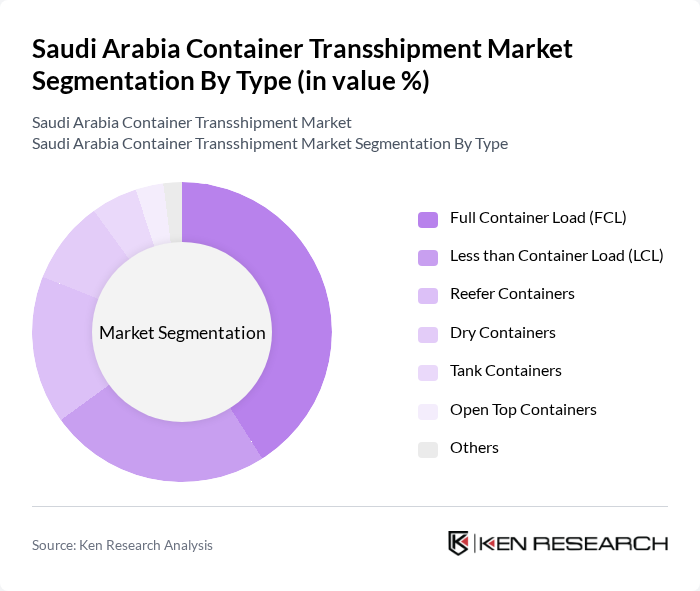
By Type:The segmentation by type includes various container categories that cater to different shipping needs. The subsegments are Full Container Load (FCL), Less than Container Load (LCL), Reefer Containers, Dry Containers, Tank Containers, Open Top Containers, and Others. Each type serves specific logistical requirements, with FCL being the most preferred for large shipments due to cost-effectiveness and efficiency. The adoption of reefer and specialized containers is rising, driven by growth in food, pharmaceutical, and chemical exports .
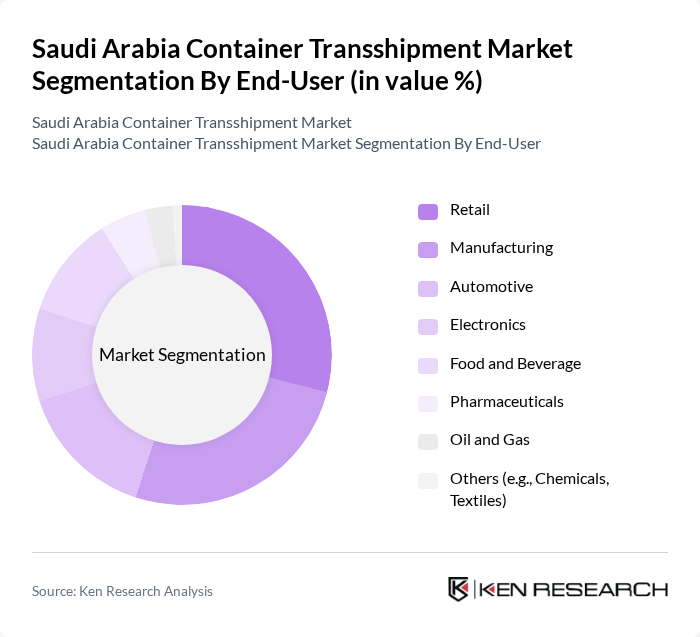
By End-User:The end-user segmentation encompasses various industries that utilize container transshipment services. The subsegments include Retail, Manufacturing, Automotive, Electronics, Food and Beverage, Pharmaceuticals, Oil and Gas, and Others. The retail and manufacturing sectors are the largest consumers, driven by the need for efficient supply chain management and the growing e-commerce market. Food and beverage, as well as pharmaceuticals, are seeing increased containerized shipments due to rising demand for cold chain and temperature-controlled logistics .
The Saudi Arabia Container Transshipment Market is characterized by a dynamic mix of regional and international players. Leading participants such as Saudi Ports Authority (Mawani), Bahri (The National Shipping Company of Saudi Arabia), DP World Jeddah, Red Sea Gateway Terminal (RSGT), Saudi Global Ports (SGP), APM Terminals (King Abdulaziz Port Dammam), Gulftainer (Jubail Container Terminal), International Container Terminal Services, Inc. (ICTSI, operates at Jeddah Islamic Port), Abu Dhabi Ports (via SAFEEN Feeders, regional services), Maersk Line, Hapag-Lloyd, MSC Mediterranean Shipping Company, CMA CGM, Evergreen Marine Corporation, Yang Ming Marine Transport Corporation contribute to innovation, geographic expansion, and service delivery in this space.
The future of the Saudi Arabia container transshipment market appears promising, driven by ongoing investments in infrastructure and technology. As the government continues to prioritize logistics and trade facilitation, the adoption of smart port technologies is expected to streamline operations. Additionally, the increasing demand for e-commerce logistics will further enhance the market's growth potential, positioning Saudi Arabia as a key player in the global shipping landscape in future.
| Segment | Sub-Segments |
|---|---|
| By Type | Full Container Load (FCL) Less than Container Load (LCL) Reefer Containers Dry Containers Tank Containers Open Top Containers Others |
| By End-User | Retail Manufacturing Automotive Electronics Food and Beverage Pharmaceuticals Oil and Gas Others (e.g., Chemicals, Textiles) |
| By Shipping Line | Major Global Shipping Lines Regional Shipping Companies Niche Shipping Services Others |
| By Port Type | Major Commercial Ports (e.g., Jeddah Islamic Port, King Abdulaziz Port Dammam, King Abdullah Port, Jubail Commercial Port, Yanbu Commercial Port) Free Trade Zones Private Ports Others |
| By Container Size | foot Containers (TEU) foot Containers (FEU) foot Containers Others |
| By Service Type | Transshipment Services Storage Services Customs Clearance Services Loading and Unloading Services Transportation Services Others |
| By Pricing Model | Fixed Pricing Variable Pricing Subscription-Based Pricing Others |
| Scope Item/Segment | Sample Size | Target Respondent Profiles |
|---|---|---|
| Container Terminal Operations | 100 | Terminal Managers, Operations Supervisors |
| Shipping Line Strategies | 70 | Business Development Managers, Fleet Operations Managers |
| Customs and Regulatory Compliance | 60 | Customs Brokers, Compliance Officers |
| Logistics and Supply Chain Management | 80 | Supply Chain Managers, Logistics Coordinators |
| Trade and Economic Policy Impact | 50 | Policy Analysts, Economic Advisors |
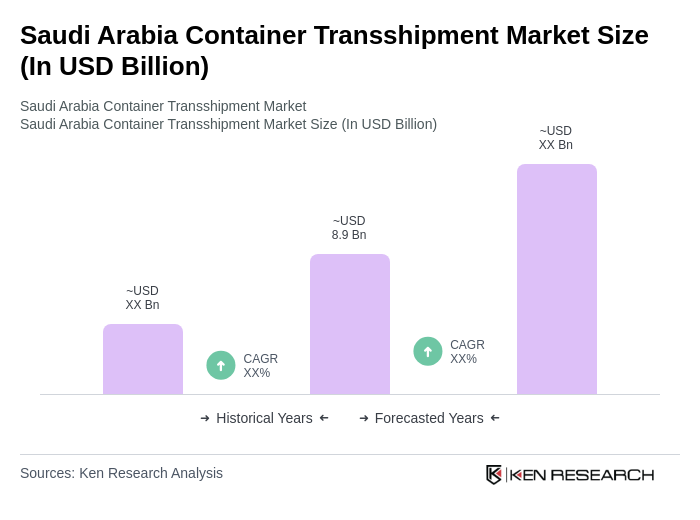
The Saudi Arabia Container Transshipment Market is valued at approximately USD 8.9 billion, reflecting significant growth driven by the country's strategic location and investments in port infrastructure and logistics capabilities.

What makes us stand out is that our consultants follow Robust, Refine and Result (RRR) methodology. Robust for clear definitions, approaches and sanity checking, Refine for differentiating respondents' facts and opinions, and Result for presenting data with story.

We have set a benchmark in the industry by offering our clients with syndicated and customized market research reports featuring coverage of entire market as well as meticulous research and analyst insights.

While we don't replace traditional research, we flip the method upside down. Our dual approach of Top Bottom & Bottom Top ensures quality deliverable by not just verifying company fundamentals but also looking at the sector and macroeconomic factors.

With one step in the future, our research team constantly tries to show you the bigger picture. We help with some of the tough questions you may encounter along the way: How is the industry positioned? Best marketing channel? KPI's of competitors? By aligning every element, we help maximize success.

Our report gives you instant access to the answers and sources that other companies might choose to hide. We elaborate each steps of research methodology we have used and showcase you the sample size to earn your trust.

If you need any support, we are here! We pride ourselves on universe strength, data quality, and quick, friendly, and professional service.













