Region:Middle East
Author(s):Geetanshi
Product Code:KRAA9002
Pages:84
Published On:November 2025
By Type:The market is segmented into various types of copper alloys, including High-Conductivity Copper Alloys, Brass Alloys, Bronze Alloys, Beryllium Copper Alloys, Copper-Nickel-Silicon Alloys, and Others. Each type serves distinct applications across industries, with specific properties that cater to different requirements. High-Conductivity Copper Alloys are widely used for electrical applications due to their excellent electrical and thermal conductivity. Brass Alloys are favored in plumbing, mechanical, and decorative applications for their machinability and corrosion resistance. Bronze Alloys are utilized in marine, industrial, and artistic applications for their strength and wear resistance. Beryllium Copper Alloys are selected for high-performance and safety-critical components, especially in aerospace and electronics, due to their unique combination of strength and conductivity. Copper-Nickel-Silicon Alloys are used in connectors and marine hardware for their resistance to corrosion and stress relaxation .

The High-Conductivity Copper Alloys segment is currently dominating the market due to their extensive use in electrical applications, where superior conductivity is essential. This type of alloy is favored in the manufacturing of electrical components, connectors, and wiring, driven by the growing demand for efficient energy transmission. The increasing focus on renewable energy sources and electric vehicles further propels the demand for high-conductivity materials, making it a key player in the copper alloys market .
By End-User:The market is segmented based on end-users, including Electrical and Electronics, Automotive, Aerospace, Telecommunications, Industrial Equipment, Government & Utilities, and Others. Each end-user category has unique requirements that influence the demand for specific types of copper alloys. The Electrical and Electronics sector requires alloys with high conductivity and reliability for components such as wires, connectors, and circuit boards. The Automotive sector uses copper alloys in wiring harnesses, radiators, and electric vehicle components. Aerospace applications demand high-performance alloys for critical safety and operational reliability. Telecommunications relies on copper alloys for connectors and transmission lines, while Industrial Equipment utilizes them for wear-resistant and corrosion-resistant parts. Government & Utilities employ copper alloys in power distribution and infrastructure projects .
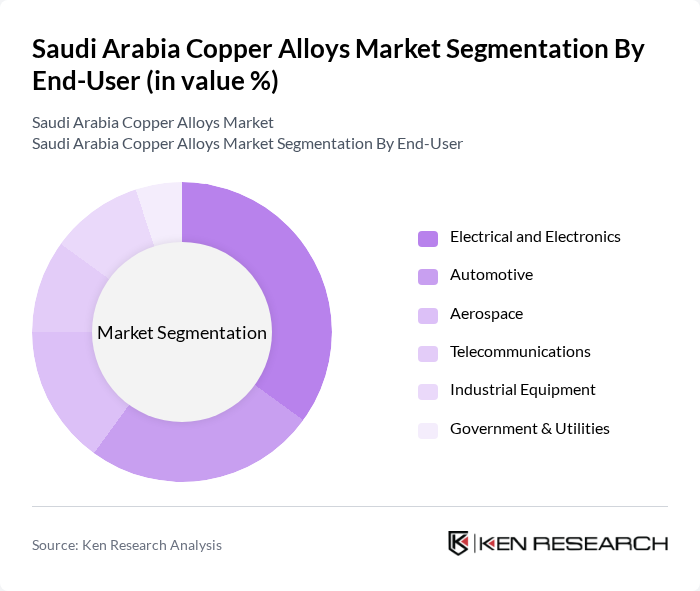
The Electrical and Electronics sector is the leading end-user of copper alloys, driven by the increasing demand for high-performance electrical components. The rapid growth of the electronics industry, particularly in consumer electronics and renewable energy applications, has significantly boosted the consumption of copper alloys. Additionally, the automotive sector is also witnessing a rise in demand for copper alloys, particularly in electric vehicles, which require efficient electrical systems .
The Saudi Arabia Copper Alloys Market is characterized by a dynamic mix of regional and international players. Leading participants such as Saudi Copper & Alloys Manufacturing Company, Gulf Copper Manufacturing LLC, National Metal Manufacturing and Casting Company (Maadaniyah), Saudi Arabian Mining Company (Ma'aden), Al-Babtain Power & Telecommunication Co., Al-Fozan Holding Company, Al-Muhaidib Group, UNISTEEL International, Empire Alloys, MB Trading Company (MBTC), Prestige Metalloys LLC, Sunflex Metal Industries, Repute Steel & Engineering Co., Mehul Nickel Alloys, Splitbolts Middle East contribute to innovation, geographic expansion, and service delivery in this space.
The Saudi Arabia copper alloys market is poised for significant transformation, driven by a combination of technological advancements and increasing sustainability initiatives. As the construction and automotive sectors continue to expand, the demand for high-performance and eco-friendly copper alloys will rise. Additionally, the government's focus on local manufacturing and recycling initiatives will create a more resilient supply chain. In future, the market is expected to adapt to these trends, fostering innovation and enhancing competitiveness in the region.
| Segment | Sub-Segments |
|---|---|
| By Type | High-Conductivity Copper Alloys Brass Alloys Bronze Alloys Beryllium Copper Alloys Copper-Nickel-Silicon Alloys Others |
| By End-User | Electrical and Electronics Automotive Aerospace Telecommunications Industrial Equipment Government & Utilities Others |
| By Application | Electrical Components Plumbing Industrial Machinery Marine Applications Connectors Others |
| By Form | Sheets and Plates Bars and Rods Wires Tubes Others |
| By Distribution Channel | Direct Sales Distributors Online Sales Retail Others |
| By Geography | Central Region Eastern Region Western Region Southern Region Others |
| By Product Lifecycle Stage | Introduction Growth Maturity Decline Others |
| Scope Item/Segment | Sample Size | Target Respondent Profiles |
|---|---|---|
| Construction Industry Copper Alloys | 100 | Project Managers, Procurement Officers |
| Automotive Sector Copper Alloys | 80 | Manufacturing Engineers, Supply Chain Managers |
| Electronics Manufacturing Copper Alloys | 70 | Product Development Engineers, Quality Assurance Managers |
| Electrical Equipment Copper Alloys | 60 | Technical Directors, Operations Managers |
| Marine and Aerospace Copper Alloys | 40 | R&D Managers, Compliance Officers |
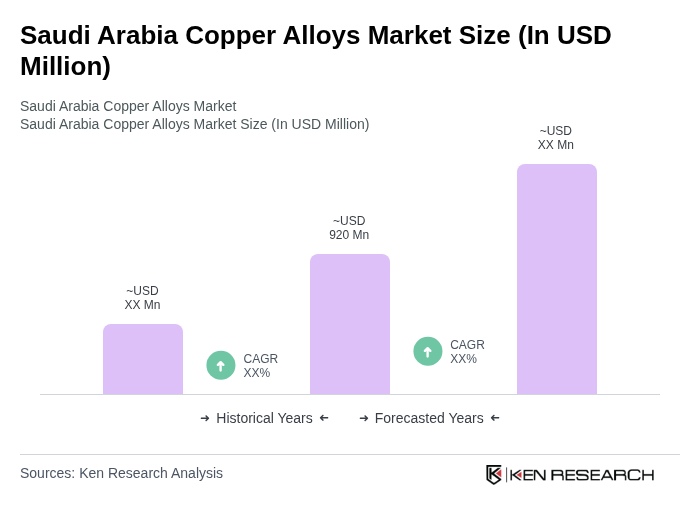
The Saudi Arabia Copper Alloys Market is valued at approximately USD 920 million, driven by increasing demand in construction, automotive, and electronics sectors, along with government investments in infrastructure and renewable energy initiatives.

What makes us stand out is that our consultants follow Robust, Refine and Result (RRR) methodology. Robust for clear definitions, approaches and sanity checking, Refine for differentiating respondents' facts and opinions, and Result for presenting data with story.

We have set a benchmark in the industry by offering our clients with syndicated and customized market research reports featuring coverage of entire market as well as meticulous research and analyst insights.

While we don't replace traditional research, we flip the method upside down. Our dual approach of Top Bottom & Bottom Top ensures quality deliverable by not just verifying company fundamentals but also looking at the sector and macroeconomic factors.

With one step in the future, our research team constantly tries to show you the bigger picture. We help with some of the tough questions you may encounter along the way: How is the industry positioned? Best marketing channel? KPI's of competitors? By aligning every element, we help maximize success.

Our report gives you instant access to the answers and sources that other companies might choose to hide. We elaborate each steps of research methodology we have used and showcase you the sample size to earn your trust.

If you need any support, we are here! We pride ourselves on universe strength, data quality, and quick, friendly, and professional service.













