Region:Middle East
Author(s):Shubham
Product Code:KRAC4332
Pages:97
Published On:October 2025
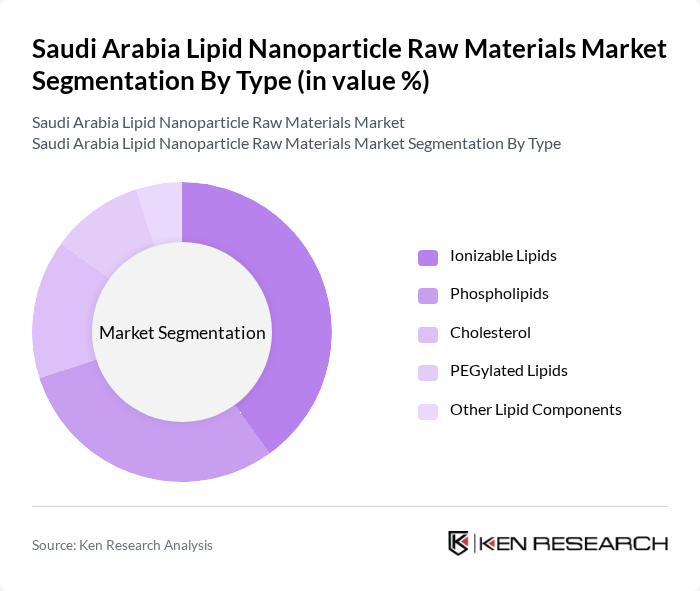
By Type:The market is segmented into various types of lipid components, each playing a crucial role in the formulation of lipid nanoparticles. Among these, ionizable lipids and phospholipids are particularly significant due to their effectiveness in drug delivery applications. Ionizable lipids are favored for their ability to encapsulate nucleic acids, while phospholipids are widely used for their biocompatibility and stability. The demand for cholesterol and PEGylated lipids is also growing, driven by their roles in enhancing the pharmacokinetics and stability of drug formulations. Liposomes, a class of phospholipid-based nanoparticles, currently represent the largest segment by revenue in the Saudi market .
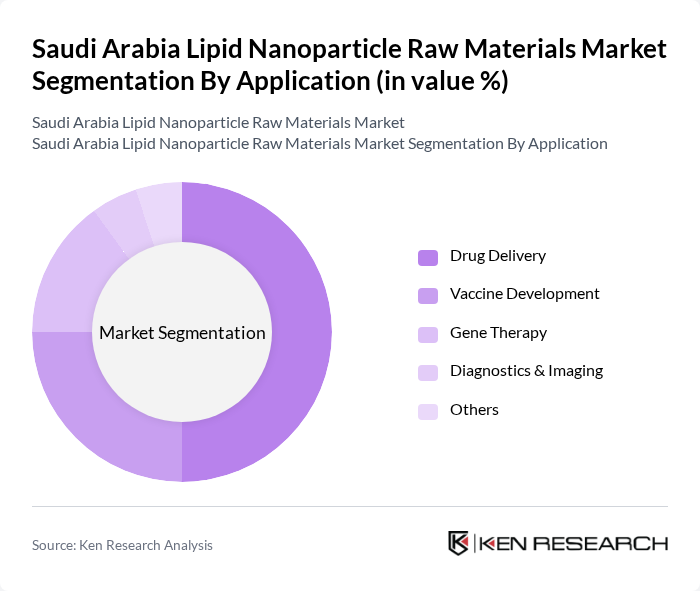
By Application:The applications of lipid nanoparticles are diverse, with drug delivery and vaccine development being the most prominent. The increasing prevalence of chronic diseases and the need for effective vaccines have propelled the demand for lipid nanoparticles in these areas. Gene therapy and diagnostics & imaging are also gaining traction, as advancements in biotechnology continue to evolve. The versatility of lipid nanoparticles in various therapeutic applications, including oncology, rare disease treatments, and personalized medicine, is a key driver of market growth .
The Saudi Arabia Lipid Nanoparticle Raw Materials Market is characterized by a dynamic mix of regional and international players. Leading participants such as Evonik Industries AG, Merck KGaA, Lipoid GmbH, Avanti Polar Lipids, Inc. (a part of Croda International Plc), CordenPharma International GmbH, NOF Corporation, Precision NanoSystems Inc. (a part of Danaher Corporation), Polymun Scientific Immunbiologische Forschung GmbH, Gattefossé SAS, Nippon Fine Chemical Co., Ltd., Stepan Company, Chem-Impex International, Inc., Avanti Polar Lipids Middle East (local distributor), Al-Dawaa Pharmacies (Saudi distributor), Saudi Pharmaceutical Industries & Medical Appliances Corporation (SPIMACO) contribute to innovation, geographic expansion, and service delivery in this space.
The future of the lipid nanoparticle market in Saudi Arabia appears promising, driven by ongoing research and technological advancements. The integration of artificial intelligence in drug formulation is expected to streamline development processes, enhancing efficiency. Additionally, the increasing focus on personalized medicine will likely propel the demand for lipid nanoparticles, as they offer tailored therapeutic solutions. As the government continues to support pharmaceutical innovations, the market is poised for significant growth, fostering a robust ecosystem for lipid-based drug delivery systems.
| Segment | Sub-Segments |
|---|---|
| By Type | Ionizable Lipids Phospholipids Cholesterol PEGylated Lipids Other Lipid Components |
| By Application | Drug Delivery Vaccine Development Gene Therapy Diagnostics & Imaging Others |
| By End-User | Pharmaceutical Companies Biotechnology Firms Academic & Research Institutes Contract Manufacturing Organizations (CMOs) Others |
| By Distribution Channel | Direct Sales Distributors Online Sales Others |
| By Region | Central Region Eastern Region Western Region Southern Region Northern Region |
| By Price Range | Low Price Mid Price High Price |
| By Regulatory Compliance | Saudi FDA Approved GMP Certified CE Marked Others |
| Scope Item/Segment | Sample Size | Target Respondent Profiles |
|---|---|---|
| Pharmaceutical Manufacturers | 100 | R&D Managers, Production Managers |
| Raw Material Suppliers | 60 | Sales Managers, Procurement Managers |
| Regulatory Bodies | 40 | Policy Makers, Compliance Officers |
| Academic Institutions | 50 | Research Professors, Graduate Students |
| Healthcare Providers | 50 | Pharmacists, Clinical Researchers |
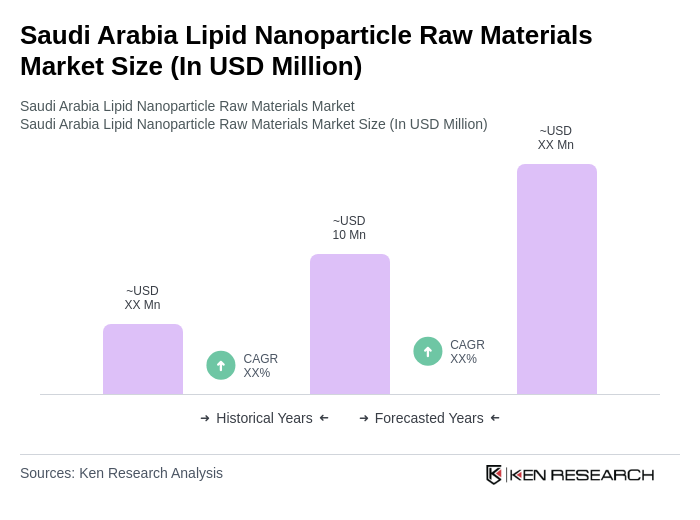
The Saudi Arabia Lipid Nanoparticle Raw Materials Market is valued at approximately USD 10 million, reflecting a significant growth driven by the increasing demand for lipid-based drug delivery systems in the pharmaceutical and biotechnology sectors.

What makes us stand out is that our consultants follow Robust, Refine and Result (RRR) methodology. Robust for clear definitions, approaches and sanity checking, Refine for differentiating respondents' facts and opinions, and Result for presenting data with story.

We have set a benchmark in the industry by offering our clients with syndicated and customized market research reports featuring coverage of entire market as well as meticulous research and analyst insights.

While we don't replace traditional research, we flip the method upside down. Our dual approach of Top Bottom & Bottom Top ensures quality deliverable by not just verifying company fundamentals but also looking at the sector and macroeconomic factors.

With one step in the future, our research team constantly tries to show you the bigger picture. We help with some of the tough questions you may encounter along the way: How is the industry positioned? Best marketing channel? KPI's of competitors? By aligning every element, we help maximize success.

Our report gives you instant access to the answers and sources that other companies might choose to hide. We elaborate each steps of research methodology we have used and showcase you the sample size to earn your trust.

If you need any support, we are here! We pride ourselves on universe strength, data quality, and quick, friendly, and professional service.













