KSA senior living market report size, share, growth drivers, trends, opportunities & forecast 2025–2030

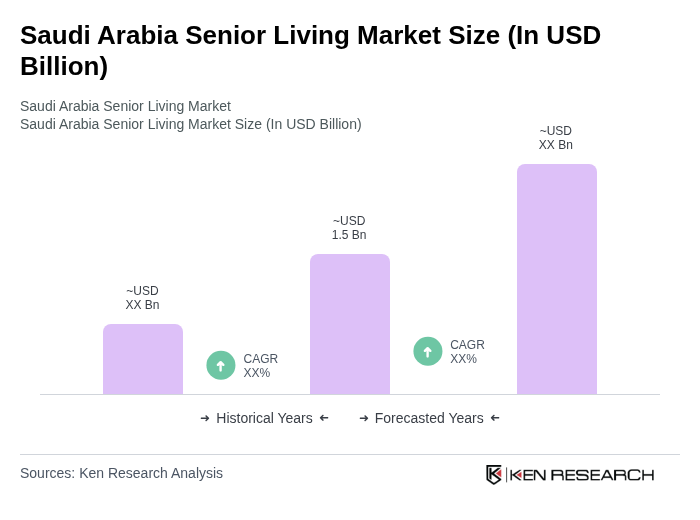
Saudi Arabia Senior Living Market, valued at USD 1.5 Bn, grows due to aging population reaching 5M, government initiatives, and tech advancements in elderly care.

Region:Middle East

Author(s):Shubham

Product Code:KRAC8966

Pages:82

Published On:November 2025
About the Report

Base Year 2024

Saudi Arabia Senior Living Market Overview

  • The Saudi Arabia Senior Living Market is valued at USD 1.5 billion, based on a five-year historical analysis. This growth is primarily driven by the increasing aging population, rising disposable incomes, urbanization, and a growing awareness of the benefits of senior living facilities. The demand for quality care and lifestyle options for seniors has surged, leading to a significant expansion of services and facilities catering to this demographic. Government initiatives under Vision 2030, improved healthcare infrastructure, and cultural shifts reducing reliance on family caregiving are accelerating organized long-term care adoption .
  • Key cities dominating the market include Riyadh, Jeddah, and Dammam. Riyadh, as the capital, has a higher concentration of healthcare facilities and services, while Jeddah and Dammam benefit from their strategic locations and economic activities. The urbanization and development initiatives in these cities have further enhanced the appeal of senior living options, making them attractive for both local and international investors .
  • In 2023, the Saudi government implemented regulations to enhance the quality of senior living facilities. The Executive Regulations for Private Health Institutions, issued by the Ministry of Health in 2023, mandate licensing for all senior care homes and set minimum care standards, including staffing qualifications, facility safety, and resident rights. These regulations aim to improve service delivery and promote a higher standard of living for the elderly population .
Saudi Arabia Senior Living Market Size

Saudi Arabia Senior Living Market Segmentation

By Type:The market is segmented into various types of senior living options, including Independent Living, Assisted Living, Memory Care, Skilled Nursing Facilities, Continuing Care Retirement Communities, Respite Care, Home Care, and Others. Each type caters to different needs and preferences of seniors, influencing their choice of living arrangements. Home Care and Assisted Living are the most prominent segments, reflecting a preference for personalized and supportive environments. Nursing Homes and Memory Care facilities address more intensive medical and cognitive needs, while Continuing Care Retirement Communities offer a continuum of care for aging in place .
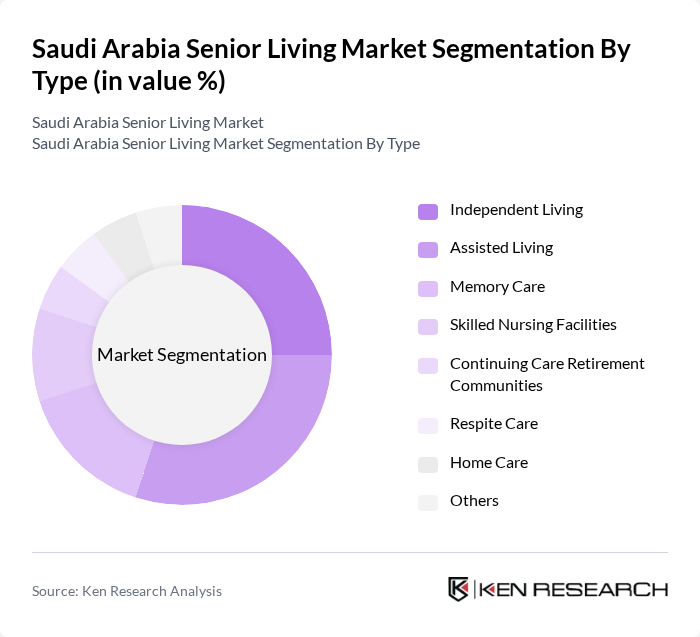
Saudi Arabia Senior Living Market segmentation by Type.

By End-User:The end-user segmentation includes Seniors (65+), Adults (45-64), Families of Seniors, Healthcare Providers, and Others. This segmentation reflects the diverse needs and preferences of those seeking senior living solutions, with a focus on providing tailored services to enhance the quality of life for seniors. Individuals and families are the primary users, while healthcare providers and institutions play a supporting role in care delivery .
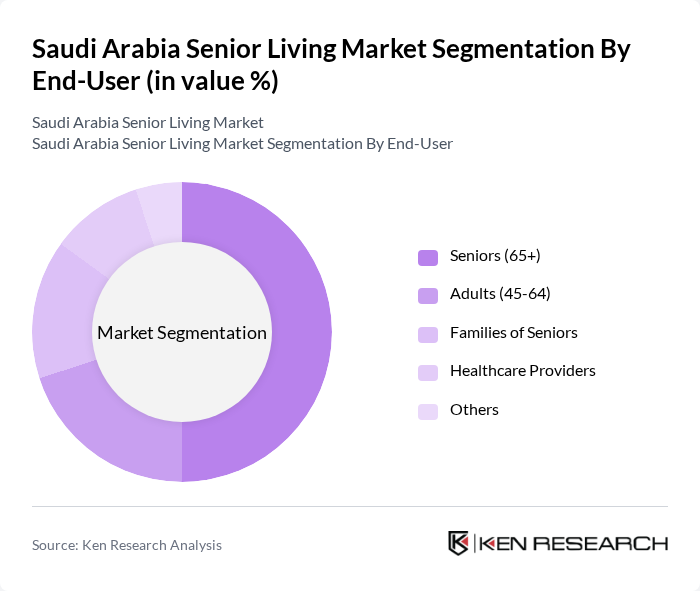
Saudi Arabia Senior Living Market segmentation by End-User.

Saudi Arabia Senior Living Market Competitive Landscape

The Saudi Arabia Senior Living Market is characterized by a dynamic mix of regional and international players. Leading participants such as Sukoon International Holding Company, Saudi German Health, Dr. Sulaiman Al-Habib Medical Group, King Faisal Specialist Hospital & Research Centre, Al Hammadi Hospitals, National Care Company (NMC), Dallah Healthcare Company, Mouwasat Medical Services, International Extended Care Center (IECC), Almoosa Specialist Hospital, Al Mana General Hospitals, Magrabi Hospitals & Centers, Al Habib Medical Group, Al Borg Medical Laboratories, Tibbiyah Holding contribute to innovation, geographic expansion, and service delivery in this space .

Sukoon International Holding Company

2010

Jeddah

Saudi German Health

1988

Jeddah

Dr. Sulaiman Al-Habib Medical Group

1995

Riyadh

King Faisal Specialist Hospital & Research Centre

1975

Riyadh

Al Hammadi Hospitals

1985

Riyadh

Company

Establishment Year

Headquarters

Number of Facilities

Total Number of Beds

Occupancy Rate (%)

Revenue per Resident (SAR/year)

Customer Satisfaction Score

Staff-to-Resident Ratio

Saudi Arabia Senior Living Market Industry Analysis

Growth Drivers

  • Increasing Aging Population:In future, Saudi Arabia's population aged 60 and above is projected to reach approximately 5 million, representing a significant demographic shift. This increase is driven by improved healthcare and life expectancy, which is now around 77 years. The growing elderly population necessitates enhanced senior living solutions, creating a robust demand for specialized facilities and services tailored to their needs, thereby driving market growth.
  • Rising Disposable Incomes:The average disposable income in Saudi Arabia is expected to rise to SAR 13,000 per month in future, reflecting a 6% increase from previous years. This growth in disposable income allows families to invest more in senior living options, including assisted living and nursing care. As financial capabilities improve, more families are likely to seek quality care solutions for their elderly relatives, further propelling market expansion.
  • Government Initiatives for Elderly Care:The Saudi government has allocated SAR 2 billion for elderly care initiatives in future, focusing on enhancing healthcare services and infrastructure. This funding supports the establishment of new senior living facilities and the improvement of existing ones. Additionally, government policies promoting private sector involvement in elderly care are expected to stimulate market growth, ensuring better services and facilities for the aging population.

Market Challenges

  • Cultural Stigma Around Senior Living:In Saudi Arabia, cultural perceptions regarding senior living facilities often discourage families from considering them as viable options. Many families prefer to care for elderly relatives at home, leading to a reluctance to utilize professional care services. This cultural stigma poses a significant barrier to market growth, as it limits the acceptance and demand for senior living solutions despite the increasing need for such services.
  • High Operational Costs:The operational costs for senior living facilities in Saudi Arabia are projected to rise, with average monthly expenses estimated at SAR 9,000 per resident in future. These costs include staffing, maintenance, and compliance with health regulations. High operational expenses can deter potential investors and operators from entering the market, limiting the availability of facilities and services for the growing elderly population.

Saudi Arabia Senior Living Market Future Outlook

The Saudi Arabia senior living market is poised for significant transformation as demographic shifts and economic factors converge. With an increasing elderly population and rising disposable incomes, demand for senior living solutions is expected to grow. Government initiatives aimed at enhancing elderly care infrastructure will further support this trend. As cultural perceptions evolve, the market is likely to witness a shift towards more acceptance of senior living facilities, paving the way for innovative care models and improved service offerings.

Market Opportunities

  • Expansion of Private Sector Involvement:The Saudi government is encouraging private investment in senior living facilities, with an expected increase in private sector participation by 35% in future. This expansion presents opportunities for innovative service delivery and enhanced care options, catering to the diverse needs of the elderly population.
  • Technological Advancements in Care:The integration of smart technologies in senior living facilities is anticipated to grow, with investments in health monitoring systems projected to reach SAR 600 million in future. These advancements can improve care quality and operational efficiency, creating a competitive edge for facilities that adopt such technologies.

Scope of the Report

SegmentSub-Segments
By Type

Independent Living

Assisted Living

Memory Care

Skilled Nursing Facilities

Continuing Care Retirement Communities

Respite Care

Home Care

Others

By End-User

Seniors (65+)

Adults (45-64)

Families of Seniors

Healthcare Providers

Others

By Region

Riyadh

Jeddah

Dammam

Khobar

Mecca

Medina

Others

By Service Type

Medical Services

Recreational Services

Nutritional Services

Transportation Services

Rehabilitation Services

Others

By Facility Size

Small Facilities (1-50 beds)

Medium Facilities (51-150 beds)

Large Facilities (151+ beds)

Others

By Ownership Type

Private Ownership

Public Ownership

Non-Profit Organizations

Others

By Payment Model

Private Pay

Insurance-Based

Government-Funded

Others

Key Target Audience

Investors and Venture Capitalist Firms

Government and Regulatory Bodies (e.g., Ministry of Health, Ministry of Housing)

Healthcare Providers and Senior Care Facilities

Real Estate Developers and Property Management Firms

Insurance Companies and Financial Service Providers

Technology Providers for Senior Living Solutions

Non-Governmental Organizations (NGOs) focused on Elderly Care

Industry Associations and Advocacy Groups

Players Mentioned in the Report:

Sukoon International Holding Company

Saudi German Health

Dr. Sulaiman Al-Habib Medical Group

King Faisal Specialist Hospital & Research Centre

Al Hammadi Hospitals

National Care Company (NMC)

Dallah Healthcare Company

Mouwasat Medical Services

International Extended Care Center (IECC)

Almoosa Specialist Hospital

Al Mana General Hospitals

Magrabi Hospitals & Centers

Al Habib Medical Group

Al Borg Medical Laboratories

Tibbiyah Holding

Table of Contents

Market Assessment Phase

1. Executive Summary and Approach


2. Saudi Arabia Senior Living Market Overview

2.1 Key Insights and Strategic Recommendations

2.2 Saudi Arabia Senior Living Market Overview

2.3 Definition and Scope

2.4 Evolution of Market Ecosystem

2.5 Timeline of Key Regulatory Milestones

2.6 Value Chain & Stakeholder Mapping

2.7 Business Cycle Analysis

2.8 Policy & Incentive Landscape


3. Saudi Arabia Senior Living Market Analysis

3.1 Growth Drivers

3.1.1 Increasing Aging Population
3.1.2 Rising Disposable Incomes
3.1.3 Growing Awareness of Senior Care
3.1.4 Government Initiatives for Elderly Care

3.2 Market Challenges

3.2.1 Cultural Stigma Around Senior Living
3.2.2 Limited Availability of Facilities
3.2.3 High Operational Costs
3.2.4 Regulatory Compliance Issues

3.3 Market Opportunities

3.3.1 Expansion of Private Sector Involvement
3.3.2 Technological Advancements in Care
3.3.3 Development of Hybrid Living Models
3.3.4 Increased Investment in Healthcare Infrastructure

3.4 Market Trends

3.4.1 Rise of Assisted Living Facilities
3.4.2 Integration of Smart Technologies
3.4.3 Focus on Wellness and Lifestyle Services
3.4.4 Shift Towards Community-Based Care

3.5 Government Regulation

3.5.1 Licensing Requirements for Facilities
3.5.2 Health and Safety Standards
3.5.3 Financial Incentives for Senior Care Providers
3.5.4 Regulations on Staffing and Training

4. SWOT Analysis


5. Stakeholder Analysis


6. Porter's Five Forces Analysis


7. Saudi Arabia Senior Living Market Market Size, 2019-2024

7.1 By Value

7.2 By Volume

7.3 By Average Selling Price


8. Saudi Arabia Senior Living Market Segmentation

8.1 By Type

8.1.1 Independent Living
8.1.2 Assisted Living
8.1.3 Memory Care
8.1.4 Skilled Nursing Facilities
8.1.5 Continuing Care Retirement Communities
8.1.6 Respite Care
8.1.7 Home Care
8.1.8 Others

8.2 By End-User

8.2.1 Seniors (65+)
8.2.2 Adults (45-64)
8.2.3 Families of Seniors
8.2.4 Healthcare Providers
8.2.5 Others

8.3 By Region

8.3.1 Riyadh
8.3.2 Jeddah
8.3.3 Dammam
8.3.4 Khobar
8.3.5 Mecca
8.3.6 Medina
8.3.7 Others

8.4 By Service Type

8.4.1 Medical Services
8.4.2 Recreational Services
8.4.3 Nutritional Services
8.4.4 Transportation Services
8.4.5 Rehabilitation Services
8.4.6 Others

8.5 By Facility Size

8.5.1 Small Facilities (1-50 beds)
8.5.2 Medium Facilities (51-150 beds)
8.5.3 Large Facilities (151+ beds)
8.5.4 Others

8.6 By Ownership Type

8.6.1 Private Ownership
8.6.2 Public Ownership
8.6.3 Non-Profit Organizations
8.6.4 Others

8.7 By Payment Model

8.7.1 Private Pay
8.7.2 Insurance-Based
8.7.3 Government-Funded
8.7.4 Others

9. Saudi Arabia Senior Living Market Competitive Analysis

9.1 Market Share of Key Players

9.2 Cross Comparison of Key Players

9.2.1 Company Name
9.2.2 Number of Facilities
9.2.3 Total Number of Beds
9.2.4 Occupancy Rate (%)
9.2.5 Revenue per Resident (SAR/year)
9.2.6 Customer Satisfaction Score
9.2.7 Staff-to-Resident Ratio
9.2.8 Average Length of Stay (months)
9.2.9 Average Daily Rate (ADR)
9.2.10 EBITDA Margin (%)
9.2.11 Return on Investment (ROI)
9.2.12 Percentage of Private vs. Public Pay Residents
9.2.13 Technology Adoption Level
9.2.14 Accreditation/Certification Status

9.3 SWOT Analysis of Top Players

9.4 Pricing Analysis

9.5 Detailed Profile of Major Companies

9.5.1 Sukoon International Holding Company
9.5.2 Saudi German Health
9.5.3 Dr. Sulaiman Al-Habib Medical Group
9.5.4 King Faisal Specialist Hospital & Research Centre
9.5.5 Al Hammadi Hospitals
9.5.6 National Care Company (NMC)
9.5.7 Dallah Healthcare Company
9.5.8 Mouwasat Medical Services
9.5.9 International Extended Care Center (IECC)
9.5.10 Almoosa Specialist Hospital
9.5.11 Al Mana General Hospitals
9.5.12 Magrabi Hospitals & Centers
9.5.13 Al Habib Medical Group
9.5.14 Al Borg Medical Laboratories
9.5.15 Tibbiyah Holding

10. Saudi Arabia Senior Living Market End-User Analysis

10.1 Procurement Behavior of Key Ministries

10.1.1 Ministry of Health
10.1.2 Ministry of Social Affairs
10.1.3 Ministry of Housing
10.1.4 Ministry of Finance

10.2 Corporate Spend on Infrastructure & Energy

10.2.1 Investment in Senior Living Facilities
10.2.2 Budget Allocation for Elderly Care
10.2.3 Partnerships with Private Sector
10.2.4 Others

10.3 Pain Point Analysis by End-User Category

10.3.1 Seniors
10.3.2 Families
10.3.3 Healthcare Providers
10.3.4 Others

10.4 User Readiness for Adoption

10.4.1 Awareness Levels
10.4.2 Financial Preparedness
10.4.3 Cultural Acceptance
10.4.4 Others

10.5 Post-Deployment ROI and Use Case Expansion

10.5.1 Cost Savings Analysis
10.5.2 Service Expansion Opportunities
10.5.3 User Feedback Mechanisms
10.5.4 Others

11. Saudi Arabia Senior Living Market Future Size, 2025-2030

11.1 By Value

11.2 By Volume

11.3 By Average Selling Price


Go-To-Market Strategy Phase

1. Whitespace Analysis + Business Model Canvas

1.1 Market Gaps Identification

1.2 Value Proposition Development

1.3 Revenue Model Structuring

1.4 Customer Segmentation

1.5 Competitive Landscape Analysis

1.6 Key Partnerships

1.7 Financial Projections


2. Marketing and Positioning Recommendations

2.1 Branding Strategies

2.2 Product USPs

2.3 Target Audience Identification

2.4 Communication Channels

2.5 Marketing Budget Allocation

2.6 Performance Metrics

2.7 Feedback Mechanisms


3. Distribution Plan

3.1 Urban Retail Strategies

3.2 Rural NGO Tie-Ups

3.3 Online Distribution Channels

3.4 Partnerships with Local Businesses

3.5 Logistics and Supply Chain Management

3.6 Distribution Cost Analysis

3.7 Performance Tracking


4. Channel & Pricing Gaps

4.1 Underserved Routes

4.2 Pricing Bands Analysis

4.3 Competitor Pricing Strategies

4.4 Customer Willingness to Pay

4.5 Price Sensitivity Analysis

4.6 Pricing Model Recommendations

4.7 Performance Metrics


5. Unmet Demand & Latent Needs

5.1 Category Gaps

5.2 Consumer Segments

5.3 Emerging Trends

5.4 Market Research Insights

5.5 Customer Feedback Analysis

5.6 Future Demand Projections

5.7 Strategic Recommendations


6. Customer Relationship

6.1 Loyalty Programs

6.2 After-sales Service

6.3 Customer Engagement Strategies

6.4 Feedback Collection Mechanisms

6.5 Relationship Management Tools

6.6 Performance Metrics

6.7 Continuous Improvement Strategies


7. Value Proposition

7.1 Sustainability Initiatives

7.2 Integrated Supply Chains

7.3 Unique Selling Points

7.4 Customer-Centric Approach

7.5 Competitive Advantages

7.6 Value Delivery Mechanisms

7.7 Performance Metrics


8. Key Activities

8.1 Regulatory Compliance

8.2 Branding Initiatives

8.3 Distribution Setup

8.4 Staff Training Programs

8.5 Marketing Campaigns

8.6 Performance Tracking

8.7 Continuous Improvement Strategies


9. Entry Strategy Evaluation

9.1 Domestic Market Entry Strategy

9.1.1 Product Mix
9.1.2 Pricing Band
9.1.3 Packaging

9.2 Export Entry Strategy

9.2.1 Target Countries
9.2.2 Compliance Roadmap

10. Entry Mode Assessment

10.1 Joint Ventures

10.2 Greenfield Investments

10.3 Mergers & Acquisitions

10.4 Distributor Model

10.5 Risk Assessment

10.6 Performance Metrics

10.7 Strategic Recommendations


11. Capital and Timeline Estimation

11.1 Capital Requirements

11.2 Timelines

11.3 Funding Sources

11.4 Financial Projections

11.5 Risk Assessment

11.6 Performance Metrics

11.7 Strategic Recommendations


12. Control vs Risk Trade-Off

12.1 Ownership vs Partnerships

12.2 Risk Mitigation Strategies

12.3 Performance Metrics

12.4 Strategic Recommendations


13. Profitability Outlook

13.1 Breakeven Analysis

13.2 Long-term Sustainability

13.3 Financial Projections

13.4 Performance Metrics

13.5 Strategic Recommendations


14. Potential Partner List

14.1 Distributors

14.2 Joint Ventures

14.3 Acquisition Targets

14.4 Strategic Alliances

14.5 Performance Metrics

14.6 Strategic Recommendations


15. Execution Roadmap

15.1 Phased Plan for Market Entry

15.1.1 Market Setup
15.1.2 Market Entry
15.1.3 Growth Acceleration
15.1.4 Scale & Stabilize

15.2 Key Activities and Milestones

15.2.1 Activity Planning
15.2.2 Milestone Tracking
15.2.3 Performance Metrics

Research Methodology

ApproachModellingSample

Phase 1: Approach1

Desk Research

  • Analysis of demographic trends and aging population statistics from Saudi Arabia's General Authority for Statistics
  • Review of government policies and initiatives related to senior living and healthcare from the Ministry of Health
  • Examination of existing market reports and publications on senior living facilities and services in the region

Primary Research

  • Interviews with senior living facility operators and management teams across various regions in Saudi Arabia
  • Surveys conducted with families of seniors to understand preferences and expectations regarding senior living options
  • Focus group discussions with healthcare professionals specializing in geriatric care to gather insights on service needs

Validation & Triangulation

  • Cross-validation of findings through multiple data sources, including government reports and industry publications
  • Triangulation of qualitative insights from interviews with quantitative data from surveys
  • Sanity checks through expert panel reviews involving industry veterans and academic professionals

Phase 2: Market Size Estimation1

Top-down Assessment

  • Estimation of the total addressable market based on the aging population and projected growth rates
  • Segmentation of the market by types of senior living facilities, including independent living, assisted living, and nursing homes
  • Incorporation of government funding and support initiatives for senior living developments

Bottom-up Modeling

  • Collection of operational data from existing senior living facilities to establish average occupancy rates and pricing models
  • Analysis of construction costs and investment trends in the senior living sector
  • Volume x cost basis for different types of services offered within senior living facilities

Forecasting & Scenario Analysis

  • Multi-factor regression analysis incorporating economic indicators, healthcare trends, and demographic shifts
  • Scenario modeling based on potential changes in government policy and healthcare funding
  • Baseline, optimistic, and pessimistic projections for market growth through 2035

Phase 3: CATI Sample Composition1

Scope Item/SegmentSample SizeTarget Respondent Profiles
Independent Living Facilities60Facility Managers, Residents, Family Members
Assisted Living Services50Caregivers, Healthcare Providers, Facility Administrators
Nursing Home Operations40Nursing Home Directors, Medical Staff, Family Caregivers
Home Care Services50Home Care Agency Owners, Caregivers, Clients
Senior Living Market Trends40Market Analysts, Policy Makers, Industry Experts

Frequently Asked Questions

What is the current value of the Saudi Arabia Senior Living Market?

The Saudi Arabia Senior Living Market is valued at approximately USD 1.5 billion, driven by factors such as an increasing aging population, rising disposable incomes, and urbanization, alongside government initiatives aimed at enhancing elderly care services.

What are the main types of senior living options available in Saudi Arabia?

Which cities are leading in the Saudi Arabia Senior Living Market?

What government initiatives are supporting the senior living market in Saudi Arabia?

Other Regional/Country Reports

Indonesia Senior Living Market Report Size, Share, Growth Drivers, Trends, Opportunities & Forecast 2025–2030

Malaysia Senior Living Market Report Size, Share, Growth Drivers, Trends, Opportunities & Forecast 2025–2030

KSA Senior Living Market Report Size, Share, Growth Drivers, Trends, Opportunities & Forecast 2025–2030

APAC Senior Living Market Report Size, Share, Growth Drivers, Trends, Opportunities & Forecast 2025–2030

SEA Senior Living Market Report Size, Share, Growth Drivers, Trends, Opportunities & Forecast 2025–2030

Vietnam Senior Living Market Report Size, Share, Growth Drivers, Trends, Opportunities & Forecast 2025–2030

Other Adjacent Reports

Saudi Arabia Elderly Care Services Market Size, Share, Growth Drivers, Trends, Opportunities & Forecast 2025–2030Saudi Arabia Africa Home Healthcare Market Report Size Share Growth Drivers Trends Opportunities & Forecast 2025–2030

South Africa Assisted Living Facilities Market

South Africa Skilled Nursing Facilities Market

South Korea Memory Care Services Market

Kuwait Continuing Care Retirement Communities Market

Oman geriatric medicine market size share growth drivers trends opportunities & forecast 2025–2030

Bahrain Senior Health Insurance Market

Singapore Aging Technology Market

Thailand Rehabilitation Services Market

Why Buy From Us?

Refine Robust Result (RRR) Framework

What makes us stand out is that our consultants follow Robust, Refine and Result (RRR) methodology. Robust for clear definitions, approaches and sanity checking, Refine for differentiating respondents' facts and opinions, and Result for presenting data with story.

Our Reach Is Unmatched

We have set a benchmark in the industry by offering our clients with syndicated and customized market research reports featuring coverage of entire market as well as meticulous research and analyst insights.

Shifting the Research Paradigm

While we don't replace traditional research, we flip the method upside down. Our dual approach of Top Bottom & Bottom Top ensures quality deliverable by not just verifying company fundamentals but also looking at the sector and macroeconomic factors.

More Insights-Better Decisions

With one step in the future, our research team constantly tries to show you the bigger picture. We help with some of the tough questions you may encounter along the way: How is the industry positioned? Best marketing channel? KPI's of competitors? By aligning every element, we help maximize success.

Transparency and Trust

Our report gives you instant access to the answers and sources that other companies might choose to hide. We elaborate each steps of research methodology we have used and showcase you the sample size to earn your trust.

Round the Clock Support

If you need any support, we are here! We pride ourselves on universe strength, data quality, and quick, friendly, and professional service.

Why Clients Choose Us?

400000+
Reports in repository
150+
Consulting projects a year
100+
Analysts
8000+
Client Queries in 2022








