About the Report
Base Year 2024South Africa Online Loan & Credit Platforms Market Overview
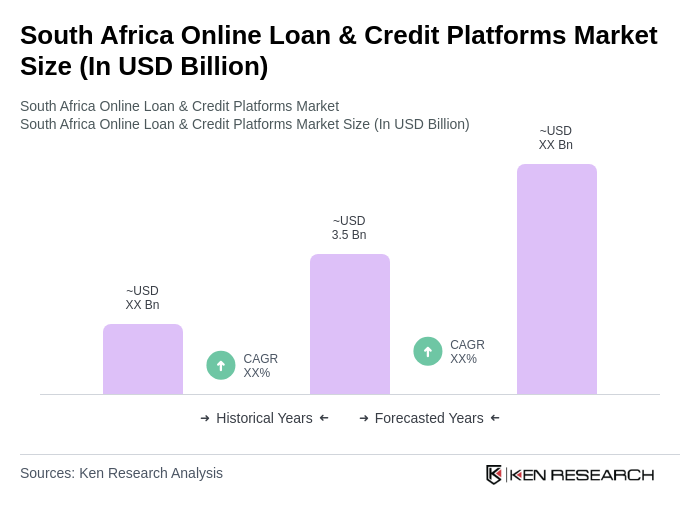
- The South Africa Online Loan & Credit Platforms Market is valued at USD 3.5 billion, based on a five-year historical analysis. This growth is primarily driven by the increasing demand for quick and accessible financial solutions, particularly among the unbanked and underbanked populations. The rise of digital technology and mobile banking has further facilitated the expansion of online lending platforms, making it easier for consumers to access credit.
- Key cities such as Johannesburg, Cape Town, and Durban dominate the market due to their high population density and economic activity. These urban centers have a significant number of small businesses and individuals seeking financial assistance, which drives the demand for online loan services. Additionally, the presence of numerous fintech companies in these cities fosters a competitive environment that enhances service delivery.
- In 2023, the South African government implemented the National Credit Amendment Act, which aims to regulate the online lending sector more stringently. This regulation mandates that all online lenders must be registered with the National Credit Regulator and adhere to responsible lending practices, ensuring that consumers are protected from predatory lending and over-indebtedness.
South Africa Online Loan & Credit Platforms Market Segmentation
By Type:The online loan and credit platforms market is segmented into various types, including Personal Loans, Business Loans, Payday Loans, Student Loans, Home Loans, Vehicle Loans, and Others. Personal Loans are currently the most dominant segment, driven by consumer demand for flexible financing options for personal expenses. Business Loans are also significant, as small and medium enterprises increasingly seek online solutions for quick funding. The Payday Loans segment has seen a rise due to the urgent financial needs of consumers, while Student Loans cater to the educational financing market.

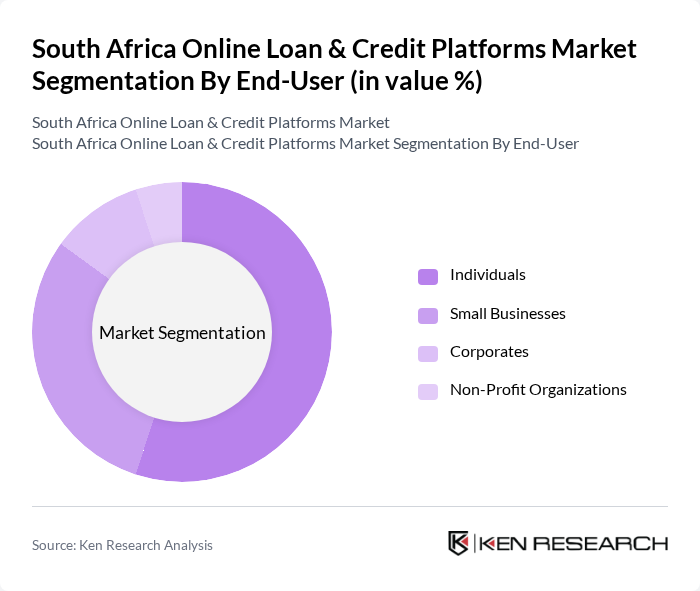
By End-User:The market is also segmented by end-users, which include Individuals, Small Businesses, Corporates, and Non-Profit Organizations. Individuals represent the largest segment, as they seek personal loans for various needs, including emergencies and consumer purchases. Small Businesses are increasingly turning to online platforms for quick access to capital, while Corporates utilize these services for operational financing. Non-Profit Organizations also participate in this market, seeking funding for their initiatives.
South Africa Online Loan & Credit Platforms Market Competitive Landscape
The South Africa Online Loan & Credit Platforms Market is characterized by a dynamic mix of regional and international players. Leading participants such as Capitec Bank, African Bank, Wonga, PayJustNow, Lendico, GetBucks, Finbond, DirectAxis, Standard Bank, Absa Bank, Nedbank, FNB, MobiMoney, Lendico, LoanFinder contribute to innovation, geographic expansion, and service delivery in this space.
South Africa Online Loan & Credit Platforms Market Industry Analysis
Growth Drivers
- Increasing Smartphone Penetration:As of future, South Africa's smartphone penetration is projected to reach 90%, with approximately 56 million users. This surge facilitates easier access to online loan platforms, enabling consumers to apply for credit anytime and anywhere. The growing reliance on mobile technology is reshaping consumer behavior, leading to a significant increase in digital loan applications. Enhanced connectivity and mobile internet access are crucial for the expansion of online lending services in the region.
- Rising Demand for Quick Access to Credit:In future, the demand for quick access to credit is expected to rise, with an estimated 32% of South Africans seeking instant loans. This trend is driven by the need for immediate financial solutions, particularly among the younger population. The convenience of online platforms allows consumers to secure funds rapidly, addressing urgent financial needs. This shift towards instant credit solutions is reshaping the lending landscape, making it more competitive and accessible.
- Growth of E-commerce and Digital Transactions:The e-commerce sector in South Africa is anticipated to grow to R180 billion by future, reflecting a 22% increase from previous years. This growth is closely linked to the rise of digital transactions, which are becoming the preferred method for consumers. As online shopping expands, the demand for integrated credit solutions is also increasing, prompting online loan platforms to innovate and offer tailored financial products that cater to e-commerce consumers.
Market Challenges
- High Levels of Consumer Debt:South Africa faces a significant challenge with consumer debt, which reached R1.9 trillion in future. This high debt level affects consumer confidence and borrowing capacity, leading to increased default rates. As consumers struggle to manage their financial obligations, online loan platforms may experience higher risks, necessitating stricter credit assessments and risk management strategies to mitigate potential losses.
- Regulatory Compliance Complexities:The regulatory landscape for online lending in South Africa is becoming increasingly complex, with over 32 regulations impacting the sector. Compliance with the National Credit Act and data protection laws requires significant investment in legal and operational frameworks. These complexities can hinder the agility of online loan platforms, making it challenging to adapt to market changes while ensuring adherence to regulatory requirements.
South Africa Online Loan & Credit Platforms Market Future Outlook
The South African online loan and credit platforms market is poised for significant transformation, driven by technological advancements and evolving consumer preferences. As digital lending solutions become more prevalent, platforms will increasingly leverage artificial intelligence and big data analytics to enhance credit scoring and risk assessment. Additionally, the focus on customer experience will intensify, with personalized offerings becoming a key differentiator. This dynamic environment presents opportunities for innovation and growth, particularly in underserved markets where access to credit remains limited.
Market Opportunities
- Development of Innovative Loan Products:There is a growing opportunity for online loan platforms to develop innovative products tailored to specific consumer needs. By creating flexible repayment options and customized loan terms, platforms can attract a broader customer base, particularly among younger borrowers seeking personalized financial solutions.
- Partnerships with Fintech Companies:Collaborating with fintech companies can enhance the technological capabilities of online loan platforms. These partnerships can facilitate the integration of advanced analytics and machine learning, improving credit assessment processes and enabling platforms to offer competitive rates, thereby expanding their market reach and customer engagement.
Scope of the Report
| Segment | Sub-Segments |
|---|---|
| By Type | Personal Loans Business Loans Payday Loans Student Loans Home Loans Vehicle Loans Others |
| By End-User | Individuals Small Businesses Corporates Non-Profit Organizations |
| By Loan Amount | Micro Loans Small Loans Medium Loans Large Loans |
| By Loan Duration | Short-Term Loans Medium-Term Loans Long-Term Loans |
| By Application Method | Online Applications Mobile Applications In-Branch Applications |
| By Credit Score Requirement | Low Credit Score Medium Credit Score High Credit Score |
| By Geographic Reach | Urban Areas Suburban Areas Rural Areas Others |
Key Target Audience
Investors and Venture Capitalist Firms
Government and Regulatory Bodies (e.g., National Credit Regulator, South African Reserve Bank)
Microfinance Institutions
Payment Processing Companies
Fintech Startups
Consumer Advocacy Groups
Insurance Companies
Credit Bureaus
Players Mentioned in the Report:
Capitec Bank
African Bank
Wonga
PayJustNow
Lendico
GetBucks
Finbond
DirectAxis
Standard Bank
Absa Bank
Nedbank
FNB
MobiMoney
LoanFinder
Table of Contents
Market Assessment Phase
1. Executive Summary and Approach
2. South Africa Online Loan & Credit Platforms Market Overview
2.1 Key Insights and Strategic Recommendations
2.2 South Africa Online Loan & Credit Platforms Market Overview
2.3 Definition and Scope
2.4 Evolution of Market Ecosystem
2.5 Timeline of Key Regulatory Milestones
2.6 Value Chain & Stakeholder Mapping
2.7 Business Cycle Analysis
2.8 Policy & Incentive Landscape
3. South Africa Online Loan & Credit Platforms Market Analysis
3.1 Growth Drivers
3.1.1 Increasing smartphone penetration
3.1.2 Rising demand for quick access to credit
3.1.3 Growth of e-commerce and digital transactions
3.1.4 Expansion of financial inclusion initiatives
3.2 Market Challenges
3.2.1 High levels of consumer debt
3.2.2 Regulatory compliance complexities
3.2.3 Competition from traditional banks
3.2.4 Economic instability affecting consumer confidence
3.3 Market Opportunities
3.3.1 Development of innovative loan products
3.3.2 Partnerships with fintech companies
3.3.3 Expansion into underserved markets
3.3.4 Utilization of big data for credit scoring
3.4 Market Trends
3.4.1 Shift towards mobile lending solutions
3.4.2 Increasing use of AI in loan processing
3.4.3 Growth of peer-to-peer lending platforms
3.4.4 Focus on customer experience and personalization
3.5 Government Regulation
3.5.1 National Credit Act compliance
3.5.2 Data protection regulations
3.5.3 Interest rate caps on loans
3.5.4 Consumer protection laws
4. SWOT Analysis
5. Stakeholder Analysis
6. Porter's Five Forces Analysis
7. South Africa Online Loan & Credit Platforms Market Market Size, 2019-2024
7.1 By Value
7.2 By Volume
7.3 By Average Selling Price
8. South Africa Online Loan & Credit Platforms Market Segmentation
8.1 By Type
8.1.1 Personal Loans
8.1.2 Business Loans
8.1.3 Payday Loans
8.1.4 Student Loans
8.1.5 Home Loans
8.1.6 Vehicle Loans
8.1.7 Others
8.2 By End-User
8.2.1 Individuals
8.2.2 Small Businesses
8.2.3 Corporates
8.2.4 Non-Profit Organizations
8.3 By Loan Amount
8.3.1 Micro Loans
8.3.2 Small Loans
8.3.3 Medium Loans
8.3.4 Large Loans
8.4 By Loan Duration
8.4.1 Short-Term Loans
8.4.2 Medium-Term Loans
8.4.3 Long-Term Loans
8.5 By Application Method
8.5.1 Online Applications
8.5.2 Mobile Applications
8.5.3 In-Branch Applications
8.6 By Credit Score Requirement
8.6.1 Low Credit Score
8.6.2 Medium Credit Score
8.6.3 High Credit Score
8.7 By Geographic Reach
8.7.1 Urban Areas
8.7.2 Suburban Areas
8.7.3 Rural Areas
8.7.4 Others
9. South Africa Online Loan & Credit Platforms Market Competitive Analysis
9.1 Market Share of Key Players
9.2 Cross Comparison of Key Players
9.2.1 Company Name
9.2.2 Group Size (Large, Medium, or Small as per industry convention)
9.2.3 Customer Acquisition Cost
9.2.4 Loan Approval Rate
9.2.5 Average Loan Amount Disbursed
9.2.6 Default Rate
9.2.7 Customer Retention Rate
9.2.8 Pricing Strategy
9.2.9 Revenue Growth Rate
9.2.10 Market Penetration Rate
9.3 SWOT Analysis of Top Players
9.4 Pricing Analysis
9.5 Detailed Profile of Major Companies
9.5.1 Capitec Bank
9.5.2 African Bank
9.5.3 Wonga
9.5.4 PayJustNow
9.5.5 Lendico
9.5.6 GetBucks
9.5.7 Finbond
9.5.8 DirectAxis
9.5.9 Standard Bank
9.5.10 Absa Bank
9.5.11 Nedbank
9.5.12 FNB
9.5.13 MobiMoney
9.5.14 Lendico
9.5.15 LoanFinder
10. South Africa Online Loan & Credit Platforms Market End-User Analysis
10.1 Procurement Behavior of Key Ministries
10.1.1 Budget Allocation for Financial Services
10.1.2 Evaluation Criteria for Loan Providers
10.1.3 Preferred Loan Types
10.2 Corporate Spend on Infrastructure & Energy
10.2.1 Investment in Digital Financial Solutions
10.2.2 Trends in Corporate Borrowing
10.3 Pain Point Analysis by End-User Category
10.3.1 Access to Affordable Credit
10.3.2 Transparency in Loan Terms
10.3.3 Speed of Loan Processing
10.4 User Readiness for Adoption
10.4.1 Awareness of Online Loan Options
10.4.2 Trust in Digital Platforms
10.5 Post-Deployment ROI and Use Case Expansion
10.5.1 Measurement of Financial Benefits
10.5.2 Expansion into New Loan Products
11. South Africa Online Loan & Credit Platforms Market Future Size, 2025-2030
11.1 By Value
11.2 By Volume
11.3 By Average Selling Price
Go-To-Market Strategy Phase
1. Whitespace Analysis + Business Model Canvas
1.1 Market Gaps Identification
1.2 Business Model Framework
2. Marketing and Positioning Recommendations
2.1 Branding Strategies
2.2 Product USPs
3. Distribution Plan
3.1 Urban Retail vs Rural NGO Tie-ups
4. Channel & Pricing Gaps
4.1 Underserved Routes
4.2 Pricing Bands
5. Unmet Demand & Latent Needs
5.1 Category Gaps
5.2 Consumer Segments
6. Customer Relationship
6.1 Loyalty Programs
6.2 After-Sales Service
7. Value Proposition
7.1 Sustainability
7.2 Integrated Supply Chains
8. Key Activities
8.1 Regulatory Compliance
8.2 Branding
8.3 Distribution Setup
9. Entry Strategy Evaluation
9.1 Domestic Market Entry Strategy
9.1.1 Product Mix
9.1.2 Pricing Band
9.1.3 Packaging
9.2 Export Entry Strategy
9.2.1 Target Countries
9.2.2 Compliance Roadmap
10. Entry Mode Assessment
10.1 JV
10.2 Greenfield
10.3 M&A
10.4 Distributor Model
11. Capital and Timeline Estimation
11.1 Capital Requirements
11.2 Timelines
12. Control vs Risk Trade-Off
12.1 Ownership vs Partnerships
13. Profitability Outlook
13.1 Breakeven Analysis
13.2 Long-Term Sustainability
14. Potential Partner List
14.1 Distributors
14.2 JVs
14.3 Acquisition Targets
15. Execution Roadmap
15.1 Phased Plan for Market Entry
15.1.1 Market Setup
15.1.2 Market Entry
15.1.3 Growth Acceleration
15.1.4 Scale & Stabilize
15.2 Key Activities and Milestones
15.2.1 Activity Timeline
15.2.2 Milestone Tracking
Research Methodology
Phase 1: Approach1
Desk Research
- Analysis of industry reports from financial institutions and market research firms
- Review of regulatory frameworks and guidelines from the South African Reserve Bank
- Examination of online loan and credit platform user statistics from government publications
Primary Research
- Interviews with executives from leading online loan and credit platforms
- Surveys targeting consumers who have utilized online loan services
- Focus groups with financial advisors and credit counselors
Validation & Triangulation
- Cross-validation of findings through multiple data sources including user reviews and financial reports
- Triangulation of market trends with insights from industry experts
- Sanity checks through comparative analysis with similar markets in the region
Phase 2: Market Size Estimation1
Top-down Assessment
- Estimation of total market size based on national credit statistics and economic indicators
- Segmentation of the market by loan type, including personal loans, business loans, and credit facilities
- Incorporation of demographic data to assess potential market growth
Bottom-up Modeling
- Collection of transaction data from major online loan platforms to establish average loan sizes
- Analysis of user acquisition costs and retention rates to project revenue streams
- Estimation of market penetration rates based on consumer behavior studies
Forecasting & Scenario Analysis
- Development of predictive models using historical growth rates and economic forecasts
- Scenario analysis based on potential regulatory changes and market disruptions
- Creation of best-case, worst-case, and most-likely scenarios through 2030
Phase 3: CATI Sample Composition1
| Scope Item/Segment | Sample Size | Target Respondent Profiles |
|---|---|---|
| Personal Loan Users | 150 | Individuals aged 25-45, employed, with prior loan experience |
| Small Business Loan Applicants | 100 | Small business owners, entrepreneurs seeking funding |
| Credit Platform Users | 120 | Consumers who have used online credit services in the last year |
| Financial Advisors | 80 | Certified financial planners, credit counselors |
| Regulatory Experts | 50 | Policy makers, compliance officers in financial institutions |
Frequently Asked Questions
What is the current value of the South Africa Online Loan & Credit Platforms Market?
The South Africa Online Loan & Credit Platforms Market is valued at approximately USD 3.5 billion, reflecting significant growth driven by the demand for accessible financial solutions, particularly among unbanked and underbanked populations.
Which cities are the key players in the South Africa Online Loan & Credit Platforms Market?
What types of loans are offered in the South Africa Online Loan & Credit Platforms Market?
Who are the primary end-users of online loan platforms in South Africa?
Other Regional/Country Reports
Indonesia Online Loan & Credit Platforms Market
Malaysia Online Loan & Credit Platforms Market
KSA Online Loan & Credit Platforms Market
APAC Online Loan & Credit Platforms Market
Other Adjacent Reports
Mexico Fintech Solutions Market
GCC digital banking platforms market report size, share, growth drivers, trends, opportunities & forecast 2025–2030India Peer-to-Peer Lending Market Outlook to 2030UAE Microfinance Services Market
Belgium Credit Scoring Technology Market
Thailand Mobile Payment Systems Market
Indonesia E-Commerce Financing Market
Japan Insurtech Innovations Market
Philippines Blockchain Finance MarketKuwait RegTech Compliance Market
Why Buy From Us?

What makes us stand out is that our consultants follow Robust, Refine and Result (RRR) methodology. Robust for clear definitions, approaches and sanity checking, Refine for differentiating respondents' facts and opinions, and Result for presenting data with story.

We have set a benchmark in the industry by offering our clients with syndicated and customized market research reports featuring coverage of entire market as well as meticulous research and analyst insights.

While we don't replace traditional research, we flip the method upside down. Our dual approach of Top Bottom & Bottom Top ensures quality deliverable by not just verifying company fundamentals but also looking at the sector and macroeconomic factors.

With one step in the future, our research team constantly tries to show you the bigger picture. We help with some of the tough questions you may encounter along the way: How is the industry positioned? Best marketing channel? KPI's of competitors? By aligning every element, we help maximize success.

Our report gives you instant access to the answers and sources that other companies might choose to hide. We elaborate each steps of research methodology we have used and showcase you the sample size to earn your trust.

If you need any support, we are here! We pride ourselves on universe strength, data quality, and quick, friendly, and professional service.