Region:Asia
Author(s):Shubham
Product Code:KRAA7171
Pages:85
Published On:January 2026
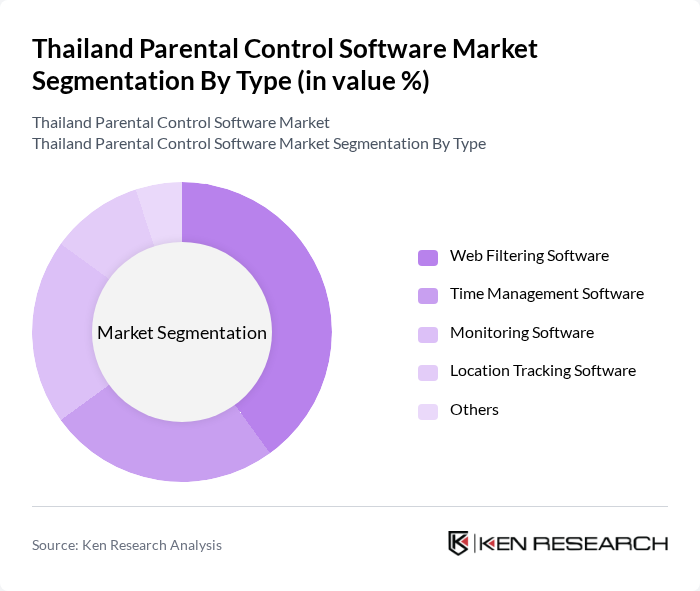
By Type:The market is segmented into various types of parental control software, including Web Filtering Software, Time Management Software, Monitoring Software, Location Tracking Software, and Others. Among these, Web Filtering Software is the most dominant segment, as it allows parents to restrict access to inappropriate websites and content, which is a primary concern for many families. The increasing awareness of online dangers has led to a surge in demand for these solutions, making them essential for modern parenting.
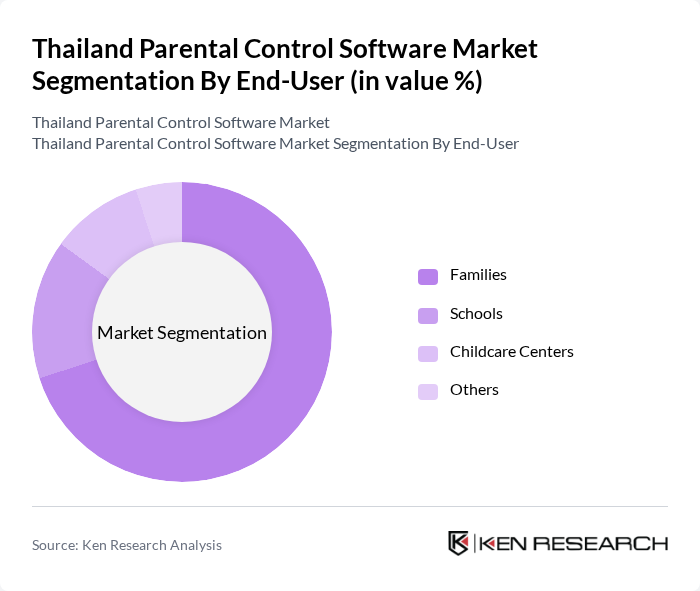
By End-User:The end-user segmentation includes Families, Schools, Childcare Centers, and Others. Families represent the largest segment, driven by the increasing need for parents to monitor their children's online activities and ensure their safety amid rising screen time, social media usage, and cyber threats. The rise in digital device usage among children has prompted parents to seek effective solutions to manage screen time and protect their children from potential online threats.
The Thailand Parental Control Software Market is characterized by a dynamic mix of regional and international players. Leading participants such as Qustodio, Norton Family, Kaspersky Safe Kids, Net Nanny, FamilyTime, Bark, KidLogger, Mobicip, FamiSafe, Screen Time, OurPact, Circle with Disney, Kidgy, Safe Lagoon, WebWatcher contribute to innovation, geographic expansion, and service delivery in this space.
The future of the Thailand parental control software market appears promising, driven by increasing digital engagement among children and a growing emphasis on online safety. As technology evolves, solutions that integrate artificial intelligence and machine learning will likely gain traction, offering more personalized and effective monitoring capabilities. Additionally, partnerships with educational institutions may enhance the adoption of these tools, fostering a safer online environment for children while addressing parental concerns about digital exposure.
| Segment | Sub-Segments |
|---|---|
| By Type | Web Filtering Software Time Management Software Monitoring Software Location Tracking Software Others |
| By End-User | Families Schools Childcare Centers Others |
| By Device Type | Smartphones Tablets Laptops Desktops Others |
| By Distribution Channel | Online Retail Offline Retail Direct Sales Others |
| By Subscription Model | Monthly Subscription Annual Subscription One-Time Purchase Others |
| By Age Group | Children (0-12 years) Teenagers (13-19 years) Others |
| By Policy Support | Government Initiatives Non-Profit Organization Support Community Programs Others |
| Scope Item/Segment | Sample Size | Target Respondent Profiles |
|---|---|---|
| Parental Control Software Users | 120 | Parents of children aged 5-18 |
| Educational Institutions | 80 | School Administrators, IT Coordinators |
| Child Psychologists | 40 | Child Development Experts, Therapists |
| Software Developers | 60 | Product Managers, Software Engineers in EdTech |
| Consumer Advocacy Groups | 30 | Consumer Rights Advocates, Digital Safety Campaigners |
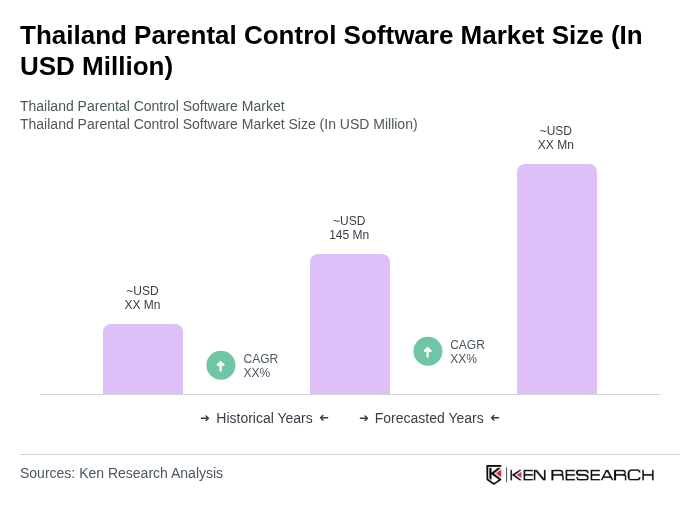
The Thailand Parental Control Software Market is valued at approximately USD 145 million, reflecting a significant increase driven by rising concerns over children's online safety and the growing use of digital devices among children.

What makes us stand out is that our consultants follow Robust, Refine and Result (RRR) methodology. Robust for clear definitions, approaches and sanity checking, Refine for differentiating respondents' facts and opinions, and Result for presenting data with story.

We have set a benchmark in the industry by offering our clients with syndicated and customized market research reports featuring coverage of entire market as well as meticulous research and analyst insights.

While we don't replace traditional research, we flip the method upside down. Our dual approach of Top Bottom & Bottom Top ensures quality deliverable by not just verifying company fundamentals but also looking at the sector and macroeconomic factors.

With one step in the future, our research team constantly tries to show you the bigger picture. We help with some of the tough questions you may encounter along the way: How is the industry positioned? Best marketing channel? KPI's of competitors? By aligning every element, we help maximize success.

Our report gives you instant access to the answers and sources that other companies might choose to hide. We elaborate each steps of research methodology we have used and showcase you the sample size to earn your trust.

If you need any support, we are here! We pride ourselves on universe strength, data quality, and quick, friendly, and professional service.













