Region:Middle East
Author(s):Shubham
Product Code:KRAA8771
Pages:88
Published On:November 2025
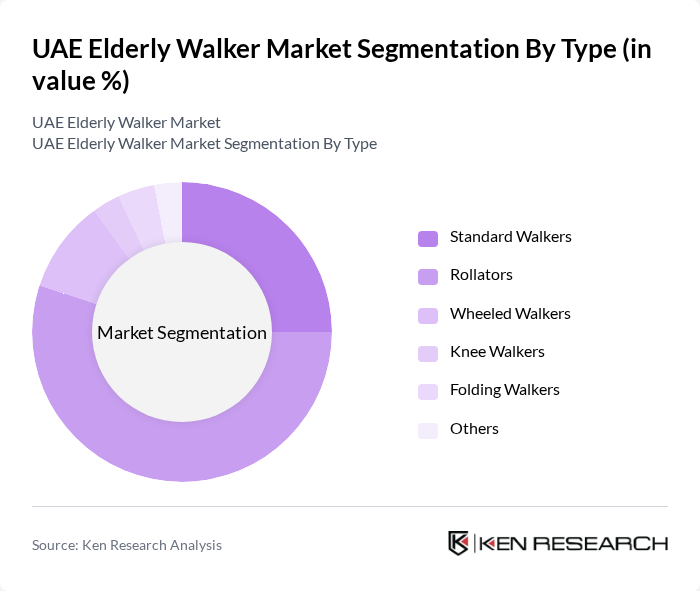
By Type:The market is segmented into various types of walkers, including Standard Walkers, Rollators, Wheeled Walkers, Knee Walkers, Folding Walkers, and Others. Rollators are gaining significant popularity due to their enhanced stability, integrated braking systems, and ease of use, making them a preferred choice for many elderly users. The demand for Standard Walkers remains strong owing to their simplicity and affordability, while Wheeled Walkers are favored for their mobility features. The market is witnessing a shift towards advanced walker types that offer greater support, comfort, and user-friendly features such as adjustable frames and lightweight materials .
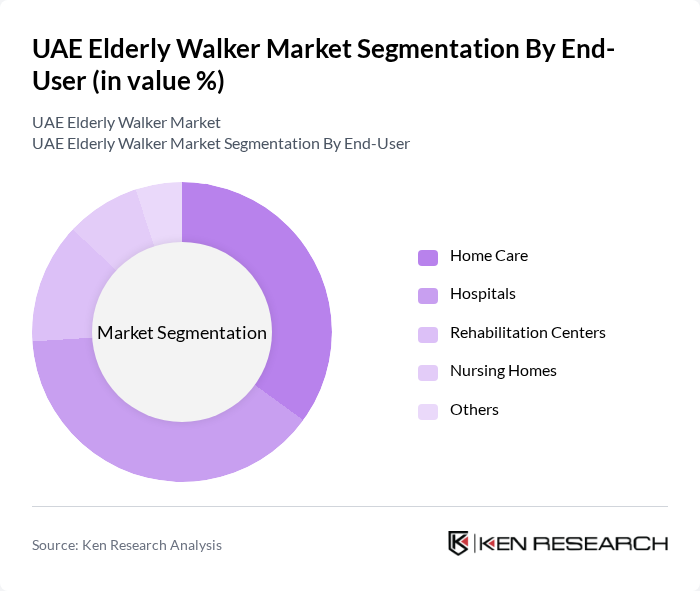
By End-User:The market is segmented based on end-users, including Home Care, Hospitals, Rehabilitation Centers, Nursing Homes, and Others. Hospitals represent the leading segment, driven by the high volume of elderly patients requiring mobility support during post-surgical recovery and rehabilitation. Home Care is experiencing rapid growth due to the increasing preference for aging-in-place and the expansion of home healthcare services. Rehabilitation Centers and Nursing Homes also contribute significantly, as these facilities require a range of mobility aids to support patient independence and recovery .
The UAE Elderly Walker Market is characterized by a dynamic mix of regional and international players. Leading participants such as Sunrise Medical, Invacare Corporation, Drive DeVilbiss Healthcare, Medline Industries, Karman Healthcare, Nova Medical Products, TGA Mobility, Access Mobility, Rollz International, Rehamo, Carex Health Brands, Essential Medical Supply, Meyra GmbH, Homecare Medical, and ProBasics contribute to innovation, geographic expansion, and service delivery in this space.
The future of the UAE elderly walker market appears promising, driven by demographic shifts and technological advancements. As the elderly population continues to grow, the demand for innovative mobility solutions will likely increase. Additionally, the integration of smart technology into walkers is expected to enhance user experience and safety. With government support and rising awareness, the market is set to evolve, addressing the needs of a diverse elderly population while overcoming existing challenges in accessibility and affordability.
| Segment | Sub-Segments |
|---|---|
| By Type | Standard Walkers Rollators Wheeled Walkers Knee Walkers Folding Walkers Others |
| By End-User | Home Care Hospitals Rehabilitation Centers Nursing Homes Others |
| By Age Group | 70 Years 80 Years Years and Above Others |
| By Material | Aluminum Steel Plastic Others |
| By Distribution Channel | Brick and Mortar Retail E-commerce/Online Retail Direct Sales Others |
| By Price Range | Budget Mid-Range Premium Others |
| By Brand Preference | Local Brands International Brands Generic Brands Others |
| Scope Item/Segment | Sample Size | Target Respondent Profiles |
|---|---|---|
| Elderly Walker Users | 60 | Senior Citizens, Caregivers |
| Healthcare Professionals | 40 | Physiotherapists, Geriatricians |
| Rehabilitation Centers | 40 | Rehabilitation Specialists, Center Administrators |
| Mobility Aid Retailers | 40 | Store Managers, Sales Representatives |
| Government Health Officials | 40 | Policy Makers, Health Program Coordinators |
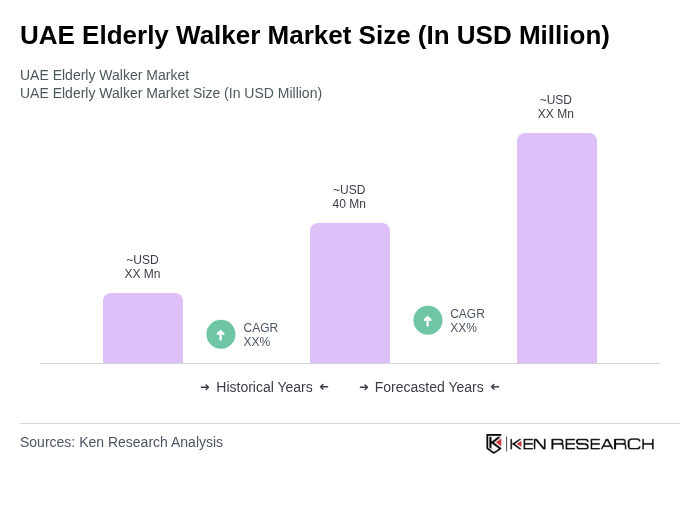
The UAE Elderly Walker Market is valued at approximately USD 40 million, driven by factors such as an increasing elderly population, rising mobility-related disorders, and advancements in walker technology that enhance user comfort and safety.

What makes us stand out is that our consultants follow Robust, Refine and Result (RRR) methodology. Robust for clear definitions, approaches and sanity checking, Refine for differentiating respondents' facts and opinions, and Result for presenting data with story.

We have set a benchmark in the industry by offering our clients with syndicated and customized market research reports featuring coverage of entire market as well as meticulous research and analyst insights.

While we don't replace traditional research, we flip the method upside down. Our dual approach of Top Bottom & Bottom Top ensures quality deliverable by not just verifying company fundamentals but also looking at the sector and macroeconomic factors.

With one step in the future, our research team constantly tries to show you the bigger picture. We help with some of the tough questions you may encounter along the way: How is the industry positioned? Best marketing channel? KPI's of competitors? By aligning every element, we help maximize success.

Our report gives you instant access to the answers and sources that other companies might choose to hide. We elaborate each steps of research methodology we have used and showcase you the sample size to earn your trust.

If you need any support, we are here! We pride ourselves on universe strength, data quality, and quick, friendly, and professional service.













