Region:Middle East
Author(s):Dev
Product Code:KRAC8842
Pages:96
Published On:November 2025
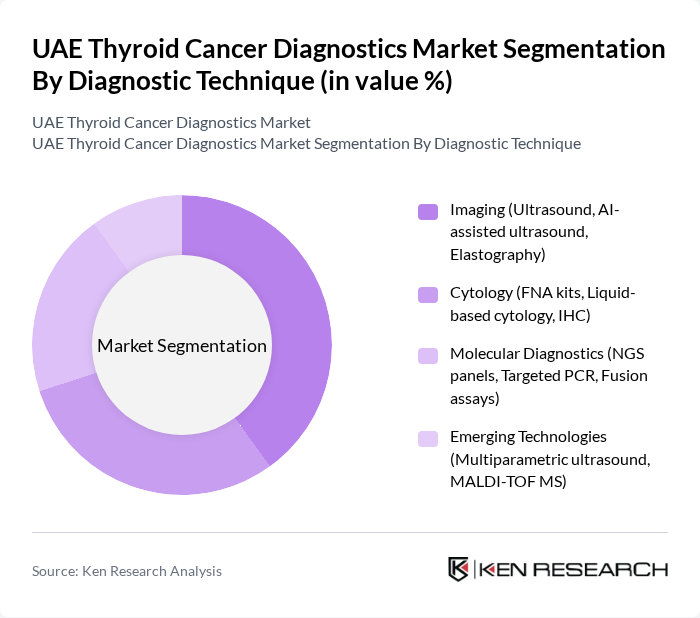
By Diagnostic Technique:The diagnostic techniques segment includes various methods used to identify thyroid cancer, such as imaging, cytology, molecular diagnostics, and emerging technologies. Imaging techniques like ultrasound and AI-assisted ultrasound are gaining traction due to their non-invasive nature and accuracy. Cytology methods, including fine-needle aspiration (FNA) kits and liquid-based cytology, are widely used for their reliability in diagnosing thyroid nodules. Molecular diagnostics, particularly next-generation sequencing (NGS) panels and targeted PCR, are becoming increasingly important for personalized treatment approaches. Emerging technologies, such as multiparametric ultrasound and MALDI-TOF mass spectrometry, are also being explored for their potential to enhance diagnostic accuracy .
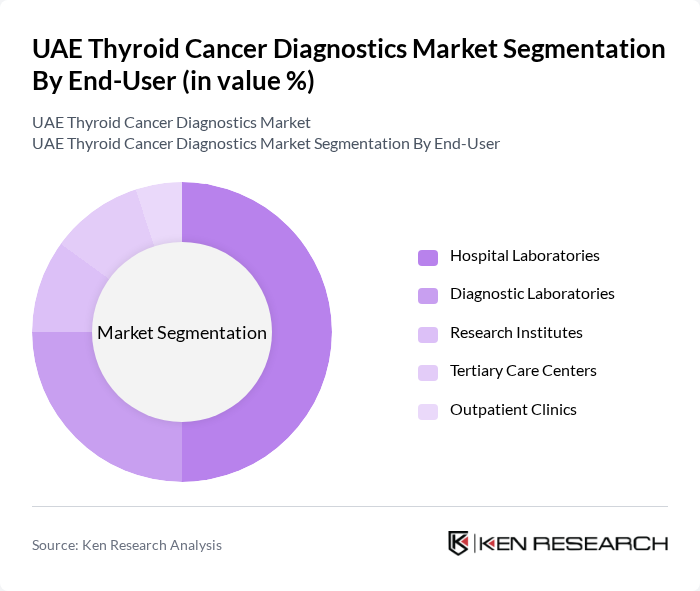
By End-User:The end-user segment encompasses various healthcare settings where thyroid cancer diagnostics are performed. Hospital laboratories are the primary users due to their comprehensive facilities and access to advanced diagnostic tools. Diagnostic laboratories also play a significant role, providing specialized testing services. Research institutes contribute to the development of new diagnostic methods, while tertiary care centers and outpatient clinics offer essential services for patient management. The increasing collaboration between these entities is enhancing the overall diagnostic landscape .
The UAE Thyroid Cancer Diagnostics Market is characterized by a dynamic mix of regional and international players. Leading participants such as Siemens Healthineers AG, F. Hoffmann-La Roche Ltd., Abbott Laboratories, GE HealthCare Technologies, Koninklijke Philips N.V., Thermo Fisher Scientific Inc., Bio-Rad Laboratories Inc., Illumina Inc., Agilent Technologies Inc., Hologic Inc., Toshiba Corporation (Medical Systems Division), Regional NGS Reference Laboratories (Send-out partners) contribute to innovation, geographic expansion, and service delivery in this space.
The future of the UAE thyroid cancer diagnostics market appears promising, driven by technological advancements and a growing emphasis on preventive healthcare. As the healthcare infrastructure expands, particularly in underserved areas, access to diagnostic services is expected to improve. Additionally, the integration of artificial intelligence in diagnostic processes is anticipated to enhance accuracy and efficiency, further supporting early detection efforts. These trends indicate a robust growth trajectory for the market in the coming years.
| Segment | Sub-Segments |
|---|---|
| By Diagnostic Technique | Imaging (Ultrasound, AI-assisted ultrasound, Elastography) Cytology (FNA kits, Liquid-based cytology, IHC) Molecular Diagnostics (NGS panels, Targeted PCR, Fusion assays) Emerging Technologies (Multiparametric ultrasound, MALDI-TOF MS) |
| By End-User | Hospital Laboratories Diagnostic Laboratories Research Institutes Tertiary Care Centers Outpatient Clinics |
| By Cancer Type | Papillary Thyroid Cancer Follicular Thyroid Cancer Medullary Thyroid Cancer Anaplastic Thyroid Cancer Thyroid Lymphoma |
| By Gender Demographics | Female (Higher prevalence at ~13.6/100,000 ASR) Male (Lower prevalence at ~1.9/100,000 ASR) |
| By Geographic Region | Abu Dhabi Dubai Sharjah Ajman Other Emirates |
| By Mutation Profile | BRAF V600E Mutation Testing RET/NTRK Fusion Detection Other Genetic Markers |
| Scope Item/Segment | Sample Size | Target Respondent Profiles |
|---|---|---|
| Oncologists and Endocrinologists | 50 | Medical Doctors specializing in thyroid cancer |
| Laboratory Managers | 40 | Professionals overseeing diagnostic testing facilities |
| Healthcare Policy Makers | 40 | Government officials involved in health regulations |
| Thyroid Cancer Patients | 60 | Individuals diagnosed with thyroid cancer |
| Healthcare Consultants | 40 | Experts providing insights on healthcare market trends |
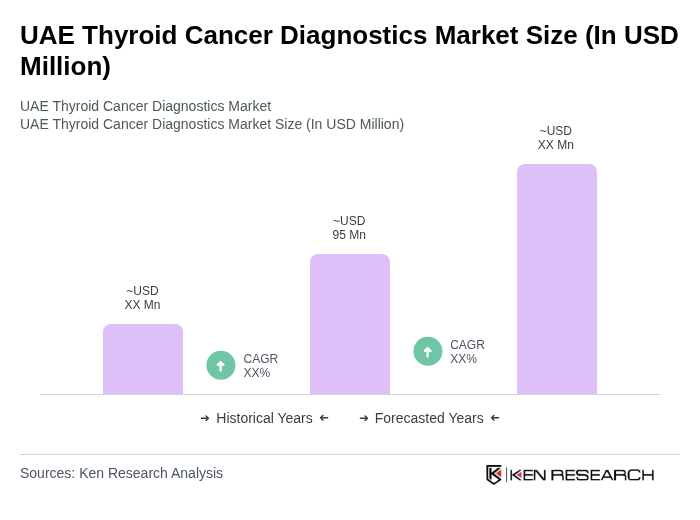
The UAE Thyroid Cancer Diagnostics Market is valued at approximately USD 95 million, reflecting a significant growth trend driven by increased awareness of thyroid disorders and advancements in diagnostic technologies.

What makes us stand out is that our consultants follow Robust, Refine and Result (RRR) methodology. Robust for clear definitions, approaches and sanity checking, Refine for differentiating respondents' facts and opinions, and Result for presenting data with story.

We have set a benchmark in the industry by offering our clients with syndicated and customized market research reports featuring coverage of entire market as well as meticulous research and analyst insights.

While we don't replace traditional research, we flip the method upside down. Our dual approach of Top Bottom & Bottom Top ensures quality deliverable by not just verifying company fundamentals but also looking at the sector and macroeconomic factors.

With one step in the future, our research team constantly tries to show you the bigger picture. We help with some of the tough questions you may encounter along the way: How is the industry positioned? Best marketing channel? KPI's of competitors? By aligning every element, we help maximize success.

Our report gives you instant access to the answers and sources that other companies might choose to hide. We elaborate each steps of research methodology we have used and showcase you the sample size to earn your trust.

If you need any support, we are here! We pride ourselves on universe strength, data quality, and quick, friendly, and professional service.













