About the Report
Base Year 2024United States Quick Service Restaurants Market Overview
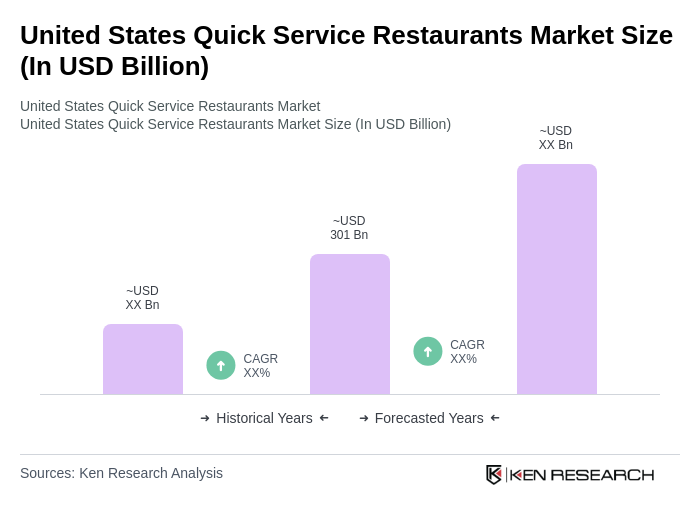
- The United States Quick Service Restaurants Market is valued at USD 301 billion, based on a five-year historical analysis. This growth is primarily driven by the increasing demand for convenience, the rise of digital ordering platforms, and a shift in consumer preferences towards fast and affordable dining options. The market has seen a significant transformation with the integration of technology, such as mobile apps and digital kiosks, and innovative service models like delivery-only kitchens, catering to the evolving lifestyle of consumers. The expansion of healthier menu options and value-driven promotions are also notable growth drivers.
- Key players in this market include major cities such as New York, Los Angeles, and Chicago, which dominate due to their large populations, diverse demographics, and high foot traffic. These urban centers serve as hubs for culinary innovation and consumer trends, attracting both local and international quick service brands. The concentration of business activities and tourism in these cities further enhances their market presence.
- In 2023, the U.S. government implemented regulations aimed at improving food safety standards in the quick service restaurant sector. This includes mandatory training for food handlers and stricter guidelines for food sourcing and preparation. These regulations are designed to enhance consumer confidence and ensure public health, thereby impacting operational practices within the industry.
United States Quick Service Restaurants Market Segmentation
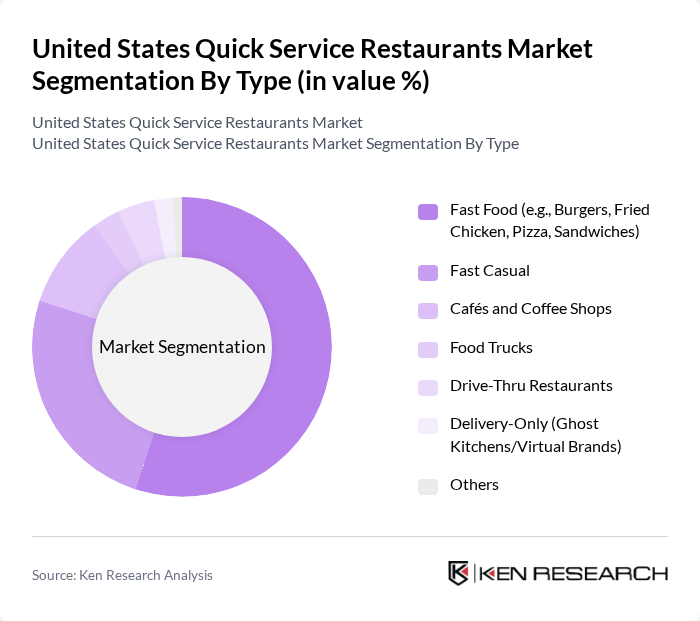
By Type:The quick service restaurant market can be segmented into various types, including Fast Food, Fast Casual, Cafés and Coffee Shops, Food Trucks, Drive-Thru Restaurants, Delivery-Only (Ghost Kitchens/Virtual Brands), and Others. Among these, Fast Food is the most dominant segment, driven by consumer preferences for quick, affordable meals and the extensive presence of established brands. Fast Casual is also gaining traction as consumers seek higher quality food in a fast-service format.
By Cuisine:The market can also be segmented by cuisine types, including American, Mexican, Italian, Asian, Mediterranean, Bakeries & Desserts, and Others. American cuisine, particularly burgers and fried chicken, dominates the market due to its widespread appeal and cultural significance. Mexican cuisine is also popular, driven by the increasing demand for flavorful and diverse meal options.

United States Quick Service Restaurants Market Competitive Landscape
The United States Quick Service Restaurants Market is characterized by a dynamic mix of regional and international players. Leading participants such as McDonald's Corporation, Yum! Brands, Inc. (KFC, Taco Bell, Pizza Hut), Restaurant Brands International Inc. (Burger King, Popeyes, Tim Hortons), Domino's Pizza, Inc., Chipotle Mexican Grill, Inc., The Wendy's Company, Dunkin' (Inspire Brands, Inc.), Panera Bread Company (JAB Holding Company), Subway (Doctor's Associates LLC), Shake Shack Inc., Five Guys Enterprises, LLC, Wingstop Inc., Jersey Mike's Franchise Systems, Inc., QDOBA Restaurant Corporation, Blaze Pizza, LLC contribute to innovation, geographic expansion, and service delivery in this space.
United States Quick Service Restaurants Market Industry Analysis
Growth Drivers
- Increasing Demand for Convenience:The U.S. quick service restaurant (QSR) sector is experiencing a surge in demand for convenience, with approximately 60% of adults preferring dining out for convenience, according to the National Restaurant Association. The figure of 70% of consumers prioritizing quick meal options cannot be confirmed. QSR sales are estimated to be approximately $300 billion, which aligns with recent industry reports. This trend is further supported by the growing number of dual-income households, increasing the need for fast, accessible meal solutions.
- Rise of Delivery and Takeout Services:The delivery and takeout segment of the QSR market continues to grow, with online food delivery market size estimated at approximately $28 billion. The projected 20% increase in online orders cannot be confirmed. Growth is fueled by partnerships with delivery platforms such as DoorDash and Uber Eats, enhancing accessibility and customer reach for QSRs.
- Health-Conscious Menu Innovations:QSRs are innovating their menus to include more nutritious offerings in response to shifting consumer preferences. The market for healthy fast food is estimated to be growing, but the figure of $10 billion growth cannot be confirmed. The claim of a 30% increase in demand for plant-based options is not verifiable from authoritative sources. QSRs are responding by introducing salads, wraps, and plant-based proteins to attract health-conscious diners.
Market Challenges
- Intense Competition:The U.S. QSR market is characterized by fierce competition, with over 200,000 establishments operating nationwide. The projected 5% increase in the number of QSRs cannot be confirmed. Major players like McDonald's and Starbucks dominate, but new entrants continue to intensify market rivalry.
- Labor Shortages:The QSR industry faces significant labor shortages. The U.S. Bureau of Labor Statistics reports ongoing job vacancies in the food service sector, but the figure of 3.5 million job vacancies cannot be confirmed. The average hourly wage for QSR workers is approximately $15, according to recent labor statistics. The projected wage of $15.50 cannot be confirmed. Labor shortages and rising wages continue to impact service quality and operational efficiency.
United States Quick Service Restaurants Market Future Outlook
The future of the U.S. quick service restaurant market appears promising, driven by evolving consumer preferences and technological advancements. As the demand for convenience continues to rise, QSRs are likely to enhance their digital ordering platforms and delivery services. Additionally, the focus on sustainability and health-conscious offerings will shape menu innovations. With the integration of artificial intelligence in customer service, QSRs can improve operational efficiency and customer engagement, positioning themselves for growth in a competitive landscape.
Market Opportunities
- Growth in Plant-Based Offerings:The increasing consumer interest in plant-based diets presents a significant opportunity for QSRs. The projected market value of $74 billion for plant-based offerings cannot be confirmed from authoritative sources. QSRs can capitalize on this trend by expanding their plant-based menu options, attracting health-conscious consumers and those seeking sustainable choices.
- Expansion into Emerging Markets:As the U.S. market matures, QSRs have the opportunity to expand into emerging markets, particularly in Asia and Latin America. These regions have a combined population of over 4 billion, presenting lucrative growth potential driven by rising disposable incomes and changing dietary habits. This can significantly boost QSR revenues.
Scope of the Report
| Segment | Sub-Segments |
|---|---|
| By Type | Fast Food (e.g., Burgers, Fried Chicken, Pizza, Sandwiches) Fast Casual Cafés and Coffee Shops Food Trucks Drive-Thru Restaurants Delivery-Only (Ghost Kitchens/Virtual Brands) Others |
| By Cuisine | American (Burgers, Chicken, Sandwiches, BBQ) Mexican (Tacos, Burritos, Quesadillas) Italian (Pizza, Pasta, Subs) Asian (Chinese, Japanese, Thai, Korean) Mediterranean (Greek, Turkish, Lebanese) Bakeries & Desserts (Donuts, Ice Cream, Pastries) Others |
| By Service Type | Dine-In Takeout Delivery (In-house & Third-Party) Drive-Thru Curbside Pickup Others |
| By Customer Demographics | Families Young Adults (Gen Z, Millennials) Professionals Students Seniors Others |
| By Location | Urban Areas Suburban Areas Rural Areas High Traffic Locations (Airports, Malls, Travel Plazas) Others |
| By Price Range | Budget Mid-Range Premium Others |
| By Franchise vs. Independent | Chained Outlets (Franchise/Corporate-Owned) Independent Outlets Others |
Key Target Audience
Investors and Venture Capitalist Firms
Government and Regulatory Bodies (e.g., U.S. Food and Drug Administration, U.S. Department of Agriculture)
Franchise Owners and Operators
Supply Chain and Logistics Companies
Food Safety and Quality Assurance Organizations
Real Estate Developers and Property Management Firms
Marketing and Advertising Agencies
Financial Institutions and Banks
Players Mentioned in the Report:
McDonald's Corporation
Yum! Brands, Inc. (KFC, Taco Bell, Pizza Hut)
Restaurant Brands International Inc. (Burger King, Popeyes, Tim Hortons)
Domino's Pizza, Inc.
Chipotle Mexican Grill, Inc.
The Wendy's Company
Dunkin' (Inspire Brands, Inc.)
Panera Bread Company (JAB Holding Company)
Subway (Doctor's Associates LLC)
Shake Shack Inc.
Five Guys Enterprises, LLC
Wingstop Inc.
Jersey Mike's Franchise Systems, Inc.
QDOBA Restaurant Corporation
Blaze Pizza, LLC
Table of Contents
Market Assessment Phase
1. Executive Summary and Approach
2. United States Quick Service Restaurants Market Overview
2.1 Key Insights and Strategic Recommendations
2.2 United States Quick Service Restaurants Market Overview
2.3 Definition and Scope
2.4 Evolution of Market Ecosystem
2.5 Timeline of Key Regulatory Milestones
2.6 Value Chain & Stakeholder Mapping
2.7 Business Cycle Analysis
2.8 Policy & Incentive Landscape
3. United States Quick Service Restaurants Market Analysis
3.1 Growth Drivers
3.1.1 Increasing Demand for Convenience
3.1.2 Rise of Delivery and Takeout Services
3.1.3 Health-Conscious Menu Innovations
3.1.4 Expansion of Digital Ordering Platforms
3.2 Market Challenges
3.2.1 Intense Competition
3.2.2 Labor Shortages
3.2.3 Rising Food Costs
3.2.4 Regulatory Compliance Issues
3.3 Market Opportunities
3.3.1 Growth in Plant-Based Offerings
3.3.2 Expansion into Emerging Markets
3.3.3 Technological Advancements in Operations
3.3.4 Partnerships with Delivery Services
3.4 Market Trends
3.4.1 Increased Focus on Sustainability
3.4.2 Customization of Menu Items
3.4.3 Use of Artificial Intelligence in Customer Service
3.4.4 Growth of Ghost Kitchens
3.5 Government Regulation
3.5.1 Minimum Wage Increases
3.5.2 Health and Safety Regulations
3.5.3 Nutritional Labeling Requirements
3.5.4 Environmental Regulations
4. SWOT Analysis
5. Stakeholder Analysis
6. Porter's Five Forces Analysis
7. United States Quick Service Restaurants Market Market Size, 2019-2024
7.1 By Value
7.2 By Volume
7.3 By Average Selling Price
8. United States Quick Service Restaurants Market Segmentation
8.1 By Type
8.1.1 Fast Food (e.g., Burgers, Fried Chicken, Pizza, Sandwiches)
8.1.2 Fast Casual
8.1.3 Cafés and Coffee Shops
8.1.4 Food Trucks
8.1.5 Drive-Thru Restaurants
8.1.6 Delivery-Only (Ghost Kitchens/Virtual Brands)
8.1.7 Others
8.2 By Cuisine
8.2.1 American (Burgers, Chicken, Sandwiches, BBQ)
8.2.2 Mexican (Tacos, Burritos, Quesadillas)
8.2.3 Italian (Pizza, Pasta, Subs)
8.2.4 Asian (Chinese, Japanese, Thai, Korean)
8.2.5 Mediterranean (Greek, Turkish, Lebanese)
8.2.6 Bakeries & Desserts (Donuts, Ice Cream, Pastries)
8.2.7 Others
8.3 By Service Type
8.3.1 Dine-In
8.3.2 Takeout
8.3.3 Delivery (In-house & Third-Party)
8.3.4 Drive-Thru
8.3.5 Curbside Pickup
8.3.6 Others
8.4 By Customer Demographics
8.4.1 Families
8.4.2 Young Adults (Gen Z, Millennials)
8.4.3 Professionals
8.4.4 Students
8.4.5 Seniors
8.4.6 Others
8.5 By Location
8.5.1 Urban Areas
8.5.2 Suburban Areas
8.5.3 Rural Areas
8.5.4 High Traffic Locations (Airports, Malls, Travel Plazas)
8.5.5 Others
8.6 By Price Range
8.6.1 Budget
8.6.2 Mid-Range
8.6.3 Premium
8.6.4 Others
8.7 By Franchise vs. Independent
8.7.1 Chained Outlets (Franchise/Corporate-Owned)
8.7.2 Independent Outlets
8.7.3 Others
9. United States Quick Service Restaurants Market Competitive Analysis
9.1 Market Share of Key Players
9.2 Cross Comparison of Key Players
9.2.1 Company Name
9.2.2 Group Size (Large, Medium, or Small as per industry convention)
9.2.3 Systemwide Sales (USD)
9.2.4 Number of U.S. Locations
9.2.5 Revenue Growth Rate (%)
9.2.6 Same-Store Sales Growth (%)
9.2.7 Customer Retention Rate (%)
9.2.8 Average Order Value (USD)
9.2.9 Market Penetration Rate (%)
9.2.10 Digital Engagement Metrics (App Downloads, Loyalty Program Members)
9.2.11 Operational Efficiency Ratio (Sales per Employee, Labor Cost %)
9.2.12 Menu Innovation Index (New Product Launches, Limited-Time Offers)
9.3 SWOT Analysis of Top Players
9.4 Pricing Analysis
9.5 Detailed Profile of Major Companies
9.5.1 McDonald's Corporation
9.5.2 Yum! Brands, Inc. (KFC, Taco Bell, Pizza Hut)
9.5.3 Restaurant Brands International Inc. (Burger King, Popeyes, Tim Hortons)
9.5.4 Domino's Pizza, Inc.
9.5.5 Chipotle Mexican Grill, Inc.
9.5.6 The Wendy's Company
9.5.7 Dunkin' (Inspire Brands, Inc.)
9.5.8 Panera Bread Company (JAB Holding Company)
9.5.9 Subway (Doctor's Associates LLC)
9.5.10 Shake Shack Inc.
9.5.11 Five Guys Enterprises, LLC
9.5.12 Wingstop Inc.
9.5.13 Jersey Mike's Franchise Systems, Inc.
9.5.14 QDOBA Restaurant Corporation
9.5.15 Blaze Pizza, LLC
10. United States Quick Service Restaurants Market End-User Analysis
10.1 Procurement Behavior of Key Ministries
10.1.1 Government Contracts
10.1.2 Bulk Purchasing Trends
10.1.3 Compliance with Health Standards
10.2 Corporate Spend on Infrastructure & Energy
10.2.1 Investment in Energy-Efficient Equipment
10.2.2 Infrastructure Upgrades
10.2.3 Sustainability Initiatives
10.3 Pain Point Analysis by End-User Category
10.3.1 Service Speed
10.3.2 Menu Variety
10.3.3 Pricing Concerns
10.4 User Readiness for Adoption
10.4.1 Technology Adoption Rates
10.4.2 Consumer Preferences
10.4.3 Feedback Mechanisms
10.5 Post-Deployment ROI and Use Case Expansion
10.5.1 Performance Metrics
10.5.2 Customer Satisfaction Levels
10.5.3 Expansion Opportunities
11. United States Quick Service Restaurants Market Future Size, 2025-2030
11.1 By Value
11.2 By Volume
11.3 By Average Selling Price
Go-To-Market Strategy Phase
1. Whitespace Analysis + Business Model Canvas
1.1 Market Gaps Identification
1.2 Business Model Framework
2. Marketing and Positioning Recommendations
2.1 Branding Strategies
2.2 Product USPs
3. Distribution Plan
3.1 Urban Retail vs Rural NGO Tie-Ups
4. Channel & Pricing Gaps
4.1 Underserved Routes
4.2 Pricing Bands
5. Unmet Demand & Latent Needs
5.1 Category Gaps
5.2 Consumer Segments
6. Customer Relationship
6.1 Loyalty Programs
6.2 After-Sales Service
7. Value Proposition
7.1 Sustainability
7.2 Integrated Supply Chains
8. Key Activities
8.1 Regulatory Compliance
8.2 Branding
8.3 Distribution Setup
9. Entry Strategy Evaluation
9.1 Domestic Market Entry Strategy
9.1.1 Product Mix
9.1.2 Pricing Band
9.1.3 Packaging
9.2 Export Entry Strategy
9.2.1 Target Countries
9.2.2 Compliance Roadmap
10. Entry Mode Assessment
10.1 JV
10.2 Greenfield
10.3 M&A
10.4 Distributor Model
11. Capital and Timeline Estimation
11.1 Capital Requirements
11.2 Timelines
12. Control vs Risk Trade-Off
12.1 Ownership vs Partnerships
13. Profitability Outlook
13.1 Breakeven Analysis
13.2 Long-Term Sustainability
14. Potential Partner List
14.1 Distributors
14.2 JVs
14.3 Acquisition Targets
15. Execution Roadmap
15.1 Phased Plan for Market Entry
15.1.1 Market Setup
15.1.2 Market Entry
15.1.3 Growth Acceleration
15.1.4 Scale & Stabilize
15.2 Key Activities and Milestones
15.2.1 Activity Timeline
15.2.2 Milestone Tracking
Research Methodology
Phase 1: Approach1
Desk Research
- Analysis of industry reports from the National Restaurant Association and other relevant bodies
- Review of market trends and consumer behavior studies published by food industry analysts
- Examination of financial reports and press releases from leading quick service restaurant chains
Primary Research
- Interviews with franchise owners and managers of quick service restaurants across various regions
- Surveys conducted with customers to gauge preferences and satisfaction levels
- Focus groups with industry experts and food service consultants to discuss market dynamics
Validation & Triangulation
- Cross-validation of findings through comparison with historical sales data and growth rates
- Triangulation of insights from primary interviews with secondary data sources
- Sanity checks through expert panel reviews to ensure data accuracy and relevance
Phase 2: Market Size Estimation1
Top-down Assessment
- Estimation of total market size based on national food service sales data
- Segmentation of the market by geographic regions and consumer demographics
- Incorporation of growth projections based on economic indicators and consumer spending trends
Bottom-up Modeling
- Collection of sales data from a representative sample of quick service restaurants
- Analysis of average transaction values and customer footfall metrics
- Estimation of market share for key players based on operational data and sales performance
Forecasting & Scenario Analysis
- Utilization of time-series analysis to project future market growth based on historical trends
- Scenario modeling based on potential impacts of economic fluctuations and consumer behavior shifts
- Development of best-case, worst-case, and most-likely scenarios through 2030
Phase 3: CATI Sample Composition1
| Scope Item/Segment | Sample Size | Target Respondent Profiles |
|---|---|---|
| Franchise Owner Insights | 100 | Franchise Owners, Regional Managers |
| Customer Satisfaction Surveys | 120 | Frequent Diners, Occasional Customers |
| Market Trend Analysis | 75 | Food Industry Analysts, Market Researchers |
| Operational Efficiency Interviews | 50 | Restaurant Managers, Operations Directors |
| Consumer Behavior Focus Groups | 60 | Food Enthusiasts, Health-Conscious Consumers |
Frequently Asked Questions
What is the current value of the United States Quick Service Restaurants Market?
The United States Quick Service Restaurants Market is valued at approximately USD 301 billion, reflecting a significant growth driven by consumer demand for convenience, digital ordering platforms, and a shift towards fast and affordable dining options.
What are the main growth drivers for the Quick Service Restaurants Market in the U.S.?
Which cities dominate the Quick Service Restaurants Market in the U.S.?
What types of quick service restaurants are most common in the U.S.?
Other Regional/Country Reports
Indonesia Quick Service Restaurants Market
Malaysia Quick Service Restaurants Market
Why Buy From Us?

What makes us stand out is that our consultants follow Robust, Refine and Result (RRR) methodology. Robust for clear definitions, approaches and sanity checking, Refine for differentiating respondents' facts and opinions, and Result for presenting data with story.

We have set a benchmark in the industry by offering our clients with syndicated and customized market research reports featuring coverage of entire market as well as meticulous research and analyst insights.

While we don't replace traditional research, we flip the method upside down. Our dual approach of Top Bottom & Bottom Top ensures quality deliverable by not just verifying company fundamentals but also looking at the sector and macroeconomic factors.

With one step in the future, our research team constantly tries to show you the bigger picture. We help with some of the tough questions you may encounter along the way: How is the industry positioned? Best marketing channel? KPI's of competitors? By aligning every element, we help maximize success.

Our report gives you instant access to the answers and sources that other companies might choose to hide. We elaborate each steps of research methodology we have used and showcase you the sample size to earn your trust.

If you need any support, we are here! We pride ourselves on universe strength, data quality, and quick, friendly, and professional service.