Region:North America
Author(s):Dev
Product Code:KRAC8724
Pages:82
Published On:November 2025
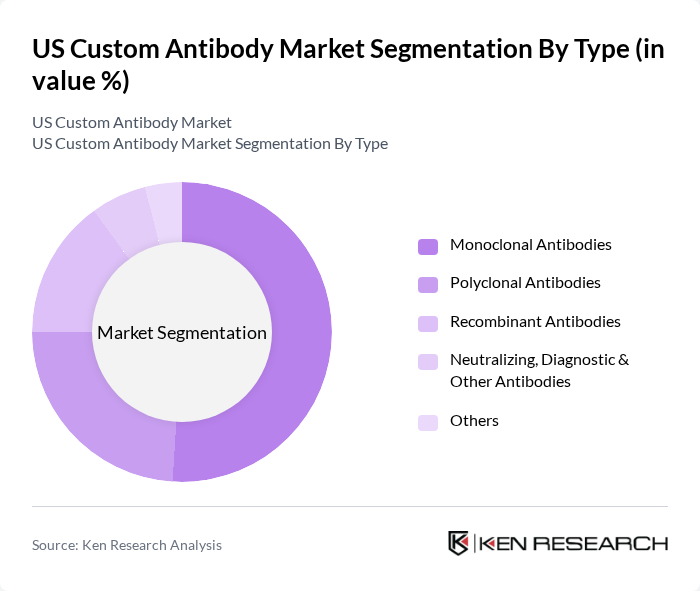
By Type:The custom antibody market is segmented into Monoclonal Antibodies, Polyclonal Antibodies, Recombinant Antibodies, Neutralizing, Diagnostic & Other Antibodies, and Others. Monoclonal antibodies are particularly dominant due to their high specificity and effectiveness in targeting disease-related proteins, making them the preferred choice for therapeutic and diagnostic applications. Polyclonal antibodies remain widely used in research settings for their ability to recognize multiple epitopes. The demand for recombinant antibodies is increasing, driven by their advantages in consistency, reproducibility, and suitability for advanced research and clinical applications .
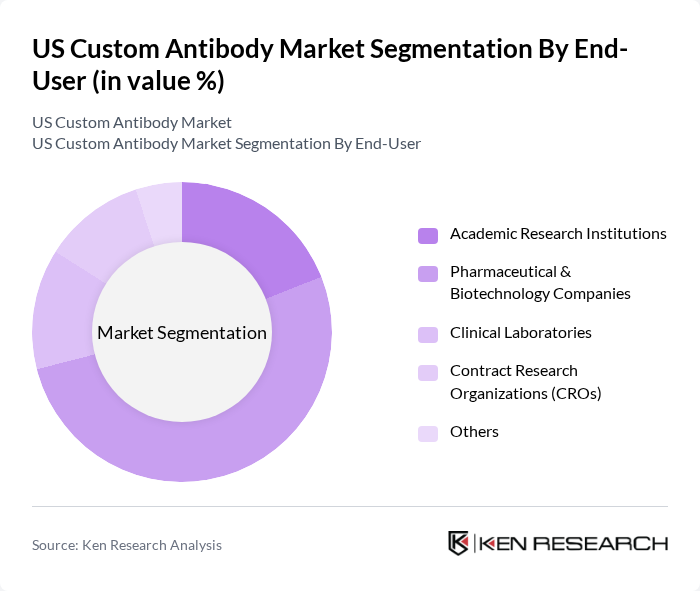
By End-User:The market is further segmented by end-users, including Academic Research Institutions, Pharmaceutical & Biotechnology Companies, Clinical Laboratories, Contract Research Organizations (CROs), and Others. Pharmaceutical and biotechnology companies are the leading end-users, driven by their need for custom antibodies in drug discovery, targeted therapy development, and clinical trials. Academic research institutions also play a significant role, utilizing custom antibodies for basic and translational research. Clinical laboratories and CROs are increasingly adopting custom antibodies for diagnostic purposes and outsourced research services .
The US Custom Antibody Market is characterized by a dynamic mix of regional and international players. Leading participants such as Abcam plc, Thermo Fisher Scientific Inc., GenScript Biotech Corporation, Bio-Rad Laboratories, Inc., Merck KGaA (MilliporeSigma in US), Sigma-Aldrich Corporation (now part of Merck KGaA/MilliporeSigma), Santa Cruz Biotechnology, Inc., Cell Signaling Technology, Inc., R&D Systems, Inc. (a Bio-Techne brand), Rockland Immunochemicals, Inc., Creative Biolabs, ProSci Inc., Antibody Solutions, Absolute Antibody Ltd., Sino Biological, Inc. contribute to innovation, geographic expansion, and service delivery in this space.
The US custom antibody market is poised for significant evolution, driven by technological advancements and increasing healthcare demands. The integration of artificial intelligence in antibody design is expected to streamline development processes, enhancing efficiency and reducing costs. Additionally, the focus on sustainable production methods will likely gain traction, aligning with global environmental goals. As the market adapts to these trends, it will foster innovation and collaboration, particularly in biopharmaceuticals and personalized medicine, ensuring a dynamic future landscape.
| Segment | Sub-Segments |
|---|---|
| By Type | Monoclonal Antibodies Polyclonal Antibodies Recombinant Antibodies Neutralizing, Diagnostic & Other Antibodies Others |
| By End-User | Academic Research Institutions Pharmaceutical & Biotechnology Companies Clinical Laboratories Contract Research Organizations (CROs) Others |
| By Application | Diagnostics Therapeutics Research and Development Oncology Infectious Diseases Neurology Immunology Cardiovascular Diseases Others |
| By Source | Animal-Derived Antibodies (e.g., Rabbit, Mouse, Goat) Human-Derived Antibodies Synthetic Antibodies Others |
| By Production Method | Hybridoma Technology Phage Display Technology Transgenic Animals Fragmentation & Labeling Others |
| By Region | Northeast Midwest South West |
| By Customer Type | Government Agencies Private Sector Non-Profit Organizations Others |
| Scope Item/Segment | Sample Size | Target Respondent Profiles |
|---|---|---|
| Biotechnology Firms | 60 | R&D Directors, Product Managers |
| Pharmaceutical Companies | 50 | Procurement Managers, Clinical Research Coordinators |
| Academic Institutions | 40 | Laboratory Managers, Principal Investigators |
| Contract Research Organizations (CROs) | 45 | Project Managers, Business Development Executives |
| Healthcare Providers | 40 | Clinical Lab Directors, Pathologists |
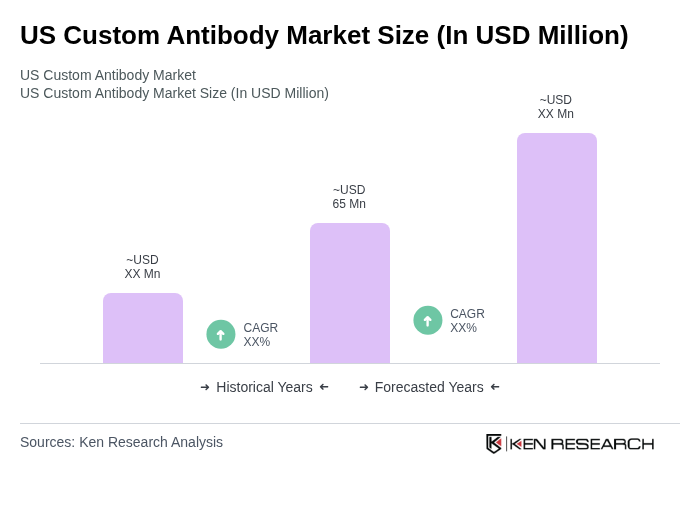
The US Custom Antibody Market is valued at approximately USD 65 million, driven by the increasing demand for personalized medicine, advancements in antibody engineering technologies, and the rising prevalence of chronic diseases such as cancer and autoimmune disorders.

What makes us stand out is that our consultants follow Robust, Refine and Result (RRR) methodology. Robust for clear definitions, approaches and sanity checking, Refine for differentiating respondents' facts and opinions, and Result for presenting data with story.

We have set a benchmark in the industry by offering our clients with syndicated and customized market research reports featuring coverage of entire market as well as meticulous research and analyst insights.

While we don't replace traditional research, we flip the method upside down. Our dual approach of Top Bottom & Bottom Top ensures quality deliverable by not just verifying company fundamentals but also looking at the sector and macroeconomic factors.

With one step in the future, our research team constantly tries to show you the bigger picture. We help with some of the tough questions you may encounter along the way: How is the industry positioned? Best marketing channel? KPI's of competitors? By aligning every element, we help maximize success.

Our report gives you instant access to the answers and sources that other companies might choose to hide. We elaborate each steps of research methodology we have used and showcase you the sample size to earn your trust.

If you need any support, we are here! We pride ourselves on universe strength, data quality, and quick, friendly, and professional service.













