Us External Pacemakers Market Report Size, Share, Growth Drivers, Trends, Opportunities & Forecast 2025–2030

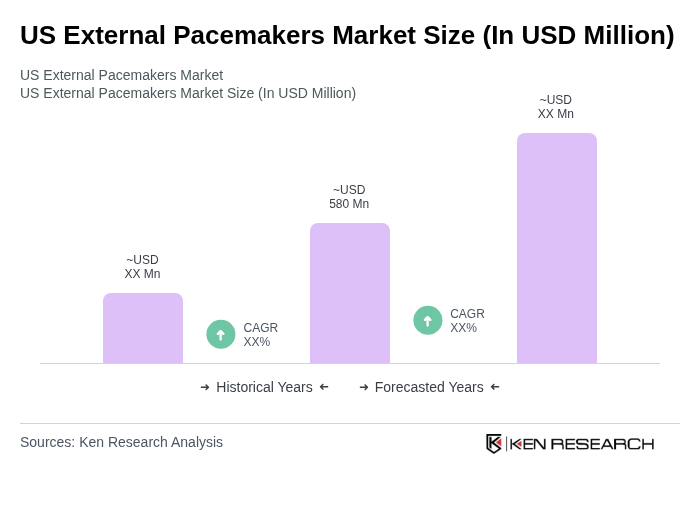
The US External Pacemakers Market, valued at USD 580 million, is driven by increasing cardiac diseases, technological advancements, and a growing geriatric population.

Region:North America

Author(s):Rebecca

Product Code:KRAD5022

Pages:96

Published On:December 2025
About the Report

Base Year 2024

US External Pacemakers Market Overview

  • The US External Pacemakers Market is valued at USD 580 million, based on a five-year historical analysis of national revenue within the broader US pacemakers segment and the reported share of external devices in North America. This growth is primarily driven by the increasing prevalence of cardiac diseases, including arrhythmias and heart block, advancements in cardiac rhythm management technology, and a growing aging population that requires cardiac interventions. The demand for external pacemakers has also increased as healthcare providers focus on early intervention, hemodynamic stabilization in acute settings, and reducing length of hospital stay through efficient temporary pacing strategies.
  • Key demand centers in this market include major metropolitan areas such as New York, Los Angeles, and Chicago, which account for a significant share of procedure volumes due to their advanced tertiary and quaternary care hospitals, high cardiac patient loads, and access to cutting-edge electrophysiology and cardiac surgery programs. These cities are home to leading academic medical centers and research institutions that drive clinical adoption, conduct pivotal trials, and support training on advanced external pacemaker technologies.
  • External pacemakers in the US must comply with stringent safety and performance requirements under the Food, Drug, and Cosmetic Act and associated medical device regulations issued by the US Food and Drug Administration (FDA). In particular, external cardiac pacemakers are subject to the FDA’s Quality System Regulation (21 CFR Part 820) and device-specific standards incorporated through the Premarket Approval (PMA) and 510(k) pathways, which require robust clinical and bench evidence of safety, electromagnetic compatibility, electrical performance, and reliability before marketing authorization. These binding requirements have reinforced consistent device quality, post-market surveillance, and labeling standards, strengthening confidence among clinicians and patients in externally applied pacing systems.
US External Pacemakers Market Size

US External Pacemakers Market Segmentation

By Product Type:The product type segmentation includes various categories of external pacemakers, each designed to cater to specific patient needs and clinical scenarios. The subsegments are Single-chamber External Pacemakers, Dual-chamber External Pacemakers, Biventricular / CRT External Pacemakers, and External Temporary Pacemakers. Dual-chamber External Pacemakers account for a prominent share of usage as they better mimic physiological atrioventricular synchrony and are widely used for managing advanced atrioventricular block and other complex rhythm disorders in intensive care and perioperative settings. Increasing awareness of the hemodynamic benefits of dual-chamber pacing, coupled with improvements in programmability, safety features, and compatibility with monitoring systems, has supported their strong adoption in US hospitals.
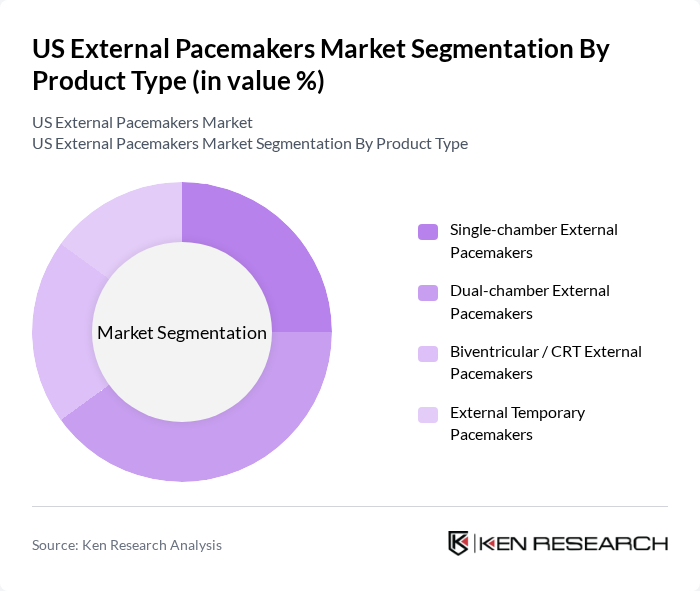
US External Pacemakers Market segmentation by Product Type.

By End-User:The end-user segmentation encompasses various healthcare settings where external pacemakers are utilized, including Hospitals, Ambulatory Surgical Centers, Cardiac Specialty Clinics, and Others. Hospitals dominate this segment due to their comprehensive cardiac care facilities, intensive and coronary care units, and the capability to manage high-acuity cases requiring temporary pacing after cardiac surgery, acute myocardial infarction, or catheter-based interventions. The increasing number of cardiovascular procedures, such as open-heart surgery, structural heart interventions, and complex electrophysiology procedures performed in hospital settings, along with the presence of multidisciplinary cardiac teams, has solidified hospitals as the primary end-user of external pacemakers.
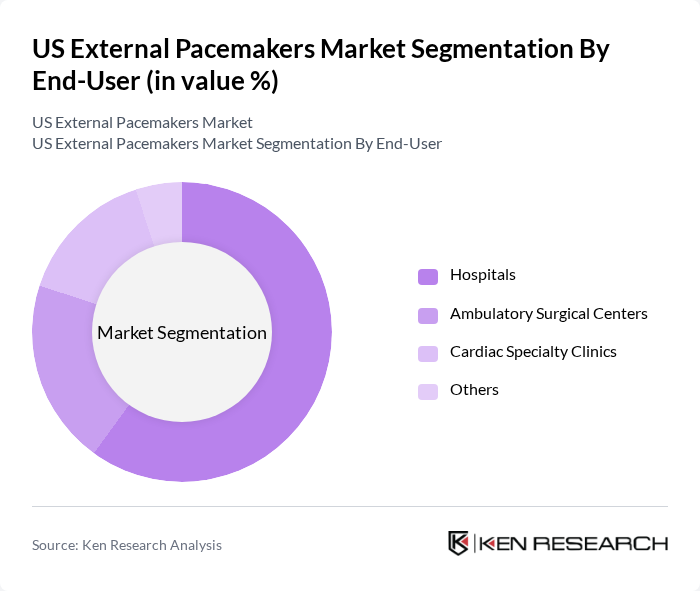
US External Pacemakers Market segmentation by End-User.

US External Pacemakers Market Competitive Landscape

The US External Pacemakers Market is characterized by a dynamic mix of regional and international players. Leading participants such as Medtronic plc, Boston Scientific Corporation, Abbott Laboratories (Abbott), BIOTRONIK SE & Co. KG, OSYPKA MEDICAL GmbH, OSCOR Inc. (a Teleflex company), Pacetronix Ltd., Lepu Medical Technology (Beijing) Co., Ltd., Avery Biomedical Devices, Inc., ZOLL Medical Corporation, MicroPort Scientific Corporation, Edwards Lifesciences Corporation, LivaNova PLC, Philips Healthcare (Philips Medical Systems), GE HealthCare Technologies Inc. contribute to innovation, geographic expansion, and service delivery in this space.

Medtronic plc

1949

Dublin, Ireland

Boston Scientific Corporation

1979

Marlborough, Massachusetts, USA

Abbott Laboratories

1888

Abbott Park, Illinois, USA

BIOTRONIK SE & Co. KG

1963

Berlin, Germany

OSYPKA MEDICAL GmbH

1987

Berlin, Germany

Company

Establishment Year

Headquarters

Group Size (Global, Regional, Niche)

External Pacemaker Revenue (US$, Latest Year)

US External Pacemaker Market Share (%)

3?year CAGR in External Pacemaker Revenue

R&D Intensity (% of Revenue)

Number of FDA?cleared External Pacemaker Models

US External Pacemakers Market Industry Analysis

Growth Drivers

  • Increasing Prevalence of Cardiac Diseases:The prevalence of cardiac diseases in the US is projected to reach approximately 30.3 million cases in future, driven by lifestyle factors and an aging population. According to the American Heart Association, cardiovascular diseases account for nearly 697,000 deaths annually, highlighting the urgent need for effective treatment options. This growing patient base significantly boosts the demand for external pacemakers, as they are essential for managing arrhythmias and other heart conditions.
  • Technological Advancements in Pacemaker Devices:The US external pacemaker market is witnessing rapid technological advancements, with innovations such as wireless connectivity and remote monitoring capabilities. In future, the market is expected to see the introduction of multiple new models featuring enhanced battery life and miniaturization. These advancements not only improve patient outcomes but also increase the efficiency of healthcare delivery, making external pacemakers more appealing to both patients and healthcare providers.
  • Rising Geriatric Population:The US Census Bureau projects that the population aged 65 and older will exceed approximately 56 million in future, representing a significant demographic shift. This age group is particularly susceptible to cardiac diseases, leading to an increased demand for external pacemakers. As older adults often require more frequent medical interventions, the growing geriatric population is a critical driver for the external pacemaker market, necessitating innovative solutions to manage their health effectively.

Market Challenges

  • High Cost of Advanced Pacemaker Systems:The average cost of advanced external pacemaker systems can exceed USD 30,000, which poses a significant barrier to adoption. Many healthcare facilities face budget constraints, limiting their ability to invest in these technologies. Additionally, patients often struggle with out-of-pocket expenses, leading to delayed treatments. This high cost can hinder market growth, particularly in regions with limited healthcare funding and resources.
  • Stringent Regulatory Requirements:The regulatory landscape for medical devices in the US is complex, with the FDA imposing rigorous approval processes. It is estimated that the average time for device approval can extend to around 12–18 months, delaying market entry for new technologies. Compliance with safety and efficacy standards requires significant investment in clinical trials, which can deter smaller companies from entering the market, ultimately limiting innovation and competition.

US External Pacemakers Market Future Outlook

The US external pacemakers market is poised for significant transformation, driven by technological innovations and demographic shifts. As the prevalence of cardiac diseases continues to rise, healthcare providers are increasingly adopting advanced pacemaker technologies that enhance patient care. Furthermore, the integration of digital health solutions is expected to streamline monitoring and improve patient outcomes. These trends indicate a robust future for the market, with ongoing investments in research and development likely to yield new opportunities for growth and improved patient management strategies.

Market Opportunities

  • Expansion in Emerging Markets:The growing demand for healthcare services in emerging markets presents a significant opportunity for US external pacemaker manufacturers. Countries like India and Brazil are expected to increase healthcare spending by over USD 50 billion in future, creating a favorable environment for market entry and expansion. This trend allows companies to tap into new customer bases and diversify their revenue streams.
  • Development of Next-Generation Pacemakers:The focus on developing next-generation pacemakers that incorporate advanced features such as AI-driven analytics and remote monitoring is a promising opportunity. It is anticipated that multiple major manufacturers will launch devices with these capabilities in future, enhancing patient engagement and adherence to treatment plans. This innovation can significantly improve patient outcomes and drive market growth.

Scope of the Report

SegmentSub-Segments
By Product Type

Single-chamber External Pacemakers

Dual-chamber External Pacemakers

Biventricular / CRT External Pacemakers

External Temporary Pacemakers

By End-User

Hospitals

Ambulatory Surgical Centers

Cardiac Specialty Clinics

Others

By Clinical Application

Bradycardia and Heart Block

Atrial Fibrillation and Other Arrhythmias Management

Acute Myocardial Infarction and Post?cardiac Surgery Support

Others

By Distribution Channel

Direct Sales to Hospitals and IDNs

Medical Device Distributors

Group Purchasing Organizations (GPOs)

Online / E?procurement Portals

By US Region

Northeast

Midwest

South

West

By Patient Demographics

Pediatric Patients

Adult Patients

Geriatric Patients

Others

By Technology Feature

Conventional External Pacemakers

External Pacemakers with Remote Monitoring / Telemetry

MRI?compatible External Pacemakers

Battery and Lead?less Innovation Platforms

Key Target Audience

Investors and Venture Capitalist Firms

Government and Regulatory Bodies (e.g., Food and Drug Administration, Centers for Medicare & Medicaid Services)

Manufacturers and Producers

Distributors and Retailers

Healthcare Providers and Hospitals

Medical Device Regulatory Consultants

Industry Associations (e.g., Heart Rhythm Society, American College of Cardiology)

Financial Institutions

Players Mentioned in the Report:

Medtronic plc

Boston Scientific Corporation

Abbott Laboratories (Abbott)

BIOTRONIK SE & Co. KG

OSYPKA MEDICAL GmbH

OSCOR Inc. (a Teleflex company)

Pacetronix Ltd.

Lepu Medical Technology (Beijing) Co., Ltd.

Avery Biomedical Devices, Inc.

ZOLL Medical Corporation

MicroPort Scientific Corporation

Edwards Lifesciences Corporation

LivaNova PLC

Philips Healthcare (Philips Medical Systems)

GE HealthCare Technologies Inc.

Table of Contents

Market Assessment Phase

1. Executive Summary and Approach


2. US External Pacemakers Market Overview

2.1 Key Insights and Strategic Recommendations

2.2 US External Pacemakers Market Overview

2.3 Definition and Scope

2.4 Evolution of Market Ecosystem

2.5 Timeline of Key Regulatory Milestones

2.6 Value Chain & Stakeholder Mapping

2.7 Business Cycle Analysis

2.8 Policy & Incentive Landscape


3. US External Pacemakers Market Analysis

3.1 Growth Drivers

3.1.1 Increasing prevalence of cardiac diseases
3.1.2 Technological advancements in pacemaker devices
3.1.3 Rising geriatric population
3.1.4 Growing awareness and acceptance of external pacemakers

3.2 Market Challenges

3.2.1 High cost of advanced pacemaker systems
3.2.2 Stringent regulatory requirements
3.2.3 Limited reimbursement policies
3.2.4 Competition from alternative therapies

3.3 Market Opportunities

3.3.1 Expansion in emerging markets
3.3.2 Development of next-generation pacemakers
3.3.3 Strategic partnerships and collaborations
3.3.4 Increasing investment in healthcare infrastructure

3.4 Market Trends

3.4.1 Shift towards minimally invasive procedures
3.4.2 Integration of digital health technologies
3.4.3 Personalized medicine approaches
3.4.4 Focus on patient-centric care models

3.5 Government Regulation

3.5.1 FDA approval processes for medical devices
3.5.2 Compliance with safety and efficacy standards
3.5.3 Reporting requirements for adverse events
3.5.4 Guidelines for clinical trials and studies

4. SWOT Analysis


5. Stakeholder Analysis


6. Porter's Five Forces Analysis


7. US External Pacemakers Market Market Size, 2019-2024

7.1 By Value

7.2 By Volume

7.3 By Average Selling Price


8. US External Pacemakers Market Segmentation

8.1 By Product Type

8.1.1 Single-chamber External Pacemakers
8.1.2 Dual-chamber External Pacemakers
8.1.3 Biventricular / CRT External Pacemakers
8.1.4 External Temporary Pacemakers

8.2 By End-User

8.2.1 Hospitals
8.2.2 Ambulatory Surgical Centers
8.2.3 Cardiac Specialty Clinics
8.2.4 Others

8.3 By Clinical Application

8.3.1 Bradycardia and Heart Block
8.3.2 Atrial Fibrillation and Other Arrhythmias Management
8.3.3 Acute Myocardial Infarction and Post?cardiac Surgery Support
8.3.4 Others

8.4 By Distribution Channel

8.4.1 Direct Sales to Hospitals and IDNs
8.4.2 Medical Device Distributors
8.4.3 Group Purchasing Organizations (GPOs)
8.4.4 Online / E?procurement Portals

8.5 By US Region

8.5.1 Northeast
8.5.2 Midwest
8.5.3 South
8.5.4 West

8.6 By Patient Demographics

8.6.1 Pediatric Patients
8.6.2 Adult Patients
8.6.3 Geriatric Patients
8.6.4 Others

8.7 By Technology Feature

8.7.1 Conventional External Pacemakers
8.7.2 External Pacemakers with Remote Monitoring / Telemetry
8.7.3 MRI?compatible External Pacemakers
8.7.4 Battery and Lead?less Innovation Platforms

9. US External Pacemakers Market Competitive Analysis

9.1 Market Share of Key Players

9.2 Cross Comparison of Key Players

9.2.1 Company Name
9.2.2 Group Size (Global, Regional, Niche)
9.2.3 External Pacemaker Revenue (US$, Latest Year)
9.2.4 US External Pacemaker Market Share (%)
9.2.5 3?year CAGR in External Pacemaker Revenue
9.2.6 R&D Intensity (% of Revenue)
9.2.7 Number of FDA?cleared External Pacemaker Models
9.2.8 Installed Base in US Hospitals / Cath Labs
9.2.9 Average Selling Price Positioning (Premium / Mid / Value)
9.2.10 Gross Margin on External Pacemaker Portfolio
9.2.11 US Distribution Coverage (States / IDNs / GPO Contracts)
9.2.12 Service & Support Metrics (Uptime, Response Time SLA)

9.3 SWOT Analysis of Top Players

9.4 Pricing Analysis

9.5 Detailed Profile of Major Companies

9.5.1 Medtronic plc
9.5.2 Boston Scientific Corporation
9.5.3 Abbott Laboratories (Abbott)
9.5.4 BIOTRONIK SE & Co. KG
9.5.5 OSYPKA MEDICAL GmbH
9.5.6 OSCOR Inc. (a Teleflex company)
9.5.7 Pacetronix Ltd.
9.5.8 Lepu Medical Technology (Beijing) Co., Ltd.
9.5.9 Avery Biomedical Devices, Inc.
9.5.10 ZOLL Medical Corporation
9.5.11 MicroPort Scientific Corporation
9.5.12 Edwards Lifesciences Corporation
9.5.13 LivaNova PLC
9.5.14 Philips Healthcare (Philips Medical Systems)
9.5.15 GE HealthCare Technologies Inc.

10. US External Pacemakers Market End-User Analysis

10.1 Procurement Behavior of Key Ministries

10.1.1 Budget Allocation for Cardiac Devices
10.1.2 Procurement Processes and Timelines
10.1.3 Preferred Suppliers and Vendors
10.1.4 Compliance and Regulatory Considerations

10.2 Corporate Spend on Infrastructure & Energy

10.2.1 Investment in Cardiac Care Facilities
10.2.2 Funding for Research and Development
10.2.3 Expenditure on Training and Education
10.2.4 Others

10.3 Pain Point Analysis by End-User Category

10.3.1 Access to Advanced Technologies
10.3.2 Cost of Treatment
10.3.3 Availability of Trained Personnel
10.3.4 Others

10.4 User Readiness for Adoption

10.4.1 Awareness of External Pacemakers
10.4.2 Training Needs for Healthcare Providers
10.4.3 Patient Acceptance and Feedback
10.4.4 Others

10.5 Post-Deployment ROI and Use Case Expansion

10.5.1 Cost Savings from Reduced Hospitalizations
10.5.2 Improved Patient Outcomes
10.5.3 Expansion into New Patient Segments
10.5.4 Others

11. US External Pacemakers Market Future Size, 2025-2030

11.1 By Value

11.2 By Volume

11.3 By Average Selling Price


Go-To-Market Strategy Phase

1. Whitespace Analysis + Business Model Canvas

1.1 Market Gaps Identification

1.2 Business Model Development


2. Marketing and Positioning Recommendations

2.1 Branding Strategies

2.2 Product USPs


3. Distribution Plan

3.1 Urban Retail Strategies

3.2 Rural NGO Tie-ups


4. Channel & Pricing Gaps

4.1 Underserved Routes

4.2 Pricing Bands Analysis


5. Unmet Demand & Latent Needs

5.1 Category Gaps

5.2 Consumer Segments


6. Customer Relationship

6.1 Loyalty Programs

6.2 After-sales Service


7. Value Proposition

7.1 Sustainability Initiatives

7.2 Integrated Supply Chains


8. Key Activities

8.1 Regulatory Compliance

8.2 Branding Efforts

8.3 Distribution Setup


9. Entry Strategy Evaluation

9.1 Domestic Market Entry Strategy

9.1.1 Product Mix Considerations
9.1.2 Pricing Band Strategy
9.1.3 Packaging Solutions

9.2 Export Entry Strategy

9.2.1 Target Countries Identification
9.2.2 Compliance Roadmap Development

10. Entry Mode Assessment

10.1 Joint Ventures

10.2 Greenfield Investments

10.3 Mergers & Acquisitions

10.4 Distributor Model Evaluation


11. Capital and Timeline Estimation

11.1 Capital Requirements

11.2 Timelines for Implementation


12. Control vs Risk Trade-Off

12.1 Ownership Considerations

12.2 Partnerships Evaluation


13. Profitability Outlook

13.1 Breakeven Analysis

13.2 Long-term Sustainability Strategies


14. Potential Partner List

14.1 Distributors

14.2 Joint Ventures

14.3 Acquisition Targets


15. Execution Roadmap

15.1 Phased Plan for Market Entry

15.1.1 Market Setup
15.1.2 Market Entry
15.1.3 Growth Acceleration
15.1.4 Scale & Stabilize

15.2 Key Activities and Milestones

15.2.1 Milestone Planning
15.2.2 Activity Tracking

Research Methodology

ApproachModellingSample

Phase 1: Approach1

Desk Research

  • Analysis of market reports from healthcare associations and industry publications
  • Review of regulatory guidelines and updates from the FDA and CMS
  • Examination of sales data and trends from medical device distributors and wholesalers

Primary Research

  • Interviews with cardiologists and electrophysiologists specializing in pacemaker implantation
  • Surveys with hospital procurement managers and medical device buyers
  • Field interviews with biomedical engineers involved in pacemaker technology

Validation & Triangulation

  • Cross-validation of findings through multiple expert interviews and focus groups
  • Triangulation of data from clinical studies, market reports, and expert opinions
  • Sanity checks through peer reviews and feedback from industry stakeholders

Phase 2: Market Size Estimation1

Top-down Assessment

  • Estimation of total market size based on national healthcare expenditure and device penetration rates
  • Segmentation by device type, including single-chamber and dual-chamber pacemakers
  • Incorporation of demographic trends and aging population statistics

Bottom-up Modeling

  • Volume estimates derived from hospital discharge data and procedure rates
  • Cost analysis based on average selling prices and reimbursement rates
  • Calculation of market size using unit sales multiplied by average device costs

Forecasting & Scenario Analysis

  • Multi-variable regression analysis incorporating technological advancements and market trends
  • Scenario modeling based on potential changes in healthcare policies and reimbursement frameworks
  • Development of baseline, optimistic, and pessimistic forecasts through 2030

Phase 3: CATI Sample Composition1

Scope Item/SegmentSample SizeTarget Respondent Profiles
Cardiology Clinics100Cardiologists, Clinic Administrators
Hospitals with Electrophysiology Departments90Procurement Officers, Department Heads
Medical Device Distributors60Sales Managers, Product Specialists
Biomedical Engineering Firms50Biomedical Engineers, R&D Managers
Health Insurance Providers70Policy Analysts, Claims Managers

Frequently Asked Questions

What is the current value of the US External Pacemakers Market?

The US External Pacemakers Market is valued at approximately USD 580 million, reflecting a significant share of the broader US pacemakers segment. This valuation is based on a five-year historical analysis of national revenue and the increasing demand for external devices in North America.

What factors are driving the growth of the US External Pacemakers Market?

Which cities are major demand centers for external pacemakers in the US?

What are the regulatory requirements for external pacemakers in the US?

Other Regional/Country Reports

Indonesia External Pacemakers Market

Malaysia External Pacemakers Market

KSA External Pacemakers Market

APAC External Pacemakers Market

SEA External Pacemakers Market

Vietnam External Pacemakers Market

Other Adjacent Reports

Middle East Implantable Pacemakers Market Report Size, Share, Growth Drivers, Trends, Opportunities & Forecast 2025–2030

Kuwait Cardiac Defibrillators Market

Bahrain electrophysiology devices market size, share, growth drivers, trends, opportunities & forecast 2025–2030

UAE Cardiac Resynchronization Therapy Market

Malaysia Heart Failure Devices Market

Singapore Cardiovascular Monitoring Market

Vietnam Arrhythmia Management Market

KSA Medical Electrodes Market

Egypt Cardiac Surgery Equipment Market

UAE Remote Patient Monitoring Market Size, Share, Growth Drivers, Trends, Opportunities & Forecast 2025–2030

Why Buy From Us?

Refine Robust Result (RRR) Framework

What makes us stand out is that our consultants follow Robust, Refine and Result (RRR) methodology. Robust for clear definitions, approaches and sanity checking, Refine for differentiating respondents' facts and opinions, and Result for presenting data with story.

Our Reach Is Unmatched

We have set a benchmark in the industry by offering our clients with syndicated and customized market research reports featuring coverage of entire market as well as meticulous research and analyst insights.

Shifting the Research Paradigm

While we don't replace traditional research, we flip the method upside down. Our dual approach of Top Bottom & Bottom Top ensures quality deliverable by not just verifying company fundamentals but also looking at the sector and macroeconomic factors.

More Insights-Better Decisions

With one step in the future, our research team constantly tries to show you the bigger picture. We help with some of the tough questions you may encounter along the way: How is the industry positioned? Best marketing channel? KPI's of competitors? By aligning every element, we help maximize success.

Transparency and Trust

Our report gives you instant access to the answers and sources that other companies might choose to hide. We elaborate each steps of research methodology we have used and showcase you the sample size to earn your trust.

Round the Clock Support

If you need any support, we are here! We pride ourselves on universe strength, data quality, and quick, friendly, and professional service.

Why Clients Choose Us?

400000+
Reports in repository
150+
Consulting projects a year
100+
Analysts
8000+
Client Queries in 2022








