About the Report
Base Year 2024US Invisible Orthodontics Market Overview
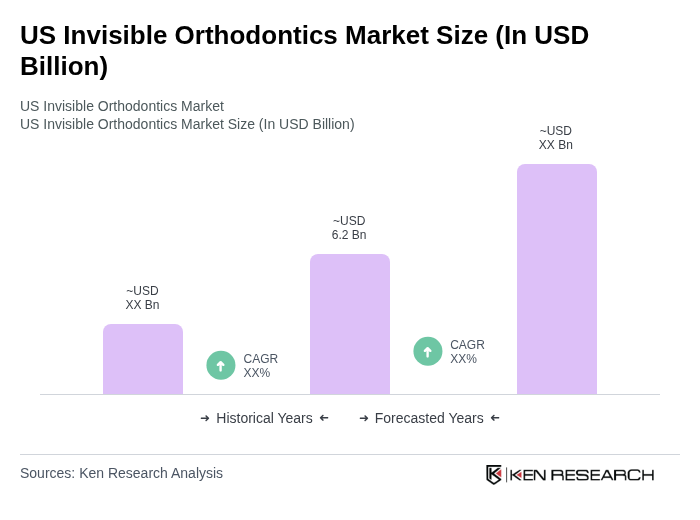
- The US Invisible Orthodontics Market is valued at USD 6.2 billion, based on a five-year historical analysis. This growth is primarily driven by increasing consumer demand for aesthetic dental solutions, rapid advancements in digital orthodontic technology (such as 3D scanning and AI-driven treatment planning), and the rising prevalence of orthodontic issues among both adults and teenagers. The market has seen a significant shift towards invisible orthodontic solutions, particularly clear aligners, which offer a more discreet and convenient alternative to traditional braces. Direct-to-consumer brands and increased insurance coverage are further accelerating adoption .
- Key players in this market are concentrated in major metropolitan areas such as New York, Los Angeles, and Chicago, which lead due to their large populations, higher disposable incomes, and a strong presence of dental professionals. These urban centers also serve as hubs for innovation and technology, supporting the growth of invisible orthodontics through enhanced treatment options, digital workflows, and increased consumer awareness .
- The US Food and Drug Administration (FDA) regulates orthodontic devices under the Federal Food, Drug, and Cosmetic Act (FD&C Act), requiring all invisible orthodontic products to comply with the FDA’s 510(k) premarket notification process. This mandates that manufacturers demonstrate safety and efficacy through clinical testing and obtain FDA clearance before marketing their devices to consumers. The FDA’s “Dental Devices; Classification of Orthodontic Appliances” (21 CFR 872.5470, updated 2023) outlines these requirements, ensuring patient safety and treatment reliability .
US Invisible Orthodontics Market Segmentation
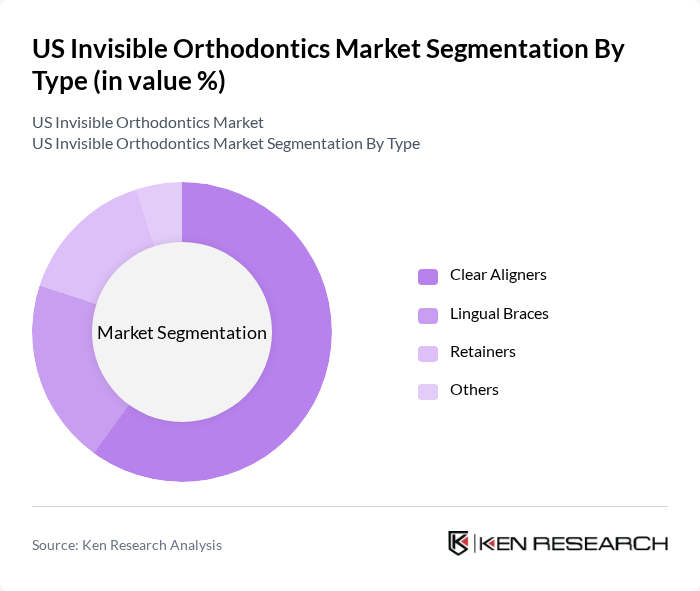
By Type:The market is segmented into Clear Aligners, Lingual Braces, Retainers, and Others. Clear Aligners lead the market, favored for their aesthetic appeal, comfort, and removability, making them the preferred choice among adults and teenagers. Lingual Braces, while effective and discreet, are less popular due to higher cost and treatment complexity. Retainers are essential for maintaining post-treatment results, and the "Others" category includes innovative solutions such as ceramic braces and hybrid appliances .
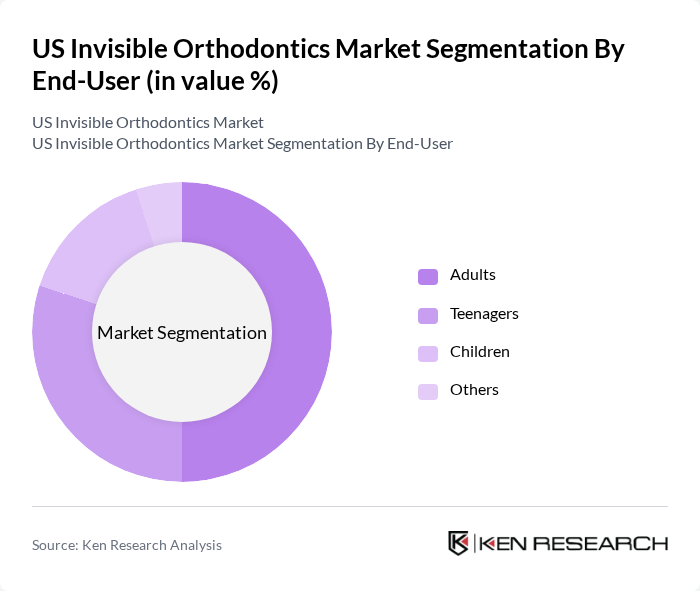
By End-User:The end-user segmentation includes Adults, Teenagers, Children, and Others. Adults represent the largest segment, driven by the growing demand for aesthetic improvements, increased acceptance of orthodontic treatments among older demographics, and the influence of social media. Teenagers are a significant market due to parental investment in dental health and the desire for discreet solutions. Children are primarily treated for health and developmental reasons, while the "Others" category includes various age groups seeking orthodontic correction .
US Invisible Orthodontics Market Competitive Landscape
The US Invisible Orthodontics Market is characterized by a dynamic mix of regional and international players. Leading participants such as Align Technology, SmileDirectClub, ClearCorrect, 3M Company, Dentsply Sirona, Ormco Corporation, Henry Schein, Inc., Straumann Group, GAC International, Ortho Organizers, American Orthodontics, Dental Wings, Planmeca, Biolase, and Carestream Dental contribute to innovation, geographic expansion, and service delivery in this space.
US Invisible Orthodontics Market Industry Analysis
Growth Drivers
- Increasing Demand for Aesthetic Dental Solutions:The US market for aesthetic dental solutions is projected to reach $13 billion in future, driven by consumer preferences for visually appealing orthodontic options. A survey by the American Dental Association indicates that 70% of adults consider aesthetics a significant factor in choosing orthodontic treatment. This trend is further supported by the rise in social media influence, where individuals seek to enhance their smiles for online presence, thus boosting demand for invisible orthodontics.
- Advancements in Orthodontic Technology:The US orthodontic technology sector is expected to grow to $5 billion in future, fueled by innovations such as 3D printing and digital scanning. These technologies enhance the precision and comfort of invisible aligners, making them more appealing to consumers. According to the American Association of Orthodontists, 85% of orthodontists report using digital tools, which streamline treatment processes and improve patient outcomes, thereby driving market growth.
- Rising Awareness About Oral Health:The US oral health market is projected to reach $22 billion in future, reflecting a growing awareness of the importance of dental care. Educational campaigns and increased access to dental services have led to a 20% rise in adults seeking orthodontic treatment. The Centers for Disease Control and Prevention reports that 47% of adults aged 30 and older have some form of periodontal disease, prompting more individuals to invest in orthodontic solutions to improve their overall oral health.
Market Challenges
- High Cost of Treatment:The average cost of invisible orthodontic treatment in the US ranges from $3,500 to $8,500, which can be prohibitive for many consumers. A report from the American Dental Association indicates that 45% of adults cite cost as a primary barrier to seeking orthodontic care. This high price point limits market accessibility, particularly among lower-income demographics, thereby hindering overall market growth.
- Limited Insurance Coverage for Orthodontic Procedures:Approximately 30% of dental insurance plans in the US do not cover orthodontic treatments, particularly for adults. This lack of coverage creates a significant financial burden for consumers, as reported by the National Association of Dental Plans. Consequently, many potential patients may delay or forgo treatment altogether, which poses a challenge to market expansion and consumer adoption of invisible orthodontics.
US Invisible Orthodontics Market Future Outlook
The future of the US invisible orthodontics market appears promising, driven by technological advancements and changing consumer preferences. As tele-dentistry continues to expand, more patients will have access to remote consultations, enhancing convenience and treatment options. Additionally, the increasing focus on adult orthodontics presents a significant opportunity for growth, as more adults seek aesthetic solutions. With ongoing innovations in aligner technology, the market is poised for substantial evolution, catering to diverse consumer needs and preferences.
Market Opportunities
- Expansion of Tele-Dentistry Services:The tele-dentistry market is projected to grow to $2.5 billion in future, providing a unique opportunity for invisible orthodontics. This service allows patients to receive consultations and follow-ups remotely, increasing accessibility and convenience. As more consumers embrace digital health solutions, orthodontic providers can leverage this trend to reach a broader audience and enhance patient engagement.
- Development of Innovative Product Offerings:The demand for customized orthodontic solutions is on the rise, with the market for personalized aligners expected to reach $1.8 billion in future. Companies that invest in research and development to create innovative products tailored to individual needs will likely capture significant market share. This trend aligns with consumer preferences for unique, effective solutions, driving further growth in the invisible orthodontics sector.
Scope of the Report
| Segment | Sub-Segments |
|---|---|
| By Type | Clear Aligners Lingual Braces Retainers Others |
| By End-User | Adults Teenagers Children Others |
| By Treatment Duration | Short-term (less than 6 months) Medium-term (6 months to 1 year) Long-term (more than 1 year) Others |
| By Distribution Channel | Dental Clinics Online Platforms Retail Pharmacies Others |
| By Material Used | Thermoplastic Materials Polycarbonate Others |
| By Geographic Presence | Urban Areas Suburban Areas Rural Areas Others |
| By Age Group | 24 Years 34 Years 44 Years Others |
Key Target Audience
Investors and Venture Capitalist Firms
Government and Regulatory Bodies (e.g., Food and Drug Administration, Federal Trade Commission)
Manufacturers and Producers
Distributors and Retailers
Dental Practices and Orthodontic Clinics
Insurance Companies and Payers
Industry Associations (e.g., American Association of Orthodontists)
Healthcare Technology Companies
Players Mentioned in the Report:
Align Technology
SmileDirectClub
ClearCorrect
3M Company
Dentsply Sirona
Ormco Corporation
Henry Schein, Inc.
Straumann Group
GAC International
Ortho Organizers
American Orthodontics
Dental Wings
Planmeca
Biolase
Carestream Dental
Table of Contents
Market Assessment Phase
1. Executive Summary and Approach
2. US Invisible Orthodontics Market Overview
2.1 Key Insights and Strategic Recommendations
2.2 US Invisible Orthodontics Market Overview
2.3 Definition and Scope
2.4 Evolution of Market Ecosystem
2.5 Timeline of Key Regulatory Milestones
2.6 Value Chain & Stakeholder Mapping
2.7 Business Cycle Analysis
2.8 Policy & Incentive Landscape
3. US Invisible Orthodontics Market Analysis
3.1 Growth Drivers
3.1.1 Increasing demand for aesthetic dental solutions
3.1.2 Advancements in orthodontic technology
3.1.3 Rising awareness about oral health
3.1.4 Growth in disposable income among consumers
3.2 Market Challenges
3.2.1 High cost of treatment
3.2.2 Limited insurance coverage for orthodontic procedures
3.2.3 Competition from traditional braces
3.2.4 Consumer skepticism regarding effectiveness
3.3 Market Opportunities
3.3.1 Expansion of tele-dentistry services
3.3.2 Increasing partnerships with dental professionals
3.3.3 Development of innovative product offerings
3.3.4 Growing market for adult orthodontics
3.4 Market Trends
3.4.1 Rise in DIY orthodontic solutions
3.4.2 Integration of AI in treatment planning
3.4.3 Customization of aligners for individual needs
3.4.4 Increased focus on sustainability in materials
3.5 Government Regulation
3.5.1 FDA regulations on orthodontic devices
3.5.2 State licensing requirements for orthodontists
3.5.3 Advertising regulations for dental services
3.5.4 Compliance with health and safety standards
4. SWOT Analysis
5. Stakeholder Analysis
6. Porter's Five Forces Analysis
7. US Invisible Orthodontics Market Market Size, 2019-2024
7.1 By Value
7.2 By Volume
7.3 By Average Selling Price
8. US Invisible Orthodontics Market Segmentation
8.1 By Type
8.1.1 Clear Aligners
8.1.2 Lingual Braces
8.1.3 Retainers
8.1.4 Others
8.2 By End-User
8.2.1 Adults
8.2.2 Teenagers
8.2.3 Children
8.2.4 Others
8.3 By Treatment Duration
8.3.1 Short-term (less than 6 months)
8.3.2 Medium-term (6 months to 1 year)
8.3.3 Long-term (more than 1 year)
8.3.4 Others
8.4 By Distribution Channel
8.4.1 Dental Clinics
8.4.2 Online Platforms
8.4.3 Retail Pharmacies
8.4.4 Others
8.5 By Material Used
8.5.1 Thermoplastic Materials
8.5.2 Polycarbonate
8.5.3 Others
8.6 By Geographic Presence
8.6.1 Urban Areas
8.6.2 Suburban Areas
8.6.3 Rural Areas
8.6.4 Others
8.7 By Age Group
8.7.1 18-24 Years
8.7.2 25-34 Years
8.7.3 35-44 Years
8.7.4 Others
9. US Invisible Orthodontics Market Competitive Analysis
9.1 Market Share of Key Players
9.2 Cross Comparison of Key Players
9.2.1 Company Name
9.2.2 Group Size (Large, Medium, or Small as per industry convention)
9.2.3 Revenue Growth Rate
9.2.4 Customer Acquisition Cost
9.2.5 Market Penetration Rate
9.2.6 Customer Retention Rate
9.2.7 Average Treatment Duration
9.2.8 Pricing Strategy
9.2.9 Brand Recognition Score
9.2.10 Customer Satisfaction Index
9.3 SWOT Analysis of Top Players
9.4 Pricing Analysis
9.5 Detailed Profile of Major Companies
9.5.1 Align Technology
9.5.2 SmileDirectClub
9.5.3 ClearCorrect
9.5.4 3M Company
9.5.5 Dentsply Sirona
9.5.6 Ormco Corporation
9.5.7 Henry Schein, Inc.
9.5.8 Straumann Group
9.5.9 GAC International
9.5.10 Ortho Organizers
9.5.11 American Orthodontics
9.5.12 Dental Wings
9.5.13 Planmeca
9.5.14 Biolase
9.5.15 Carestream Dental
10. US Invisible Orthodontics Market End-User Analysis
10.1 Procurement Behavior of Key Ministries
10.1.1 Budget Allocation for Dental Health
10.1.2 Decision-Making Process
10.1.3 Preferred Suppliers
10.1.4 Compliance Requirements
10.2 Corporate Spend on Infrastructure & Energy
10.2.1 Investment in Dental Technologies
10.2.2 Spending on Employee Dental Benefits
10.2.3 Partnerships with Dental Providers
10.2.4 Others
10.3 Pain Point Analysis by End-User Category
10.3.1 Accessibility to Orthodontic Care
10.3.2 Affordability of Treatments
10.3.3 Awareness of Options
10.3.4 Others
10.4 User Readiness for Adoption
10.4.1 Awareness of Invisible Orthodontics
10.4.2 Willingness to Pay
10.4.3 Perceived Effectiveness
10.4.4 Others
10.5 Post-Deployment ROI and Use Case Expansion
10.5.1 Treatment Success Rates
10.5.2 Patient Satisfaction Levels
10.5.3 Referral Rates
10.5.4 Others
11. US Invisible Orthodontics Market Future Size, 2025-2030
11.1 By Value
11.2 By Volume
11.3 By Average Selling Price
Go-To-Market Strategy Phase
1. Whitespace Analysis + Business Model Canvas
1.1 Market Gaps Identification
1.2 Business Model Framework
2. Marketing and Positioning Recommendations
2.1 Branding Strategies
2.2 Product USPs
3. Distribution Plan
3.1 Urban Retail vs Rural NGO Tie-ups
4. Channel & Pricing Gaps
4.1 Underserved Routes
4.2 Pricing Bands
5. Unmet Demand & Latent Needs
5.1 Category Gaps
5.2 Consumer Segments
6. Customer Relationship
6.1 Loyalty Programs
6.2 After-sales Service
7. Value Proposition
7.1 Sustainability
7.2 Integrated Supply Chains
8. Key Activities
8.1 Regulatory Compliance
8.2 Branding
8.3 Distribution Setup
9. Entry Strategy Evaluation
9.1 Domestic Market Entry Strategy
9.1.1 Product Mix
9.1.2 Pricing Band
9.1.3 Packaging
9.2 Export Entry Strategy
9.2.1 Target Countries
9.2.2 Compliance Roadmap
10. Entry Mode Assessment
10.1 JV
10.2 Greenfield
10.3 M&A
10.4 Distributor Model
11. Capital and Timeline Estimation
11.1 Capital Requirements
11.2 Timelines
12. Control vs Risk Trade-Off
12.1 Ownership vs Partnerships
13. Profitability Outlook
13.1 Breakeven Analysis
13.2 Long-term Sustainability
14. Potential Partner List
14.1 Distributors
14.2 JVs
14.3 Acquisition Targets
15. Execution Roadmap
15.1 Phased Plan for Market Entry
15.1.1 Market Setup
15.1.2 Market Entry
15.1.3 Growth Acceleration
15.1.4 Scale & Stabilize
15.2 Key Activities and Milestones
15.2.1 Milestone Planning
15.2.2 Activity Tracking
Research Methodology
Phase 1: Approach1
Desk Research
- Analysis of industry reports from orthodontic associations and dental journals
- Review of market trends and forecasts from healthcare market research publications
- Examination of demographic data and consumer behavior studies related to orthodontics
Primary Research
- Interviews with orthodontists and dental practitioners specializing in invisible aligners
- Surveys conducted with patients who have undergone treatment with invisible orthodontics
- Focus groups with dental professionals to gather insights on market needs and preferences
Validation & Triangulation
- Cross-validation of findings through multiple data sources, including sales data and clinical outcomes
- Triangulation of insights from primary interviews with secondary research findings
- Sanity checks through expert panel reviews comprising orthodontic specialists and market analysts
Phase 2: Market Size Estimation1
Top-down Assessment
- Estimation of market size based on national dental expenditure and orthodontic treatment rates
- Segmentation of the market by age groups, treatment types, and geographic regions
- Incorporation of trends in cosmetic dentistry and consumer preferences for aesthetic treatments
Bottom-up Modeling
- Collection of sales data from leading manufacturers of invisible orthodontics
- Estimation of average treatment costs and patient volume per orthodontic practice
- Analysis of growth rates based on historical data and emerging market trends
Forecasting & Scenario Analysis
- Multi-factor regression analysis incorporating factors such as technological advancements and market penetration rates
- Scenario modeling based on potential regulatory changes and shifts in consumer preferences
- Development of baseline, optimistic, and pessimistic forecasts through 2030
Phase 3: CATI Sample Composition1
| Scope Item/Segment | Sample Size | Target Respondent Profiles |
|---|---|---|
| Orthodontic Practices | 100 | Orthodontists, Dental Practice Owners |
| Patient Experience with Invisible Aligners | 80 | Patients aged 18-35, Recent Users of Invisible Aligners |
| Market Insights from Dental Suppliers | 50 | Sales Representatives, Product Managers |
| Consumer Preferences in Orthodontics | 90 | Potential Patients, Parents of Teenagers |
| Technological Adoption in Orthodontics | 40 | Dental Technicians, R&D Managers |
Frequently Asked Questions
What is the current value of the US Invisible Orthodontics Market?
The US Invisible Orthodontics Market is valued at approximately USD 6.2 billion, driven by increasing consumer demand for aesthetic dental solutions and advancements in digital orthodontic technology.
What types of products are included in the Invisible Orthodontics Market?
Who are the primary consumers of invisible orthodontics?
What are the main growth drivers for the US Invisible Orthodontics Market?
Other Regional/Country Reports
Indonesia Invisible Orthodontics Market
Malaysia Invisible Orthodontics Market
Other Adjacent Reports
Philippines Lingual Braces Market
Middle East cosmetic dentistry market size, share, growth drivers, trends, opportunities & forecast 2025–2030South Africa Orthodontic Appliances Market
Australia + New Zealand Dental Implants Market Report Size Share Growth Drivers Trends Opportunities & Forecast 2025–2030Qatar teeth whitening market report size, share, growth drivers, trends, opportunities & forecast 2025–2030Saudi Arabia oral care products market report size, share, growth drivers, trends, opportunities & forecast 2025–2030Vietnam Tele-dentistry Market
Oman Pediatric Orthodontics Market
Brazil Adult Orthodontics Market
Why Buy From Us?

What makes us stand out is that our consultants follow Robust, Refine and Result (RRR) methodology. Robust for clear definitions, approaches and sanity checking, Refine for differentiating respondents' facts and opinions, and Result for presenting data with story.

We have set a benchmark in the industry by offering our clients with syndicated and customized market research reports featuring coverage of entire market as well as meticulous research and analyst insights.

While we don't replace traditional research, we flip the method upside down. Our dual approach of Top Bottom & Bottom Top ensures quality deliverable by not just verifying company fundamentals but also looking at the sector and macroeconomic factors.

With one step in the future, our research team constantly tries to show you the bigger picture. We help with some of the tough questions you may encounter along the way: How is the industry positioned? Best marketing channel? KPI's of competitors? By aligning every element, we help maximize success.

Our report gives you instant access to the answers and sources that other companies might choose to hide. We elaborate each steps of research methodology we have used and showcase you the sample size to earn your trust.

If you need any support, we are here! We pride ourselves on universe strength, data quality, and quick, friendly, and professional service.