Region:Asia
Author(s):Shubham
Product Code:KRAC4362
Pages:81
Published On:October 2025
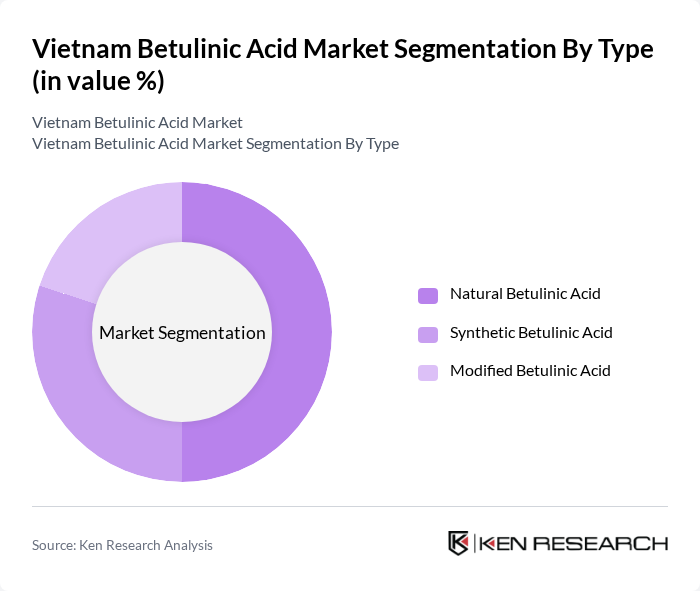
By Type:The market is segmented into three types: Natural Betulinic Acid, Synthetic Betulinic Acid, and Modified Betulinic Acid. Natural Betulinic Acid is gaining traction due to its organic appeal and perceived health benefits, while Synthetic Betulinic Acid is preferred for its consistency, scalability, and cost-effectiveness. Modified Betulinic Acid is emerging as a niche segment, catering to specialized pharmaceutical and research applications .
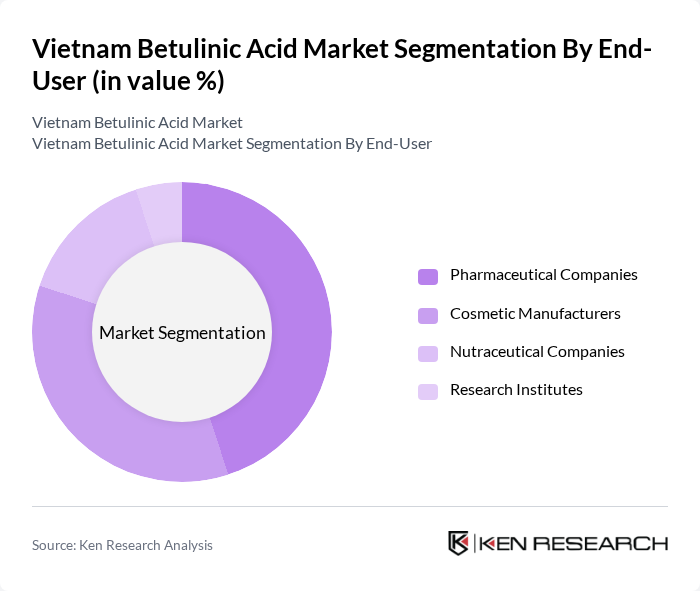
By End-User:The end-user segmentation includes Pharmaceutical Companies, Cosmetic Manufacturers, Nutraceutical Companies, and Research Institutes. Pharmaceutical companies are the largest consumers due to the increasing use of betulinic acid in drug formulations for oncology and antiviral therapies, while cosmetic manufacturers are also significant players, leveraging its skin-protective and anti-aging benefits. Nutraceutical and research sectors are expanding as scientific validation and product innovation continue .
The Vietnam Betulinic Acid Market is characterized by a dynamic mix of regional and international players. Leading participants such as Wilshire Technologies Inc., Capot Chemical Co., Ltd., Xi'an Taicheng Chem Co., Ltd., Hangzhou Dayangchem Co., Ltd., Simagchem Corporation, Aphios Corporation, Manus Aktteva Biopharma LLP, FOODCHEM International Corporation, Hangzhou Meite Chemical Co., Ltd., Aktin Chemicals Inc., Kono Chem Co., Ltd., Tianjin NWS Biotechnology Co., Ltd., Vietnam National Institute of Medicinal Materials (NIMM), Sao Thai Duong JSC, Danapha Pharmaceutical JSC contribute to innovation, geographic expansion, and service delivery in this space .
The future of the Vietnam betulinic acid market appears promising, driven by increasing consumer demand for natural health products and a growing emphasis on sustainability. As the market evolves, companies are likely to invest in innovative extraction technologies to reduce costs and improve product quality. Additionally, collaborations with research institutions will enhance the understanding of betulinic acid's benefits, paving the way for new applications in pharmaceuticals and nutraceuticals, ultimately expanding market reach and consumer acceptance.
| Segment | Sub-Segments |
|---|---|
| By Type | Natural Betulinic Acid Synthetic Betulinic Acid Modified Betulinic Acid |
| By End-User | Pharmaceutical Companies Cosmetic Manufacturers Nutraceutical Companies Research Institutes |
| By Application | Oncology (Anti-Cancer Treatments) Anti-Inflammatory Products Dermatology & Skin Care Products Antiviral Applications |
| By Distribution Channel | Online Retail Pharmacies Health Stores Direct Sales (B2B) |
| By Packaging Type | Bottles Sachets Bulk Packaging |
| By Price Range | Economy Mid-Range Premium |
| Scope Item/Segment | Sample Size | Target Respondent Profiles |
|---|---|---|
| Pharmaceutical Manufacturers | 60 | Production Managers, R&D Directors |
| Herbal Supplement Distributors | 50 | Sales Managers, Product Line Managers |
| Cosmetic Product Developers | 40 | Formulation Chemists, Brand Managers |
| Research Institutions | 40 | Research Scientists, Academic Professors |
| Regulatory Bodies | 20 | Policy Makers, Compliance Officers |
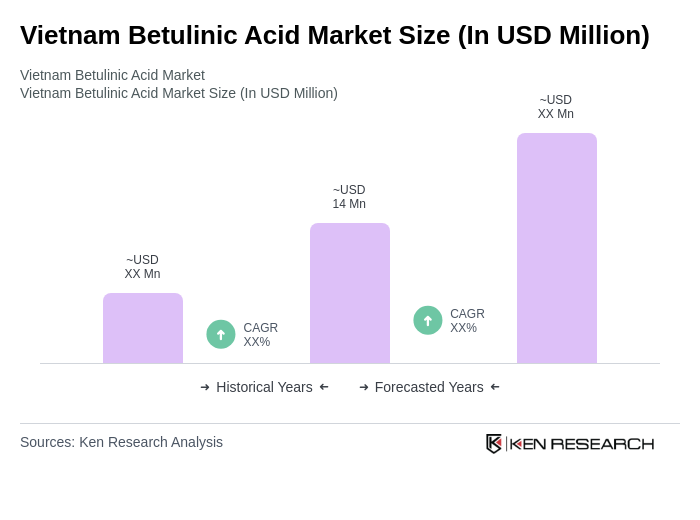
The Vietnam Betulinic Acid Market is valued at approximately USD 14 million, reflecting a growing interest in natural compounds for pharmaceuticals and cosmetics, driven by their health benefits and expanding applications in various sectors.

What makes us stand out is that our consultants follow Robust, Refine and Result (RRR) methodology. Robust for clear definitions, approaches and sanity checking, Refine for differentiating respondents' facts and opinions, and Result for presenting data with story.

We have set a benchmark in the industry by offering our clients with syndicated and customized market research reports featuring coverage of entire market as well as meticulous research and analyst insights.

While we don't replace traditional research, we flip the method upside down. Our dual approach of Top Bottom & Bottom Top ensures quality deliverable by not just verifying company fundamentals but also looking at the sector and macroeconomic factors.

With one step in the future, our research team constantly tries to show you the bigger picture. We help with some of the tough questions you may encounter along the way: How is the industry positioned? Best marketing channel? KPI's of competitors? By aligning every element, we help maximize success.

Our report gives you instant access to the answers and sources that other companies might choose to hide. We elaborate each steps of research methodology we have used and showcase you the sample size to earn your trust.

If you need any support, we are here! We pride ourselves on universe strength, data quality, and quick, friendly, and professional service.













