Region:Asia
Author(s):Dev
Product Code:KRAD3329
Pages:92
Published On:November 2025
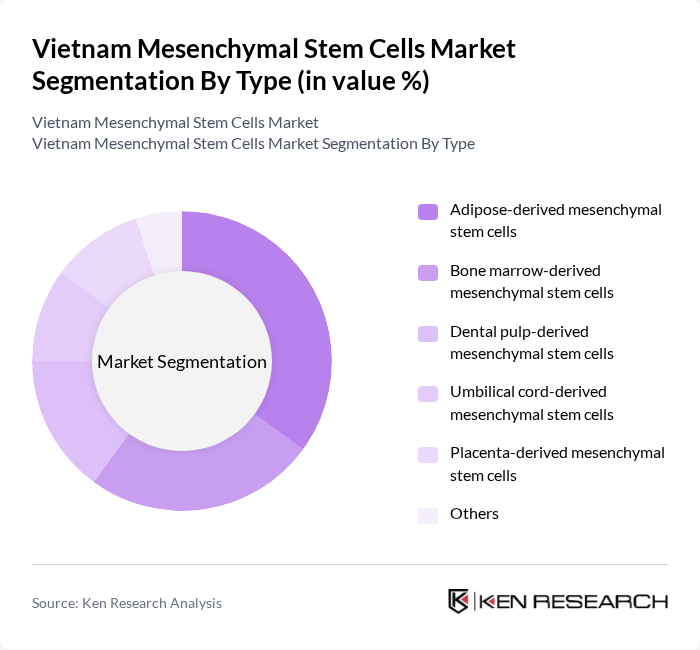
By Type:The market is segmented into various types of mesenchymal stem cells, including adipose-derived, bone marrow-derived, dental pulp-derived, umbilical cord-derived, placenta-derived, and others. Among these, adipose-derived mesenchymal stem cells are gaining significant traction due to their ease of extraction, high proliferation potential, and increasing use in cosmetic, orthopedic, and wound healing applications. The growing acceptance of these cells in regenerative medicine and their favorable safety profile further solidify their leading position in the Vietnamese market .
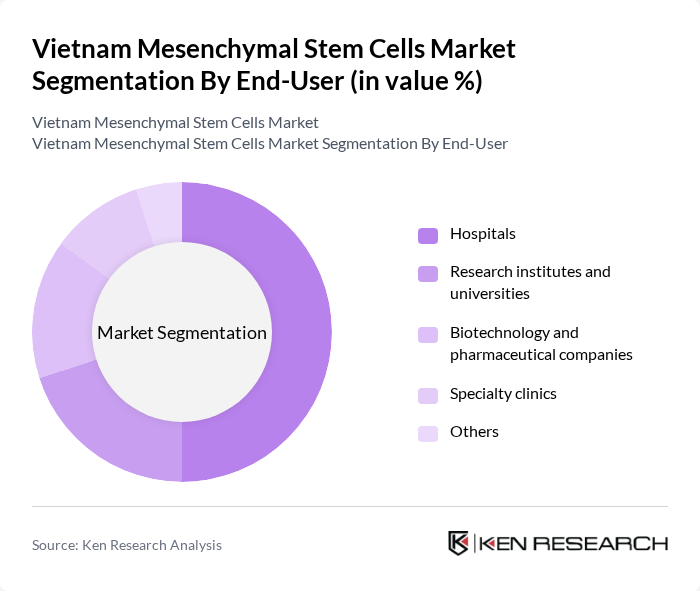
By End-User:The end-user segmentation includes hospitals, research institutes and universities, biotechnology and pharmaceutical companies, specialty clinics, and others. Hospitals remain the leading end-users of mesenchymal stem cells, driven by their extensive patient base, the increasing adoption of stem cell therapies in clinical settings, and the expansion of specialized treatment centers. Advancements in medical technology and the integration of stem cell therapies into routine clinical practice are further propelling demand in hospitals .
The Vietnam Mesenchymal Stem Cells Market is characterized by a dynamic mix of regional and international players. Leading participants such as Vinmec Healthcare System, Ho Chi Minh City University of Medicine and Pharmacy, Stem Cell Institute – University of Science, Vietnam National University Ho Chi Minh City, Hanoi Medical University, Gene Solutions, Medlatec Group, Vietnam National University, Hanoi, Van Hanh Hospital, Vinmec Research Institute of Stem Cell and Gene Technology, Stem Cell Research and Application Laboratory – University of Science, Vietnam National University Hanoi, An Phuoc International Hospital, Phu Tho General Hospital, National Institute of Hematology and Blood Transfusion, Military Medical University (H?c vi?n Quân y), 108 Military Central Hospital (B?nh vi?n Trung ??ng Quân ??i 108) contribute to innovation, geographic expansion, and service delivery in this space.
The future of the mesenchymal stem cells market in Vietnam appears promising, driven by ongoing research and technological advancements. As the government continues to invest in biotechnology, the integration of artificial intelligence in stem cell research is expected to enhance treatment outcomes. Additionally, public-private partnerships are likely to foster innovation and improve regulatory frameworks, paving the way for broader acceptance and application of stem cell therapies in clinical settings.
| Segment | Sub-Segments |
|---|---|
| By Type | Adipose-derived mesenchymal stem cells Bone marrow-derived mesenchymal stem cells Dental pulp-derived mesenchymal stem cells Umbilical cord-derived mesenchymal stem cells Placenta-derived mesenchymal stem cells Others |
| By End-User | Hospitals Research institutes and universities Biotechnology and pharmaceutical companies Specialty clinics Others |
| By Application | Orthopedics and musculoskeletal disorders Cardiology Neurology Oncology Autoimmune and inflammatory diseases Others |
| By Source | Autologous Allogeneic Others |
| By Treatment Type | Cell therapy Tissue engineering Regenerative medicine Others |
| By Distribution Channel | Direct sales Online sales Distributors Others |
| By Research Type | Clinical research Preclinical research Translational research Others |
| Scope Item/Segment | Sample Size | Target Respondent Profiles |
|---|---|---|
| Orthopedic Stem Cell Treatments | 60 | Orthopedic Surgeons, Clinic Administrators |
| Cardiovascular Applications | 50 | Cardiologists, Research Scientists |
| Neurological Disorders | 40 | Neurologists, Rehabilitation Specialists |
| Regenerative Medicine Research | 40 | Biotech Researchers, University Professors |
| Patient Experience with Stem Cell Therapy | 50 | Patients, Caregivers, Health Advocates |
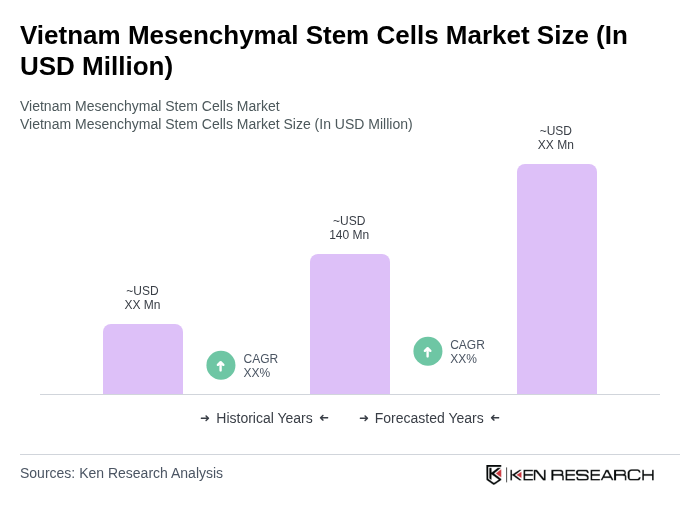
The Vietnam Mesenchymal Stem Cells Market is valued at approximately USD 140 million, reflecting significant growth driven by advancements in regenerative medicine and increasing healthcare investments.

What makes us stand out is that our consultants follow Robust, Refine and Result (RRR) methodology. Robust for clear definitions, approaches and sanity checking, Refine for differentiating respondents' facts and opinions, and Result for presenting data with story.

We have set a benchmark in the industry by offering our clients with syndicated and customized market research reports featuring coverage of entire market as well as meticulous research and analyst insights.

While we don't replace traditional research, we flip the method upside down. Our dual approach of Top Bottom & Bottom Top ensures quality deliverable by not just verifying company fundamentals but also looking at the sector and macroeconomic factors.

With one step in the future, our research team constantly tries to show you the bigger picture. We help with some of the tough questions you may encounter along the way: How is the industry positioned? Best marketing channel? KPI's of competitors? By aligning every element, we help maximize success.

Our report gives you instant access to the answers and sources that other companies might choose to hide. We elaborate each steps of research methodology we have used and showcase you the sample size to earn your trust.

If you need any support, we are here! We pride ourselves on universe strength, data quality, and quick, friendly, and professional service.













