Region:Global
Author(s):Dev
Product Code:KRAC1591
Pages:91
Published On:December 2025
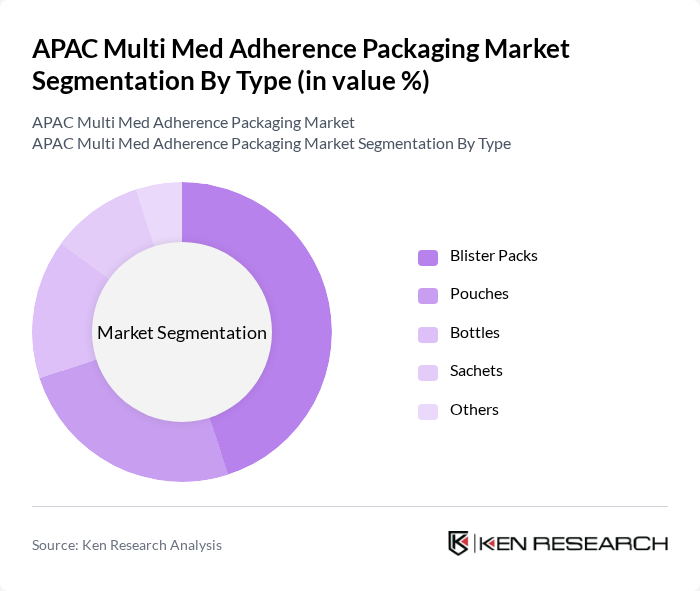
By Type:The market is segmented into various types of adherence packaging, including blister packs, pouches, bottles, sachets, and others. Among these, blister packs are the most dominant due to their ability to provide secure and organized medication dispensing, which is crucial for patient adherence. The convenience and effectiveness of blister packs in preventing medication errors and ensuring proper dosage have made them a preferred choice among healthcare providers and patients alike. Pouches are experiencing rapid growth due to their flexible, lightweight design suited for home care and e-pharmacy delivery.
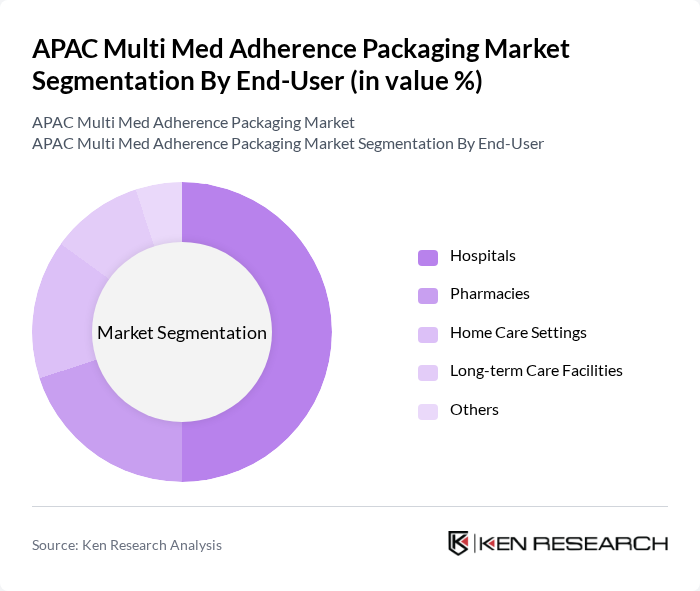
By End-User:The end-user segmentation includes hospitals, pharmacies, home care settings, long-term care facilities, and others. Hospitals are the leading end-users of multi-med adherence packaging, primarily due to their need for efficient medication management systems. The increasing focus on patient safety and the reduction of medication errors in hospital settings drive the demand for advanced packaging solutions that enhance adherence and streamline medication administration. Long-term care facilities show the fastest growth driven by geriatric population needs and polypharmacy management.
The APAC Multi Med Adherence Packaging Market is characterized by a dynamic mix of regional and international players. Leading participants such as Amcor plc, WestRock Company, AptarGroup, Inc., Becton, Dickinson and Company, Catalent, Inc., Mylan N.V., Omnicare, Inc., Parata Systems, LLC, Phillips-Medisize Corporation, Rexam PLC, Sandoz International GmbH, Teva Pharmaceutical Industries Ltd., UDG Healthcare plc, Vetter Pharma-Fertigung GmbH & Co. KG, Wockhardt Ltd. contribute to innovation, geographic expansion, and service delivery in this space.
The future of the APAC multi-med adherence packaging market is poised for significant transformation, driven by the integration of smart technologies and a growing emphasis on sustainability. As digital health solutions gain traction, the adoption of smart packaging that utilizes AI and real-time data analytics will enhance medication management. Additionally, the increasing focus on eco-friendly materials will lead to the development of sustainable packaging options, aligning with global environmental goals and consumer preferences for greener solutions.
| Segment | Sub-Segments |
|---|---|
| By Type | Blister Packs Pouches Bottles Sachets Others |
| By End-User | Hospitals Pharmacies Home Care Settings Long-term Care Facilities Others |
| By Region | North India South India East India West India |
| By Application | Chronic Disease Management Preventive Care Post-operative Care Others |
| By Material | Plastic Paper Glass Others |
| By Distribution Channel | Online Offline Direct Sales Others |
| By Technology | Smart Packaging Traditional Packaging Others |
| Scope Item/Segment | Sample Size | Target Respondent Profiles |
|---|---|---|
| Pharmacists in Urban Areas | 120 | Community Pharmacists, Hospital Pharmacists |
| Patients with Chronic Conditions | 100 | Diabetes Patients, Hypertension Patients |
| Healthcare Providers | 80 | General Practitioners, Specialists |
| Caregivers of Elderly Patients | 70 | Family Caregivers, Professional Caregivers |
| Healthcare Policy Makers | 60 | Health Administrators, Policy Analysts |
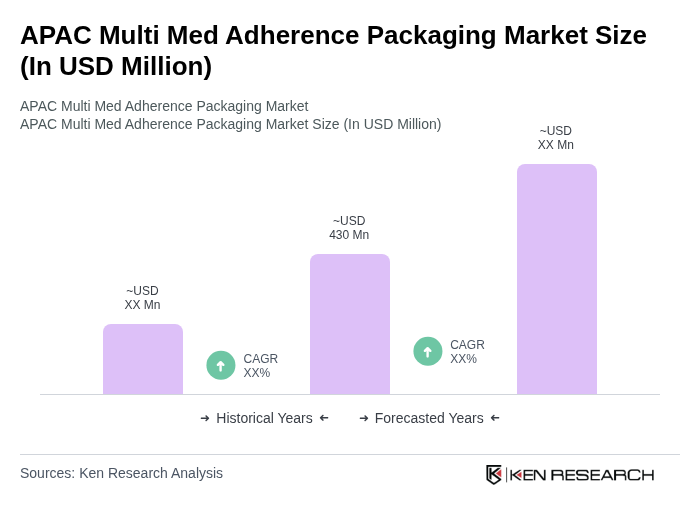
The APAC Multi Med Adherence Packaging Market is valued at approximately USD 430 million, driven by the demand for secure and patient-friendly packaging formats that enhance medication compliance, particularly in countries like China, India, and Japan.

What makes us stand out is that our consultants follow Robust, Refine and Result (RRR) methodology. Robust for clear definitions, approaches and sanity checking, Refine for differentiating respondents' facts and opinions, and Result for presenting data with story.

We have set a benchmark in the industry by offering our clients with syndicated and customized market research reports featuring coverage of entire market as well as meticulous research and analyst insights.

While we don't replace traditional research, we flip the method upside down. Our dual approach of Top Bottom & Bottom Top ensures quality deliverable by not just verifying company fundamentals but also looking at the sector and macroeconomic factors.

With one step in the future, our research team constantly tries to show you the bigger picture. We help with some of the tough questions you may encounter along the way: How is the industry positioned? Best marketing channel? KPI's of competitors? By aligning every element, we help maximize success.

Our report gives you instant access to the answers and sources that other companies might choose to hide. We elaborate each steps of research methodology we have used and showcase you the sample size to earn your trust.

If you need any support, we are here! We pride ourselves on universe strength, data quality, and quick, friendly, and professional service.













