Region:Central and South America
Author(s):Geetanshi
Product Code:KRAB3412
Pages:97
Published On:October 2025
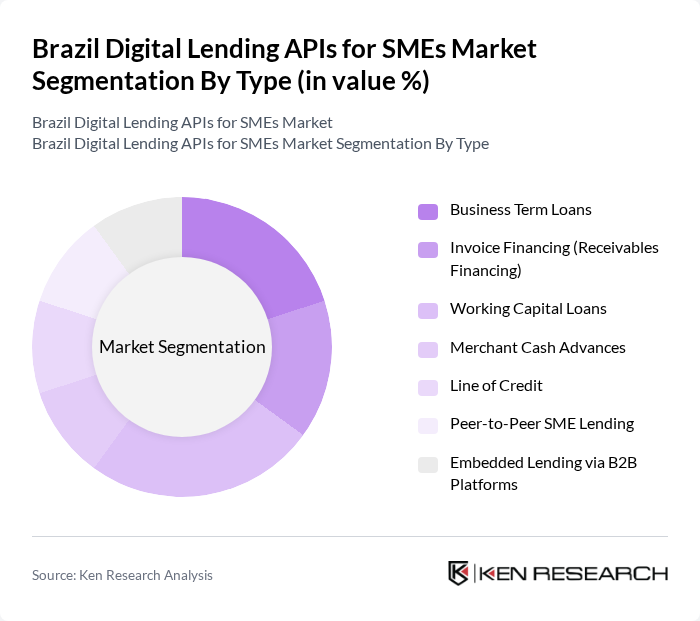
By Type:This segmentation includes various lending options available to SMEs, which cater to different financial needs and operational requirements. The subsegments are Business Term Loans, Invoice Financing (Receivables Financing), Working Capital Loans, Merchant Cash Advances, Line of Credit, Peer-to-Peer SME Lending, and Embedded Lending via B2B Platforms. Each of these subsegments plays a crucial role in providing tailored financial solutions to SMEs, addressing their unique challenges and growth aspirations. Digital lenders increasingly leverage APIs to automate loan origination, underwriting, and servicing across these product lines, enabling faster disbursement and improved customer experience .
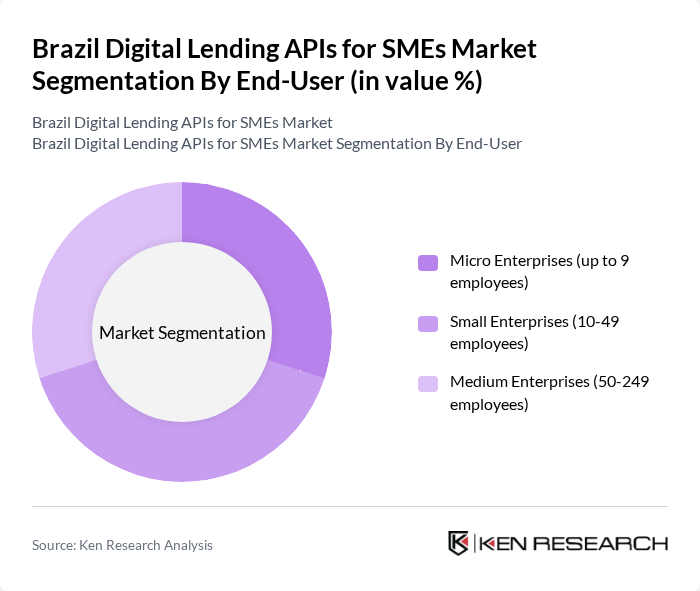
By End-User:This segmentation categorizes SMEs based on their size and employee count, which influences their borrowing needs and preferences. The subsegments include Micro Enterprises (up to 9 employees), Small Enterprises (10-49 employees), and Medium Enterprises (50-249 employees). Each category has distinct financial requirements, with micro and small enterprises often seeking smaller, more flexible loans, while medium enterprises may pursue larger financing options for expansion. The increasing digitalization of SME operations and the adoption of embedded finance solutions are driving demand across all segments .
The Brazil Digital Lending APIs for SMEs Market is characterized by a dynamic mix of regional and international players. Leading participants such as Nubank, Creditas, Banco Inter, Geru (now Rebel), BizCapital, PagSeguro, Banco Pan, C6 Bank, Koin, Simplic, Lendico, Acesso Bank, FinanZero, Zetra, Bcredi contribute to innovation, geographic expansion, and service delivery in this space.
The future of Brazil's digital lending APIs for SMEs appears promising, driven by ongoing technological advancements and increasing financial inclusion. As more SMEs embrace digital solutions, the demand for tailored lending products is expected to rise. Additionally, partnerships between fintechs and traditional banks are likely to enhance service offerings, providing SMEs with more diverse financing options. The integration of AI and machine learning will further streamline lending processes, making them more efficient and user-friendly, thus fostering market growth in the coming years.
| Segment | Sub-Segments |
|---|---|
| By Type | Business Term Loans Invoice Financing (Receivables Financing) Working Capital Loans Merchant Cash Advances Line of Credit Peer-to-Peer SME Lending Embedded Lending via B2B Platforms |
| By End-User | Micro Enterprises (up to 9 employees) Small Enterprises (10-49 employees) Medium Enterprises (50-249 employees) |
| By Application | Working Capital Financing Equipment Purchase/Leasing Business Expansion/Project Financing Inventory Financing |
| By Distribution Channel | Direct Digital Lending Platforms (APIs) Bank-Fintech Partnerships B2B Marketplaces & Embedded Finance Third-Party Aggregators |
| By Customer Segment | Startups Established SMEs Export-Oriented SMEs Seasonal Businesses |
| By Loan Size | Micro Loans (up to R$20,000) Small Loans (R$20,001 - R$100,000) Medium Loans (R$100,001 - R$500,000) Large Loans (above R$500,000) |
| By Policy Support | Government Subsidies Tax Incentives Regulatory Support Programs |
| Scope Item/Segment | Sample Size | Target Respondent Profiles |
|---|---|---|
| Digital Lending Adoption in SMEs | 120 | SME Owners, Financial Managers |
| Fintech Solutions for SME Financing | 90 | Product Managers, Business Development Managers |
| Challenges in Accessing Digital Loans | 60 | SME Founders, CFOs |
| Impact of Regulatory Changes on Lending | 50 | Compliance Officers, Legal Advisors |
| Future Trends in Digital Lending | 70 | Market Analysts, Industry Experts |
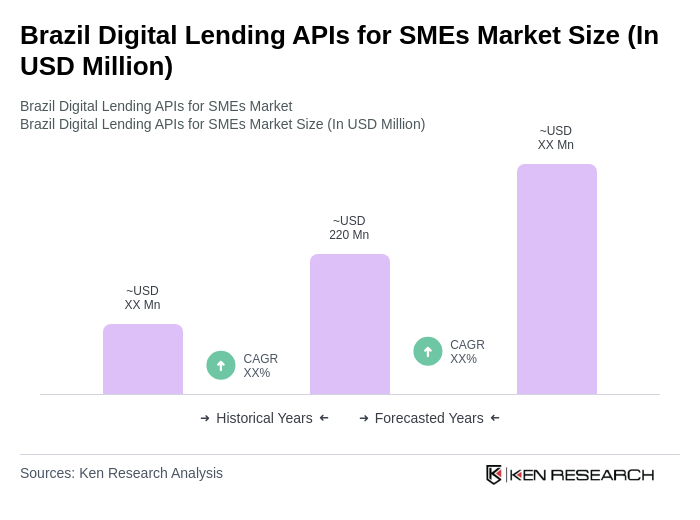
The Brazil Digital Lending APIs for SMEs market is valued at approximately USD 220 million, driven by the increasing adoption of digital financial services and the demand for rapid financing solutions among small and medium enterprises.

What makes us stand out is that our consultants follow Robust, Refine and Result (RRR) methodology. Robust for clear definitions, approaches and sanity checking, Refine for differentiating respondents' facts and opinions, and Result for presenting data with story.

We have set a benchmark in the industry by offering our clients with syndicated and customized market research reports featuring coverage of entire market as well as meticulous research and analyst insights.

While we don't replace traditional research, we flip the method upside down. Our dual approach of Top Bottom & Bottom Top ensures quality deliverable by not just verifying company fundamentals but also looking at the sector and macroeconomic factors.

With one step in the future, our research team constantly tries to show you the bigger picture. We help with some of the tough questions you may encounter along the way: How is the industry positioned? Best marketing channel? KPI's of competitors? By aligning every element, we help maximize success.

Our report gives you instant access to the answers and sources that other companies might choose to hide. We elaborate each steps of research methodology we have used and showcase you the sample size to earn your trust.

If you need any support, we are here! We pride ourselves on universe strength, data quality, and quick, friendly, and professional service.













