CHAPTER 1 - MARKET SUMMARY
Market Overview
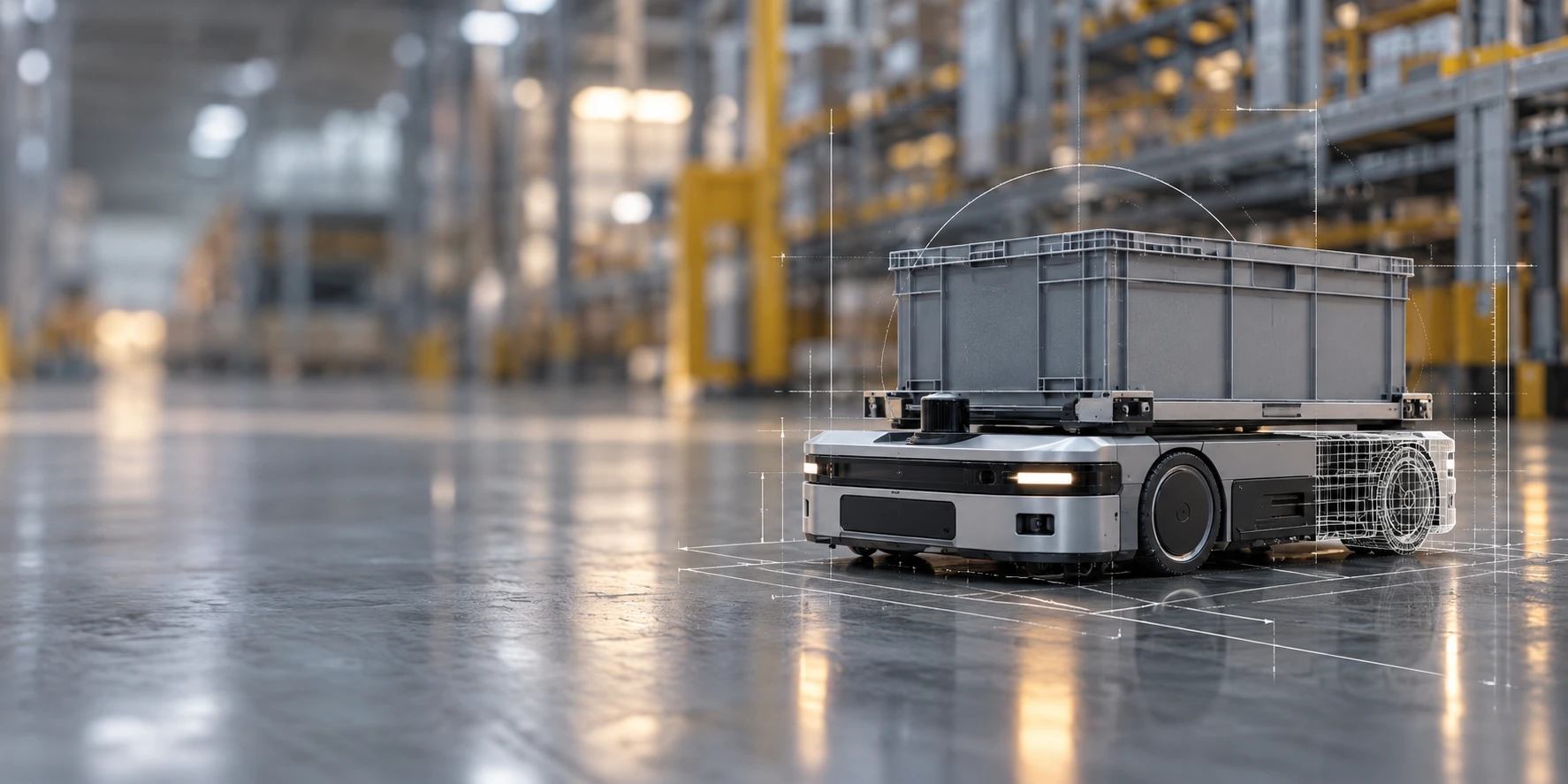
The China Logistics Robotics Market operates across warehouse movement, goods-to-person fulfillment, picking, sorting, pallet handling and manufacturing intralogistics. Demand is structurally linked to shipment intensity: express-delivery volume expanded from 83.4 billion pieces in 2020 to 199.0 billion in 2025, equivalent to approximately 19.0% annual growth. High-frequency fulfillment therefore rewards robots that improve throughput, labor productivity and operating consistency.
East China represents the strongest supply and integration cluster because robotics manufacturing, electronics, automotive production and logistics hubs are densely interconnected. At the end of 2024, eastern China accounted for 66.06% of the country's 451,700 intelligent-robot-related enterprises. This concentration lowers supplier coordination costs and supports faster deployment of robot fleets, navigation systems, controllers and warehouse integration services.
Market Value
USD 2,582 million
2025
Dominant Region
East China
Dominant Segment
Autonomous Mobile Robots
fastest growing
Total Number of Players
44
Future Outlook
The China Logistics Robotics Market is projected to expand from USD 2,582 million in 2025 to USD 7,984 million by 2032, representing a 17.50% forecast CAGR. This follows an estimated 20.18% CAGR during 2020-2025, when domestic automation demand moved from pilot installations toward larger multi-robot deployments. Growth should remain strongest where order density, labor intensity and SKU complexity create measurable automation economics. Autonomous mobile robots, autonomous forklifts, AI-based orchestration and flexible picking systems are positioned to capture a progressively larger share of incremental investment as operators favor scalable solutions over fixed automation architectures.
By 2032, market value is expected to be roughly three times its 2025 level, while modeled robot shipments increase faster than revenue during the early forecast years because system ASPs remain under competitive pressure. The underlying demand environment is reinforced by 182,000 Chinese mobile-robot units sold in 2025, up 30.94% year on year, alongside 32,000 unmanned forklifts. Over the forecast period, value creation should progressively shift from standalone hardware toward fleet software, intelligent navigation, integration, lifecycle services and multi-robot orchestration, improving recurring revenue potential for suppliers capable of supporting complex warehouse and manufacturing workflows.
17.50%
Forecast CAGR
$7,984 Mn
2030 Projection
Base Year
2025
Historical Period
2020-2025
Forecast Period
2025-2032
Historical CAGR
20.18%
CHAPTER 2 - SCOPE OF REPORT
Scope of the Market
CHAPTER 3 - Key Stakeholders
Key Target Audience
Key stakeholders who can leverage from this market analysis for investment, strategy, and operational planning.
Investors
CAGR, hardware margins, recurring software, export scalability, consolidation
Corporates
throughput, automation ROI, labor productivity, integration, fleet scalability
Government
robot density, standards, localization, logistics efficiency, industrial competitiveness
Operators
picking productivity, fleet uptime, deployment speed, safety, interoperability
Financial institutions
automation capex, payback, vendor risk, cash conversion, covenants
CHAPTER 4 - Market Size & Growth
Market Size, Growth Forecast and Trends
This section evaluates the historical market size, analyzes year-over-year growth dynamics, and presents forecast projections supported by market performance indicators and demand-side drivers.
Historical & Projected Market Size ($ Million)
Year-over-Year Growth Rate (%)
Market Value vs Volume Growth (%)
Historical Market Performance (2020-2025)
Historical expansion accelerated as logistics robotics moved beyond isolated AGV deployments into flexible AMR, autonomous forklift and picking applications. Modeled annual value growth peaked at 21.7% in 2023 before moderating to 18.1% in 2025. The 2025 divergence between 30.9% robot shipment growth and 18.1% value growth indicates falling average realization per deployed robot, consistent with localization, greater entry-level AMR penetration and stronger supplier competition. The historical period nevertheless delivered a 20.18% CAGR, establishing a substantially larger installed base for software, maintenance, fleet management and system-upgrade revenue.
Forecast Market Outlook (2025-2032)
Forecast growth is modeled at 17.50% annually, taking the market to USD 7,984 million by 2032. The model assumes continued double-digit deployment growth while unit pricing becomes more competitive and revenue composition shifts toward software, integration and higher-complexity robotic workflows. Market value reaches USD 5,783 million by 2030, broadly consistent with externally published China logistics-robot benchmarks. Expansion beyond simple transport into autonomous forklifts, AI scheduling, case handling and machine-vision picking should maintain value growth even as standardized mobile-robot hardware experiences price pressure.
CHAPTER 5 - Market Data
Market Breakdown
The market is moving from hardware-led automation toward integrated robotic fleets combining mobility, perception and orchestration. For CEOs and investors, the key issue is whether rising shipment density offsets declining hardware realization while expanding software and integration profit pools.
Year | Market Size (USD Mn) | YoY Growth (%) | Modeled Robot Shipments (000 units) | Implied System ASP (USD 000) | AMR Mix (%) | Period |
|---|---|---|---|---|---|---|
| 2020 | $1,030 Mn | +- | 63 | 16.3 | Forecast | |
| 2021 | $1,225 Mn | +18.9% | 77 | 15.9 | Forecast | |
| 2022 | $1,478 Mn | +20.7% | 99 | 14.9 | Forecast | |
| 2023 | $1,798 Mn | +21.7% | 125 | 14.4 | Forecast | |
| 2024 | $2,186 Mn | +21.6% | 139 | 15.7 | Forecast | |
| 2025 | $2,582 Mn | +18.1% | 182 | 14.2 | Forecast | |
| 2026 | $3,034 Mn | +17.5% | 218 | 13.9 | Forecast | |
| 2027 | $3,565 Mn | +17.5% | 260 | 13.7 | Forecast | |
| 2028 | $4,189 Mn | +17.5% | 309 | 13.6 | Forecast | |
| 2029 | $4,922 Mn | +17.5% | 366 | 13.4 | Forecast | |
| 2030 | $5,783 Mn | +17.5% | 432 | 13.4 | Forecast | |
| 2031 | $6,795 Mn | +17.5% | 508 | 13.4 | Forecast | |
| 2032 | $7,984 Mn | +17.5% | 595 | 13.4 | Forecast |
Mobile Robot Unit Sales
182,000 units, 2025, China. Unit sales increased 30.94%, materially faster than revenue growth, demonstrating rapid deployment penetration but also intensifying hardware pricing pressure.
Unmanned Forklift Sales
32,000 units, 2025, China. Sales expanded 30.61%, while penetration remained below 3% of approximately 1.45 million industrial forklifts, indicating substantial conversion headroom for autonomous pallet movement.
Overseas AGV/AMR Sales
RMB 8.5 billion, 2025, China. Overseas sales increased 25% and represented 32.55% of reported AGV/AMR sales, improving scale economics for domestic suppliers while raising the importance of global certification and service capability.
CHAPTER 6 - Segmentation
Market Segmentation Framework
Comprehensive analysis across key dimensions providing insights into market structure, consumer preferences, and distribution patterns.
No of Segments
7
Dominant Segment
Product Type
Fastest Growing Segment
Technology
Product Type
Application
End-Use Industry
Technology
Payload Capacity
Sales Channel
Geography
Key Segmentation Takeaways
Comprehensive analysis across all extracted segmentation dimensions providing insights into market structure, consumer preferences, and distribution patterns.
Product Type
Product architecture remains the primary commercial segmentation because hardware choice determines payload, workflow flexibility, integration complexity and capital intensity. Autonomous mobile robots increasingly capture new projects where operators need scalable fleets without fixed guidance infrastructure, while autonomous forklifts address pallet workflows and picking or sorting systems target higher-value fulfillment processes.
Technology
Technology is the fastest-changing dimension as navigation shifts from fixed-path guidance toward LiDAR, machine vision and multi-sensor autonomy. AI Fleet Orchestration is the fastest-growing Level-2 category because larger robot fleets require dynamic task allocation, traffic management, route optimization and interoperability with warehouse management systems, creating higher recurring software and integration value.
CHAPTER 7 - Regional Analysis
Regional Analysis
China ranks first among selected Asia-Pacific peer markets by logistics-robot revenue and combines the largest commercial base with the highest stated peer growth rate. Its advantage is reinforced by exceptional industrial robot deployment and domestic supplier scale.
Focus Country Ranking
1st
Focus Country Market Size
USD 2,582 Mn (2025)
China CAGR (2025-2032)
17.5%
Focus Country Ranking
1st
Focus Country Market Size
USD 2,582 Mn (2025)
China CAGR (2025-2032)
17.5%
Regional Analysis (Current Year)
Market Position
China ranks first in the peer set, with 2024 logistics-robot revenue of USD 2,186 million, more than twice India's USD 834 million benchmark.
Growth Advantage
China's published 18.1% outlook exceeds Japan's 16.7% and India's 16.3%, positioning the country as both the largest and one of the fastest-growing peer markets.
Competitive Strengths
China installed 295,000 industrial robots in 2024, held more than 2 million operational units and domestic suppliers captured 57% of installations, supporting logistics-robot localization.
CHAPTER 8 - INDUSTRY ANALYSIS
Growth Drivers, Challenges & Opportunities
Comprehensive analysis of key factors shaping the China Logistics Robotics Market, including growth catalysts, operational challenges, and emerging opportunities across production, distribution, and consumer segments.
Growth Drivers
E-commerce Fulfillment Intensity
- Online retail expanded by 8.6% (2025, China), increasing order-line complexity and supporting AMR, picking and sorting investment at high-throughput fulfillment sites.
- Physical-goods online retail reached RMB 13.09 trillion (2025, China) and represented 26.1% of consumer-goods retail, structurally embedding warehouse automation into retail distribution.
- China's total social logistics value reached RMB 368 trillion (2025, China), enlarging the addressable workflow base across distribution, manufacturing and transport nodes.
Industrial Automation Scale
- China accounted for 54% of global industrial robot installations (2024, China), giving logistics-robot suppliers access to a large automation-aware industrial customer base.
- Domestic suppliers captured 57% of China's industrial robot installations (2024, China), strengthening local component sourcing, price competition and support capacity.
- China's operational industrial robot stock exceeded 2 million units (2024, China), supporting a deep system-integration and engineering talent ecosystem relevant to logistics automation.
Policy and Digital Infrastructure
- Mobile IoT terminals reached 2.888 billion connections (2025, China), supporting machine connectivity, sensor integration and real-time orchestration across automated operations.
- The Robot+ initiative targets 10 priority sectors (2025 target, China), creating institutional support for wider robot use in manufacturing, commerce, logistics and related services.
- Service robot output reached 18.581 million sets (2025, China), up 16.1%, illustrating rapidly expanding domestic robotics production capabilities and component scale.
Market Challenges
Hardware Price and Mix Compression
- The difference between value and unit growth implies approximately 9.8% lower average realization (2025, China), increasing the importance of software and service monetization.
- About 13% of surveyed suppliers recorded revenue contraction (2025, China), demonstrating that market expansion does not translate uniformly into vendor profitability.
- Only 68% of suppliers achieved positive revenue growth (2025, China), requiring investors to distinguish shipment expansion from sustainable margin and cash generation.
Fragmented Competitive Structure
- Only 4 suppliers exceeded RMB 1 billion of orders (2025, China), indicating a long competitive tail and limited concentration at scale.
- A further 4 suppliers generated RMB 500 million to RMB 1 billion of orders (2025, China), intensifying competition immediately below the leading tier.
- China had 451,700 intelligent-robot-related enterprises (2024, China), highlighting broad ecosystem depth but also substantial vendor-selection and interoperability complexity for buyers.
Integration and Standardization Complexity
- The initiative seeks more than 100 innovative technologies and solutions (2025 target, China), underscoring the complexity of standardizing navigation, control and human-machine interaction across sites.
- A national standard covering industrial heavy-duty mobile robot performance testing entered the standards pipeline in 2024 (China), demonstrating ongoing formalization of technical requirements.
- A separate industrial robot application performance-test standard was issued as GB/T 20868-2024 (China), raising the importance of documented reliability, safety and performance validation.
Market Opportunities
Autonomous Forklift Conversion
- An industrial forklift base of approximately 1.45 million units sold (2025, China) creates a large addressable conversion pool for autonomous pallet workflows.
- Current unmanned forklift sales of 32,000 units (2025, China) provide suppliers with room to scale recurring fleet software, maintenance and integration revenue.
- Unit growth of 30.61% (2025, China) indicates customers are increasingly comfortable automating pallet handling, benefiting forklift OEMs, robotics suppliers and integrators.
International Expansion of Chinese Suppliers
- Overseas revenue reached RMB 8.5 billion (2025, China suppliers), creating monetizable demand for localization, service networks, software support and partner ecosystems.
- International sales represented 32.55% of reported AGV/AMR sales (2025, China suppliers), making global operations material to supplier growth strategies.
- More than 20 Chinese suppliers surpassed 10,000 cumulative AGV/AMR shipments (2025, China), providing deployment references needed to win larger multinational projects.
AI-Orchestrated Multi-Robot Warehouses
- National industrial-robot production grew at an average 28.8% annually during 2021-2025 (China), expanding the hardware and engineering ecosystem available for advanced logistics automation.
- China averaged 34 5G base stations per 10,000 people (2025, China), supporting industrial connectivity for real-time fleet monitoring and distributed edge intelligence.
- More than 100 Robot+ technologies and solutions (2025 target, China) create an institutional pathway for AI scheduling, multimodal sensing and collaborative robotic workflows.
CHAPTER 9 - Competitive Landscape
Competitive Landscape Overview
Competition is fragmented but scaling quickly, with 44 AGV/AMR suppliers exceeding RMB 100 million of orders in 2025 and leading vendors competing on fleet intelligence, deployment speed, vertical specialization and global service reach.
Market Share Distribution
Top 5 Players
Market Dynamics
8 new entrants in the past 5 years, indicating strong market attractiveness and growth potential.
Company Name | Market Share | Headquarters | Founding Year | Core Market Focus |
|---|---|---|---|---|
Geek+ | - | Beijing, China | 2015 | AMR-based warehouse fulfillment and material transport |
Hikrobot | - | Hangzhou, China | 2016 | Mobile robots, machine vision and intralogistics systems |
Quicktron Robotics | - | Shanghai, China | 2014 | AMR and AGV warehouse automation |
Hai Robotics | - | Shenzhen, China | 2016 | Automated case-handling mobile robots and HaiPick systems |
ForwardX Robotics | - | - | 2016 | Vision-based AMRs for fulfillment and material movement |
Libiao Robotics | - | Hangzhou, China | - | Mini-yellow sorting robots and parcel automation |
VisionNav Robotics | - | Shenzhen, China | - | Autonomous forklifts and unmanned material handling |
Standard Robots | - | Shenzhen, China | - | Industrial AMRs and flexible intralogistics automation |
IPLUSMOBOT | - | Hangzhou, China | - | Industrial mobile robots and intelligent logistics systems |
Mushiny | - | Suzhou, China | - | AMR fulfillment systems and warehouse orchestration |
Cross Comparison Parameters
The report provides detailed cross-comparison of key players across 10 performance parameters to identify competitive strengths and weaknesses.
Installed Robot Base
Average Deployment Time
China Logistics Robotics Revenue
Revenue Growth Rate
Analysis Covered
Market Share Analysis:
Compares supplier scale across core China logistics robotics revenue pools
Cross Comparison Matrix:
Benchmarks deployment scale, execution speed, revenue and growth performance
SWOT Analysis:
Assesses technology, channel, service, cost and execution advantages comprehensively
Pricing Strategy Analysis:
Evaluates hardware pricing, integration economics and recurring software monetization
Company Profiles:
Reviews positioning, product focus, capabilities and geographic operating footprint
CHAPTER 10 - REPORT TOC
Table of Contents
Market Assessment Phase
Supply-side and competitive intelligence covering market sizing, segmentation, competitive dynamics, regulatory landscape, and future forecasts.
Go-To-Market Strategy Phase
15 chapters
Entry strategy evaluation, execution roadmap, partner recommendations, and profitability outlook.
Survey Phase
8 chapters
Demand-side primary research conducted through structured interviews and online surveys with end users across priority metros and Tier 2/3 cities to capture consumption behavior, unmet needs, and purchase drivers.
Complete Report Coverage
201+ detailed sections covering every aspect of the market
143
Assessment Sections
58
Strategy Sections
CHAPTER 11 - Our Approach
Research Methodology
Desk Research
- China logistics robot shipment tracking
- Warehouse automation investment benchmarking analysis
- Robot policy and standards review
- Supplier portfolio and deployment mapping
Primary Research
- Robotics product directors interviewed
- Warehouse automation managers interviewed
- System integration directors interviewed
- Supply chain executives interviewed
Validation and Triangulation
- 296 respondent cross-check sample
- Shipment and revenue reconciliation performed
- End-user procurement benchmarks cross-validated
- Forecast arithmetic independently sanity-checked
CHAPTER 12 - FAQ
FAQs
Still have questions?
Our research team is here to help you find the right solution
CHAPTER 13 - Related Research
Explore Related Reports
Expand your market intelligence with complementary research across regions and adjacent markets.
Regional/Country ReportsRelated market analysis across key regions
Related market analysis across key regions
- Australia Logistics Robotics Market
- Germany Logistics Robotics Market
- India Logistics Robotics Market
- Indonesia Logistics Robotics Market
- Vietnam Logistics Robotics Market
Adjacent ReportsRelated markets and complementary research
Related markets and complementary research
- Vietnam Warehouse Automation Market Size, Share & Forecast, By Solution Type, End-Use Industry & Technology, 2025–2032
- Indonesia Autonomous Vehicle Technology Market
- UAE Supply Chain Management Software Market
- South Africa Robotics Integration Services Market
- Germany Artificial Intelligence in Logistics Market
500+
Market Research Reports
50+
Countries Covered
15+
Industry Verticals