Region:Global
Author(s):Shubham
Product Code:KRAA3183
Pages:81
Published On:August 2025
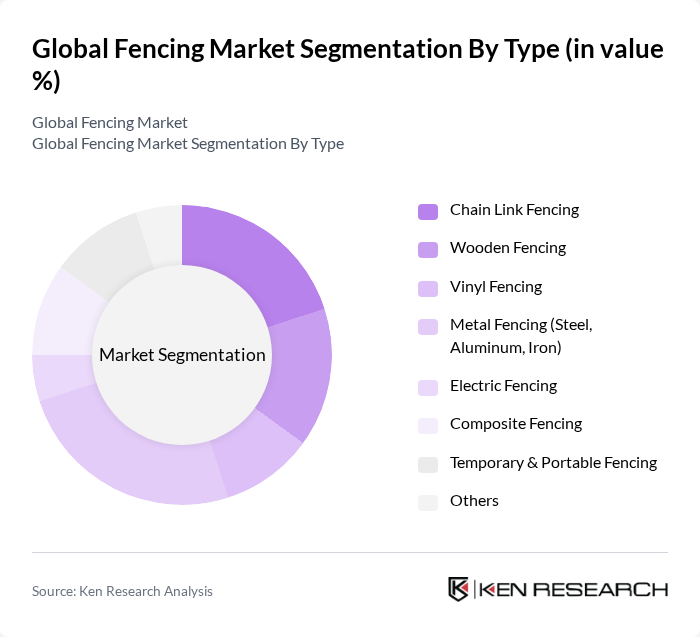
By Type:The fencing market can be segmented into various types, including Chain Link Fencing, Wooden Fencing, Vinyl Fencing, Metal Fencing (Steel, Aluminum, Iron), Electric Fencing, Composite Fencing, Temporary & Portable Fencing, and Others. Each type serves different consumer needs and preferences, influencing market dynamics. Metal fencing, particularly steel and aluminum, leads market share due to its durability, low maintenance, and suitability for both security and decorative purposes. Vinyl and composite fencing are gaining traction for their weather resistance and aesthetic appeal, while chain link and temporary fencing remain popular for cost-effective and flexible applications .
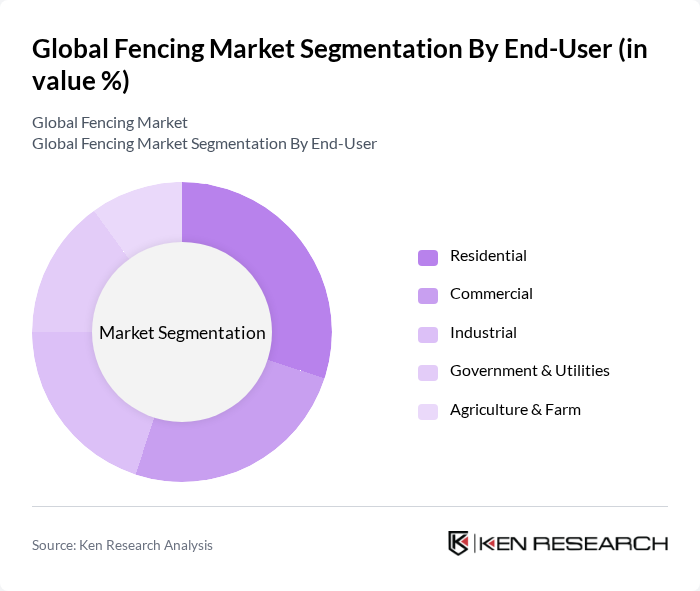
By End-User:The market can also be segmented based on end-users, which include Residential, Commercial, Industrial, Government & Utilities, and Agriculture & Farm. Each segment has unique requirements and preferences that drive the demand for specific fencing solutions. Residential applications lead the market, driven by new home construction and renovation activities, while commercial and industrial segments demand high-security and durable fencing systems. The agriculture and farm segment continues to require specialized fencing for livestock and crop protection .
The Global Fencing Market is characterized by a dynamic mix of regional and international players. Leading participants such as Ameristar Fence Products, Inc., Master Halco, Inc., Betafence NV, Barrette Outdoor Living, Inc., Fortress Building Products, Bekaert NV, Jacksons Fencing Ltd., Long Fence Company, Inc., Allied Tube & Conduit (Atkore International), SimTek Fence (now part of CertainTeed), Trex Company, Inc., CertainTeed Corporation, Ply Gem Holdings, Inc., Ametco Manufacturing Corporation, Tarter Farm and Ranch Equipment contribute to innovation, geographic expansion, and service delivery in this space.
The future of the fencing market in None appears promising, driven by technological advancements and increasing urbanization. As cities expand, the demand for effective security solutions will likely rise, leading to innovations in fencing materials and designs. Furthermore, the integration of smart technology into fencing systems is expected to enhance security features, making them more appealing to consumers. This trend, combined with a focus on sustainability, will shape the market landscape in the coming years.
| Segment | Sub-Segments |
|---|---|
| By Type | Chain Link Fencing Wooden Fencing Vinyl Fencing Metal Fencing (Steel, Aluminum, Iron) Electric Fencing Composite Fencing Temporary & Portable Fencing Others |
| By End-User | Residential Commercial Industrial Government & Utilities Agriculture & Farm |
| By Application | Security Fencing Decorative Fencing Agricultural & Farm Fencing Pool & Safety Fencing Highway & Infrastructure Fencing |
| By Material | Steel Aluminum Wood Vinyl Composite Concrete |
| By Distribution Channel | Direct Sales Retail Stores Online Sales Distributors |
| By Price Range | Low-End Mid-Range High-End |
| By Region | North America Europe Asia-Pacific Latin America Middle East & Africa |
| Scope Item/Segment | Sample Size | Target Respondent Profiles |
|---|---|---|
| Fencing Equipment Retailers | 100 | Store Managers, Sales Representatives |
| Fencing Coaches and Trainers | 60 | Head Coaches, Assistant Coaches |
| Competitive Fencers | 70 | Professional Athletes, Amateur Competitors |
| Fencing Club Administrators | 50 | Club Owners, Program Directors |
| Sports Equipment Manufacturers | 80 | Product Development Managers, Marketing Executives |
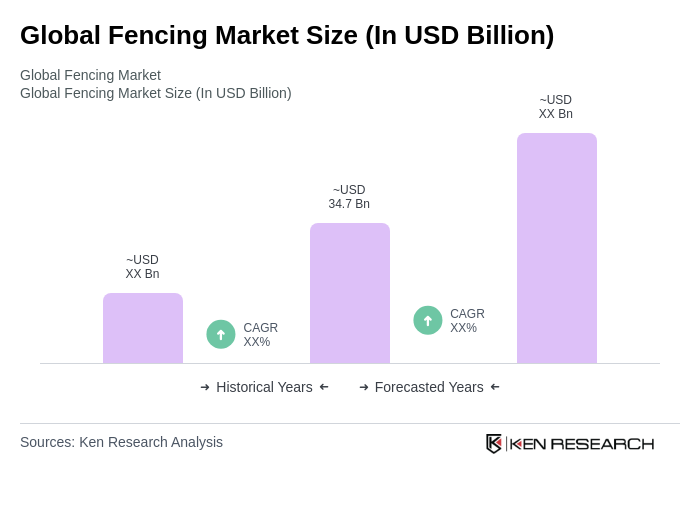
The Global Fencing Market is valued at approximately USD 34.7 billion, driven by factors such as urbanization, security concerns, and the growth of the construction industry. This valuation reflects a comprehensive analysis over the past five years.

What makes us stand out is that our consultants follow Robust, Refine and Result (RRR) methodology. Robust for clear definitions, approaches and sanity checking, Refine for differentiating respondents' facts and opinions, and Result for presenting data with story.

We have set a benchmark in the industry by offering our clients with syndicated and customized market research reports featuring coverage of entire market as well as meticulous research and analyst insights.

While we don't replace traditional research, we flip the method upside down. Our dual approach of Top Bottom & Bottom Top ensures quality deliverable by not just verifying company fundamentals but also looking at the sector and macroeconomic factors.

With one step in the future, our research team constantly tries to show you the bigger picture. We help with some of the tough questions you may encounter along the way: How is the industry positioned? Best marketing channel? KPI's of competitors? By aligning every element, we help maximize success.

Our report gives you instant access to the answers and sources that other companies might choose to hide. We elaborate each steps of research methodology we have used and showcase you the sample size to earn your trust.

If you need any support, we are here! We pride ourselves on universe strength, data quality, and quick, friendly, and professional service.













