Region:Global
Author(s):Geetanshi
Product Code:KRAD1231
Pages:89
Published On:November 2025
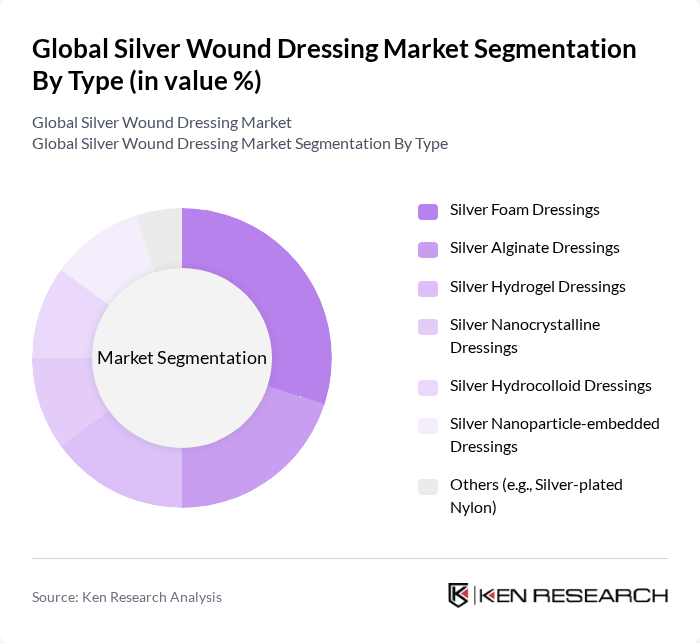
By Type:The market is segmented into various types of silver wound dressings, including Silver Foam Dressings, Silver Alginate Dressings, Silver Hydrogel Dressings, Silver Nanocrystalline Dressings, Silver Hydrocolloid Dressings, Silver Nanoparticle-embedded Dressings, and Others (e.g., Silver-plated Nylon). Among these, Silver Foam Dressings are gaining traction due to their superior absorbency, comfort, and ability to maintain a moist wound environment, making them a preferred choice for managing exudative and chronic wounds. Nanocrystalline silver dressings are also widely adopted for their prolonged antimicrobial activity and are especially used in burns and chronic wound management .
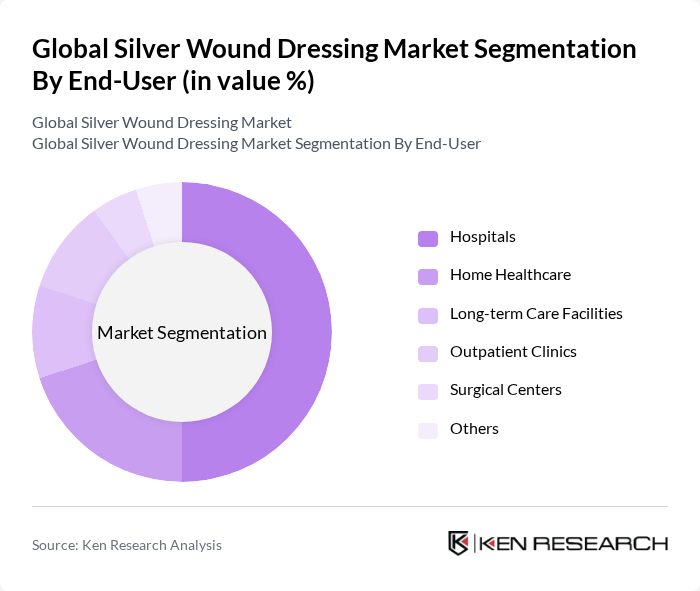
By End-User:The end-user segmentation includes Hospitals, Home Healthcare, Long-term Care Facilities, Outpatient Clinics, Surgical Centers, and Others. Hospitals remain the leading end-user segment, driven by the high volume of surgical procedures, the prevalence of chronic and post-operative wounds, and the need for advanced wound management in acute care. Home healthcare is expanding rapidly due to the aging population and increased demand for at-home wound care solutions. Outpatient clinics and long-term care facilities also contribute significantly, reflecting the shift toward decentralized and community-based wound care .
The Global Silver Wound Dressing Market is characterized by a dynamic mix of regional and international players. Leading participants such as Smith & Nephew, Mölnlycke Health Care, 3M Company, ConvaTec Group, Medline Industries, Acelity (now part of 3M), Coloplast, Derma Sciences (now part of Integra LifeSciences), Hartmann Group, BSN medical (now part of Essity), Ethicon (a subsidiary of Johnson & Johnson), Cardinal Health, Hollister Incorporated, B. Braun Melsungen AG, Medtronic, Winner Medical Co., Ltd., Advanced Medical Solutions Group plc, Urgo Medical, DeRoyal Industries, Lohmann & Rauscher contribute to innovation, geographic expansion, and service delivery in this space.
The future of the silver wound dressing market appears promising, driven by increasing healthcare investments and a focus on innovative solutions. As the global healthcare expenditure is projected to reach $12 trillion in the future, there will be significant opportunities for growth. Additionally, the integration of digital health technologies, such as telemedicine and remote monitoring, is expected to enhance patient engagement and adherence to wound care protocols, further propelling market expansion.
| Segment | Sub-Segments |
|---|---|
| By Type | Silver Foam Dressings Silver Alginate Dressings Silver Hydrogel Dressings Silver Nanocrystalline Dressings Silver Hydrocolloid Dressings Silver Nanoparticle-embedded Dressings Others (e.g., Silver-plated Nylon) |
| By End-User | Hospitals Home Healthcare Long-term Care Facilities Outpatient Clinics Surgical Centers Others |
| By Application | Surgical Wounds Traumatic Wounds Diabetic Foot Ulcers Pressure Ulcers Burns Chronic Wounds Others |
| By Distribution Channel | Direct Sales Online Retail Pharmacies Medical Supply Stores Others |
| By Region | North America Europe Asia-Pacific Latin America Middle East & Africa |
| By Material | Non-woven Fabrics Polyurethane Hydrocolloid Others |
| By Product Formulation | Antimicrobial Dressings Non-antimicrobial Dressings Others |
| Scope Item/Segment | Sample Size | Target Respondent Profiles |
|---|---|---|
| Hospital Wound Care Departments | 45 | Wound Care Specialists, Nursing Staff |
| Outpatient Clinics and Practices | 40 | General Practitioners, Dermatologists |
| Long-term Care Facilities | 35 | Facility Managers, Geriatric Care Providers |
| Home Healthcare Providers | 30 | Home Health Aides, Case Managers |
| Pharmaceutical Distributors | 50 | Sales Representatives, Distribution Managers |
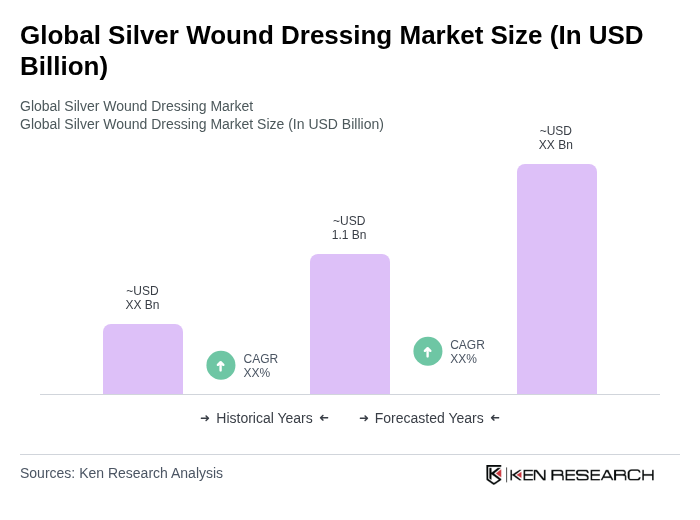
The Global Silver Wound Dressing Market is valued at approximately USD 1.1 billion, driven by the increasing prevalence of chronic wounds, surgical procedures, and the demand for advanced wound care products that utilize silver's antimicrobial properties.

What makes us stand out is that our consultants follow Robust, Refine and Result (RRR) methodology. Robust for clear definitions, approaches and sanity checking, Refine for differentiating respondents' facts and opinions, and Result for presenting data with story.

We have set a benchmark in the industry by offering our clients with syndicated and customized market research reports featuring coverage of entire market as well as meticulous research and analyst insights.

While we don't replace traditional research, we flip the method upside down. Our dual approach of Top Bottom & Bottom Top ensures quality deliverable by not just verifying company fundamentals but also looking at the sector and macroeconomic factors.

With one step in the future, our research team constantly tries to show you the bigger picture. We help with some of the tough questions you may encounter along the way: How is the industry positioned? Best marketing channel? KPI's of competitors? By aligning every element, we help maximize success.

Our report gives you instant access to the answers and sources that other companies might choose to hide. We elaborate each steps of research methodology we have used and showcase you the sample size to earn your trust.

If you need any support, we are here! We pride ourselves on universe strength, data quality, and quick, friendly, and professional service.













