Region:Global
Author(s):Rebecca
Product Code:KRAA9247
Pages:93
Published On:November 2025
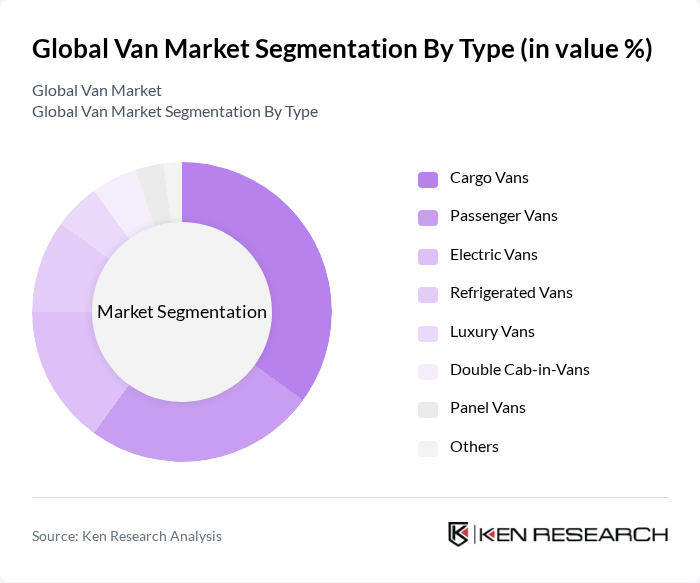
By Type:The van market can be segmented into various types, including Cargo Vans, Passenger Vans, Electric Vans, Refrigerated Vans, Luxury Vans, Double Cab-in-Vans, Panel Vans, and Others. Each type serves distinct purposes, catering to different consumer needs and preferences. Cargo vans remain the dominant segment, propelled by logistics and e-commerce growth, while electric vans are rapidly gaining share due to regulatory pressures and sustainability initiatives .
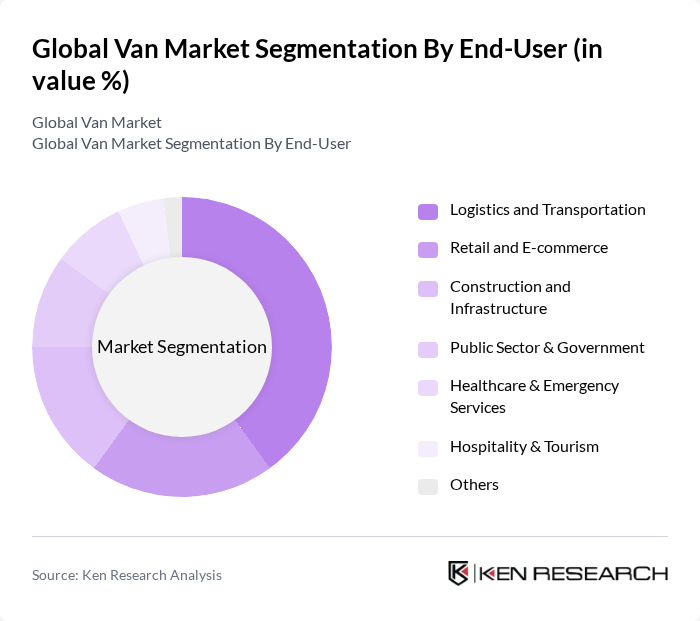
By End-User:The end-user segmentation includes Logistics and Transportation, Retail and E-commerce, Construction and Infrastructure, Public Sector & Government, Healthcare & Emergency Services, Hospitality & Tourism, and Others. Each segment reflects the diverse applications of vans across various industries. The commercial segment leads with the highest share, driven by logistics, retail, and e-commerce, followed by construction and public sector applications .
The Global Van Market is characterized by a dynamic mix of regional and international players. Leading participants such as Ford Motor Company, Mercedes-Benz Vans, Volkswagen Commercial Vehicles, Stellantis N.V. (Ram Trucks, Peugeot Professional, Citroën Business, Opel/Vauxhall), Nissan Motor Co., Ltd. (Nissan Commercial Vehicles), Toyota Motor Corporation (Toyota Commercial Vehicles, Hino Motors), Renault Group (Renault Pro+), Isuzu Motors Ltd. (Isuzu Commercial Vehicles), Mitsubishi Fuso Truck and Bus Corporation, SAIC Motor Corporation Limited (SAIC Maxus), BYD Auto Co., Ltd., Changan Automobile, Great Wall Motors, Dongfeng Motor Corporation, Hyundai Motor Company contribute to innovation, geographic expansion, and service delivery in this space.
The future of the van market is poised for transformation, driven by the increasing integration of smart technologies and a shift towards sustainable transportation solutions. As businesses prioritize efficiency and environmental responsibility, the demand for electric and hybrid vans is expected to rise significantly. Additionally, advancements in fleet management technologies will enhance operational efficiency, allowing companies to optimize routes and reduce costs, ultimately reshaping the logistics landscape in the coming years.
| Segment | Sub-Segments |
|---|---|
| By Type | Cargo Vans Passenger Vans Electric Vans Refrigerated Vans Luxury Vans Double Cab-in-Vans Panel Vans Others |
| By End-User | Logistics and Transportation Retail and E-commerce Construction and Infrastructure Public Sector & Government Healthcare & Emergency Services Hospitality & Tourism Others |
| By Payload Capacity | Light Duty Vans (Up to 2 Tons) Medium Duty Vans (2-3 Tons) Heavy Duty Vans (3-5.5 Tons) Full-Size Vans Others |
| By Fuel Type | Diesel Vans Gasoline Vans Electric Vans Hybrid Vans Plug-in Hybrid Electric Vans Others |
| By Application | Delivery Services Passenger Transport Emergency Services Mobile Workshops Refrigerated Transport Others |
| By Market Channel | Direct Sales Dealerships Online Sales Fleet Leasing Others |
| By Region | North America (U.S., Canada, Mexico) Europe (UK, Germany, France, Italy, Spain, Russia, Rest of Europe) Asia-Pacific (China, Japan, India, South Korea, Australia, Rest of APAC) Latin America (Brazil, Argentina, Rest of Latin America) Middle East & Africa (GCC, South Africa, Rest of MEA) |
| Scope Item/Segment | Sample Size | Target Respondent Profiles |
|---|---|---|
| Commercial Van Usage in Urban Areas | 100 | Fleet Managers, Urban Logistics Coordinators |
| Passenger Van Preferences | 80 | Family Vehicle Owners, Travel Agency Managers |
| Specialized Van Applications | 60 | Healthcare Logistics Managers, Food Delivery Operators |
| Electric Van Adoption Trends | 50 | Environmental Compliance Officers, Fleet Sustainability Managers |
| Market Entry Barriers for New Manufacturers | 40 | Industry Analysts, Business Development Executives |
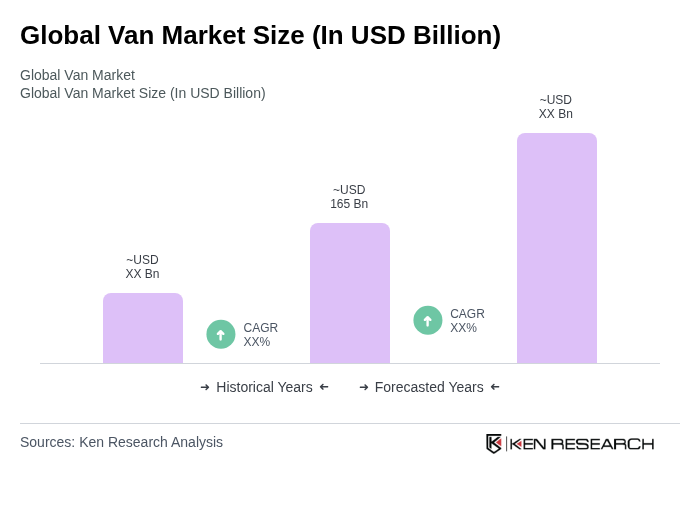
The Global Van Market is valued at approximately USD 165 billion, driven by the increasing demand for logistics and transportation services, particularly due to the growth of e-commerce and the shift towards electric vehicles.

What makes us stand out is that our consultants follow Robust, Refine and Result (RRR) methodology. Robust for clear definitions, approaches and sanity checking, Refine for differentiating respondents' facts and opinions, and Result for presenting data with story.

We have set a benchmark in the industry by offering our clients with syndicated and customized market research reports featuring coverage of entire market as well as meticulous research and analyst insights.

While we don't replace traditional research, we flip the method upside down. Our dual approach of Top Bottom & Bottom Top ensures quality deliverable by not just verifying company fundamentals but also looking at the sector and macroeconomic factors.

With one step in the future, our research team constantly tries to show you the bigger picture. We help with some of the tough questions you may encounter along the way: How is the industry positioned? Best marketing channel? KPI's of competitors? By aligning every element, we help maximize success.

Our report gives you instant access to the answers and sources that other companies might choose to hide. We elaborate each steps of research methodology we have used and showcase you the sample size to earn your trust.

If you need any support, we are here! We pride ourselves on universe strength, data quality, and quick, friendly, and professional service.













