Region:Asia
Author(s):Rebecca
Product Code:KRAD4902
Pages:92
Published On:December 2025
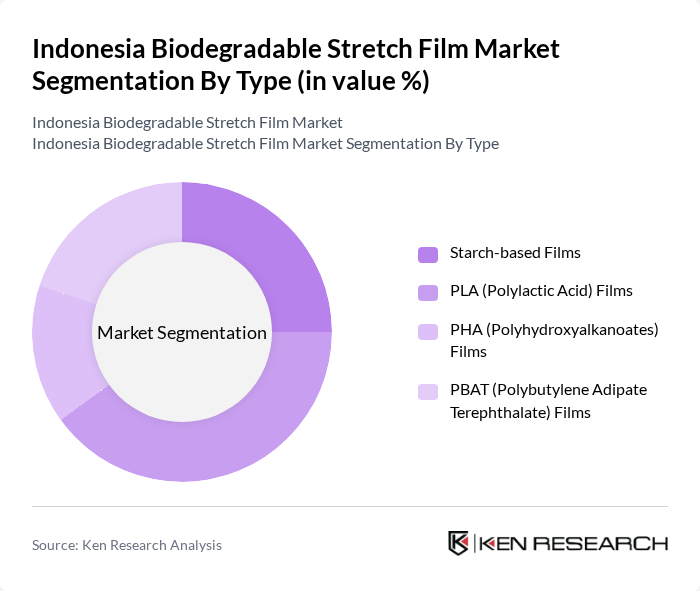
By Type:The biodegradable stretch film market is segmented into various types, including starch-based films, PLA (Polylactic Acid) films, PHA (Polyhydroxyalkanoates) films, and PBAT (Polybutylene Adipate Terephthalate) films, in line with global material classifications for biodegradable stretch films. Starch-based and PLA/PBAT blend films are gaining significant traction due to their good mechanical performance, compatibility with existing stretch-wrapping equipment, and compostability, making them suitable for pallet wrapping, food distribution, and agricultural applications. Increasing consumer demand for sustainable packaging solutions and brand-owner commitments to lower plastic footprints are driving the adoption of these materials, especially in food and beverage, fresh produce, and logistics sectors.
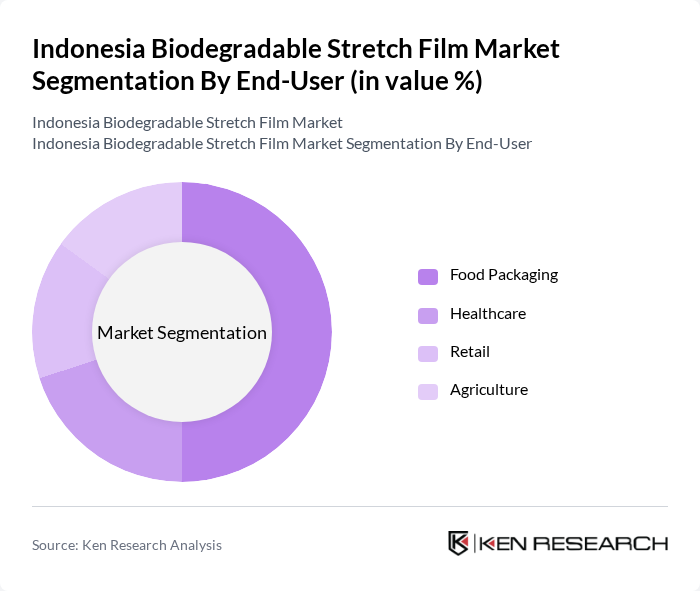
By End-User:The end-user segmentation includes food packaging, healthcare, retail, and agriculture, consistent with major application areas highlighted for biodegradable and compostable films in Asia Pacific. The food packaging sector is the largest consumer of biodegradable stretch films, driven by modern retail expansion, stricter waste-reduction expectations on brand owners, and the need to improve shelf life and protection while reducing conventional plastic use. As consumers become more environmentally conscious, food and beverage manufacturers, quick-service restaurants, and grocery chains are increasingly adopting biodegradable and compostable films for secondary and tertiary packaging to align with both voluntary sustainability targets and government waste-management policies, thereby propelling the growth of this segment relative to other end users.
The Indonesia Biodegradable Stretch Film Market is characterized by a dynamic mix of regional and international players. Leading participants such as PT Bioplastik Indonesia, PT Green Packaging Indonesia, EcoFilm Solutions Indonesia, PT BioPack Indonesia, NatureWorks LLC, BASF SE, Novamont S.p.A., BioBag International AS, Amcor plc, Sealed Air Corporation, Smurfit Kappa Group, Mondi Group, Tetra Pak International S.A., Huhtamaki Group, DS Smith plc contribute to innovation, geographic expansion, and service delivery in this space.
The future of the biodegradable stretch film market in Indonesia appears promising, driven by increasing environmental awareness and supportive government policies. As consumer preferences shift towards sustainable packaging, manufacturers are likely to invest more in innovative biodegradable solutions. Additionally, the expansion of e-commerce and the food sector will further fuel demand. Collaborations with eco-friendly brands and advancements in biodegradable technology will create new opportunities, positioning the market for significant growth in the coming years.
| Segment | Sub-Segments |
|---|---|
| By Type | Starch-based Films PLA (Polylactic Acid) Films PHA (Polyhydroxyalkanoates) Films PBAT (Polybutylene Adipate Terephthalate) Films |
| By End-User | Food Packaging Healthcare Retail Agriculture |
| By Application | Stretch Wrapping Palletizing Bundling Others |
| By Distribution Channel | Online Retail Offline Retail Direct Sales Others |
| By Region | Java Sumatra Bali Others |
| By Product Form | Rolls Sheets Bags Others |
| By Certification | ASTM D6400 EN 13432 ISO 17088 OK Compost |
| Scope Item/Segment | Sample Size | Target Respondent Profiles |
|---|---|---|
| Food Packaging Sector | 110 | Packaging Managers, Product Development Leads |
| Agricultural Applications | 90 | Farm Managers, Agricultural Product Distributors |
| Retail Packaging Solutions | 100 | Retail Operations Managers, Sustainability Coordinators |
| Manufacturing Insights | 80 | Production Managers, Quality Assurance Officers |
| Environmental Impact Studies | 70 | Environmental Scientists, Policy Makers |
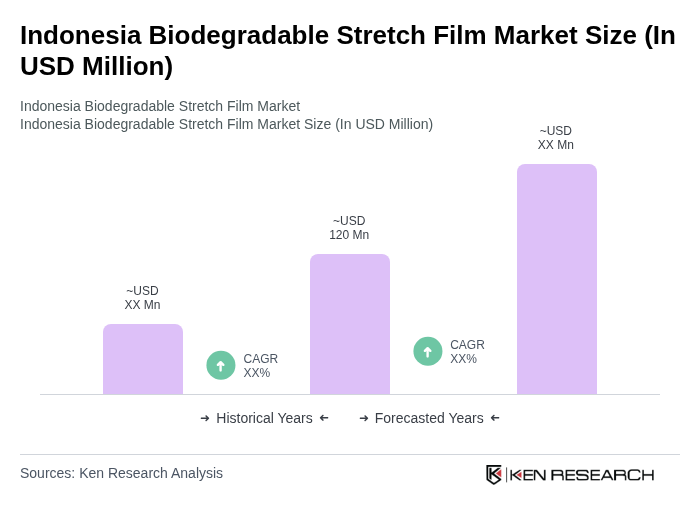
The Indonesia Biodegradable Stretch Film Market is valued at approximately USD 120 million, reflecting a growing trend towards sustainable packaging solutions driven by environmental awareness and government initiatives aimed at reducing plastic waste.

What makes us stand out is that our consultants follow Robust, Refine and Result (RRR) methodology. Robust for clear definitions, approaches and sanity checking, Refine for differentiating respondents' facts and opinions, and Result for presenting data with story.

We have set a benchmark in the industry by offering our clients with syndicated and customized market research reports featuring coverage of entire market as well as meticulous research and analyst insights.

While we don't replace traditional research, we flip the method upside down. Our dual approach of Top Bottom & Bottom Top ensures quality deliverable by not just verifying company fundamentals but also looking at the sector and macroeconomic factors.

With one step in the future, our research team constantly tries to show you the bigger picture. We help with some of the tough questions you may encounter along the way: How is the industry positioned? Best marketing channel? KPI's of competitors? By aligning every element, we help maximize success.

Our report gives you instant access to the answers and sources that other companies might choose to hide. We elaborate each steps of research methodology we have used and showcase you the sample size to earn your trust.

If you need any support, we are here! We pride ourselves on universe strength, data quality, and quick, friendly, and professional service.













