Region:Asia
Author(s):Dev
Product Code:KRAC2028
Pages:100
Published On:October 2025
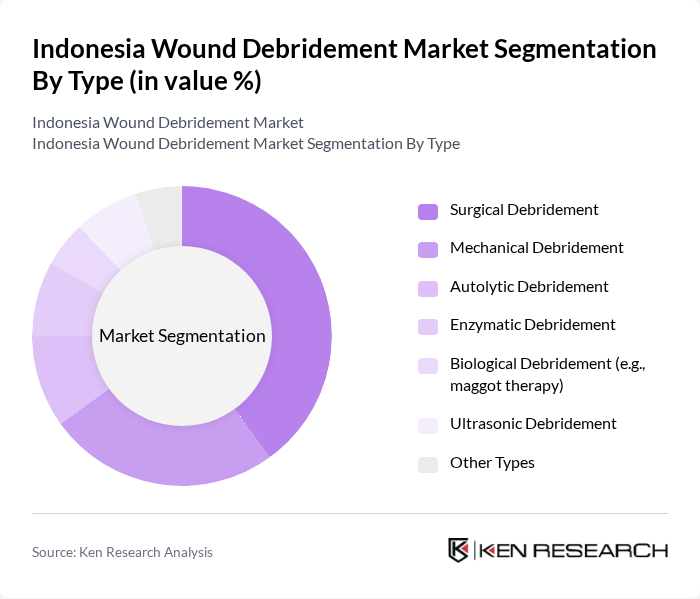
By Type:The market is segmented into various types of debridement methods, including surgical, mechanical, autolytic, enzymatic, biological, ultrasonic, and other types. Surgical debridement remains the most widely used method due to its effectiveness in removing necrotic tissue and promoting healing, especially in acute and severe chronic wounds. Mechanical debridement is also widely adopted for its accessibility and cost-effectiveness. The increasing adoption of advanced techniques, such as enzymatic and biological debridement, is notable, driven by the demand for less invasive and more targeted wound care solutions .
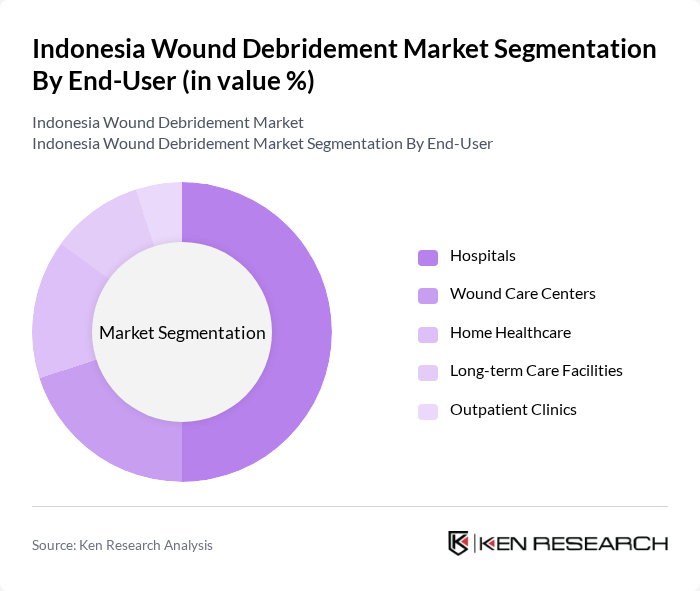
By End-User:The end-user segmentation includes hospitals, wound care centers, home healthcare, long-term care facilities, and outpatient clinics. Hospitals are the leading end-users due to their comprehensive wound care services and advanced medical technologies. Wound care centers are gaining traction as specialized facilities for chronic wound management, while home healthcare is becoming increasingly popular due to the growing preference for at-home treatment options and the expansion of outpatient wound care services .
The Indonesia Wound Debridement Market is characterized by a dynamic mix of regional and international players. Leading participants such as PT. Medika Sarana Trijaya, PT. Kimia Farma Tbk, PT. Indofarma Tbk, Smith & Nephew PLC, Mölnlycke Health Care AB, ConvaTec Group PLC, 3M Company, Johnson & Johnson, Coloplast A/S, B. Braun Melsungen AG, Medtronic PLC, Integra LifeSciences Corporation, Lohmann & Rauscher GmbH & Co. KG, Cardinal Health, Inc., Hartmann Group contribute to innovation, geographic expansion, and service delivery in this space.
The Indonesia wound debridement market is poised for significant growth, driven by demographic shifts and technological advancements. As the prevalence of chronic wounds rises alongside an aging population, healthcare providers are increasingly adopting innovative wound care solutions. Additionally, the expansion of healthcare infrastructure and the integration of digital health technologies are expected to enhance access to wound management services. These trends indicate a promising future for the wound debridement market, with opportunities for growth in both urban and rural settings.
| Segment | Sub-Segments |
|---|---|
| By Type | Surgical Debridement Mechanical Debridement Autolytic Debridement Enzymatic Debridement Biological Debridement (e.g., maggot therapy) Ultrasonic Debridement Other Types |
| By End-User | Hospitals Wound Care Centers Home Healthcare Long-term Care Facilities Outpatient Clinics |
| By Application | Diabetic Foot Ulcers Pressure Ulcers Surgical Wounds Burn Wounds Trauma Wounds |
| By Distribution Channel | Direct Tenders Retail Online Sales Distributors |
| By Product Type | Dressings Devices Solutions Biologics |
| By Region | Java Sumatra Bali Kalimantan Sulawesi |
| Scope Item/Segment | Sample Size | Target Respondent Profiles |
|---|---|---|
| Hospital Wound Care Departments | 60 | Wound Care Specialists, Surgeons |
| Private Clinics and Practices | 50 | General Practitioners, Dermatologists |
| Medical Supply Distributors | 45 | Procurement Managers, Sales Representatives |
| Healthcare Policy Makers | 40 | Health Ministry Officials, Policy Analysts |
| Patient Advocacy Groups | 40 | Patient Representatives, Healthcare Advocates |
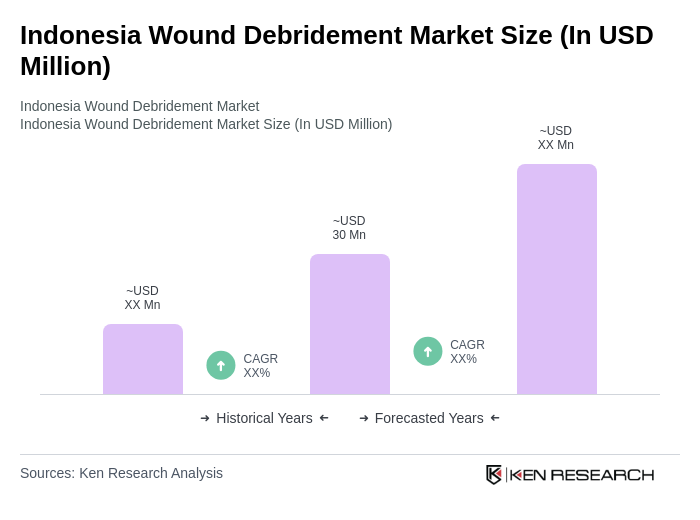
The Indonesia Wound Debridement Market is valued at approximately USD 30 million, reflecting a five-year historical analysis. This growth is driven by the increasing prevalence of chronic wounds and the adoption of advanced wound care techniques.

What makes us stand out is that our consultants follow Robust, Refine and Result (RRR) methodology. Robust for clear definitions, approaches and sanity checking, Refine for differentiating respondents' facts and opinions, and Result for presenting data with story.

We have set a benchmark in the industry by offering our clients with syndicated and customized market research reports featuring coverage of entire market as well as meticulous research and analyst insights.

While we don't replace traditional research, we flip the method upside down. Our dual approach of Top Bottom & Bottom Top ensures quality deliverable by not just verifying company fundamentals but also looking at the sector and macroeconomic factors.

With one step in the future, our research team constantly tries to show you the bigger picture. We help with some of the tough questions you may encounter along the way: How is the industry positioned? Best marketing channel? KPI's of competitors? By aligning every element, we help maximize success.

Our report gives you instant access to the answers and sources that other companies might choose to hide. We elaborate each steps of research methodology we have used and showcase you the sample size to earn your trust.

If you need any support, we are here! We pride ourselves on universe strength, data quality, and quick, friendly, and professional service.













