About the Report
Base Year 2024Japan Aromatherapy Market Overview
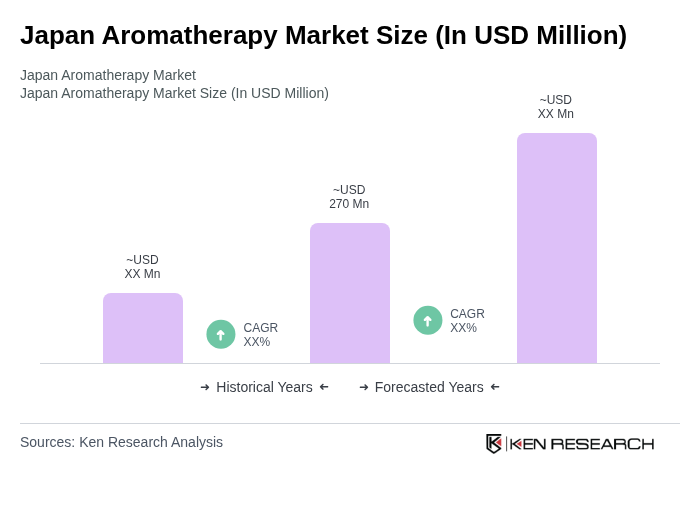
- The Japan Aromatherapy Market is valued at USD 270 million, based on a five-year historical analysis of country-level industry data. This growth is primarily driven by increasing consumer awareness of wellness and holistic health, alongside a rising demand for natural and organic products, particularly among aging and urban populations seeking stress relief and non-pharmaceutical options. The market has seen a significant uptick in the popularity of essential oils and related products as consumers seek alternatives to synthetic fragrances and conventional drugs, with aromatherapy increasingly integrated into beauty, personal care, spa, and home-use applications.
- Tokyo, Osaka, and Yokohama are the dominant cities in the Japan Aromatherapy Market, primarily due to their large urban populations and a growing trend towards wellness and self-care. These cities fall within major economic regions such as the Kanto and Kansai/Kinki areas, which collectively host a high concentration of wellness centers, spas, department stores, specialty retailers, and lifestyle chains that sell essential oils, diffusers, and related aromatherapy products, making them key demand hubs in the market.
- In 2023, the Japanese government implemented regulations to ensure the quality and safety of essential oils and aromatherapy products. This includes mandatory labeling requirements and safety assessments for products sold in the market, aimed at protecting consumers and promoting the use of high-quality, safe products. The core framework is provided by the Act on Securing Quality, Efficacy and Safety of Products Including Pharmaceuticals and Medical Devices (Pharmaceuticals and Medical Devices Act, PMD Act) issued by the Ministry of Health, Labour and Welfare, under which essential oil–based products making medical or quasi-drug claims must comply with standards for ingredient quality, safety testing, labeling, and manufacturing control.
Japan Aromatherapy Market Segmentation
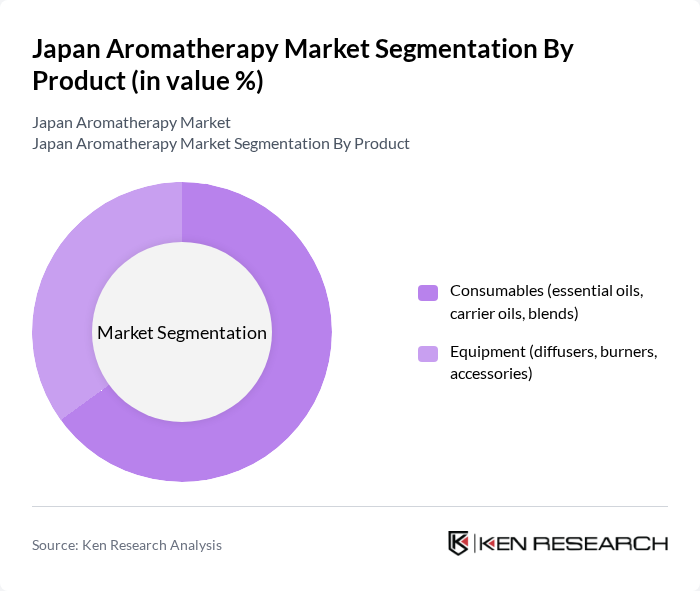
By Product:The product segmentation includes consumables and equipment. Consumables consist of essential oils, carrier oils, and blends, while equipment includes diffusers, burners, and accessories. The consumables segment is currently dominating the market due to the increasing popularity of essential oils for personal use and therapeutic applications, supported by rising awareness of their benefits for relaxation, sleep support, and mood management. Consumers are increasingly purchasing essential oils for home use through retail and direct-to-consumer channels, which has led to a surge in demand for high-quality, organic, and sustainably sourced options.
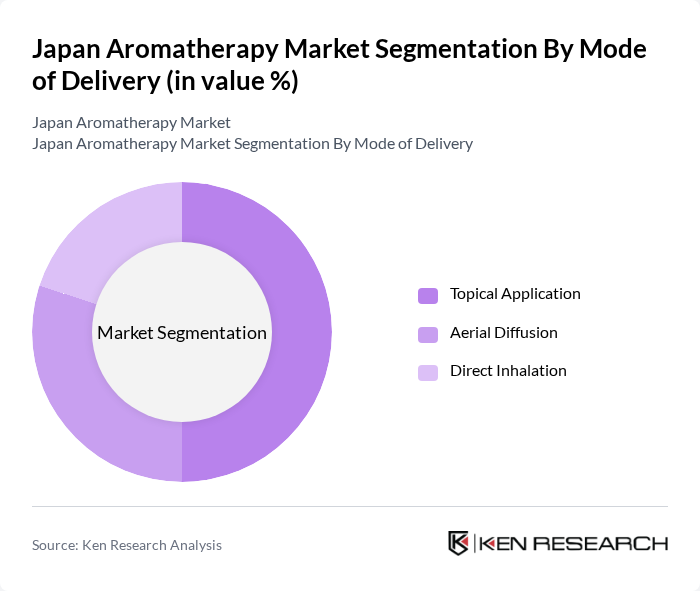
By Mode of Delivery:The mode of delivery segmentation includes topical application, aerial diffusion, and direct inhalation. Topical application is the leading method, as consumers prefer applying essential oils directly to the skin, often diluted, for localized therapeutic benefits such as muscle relaxation, skincare, and tension relief. Aerial diffusion is also popular, particularly in wellness centers, spas, hospitality facilities, and households, where creating a calming or refreshing atmosphere is essential and supports ongoing demand for diffusers and room fragrances. Direct inhalation is gaining traction among consumers seeking immediate support for stress, fatigue, and mood enhancement, including use through personal inhalers and on-the-go roll-ons.
Japan Aromatherapy Market Competitive Landscape
The Japan Aromatherapy Market is characterized by a dynamic mix of regional and international players. Leading participants such as Ryohin Keikaku Co., Ltd. (MUJI), Flavor Life Co., Ltd., HONO KA, ARTQ ORGANICS, Ecology Shimanto, Shiono Koryo Kaisha, Ltd., Yuica (Takasho Co., Ltd.), Young Living Essential Oils, doTERRA International, Saje Natural Wellness, Tisserand Aromatherapy, Neal’s Yard Remedies, L’OCCITANE en Provence, The Body Shop, and other emerging Japan-based brands contribute to innovation, geographic expansion, and service delivery in this space.
Japan Aromatherapy Market Industry Analysis
Growth Drivers
- Increasing Consumer Awareness of Health Benefits:The Japanese population is increasingly aware of the health benefits associated with aromatherapy, with over 60% of consumers recognizing its potential to alleviate stress and improve mental well-being. According to a recent survey by the Japan Health Promotion Foundation, 46 million people in Japan regularly use essential oils for relaxation and therapeutic purposes. This growing awareness is driving demand for aromatherapy products, contributing to a projected increase in market engagement.
- Rising Demand for Natural and Organic Products:The shift towards natural and organic products is evident in Japan, where the organic market reached ¥1.3 trillion, reflecting a 9% increase from the previous year. Consumers are increasingly seeking products free from synthetic chemicals, with 72% of respondents in a recent study indicating a preference for organic essential oils. This trend is propelling the growth of the aromatherapy market, as brands adapt to meet consumer expectations for purity and sustainability.
- Growth in Wellness Tourism:Japan's wellness tourism sector is thriving, with an estimated 21 million wellness tourists visiting, contributing ¥1.6 trillion to the economy. This influx is fostering a greater interest in holistic health practices, including aromatherapy. Many wellness centers and spas are incorporating aromatherapy into their services, enhancing the overall experience for tourists. This trend is expected to further stimulate demand for aromatherapy products and services in the future.
Market Challenges
- Regulatory Hurdles in Product Approvals:The Japanese aromatherapy market faces significant regulatory challenges, particularly regarding the approval of essential oils and related products. The Ministry of Health, Labour and Welfare has stringent guidelines that can delay product launches by up to 16 months. This regulatory environment can hinder innovation and limit the availability of new products, impacting market growth and competitiveness.
- High Competition from Synthetic Alternatives:The presence of synthetic alternatives poses a substantial challenge to the aromatherapy market in Japan. With synthetic fragrances accounting for approximately 38% of the fragrance market, many consumers opt for these cheaper options. This competition can undermine the perceived value of natural aromatherapy products, making it difficult for brands to differentiate themselves and maintain market share in a price-sensitive environment.
Japan Aromatherapy Market Future Outlook
The future of the Japan aromatherapy market appears promising, driven by increasing consumer interest in holistic health and wellness practices. As more individuals prioritize mental well-being, the demand for aromatherapy products is expected to rise. Additionally, the integration of technology, such as smart diffusers and mobile applications, will likely enhance user experience and engagement. Brands that focus on sustainable practices and innovative product offerings will be well-positioned to capture market share in this evolving landscape.
Market Opportunities
- Expansion into E-commerce Platforms:The shift towards online shopping presents a significant opportunity for aromatherapy brands. E-commerce sales in Japan reached ¥22 trillion, with a growing segment dedicated to health and wellness products. By leveraging online platforms, brands can reach a broader audience, enhance customer engagement, and increase sales, particularly among younger consumers who prefer digital shopping experiences.
- Development of Innovative Product Formulations:There is a growing opportunity for brands to create innovative product formulations that cater to specific consumer needs. For instance, products targeting sleep improvement or stress relief are gaining traction. The market for sleep aids in Japan was valued at ¥320 billion, indicating a strong demand for solutions that integrate aromatherapy with other wellness practices, thus enhancing market potential.
Scope of the Report
| Segment | Sub-Segments |
|---|---|
| By Product | Consumables (essential oils, carrier oils, blends) Equipment (diffusers, burners, accessories) |
| By Mode of Delivery | Topical Application Aerial Diffusion Direct Inhalation |
| By End-Use | Home Use Spa and Wellness Centers Medical and Clinical Settings Personal Care and Cosmetics Others |
| By Distribution Channel | Online Channels Specialty Stores Supermarkets/Hypermarkets Pharmacies & Drugstores Direct & Other Channels |
| By Application | Stress & Anxiety Management Sleep & Relaxation Pain Management Skin & Beauty Care Other Therapeutic Uses |
| By Price Tier | Premium Mid-range Mass/Budget |
Key Target Audience
Investors and Venture Capitalist Firms
Government and Regulatory Bodies (e.g., Ministry of Health, Labour and Welfare; Japan Aromatherapy Association)
Manufacturers and Producers
Distributors and Retailers
Essential Oil Suppliers
Wellness and Spa Industry Professionals
Natural Product Retailers
Health and Wellness Influencers
Players Mentioned in the Report:
Ryohin Keikaku Co., Ltd. (MUJI)
Flavor Life Co., Ltd.
HONO KA
ARTQ ORGANICS
Ecology Shimanto
Shiono Koryo Kaisha, Ltd.
Yuica (Takasho Co., Ltd.)
Young Living Essential Oils
doTERRA International
Saje Natural Wellness
Tisserand Aromatherapy
Neals Yard Remedies
LOCCITANE en Provence
The Body Shop
Other Emerging Japan-based Brands
Table of Contents
Market Assessment Phase
1. Executive Summary and Approach
2. Japan Aromatherapy Market Overview
2.1 Key Insights and Strategic Recommendations
2.2 Japan Aromatherapy Market Overview
2.3 Definition and Scope
2.4 Evolution of Market Ecosystem
2.5 Timeline of Key Regulatory Milestones
2.6 Value Chain & Stakeholder Mapping
2.7 Business Cycle Analysis
2.8 Policy & Incentive Landscape
3. Japan Aromatherapy Market Analysis
3.1 Growth Drivers
3.1.1 Increasing consumer awareness of health benefits
3.1.2 Rising demand for natural and organic products
3.1.3 Growth in wellness tourism
3.1.4 Expansion of retail distribution channels
3.2 Market Challenges
3.2.1 Regulatory hurdles in product approvals
3.2.2 High competition from synthetic alternatives
3.2.3 Limited consumer knowledge about product usage
3.2.4 Fluctuating raw material prices
3.3 Market Opportunities
3.3.1 Expansion into e-commerce platforms
3.3.2 Development of innovative product formulations
3.3.3 Collaborations with wellness centers and spas
3.3.4 Increasing popularity of DIY aromatherapy kits
3.4 Market Trends
3.4.1 Growing interest in holistic health practices
3.4.2 Rise of subscription-based aromatherapy services
3.4.3 Integration of technology in aromatherapy products
3.4.4 Focus on sustainable sourcing and packaging
3.5 Government Regulation
3.5.1 Standards for essential oil purity
3.5.2 Labeling requirements for aromatherapy products
3.5.3 Restrictions on health claims
3.5.4 Import regulations for raw materials
4. SWOT Analysis
5. Stakeholder Analysis
6. Porter's Five Forces Analysis
7. Japan Aromatherapy Market Market Size, 2019-2024
7.1 By Value
7.2 By Volume
7.3 By Average Selling Price
8. Japan Aromatherapy Market Segmentation
8.1 By Product
8.1.1 Consumables (essential oils, carrier oils, blends)
8.1.2 Equipment (diffusers, burners, accessories)
8.2 By Mode of Delivery
8.2.1 Topical Application
8.2.2 Aerial Diffusion
8.2.3 Direct Inhalation
8.3 By End-Use
8.3.1 Home Use
8.3.2 Spa and Wellness Centers
8.3.3 Medical and Clinical Settings
8.3.4 Personal Care and Cosmetics
8.3.5 Others
8.4 By Distribution Channel
8.4.1 Online Channels
8.4.2 Specialty Stores
8.4.3 Supermarkets/Hypermarkets
8.4.4 Pharmacies & Drugstores
8.4.5 Direct & Other Channels
8.5 By Application
8.5.1 Stress & Anxiety Management
8.5.2 Sleep & Relaxation
8.5.3 Pain Management
8.5.4 Skin & Beauty Care
8.5.5 Other Therapeutic Uses
8.6 By Price Tier
8.6.1 Premium
8.6.2 Mid-range
8.6.3 Mass/Budget
9. Japan Aromatherapy Market Competitive Analysis
9.1 Market Share of Key Players
9.2 Cross Comparison of Key Players
9.2.1 Company Name
9.2.2 Group Size (Large, Medium, or Small as per industry convention)
9.2.3 Japan Aromatherapy Revenue (USD, Latest Year)
9.2.4 3-Year Revenue CAGR in Japan
9.2.5 Japan Market Share (%)
9.2.6 Store & Online Presence in Japan (No. of Outlets / Key E-commerce Platforms)
9.2.7 Average Selling Price Positioning Index
9.2.8 Product Portfolio Breadth (No. of SKUs / Categories)
9.2.9 R&D and New Product Launch Intensity (Launches per Year)
9.2.10 Brand Awareness / Preference Score (Japan)
9.2.11 Customer Satisfaction / NPS Score
9.2.12 Digital Engagement Metrics (Followers, Engagement Rate)
9.3 SWOT Analysis of Top Players
9.4 Pricing Analysis
9.5 Detailed Profile of Major Companies
9.5.1 Ryohin Keikaku Co., Ltd. (MUJI)
9.5.2 Flavor Life Co., Ltd.
9.5.3 HONO KA
9.5.4 ARTQ ORGANICS
9.5.5 Ecology Shimanto
9.5.6 Shiono Koryo Kaisha, Ltd.
9.5.7 Yuica (Takasho Co., Ltd.)
9.5.8 Young Living Essential Oils
9.5.9 doTERRA International
9.5.10 Saje Natural Wellness
9.5.11 Tisserand Aromatherapy
9.5.12 Neal’s Yard Remedies
9.5.13 L’OCCITANE en Provence
9.5.14 The Body Shop
9.5.15 Other Emerging Japan-based Brands
10. Japan Aromatherapy Market End-User Analysis
10.1 Procurement Behavior of Key Ministries
10.1.1 Government health initiatives
10.1.2 Budget allocation for wellness programs
10.1.3 Collaboration with private sector
10.1.4 Regulatory compliance requirements
10.2 Corporate Spend on Infrastructure & Energy
10.2.1 Investment in wellness facilities
10.2.2 Spending on employee wellness programs
10.2.3 Budget for aromatherapy products
10.2.4 Partnerships with wellness brands
10.3 Pain Point Analysis by End-User Category
10.3.1 Lack of awareness about benefits
10.3.2 High costs of premium products
10.3.3 Limited availability in rural areas
10.3.4 Quality concerns
10.4 User Readiness for Adoption
10.4.1 Familiarity with aromatherapy
10.4.2 Willingness to invest in wellness
10.4.3 Access to information and resources
10.4.4 Support from healthcare professionals
10.5 Post-Deployment ROI and Use Case Expansion
10.5.1 Measurement of health outcomes
10.5.2 Feedback from users
10.5.3 Expansion into new user segments
10.5.4 Long-term engagement strategies
11. Japan Aromatherapy Market Future Size, 2025-2030
11.1 By Value
11.2 By Volume
11.3 By Average Selling Price
Go-To-Market Strategy Phase
1. Whitespace Analysis + Business Model Canvas
1.1 Market Gaps Identification
1.2 Value Proposition Development
1.3 Revenue Streams Analysis
1.4 Customer Segmentation
1.5 Key Partnerships
1.6 Cost Structure Evaluation
1.7 Channels of Distribution
2. Marketing and Positioning Recommendations
2.1 Branding Strategies
2.2 Product USPs
2.3 Target Audience Identification
2.4 Marketing Channels Selection
2.5 Promotional Strategies
3. Distribution Plan
3.1 Urban Retail vs Rural NGO Tie-ups
3.2 Online Distribution Strategies
3.3 Partnerships with Retail Chains
3.4 Logistics and Supply Chain Management
4. Channel & Pricing Gaps
4.1 Underserved Routes
4.2 Pricing Bands Analysis
4.3 Competitor Pricing Strategies
4.4 Consumer Price Sensitivity
5. Unmet Demand & Latent Needs
5.1 Category Gaps
5.2 Consumer Segments Analysis
5.3 Emerging Trends Identification
5.4 Product Development Opportunities
6. Customer Relationship
6.1 Loyalty Programs
6.2 After-sales Service
6.3 Customer Feedback Mechanisms
6.4 Community Engagement Strategies
7. Value Proposition
7.1 Sustainability
7.2 Integrated Supply Chains
7.3 Customer-Centric Innovations
7.4 Competitive Differentiation
8. Key Activities
8.1 Regulatory Compliance
8.2 Branding
8.3 Distribution Setup
8.4 Marketing Execution
9. Entry Strategy Evaluation
9.1 Domestic Market Entry Strategy
9.1.1 Product Mix
9.1.2 Pricing Band
9.1.3 Packaging
9.2 Export Entry Strategy
9.2.1 Target Countries
9.2.2 Compliance Roadmap
10. Entry Mode Assessment
10.1 JV
10.2 Greenfield
10.3 M&A
10.4 Distributor Model
11. Capital and Timeline Estimation
11.1 Capital Requirements
11.2 Timelines
12. Control vs Risk Trade-Off
12.1 Ownership vs Partnerships
13. Profitability Outlook
13.1 Breakeven Analysis
13.2 Long-term Sustainability
14. Potential Partner List
14.1 Distributors
14.2 JVs
14.3 Acquisition Targets
15. Execution Roadmap
15.1 Phased Plan for Market Entry
15.1.1 Market Setup
15.1.2 Market Entry
15.1.3 Growth Acceleration
15.1.4 Scale & Stabilize
15.2 Key Activities and Milestones
15.2.1 Activity Planning
15.2.2 Milestone Tracking
Research Methodology
Phase 1: Approach1
Desk Research
- Analysis of market reports from industry associations such as the Japan Aromatherapy Association
- Review of government publications and statistics on essential oil imports and exports
- Examination of academic journals and articles focusing on aromatherapy trends and consumer behavior in Japan
Primary Research
- Interviews with key stakeholders including aromatherapy product manufacturers and distributors
- Surveys targeting consumers to understand preferences and purchasing habits related to aromatherapy products
- Focus group discussions with wellness practitioners and aromatherapists to gather qualitative insights
Validation & Triangulation
- Cross-validation of findings through comparison with international aromatherapy market trends
- Triangulation of data from consumer surveys, expert interviews, and industry reports
- Sanity checks conducted through expert panel reviews comprising industry veterans and market analysts
Phase 2: Market Size Estimation1
Top-down Assessment
- Estimation of market size based on national health and wellness spending trends
- Segmentation of the market by product type, including essential oils, diffusers, and related accessories
- Incorporation of demographic data to assess potential market growth among different age groups
Bottom-up Modeling
- Collection of sales data from leading aromatherapy retailers and e-commerce platforms
- Estimation of average selling prices for various aromatherapy products
- Volume estimates based on consumer purchase frequency and product usage rates
Forecasting & Scenario Analysis
- Multi-factor regression analysis incorporating economic indicators and health trends
- Scenario modeling based on potential regulatory changes affecting essential oil usage
- Development of baseline, optimistic, and pessimistic market growth projections through 2030
Phase 3: CATI Sample Composition1
| Scope Item/Segment | Sample Size | Target Respondent Profiles |
|---|---|---|
| Consumer Preferences in Aromatherapy | 150 | Aromatherapy Users, Wellness Enthusiasts |
| Retail Market Insights | 100 | Retail Managers, Product Buyers |
| Industry Expert Opinions | 60 | Aromatherapy Practitioners, Health Coaches |
| Distribution Channel Analysis | 80 | Distributors, Wholesalers |
| Market Trends and Innovations | 70 | Product Developers, Marketing Managers |
Frequently Asked Questions
What is the current value of the Japan Aromatherapy Market?
The Japan Aromatherapy Market is valued at approximately USD 270 million, reflecting a growing interest in wellness and holistic health among consumers, particularly in urban areas and among the aging population.
What factors are driving the growth of the Japan Aromatherapy Market?
Which cities are the main hubs for the Japan Aromatherapy Market?
What are the main product segments in the Japan Aromatherapy Market?
Other Regional/Country Reports
Other Adjacent Reports
Japan Wellness Products Market
Vietnam Natural Skincare Market Outlook to 2030Malaysia Spa Services Market
Global Essential Oils Market Size, Share & Forecast, By Product Type, Application & Distribution Channel, 2026-2031GCC Organic Personal Care MarketThailand Herbal Remedies Market
Ksa Home Fragrance Market Size, Share, Growth Drivers, Trends, Opportunities & Forecast 2025–2030Egypt Alternative Therapy Market
Indonesia Beauty Supplements Market Size, Share & Forecast, By Product Type, Price Tier & Distribution Channel, 2026–2032Vietnam Sleep Aid Products Market
Why Buy From Us?

What makes us stand out is that our consultants follow Robust, Refine and Result (RRR) methodology. Robust for clear definitions, approaches and sanity checking, Refine for differentiating respondents' facts and opinions, and Result for presenting data with story.

We have set a benchmark in the industry by offering our clients with syndicated and customized market research reports featuring coverage of entire market as well as meticulous research and analyst insights.

While we don't replace traditional research, we flip the method upside down. Our dual approach of Top Bottom & Bottom Top ensures quality deliverable by not just verifying company fundamentals but also looking at the sector and macroeconomic factors.

With one step in the future, our research team constantly tries to show you the bigger picture. We help with some of the tough questions you may encounter along the way: How is the industry positioned? Best marketing channel? KPI's of competitors? By aligning every element, we help maximize success.

Our report gives you instant access to the answers and sources that other companies might choose to hide. We elaborate each steps of research methodology we have used and showcase you the sample size to earn your trust.

If you need any support, we are here! We pride ourselves on universe strength, data quality, and quick, friendly, and professional service.