About the Report
Base Year 2024Japan Breakfast Restaurants Market Overview
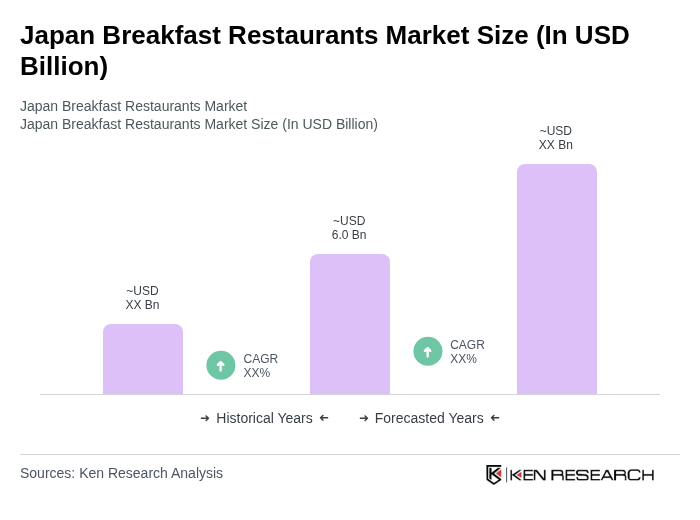
- The Japan Breakfast Restaurants Market is valued at USD 6.0 billion, based on a five-year historical analysis, aligning with the broader expansion of breakfast food and breakfast takeout demand in the country. This growth is primarily driven by the increasing demand for convenient dining options among working adults and students, evolving consumer preferences towards healthier and functional breakfast choices (such as high-protein, fiber-rich, and gut-health-oriented items), and the rise of urbanization, which has led to a greater number of breakfast outlets and convenience stores catering to busy lifestyles.
- Tokyo, Osaka, and Yokohama are the dominant cities in the Japan Breakfast Restaurants Market, reflecting the concentration of population and employment in the Kanto and Kinki regions, which are leading in breakfast takeout and on-the-go consumption. Tokyo's status as a bustling metropolis with a high population density and diverse culinary scene makes it a hotspot for breakfast dining, including quick service chains, cafés, and convenience store counters. Osaka is known for its rich food culture and strong presence of family restaurants and coffee shops, while Yokohama benefits from its proximity to Tokyo, attracting both locals and tourists seeking varied breakfast options in urban commercial areas and transport hubs.
- In 2023, the Japanese government continued to strengthen regulations aimed at promoting food safety and hygiene standards in the restaurant industry, building on the Food Sanitation Act and its revisions, which are enforced by the Ministry of Health, Labour and Welfare. Under the Food Sanitation Act (Shokuhin Eisei H?) as comprehensively amended in 2018 and fully enforced from 2021, restaurants are required to implement food safety management based on Hazard Analysis and Critical Control Point (HACCP) principles, ensure proper temperature control, and maintain detailed sanitation records, while prefectural ordinances mandate food hygiene supervision and training for food handlers to ensure safe food preparation and protect public health.
Japan Breakfast Restaurants Market Segmentation
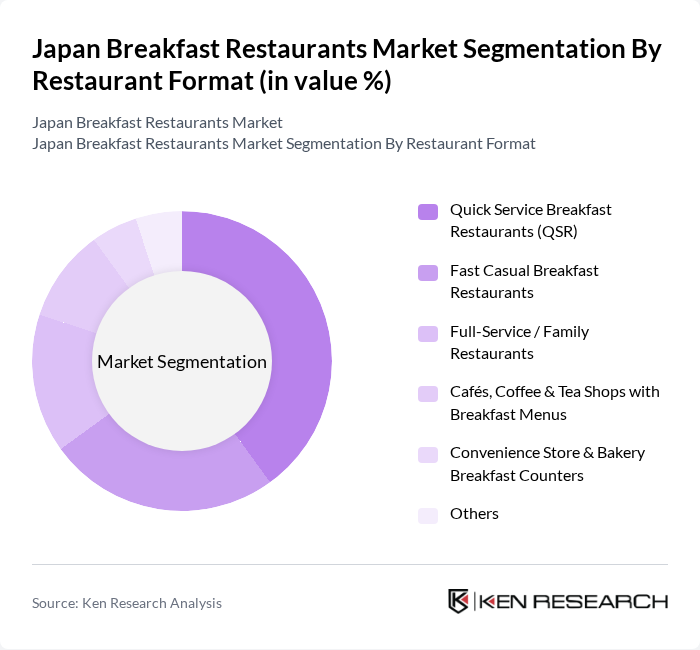
By Restaurant Format:The restaurant format segmentation includes various types of breakfast establishments catering to different consumer preferences and usage occasions. The market is characterized by a mix of quick service, casual dining, and full-service restaurants, each offering unique dining experiences. Quick Service Breakfast Restaurants (QSR) and convenience-led outlets are gaining prominence due to their speed, standardized menus, and integration with mobile ordering and takeaway, appealing strongly to commuters and office workers. Fast Casual Breakfast Restaurants and Full-Service/Family Restaurants also play significant roles, providing a more relaxed dining atmosphere and broader menus that include both Western-style and traditional Japanese breakfast sets. Cafés, coffee chains, and convenience store breakfast counters are seeing rapid traction as they expand early-morning menus, introduce healthier and premium beverage offerings, and leverage loyalty programs to capture repeat breakfast traffic.
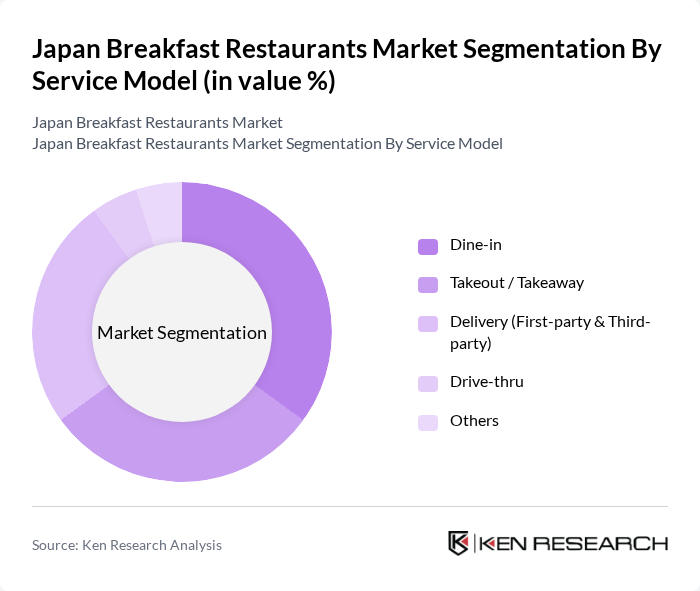
By Service Model:The service model segmentation reflects the various ways consumers can enjoy breakfast offerings across on-premise and off-premise channels. Dine-in services remain important, especially for full-service restaurants, family restaurants, and cafés where consumers seek a sit-down meal or social occasions. However, the Takeout/Takeaway segment has seen significant growth, driven by the increasing demand for convenience among urban professionals and students, supported by early opening hours and grab-and-go formats. Delivery services, both first-party and third-party, are also on the rise, particularly among younger consumers who prefer dining at home or at the office and increasingly use mobile apps for breakfast ordering. Drive-thru options are gaining traction mainly through international and domestic QSR chains, providing quick access to breakfast for commuters, while digital pre-order and pick-up models further support time-pressed customers.
Japan Breakfast Restaurants Market Competitive Landscape
The Japan Breakfast Restaurants Market is characterized by a dynamic mix of regional and international players. Leading participants such as Denny's Japan, Royal Host, Jonathan's, Saizeriya Japan, Gusto (Skylark Group), McDonald's Japan, Starbucks Coffee Japan, Eggs 'n Things Japan, Komeda's Coffee, Tully's Coffee Japan, Freshness Burger, Coco's Japan, Bikkuri Donkey, Yoshinoya Holdings Co., Ltd., Mos Food Services, Inc. (Mos Burger) contribute to innovation, geographic expansion, and service delivery in this space, with many brands expanding morning menus, introducing value breakfast sets, and leveraging digital ordering and loyalty programs to build repeat breakfast occasions.
Japan Breakfast Restaurants Market Industry Analysis
Growth Drivers
- Increasing Demand for Healthy Breakfast Options:The Japanese breakfast market is witnessing a surge in demand for healthy options, with a reported 30% increase in consumers prioritizing nutrition in their morning meals. According to the Ministry of Health, Labor and Welfare, 60% of Japanese adults are now opting for meals rich in protein and fiber, reflecting a broader global trend towards health-conscious eating. This shift is driving restaurants to innovate their menus, incorporating organic and locally sourced ingredients to meet consumer expectations.
- Rise in Breakfast Consumption Outside the Home:The trend of dining out for breakfast is gaining momentum, with a 25% increase in breakfast sales at restaurants over the past three years. Data from the Japan Food Service Association indicates that 40% of consumers now prefer eating breakfast at cafes or restaurants rather than at home. This shift is fueled by busy lifestyles and the growing popularity of brunch, prompting restaurants to expand their breakfast offerings and operating hours to capture this market segment.
- Expansion of International Breakfast Chains:The entry of international breakfast chains into the Japanese market is significantly influencing consumer choices. In the future, over 15 new international breakfast brands are expected to launch in Japan, contributing to a 20% increase in market variety. The Japan External Trade Organization reported that these chains are attracting younger demographics, who are eager for diverse and unique breakfast experiences. This expansion is not only enhancing competition but also elevating the overall quality of breakfast offerings across the country.
Market Challenges
- High Competition Among Established Players:The breakfast restaurant sector in Japan is characterized by intense competition, with over 5,000 establishments vying for market share. According to the Japan Restaurant Association, this saturation leads to price wars and reduced profit margins, making it challenging for new entrants to establish themselves. Established brands dominate consumer loyalty, which further complicates market entry for innovative concepts seeking to differentiate themselves in a crowded landscape.
- Fluctuating Ingredient Prices:The volatility of ingredient prices poses a significant challenge for breakfast restaurants. In the future, the cost of key ingredients such as eggs and dairy is expected to increase by 15% due to supply chain disruptions and inflationary pressures. The Ministry of Agriculture, Forestry and Fisheries reported that these fluctuations can severely impact menu pricing and profitability, forcing restaurants to either absorb costs or pass them on to consumers, which may deter price-sensitive customers.
Japan Breakfast Restaurants Market Future Outlook
The future of the Japan breakfast restaurant market appears promising, driven by evolving consumer preferences and lifestyle changes. As more individuals seek convenient and nutritious breakfast options, restaurants are likely to adapt by enhancing their menus and service models. The integration of technology, such as mobile ordering and delivery services, will further streamline operations. Additionally, the focus on sustainability and local sourcing will resonate with environmentally conscious consumers, creating a competitive edge for businesses that prioritize these values.
Market Opportunities
- Expansion into Urban Areas:Urbanization presents a significant opportunity for breakfast restaurants, with cities like Tokyo and Osaka experiencing a population growth of 1.5 million people in the last five years. This demographic shift increases the demand for convenient breakfast options, allowing restaurants to tap into a larger customer base by strategically opening new locations in high-traffic urban centers.
- Introduction of Plant-Based Breakfast Menus:The rising trend of plant-based diets offers a lucrative opportunity for breakfast restaurants. A survey by the Japan Vegan Society indicated that 25% of consumers are actively seeking plant-based options. By introducing innovative plant-based breakfast items, restaurants can attract health-conscious customers and capitalize on the growing demand for sustainable food choices, enhancing their market appeal.
Scope of the Report
| Segment | Sub-Segments |
|---|---|
| By Restaurant Format | Quick Service Breakfast Restaurants (QSR) Fast Casual Breakfast Restaurants Full-Service / Family Restaurants Cafés, Coffee & Tea Shops with Breakfast Menus Convenience Store & Bakery Breakfast Counters Others |
| By Service Model | Dine-in Takeout / Takeaway Delivery (First-party & Third-party) Drive-thru Others |
| By Cuisine / Menu Type | Traditional Japanese Breakfast Sets Western-style Breakfast & Brunch Bakery, Pancake & Waffle-focused Concepts Health-oriented / Functional Breakfast (e.g., low-sugar, high-protein) Others |
| By Price Band (Per Person Spend) | Economy (? JPY 500) Mass (JPY 501–1,000) Premium (JPY 1,001–2,000) Luxury (> JPY 2,000) Others |
| By Outlet Location | Central Business Districts (CBDs) Residential & Suburban Areas Transit Hubs (Railway Stations, Airports, Highway Service Areas) Tourist & Leisure Destinations Others |
| By Ownership Type | Chained Outlets Independent Outlets Franchise-operated Outlets Company-owned Outlets Others |
| By Target Customer Segment | Office Workers & Commuters Families with Children Students Tourists & Short-stay Visitors Seniors Others |
Key Target Audience
Investors and Venture Capitalist Firms
Government and Regulatory Bodies (e.g., Ministry of Agriculture, Forestry and Fisheries, Japan Tourism Agency)
Manufacturers and Producers of Breakfast Food Products
Distributors and Retailers of Food and Beverage Products
Franchise Operators and Restaurant Chains
Food Service Equipment Suppliers
Industry Associations (e.g., Japan Restaurant Association)
Financial Institutions and Banks
Players Mentioned in the Report:
Denny's Japan
Royal Host
Jonathan's
Saizeriya Japan
Gusto (Skylark Group)
McDonald's Japan
Starbucks Coffee Japan
Eggs 'n Things Japan
Komeda's Coffee
Tully's Coffee Japan
Freshness Burger
Coco's Japan
Bikkuri Donkey
Yoshinoya Holdings Co., Ltd.
Mos Food Services, Inc. (Mos Burger)
Table of Contents
Market Assessment Phase
1. Executive Summary and Approach
2. Japan Breakfast Restaurants Market Overview
2.1 Key Insights and Strategic Recommendations
2.2 Japan Breakfast Restaurants Market Overview
2.3 Definition and Scope
2.4 Evolution of Market Ecosystem
2.5 Timeline of Key Regulatory Milestones
2.6 Value Chain & Stakeholder Mapping
2.7 Business Cycle Analysis
2.8 Policy & Incentive Landscape
3. Japan Breakfast Restaurants Market Analysis
3.1 Growth Drivers
3.1.1 Increasing Demand for Healthy Breakfast Options
3.1.2 Rise in Breakfast Consumption Outside the Home
3.1.3 Expansion of International Breakfast Chains
3.1.4 Growing Trend of Brunch Culture
3.2 Market Challenges
3.2.1 High Competition Among Established Players
3.2.2 Fluctuating Ingredient Prices
3.2.3 Changing Consumer Preferences
3.2.4 Regulatory Compliance Costs
3.3 Market Opportunities
3.3.1 Expansion into Urban Areas
3.3.2 Introduction of Plant-Based Breakfast Menus
3.3.3 Collaborations with Local Farmers
3.3.4 Digital Ordering and Delivery Services
3.4 Market Trends
3.4.1 Increasing Popularity of All-Day Breakfast
3.4.2 Focus on Sustainability and Eco-Friendly Practices
3.4.3 Integration of Technology in Ordering Systems
3.4.4 Customization of Breakfast Menus
3.5 Government Regulation
3.5.1 Food Safety Standards Compliance
3.5.2 Labor Laws and Employment Regulations
3.5.3 Health and Nutrition Guidelines
3.5.4 Environmental Regulations on Waste Management
4. SWOT Analysis
5. Stakeholder Analysis
6. Porter's Five Forces Analysis
7. Japan Breakfast Restaurants Market Market Size, 2019-2024
7.1 By Value
7.2 By Volume
7.3 By Average Selling Price
8. Japan Breakfast Restaurants Market Segmentation
8.1 By Restaurant Format
8.1.1 Quick Service Breakfast Restaurants (QSR)
8.1.2 Fast Casual Breakfast Restaurants
8.1.3 Full-Service / Family Restaurants
8.1.4 Cafés, Coffee & Tea Shops with Breakfast Menus
8.1.5 Convenience Store & Bakery Breakfast Counters
8.1.6 Others
8.2 By Service Model
8.2.1 Dine-in
8.2.2 Takeout / Takeaway
8.2.3 Delivery (First-party & Third-party)
8.2.4 Drive-thru
8.2.5 Others
8.3 By Cuisine / Menu Type
8.3.1 Traditional Japanese Breakfast Sets
8.3.2 Western-style Breakfast & Brunch
8.3.3 Bakery, Pancake & Waffle-focused Concepts
8.3.4 Health-oriented / Functional Breakfast (e.g., low-sugar, high-protein)
8.3.5 Others
8.4 By Price Band (Per Person Spend)
8.4.1 Economy (? JPY 500)
8.4.2 Mass (JPY 501–1,000)
8.4.3 Premium (JPY 1,001–2,000)
8.4.4 Luxury (> JPY 2,000)
8.4.5 Others
8.5 By Outlet Location
8.5.1 Central Business Districts (CBDs)
8.5.2 Residential & Suburban Areas
8.5.3 Transit Hubs (Railway Stations, Airports, Highway Service Areas)
8.5.4 Tourist & Leisure Destinations
8.5.5 Others
8.6 By Ownership Type
8.6.1 Chained Outlets
8.6.2 Independent Outlets
8.6.3 Franchise-operated Outlets
8.6.4 Company-owned Outlets
8.6.5 Others
8.7 By Target Customer Segment
8.7.1 Office Workers & Commuters
8.7.2 Families with Children
8.7.3 Students
8.7.4 Tourists & Short-stay Visitors
8.7.5 Seniors
8.7.6 Others
9. Japan Breakfast Restaurants Market Competitive Analysis
9.1 Market Share of Key Players
9.2 Cross Comparison of Key Players
9.2.1 Company Name
9.2.2 Group Size (Number of Outlets in Japan)
9.2.3 Japan Breakfast Revenue (Latest FY, JPY Million)
9.2.4 Same-store Sales Growth (Breakfast, %)
9.2.5 Average Revenue per Store per Day (Breakfast Daypart)
9.2.6 Average Ticket Size per Breakfast Transaction (JPY)
9.2.7 Breakfast Customer Retention / Repeat Visit Rate (%)
9.2.8 Breakfast Daypart Traffic Share (% of Total Visits)
9.2.9 Delivery & Digital Order Share in Breakfast Sales (%)
9.2.10 Store-level EBITDA Margin (%)
9.3 SWOT Analysis of Top Players
9.4 Pricing Analysis
9.5 Detailed Profile of Major Companies
9.5.1 Denny's Japan
9.5.2 Royal Host
9.5.3 Jonathan's
9.5.4 Saizeriya Japan
9.5.5 Gusto (Skylark Group)
9.5.6 McDonald's Japan
9.5.7 Starbucks Coffee Japan
9.5.8 Eggs 'n Things Japan
9.5.9 Komeda's Coffee
9.5.10 Tully's Coffee Japan
9.5.11 Freshness Burger
9.5.12 Coco's Japan
9.5.13 Bikkuri Donkey
9.5.14 Yoshinoya Holdings Co., Ltd.
9.5.15 Mos Food Services, Inc. (Mos Burger)
10. Japan Breakfast Restaurants Market End-User Analysis
10.1 Procurement Behavior of Key Ministries
10.1.1 Government Contracts for Breakfast Services
10.1.2 Budget Allocations for Public Events
10.1.3 Partnerships with Local Restaurants
10.1.4 Compliance with Health Standards
10.1.5 Others
10.2 Corporate Spend on Infrastructure & Energy
10.2.1 Investment in Breakfast Facilities
10.2.2 Energy Efficiency Initiatives
10.2.3 Employee Wellness Programs
10.2.4 Catering Services for Corporate Events
10.2.5 Others
10.3 Pain Point Analysis by End-User Category
10.3.1 Quality of Ingredients
10.3.2 Service Speed
10.3.3 Menu Variety
10.3.4 Pricing Affordability
10.3.5 Others
10.4 User Readiness for Adoption
10.4.1 Awareness of Breakfast Options
10.4.2 Willingness to Try New Menus
10.4.3 Accessibility of Breakfast Locations
10.4.4 Digital Ordering Familiarity
10.4.5 Others
10.5 Post-Deployment ROI and Use Case Expansion
10.5.1 Customer Feedback Mechanisms
10.5.2 Repeat Business Metrics
10.5.3 Menu Performance Analysis
10.5.4 Expansion into New Locations
10.5.5 Others
11. Japan Breakfast Restaurants Market Future Size, 2025-2030
11.1 By Value
11.2 By Volume
11.3 By Average Selling Price
Go-To-Market Strategy Phase
1. Whitespace Analysis + Business Model Canvas
1.1 Market Gaps Identification
1.2 Business Model Framework
2. Marketing and Positioning Recommendations
2.1 Branding Strategies
2.2 Product USPs
3. Distribution Plan
3.1 Urban Retail vs Rural NGO Tie-ups
4. Channel & Pricing Gaps
4.1 Underserved Routes
4.2 Pricing Bands
5. Unmet Demand & Latent Needs
5.1 Category Gaps
5.2 Consumer Segments
6. Customer Relationship
6.1 Loyalty Programs
6.2 After-sales Service
7. Value Proposition
7.1 Sustainability
7.2 Integrated Supply Chains
8. Key Activities
8.1 Regulatory Compliance
8.2 Branding
8.3 Distribution Setup
9. Entry Strategy Evaluation
9.1 Domestic Market Entry Strategy
9.1.1 Product Mix
9.1.2 Pricing Band
9.1.3 Packaging
9.2 Export Entry Strategy
9.2.1 Target Countries
9.2.2 Compliance Roadmap
10. Entry Mode Assessment
10.1 JV
10.2 Greenfield
10.3 M&A
10.4 Distributor Model
11. Capital and Timeline Estimation
11.1 Capital Requirements
11.2 Timelines
12. Control vs Risk Trade-Off
12.1 Ownership vs Partnerships
13. Profitability Outlook
13.1 Breakeven Analysis
13.2 Long-term Sustainability
14. Potential Partner List
14.1 Distributors
14.2 JVs
14.3 Acquisition Targets
15. Execution Roadmap
15.1 Phased Plan for Market Entry
15.1.1 Market Setup
15.1.2 Market Entry
15.1.3 Growth Acceleration
15.1.4 Scale & Stabilize
15.2 Key Activities and Milestones
15.2.1 Activity Timeline
15.2.2 Milestone Tracking
Research Methodology
Phase 1: Approach1
Desk Research
- Analysis of industry reports from Japanese food and beverage associations
- Review of government publications on food service regulations and trends
- Examination of market studies and consumer behavior reports specific to breakfast dining
Primary Research
- Interviews with owners and managers of popular breakfast restaurants across Japan
- Surveys targeting customers to understand preferences and dining habits
- Focus groups with food industry experts to gather insights on market dynamics
Validation & Triangulation
- Cross-validation of findings through multiple data sources including sales data and consumer surveys
- Triangulation of insights from primary interviews with secondary research findings
- Sanity checks conducted through expert panel reviews and feedback sessions
Phase 2: Market Size Estimation1
Top-down Assessment
- Estimation of total market size based on national food service revenue statistics
- Segmentation of the breakfast restaurant market by region and cuisine type
- Incorporation of trends in consumer spending on breakfast dining experiences
Bottom-up Modeling
- Collection of sales data from a representative sample of breakfast restaurants
- Estimation of average transaction values and customer footfall metrics
- Calculation of market size based on aggregated data from surveyed establishments
Forecasting & Scenario Analysis
- Multi-factor regression analysis incorporating economic indicators and consumer trends
- Scenario modeling based on potential impacts of health trends and dietary preferences
- Development of baseline, optimistic, and pessimistic forecasts through 2030
Phase 3: CATI Sample Composition1
| Scope Item/Segment | Sample Size | Target Respondent Profiles |
|---|---|---|
| Urban Breakfast Restaurant Owners | 90 | Restaurant Owners, Franchise Managers |
| Breakfast Menu Development Experts | 60 | Culinary Chefs, Menu Planners |
| Consumer Preferences in Breakfast Dining | 120 | Regular Breakfast Diners, Food Bloggers |
| Health and Wellness Trends Impacting Breakfast Choices | 70 | Nutritionists, Health Coaches |
| Market Trends in Breakfast Food Products | 50 | Food Product Developers, Retail Buyers |
Frequently Asked Questions
What is the current value of the Japan Breakfast Restaurants Market?
The Japan Breakfast Restaurants Market is valued at approximately USD 6.0 billion, reflecting a growing demand for breakfast food and takeout options, particularly among working adults and students seeking convenience and healthier choices.
Which cities dominate the Japan Breakfast Restaurants Market?
What are the main drivers of growth in the Japan Breakfast Restaurants Market?
What challenges does the Japan Breakfast Restaurants Market face?
Other Regional/Country Reports
Other Adjacent Reports
Bahrain Coffee Shops Market
Bahrain Food Delivery Services Market
Japan Takeout Food Market
Brazil Healthy Food Products Market
GCC convenience stores market report size, share, growth drivers, trends, opportunities & forecast 2025–2030Japan Casual Dining Restaurants Market
India Bakery Products Market Size, Share & Forecast, By Product Type, Distribution Channel & Price Tier, 2026-2031UAE Beverage MarketSingapore Plant-Based Food Market
Why Buy From Us?

What makes us stand out is that our consultants follow Robust, Refine and Result (RRR) methodology. Robust for clear definitions, approaches and sanity checking, Refine for differentiating respondents' facts and opinions, and Result for presenting data with story.

We have set a benchmark in the industry by offering our clients with syndicated and customized market research reports featuring coverage of entire market as well as meticulous research and analyst insights.

While we don't replace traditional research, we flip the method upside down. Our dual approach of Top Bottom & Bottom Top ensures quality deliverable by not just verifying company fundamentals but also looking at the sector and macroeconomic factors.

With one step in the future, our research team constantly tries to show you the bigger picture. We help with some of the tough questions you may encounter along the way: How is the industry positioned? Best marketing channel? KPI's of competitors? By aligning every element, we help maximize success.

Our report gives you instant access to the answers and sources that other companies might choose to hide. We elaborate each steps of research methodology we have used and showcase you the sample size to earn your trust.

If you need any support, we are here! We pride ourselves on universe strength, data quality, and quick, friendly, and professional service.