About the Report
Base Year 2024New Zealand Breakfast Restaurants Market Overview
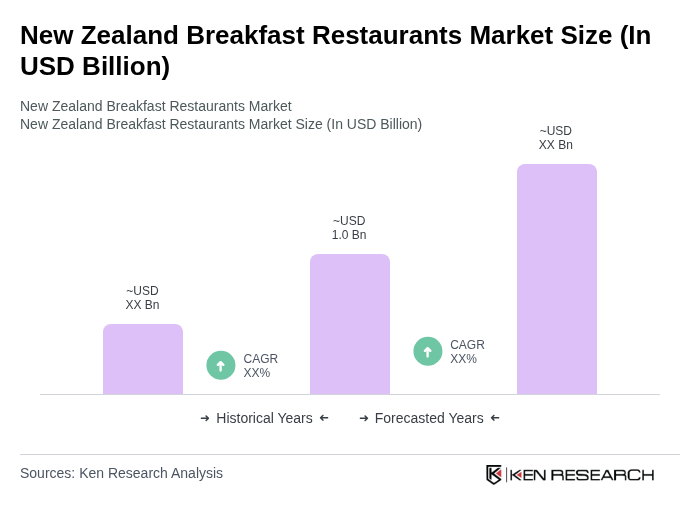
- The New Zealand Breakfast Restaurants Market is valued at USD 1.0 billion, based on a five-year historical analysis and its share within the wider New Zealand foodservice and cafés/restaurants revenue pool. This growth is primarily driven by the increasing demand for breakfast and all?day brunch options among consumers, coupled with a rising trend of social brunch culture and the expansion of café chains and independent specialty cafés across urban areas. The market has seen a significant shift towards healthier and diverse menu offerings, including plant?based dishes, free?from options, premium coffee and artisanal bakery items, catering to changing consumer preferences for wellness, convenience, and experience?led dining.
- Auckland, Wellington, and Christchurch are the dominant cities in the New Zealand Breakfast Restaurants Market. Auckland leads due to its large population base and vibrant food scene, accounting for the largest share of the national foodservice and café/restaurant market. Wellington is known for its strong café culture, specialty coffee scene, and innovative dining experiences that support high breakfast and brunch visitation. Christchurch, supported by ongoing urban redevelopment, growing tourism flows, and a strengthening network of local cafés and hotel foodservice venues, also plays a crucial role in the market's dynamics.
- In 2023, the New Zealand government implemented and updated regulations aimed at promoting sustainable practices in the food service industry, including breakfast?oriented cafés and restaurants. The Waste Minimisation (Plastic and Related Products) Regulations 2022, issued under the Waste Minimisation Act 2008 by the New Zealand Government, phased out specified single?use plastic items used by foodservice businesses, requiring operators to transition to reusable or certified compostable alternatives. In parallel, initiatives under the Waste Minimisation Fund and guidance from the Ministry for the Environment encourage foodservice operators to adopt food?waste reduction practices and support the use of locally sourced ingredients through procurement and sustainability programmes. These measures are designed to enhance the environmental sustainability of breakfast restaurants, aligning with the growing consumer demand for eco?friendly and locally focused dining options.
New Zealand Breakfast Restaurants Market Segmentation
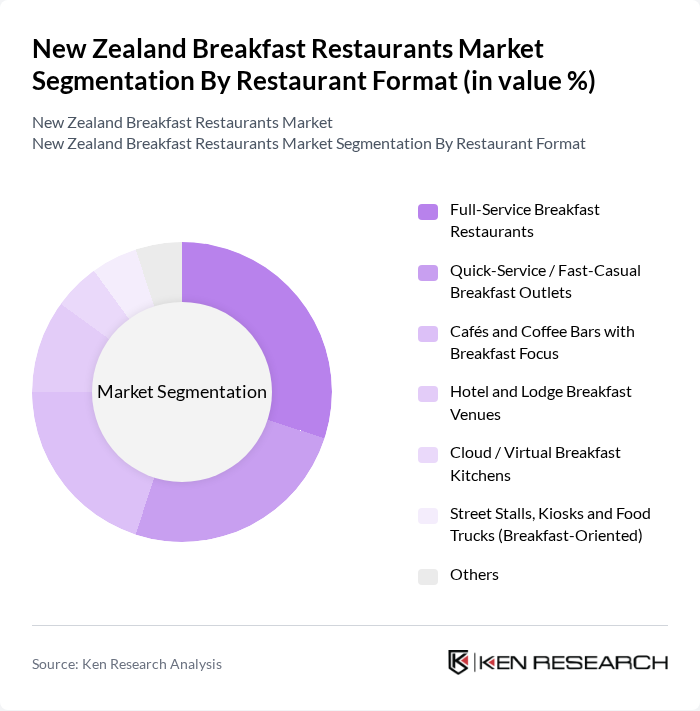
By Restaurant Format:The breakfast restaurant segment is diverse, encompassing various formats that cater to different consumer preferences. Full-Service Breakfast Restaurants offer a sit-down dining experience with extensive menus and increasingly feature all?day breakfast and brunch concepts. Quick-Service / Fast-Casual Breakfast Outlets provide faster, value?driven options for on-the-go consumers, often leveraging digital ordering and grab?and?go breakfast items. Cafés and Coffee Bars with Breakfast Focus are popular for their casual atmosphere, specialty coffee, and premium baked goods, and remain a core component of New Zealand’s established café culture. Hotel and Lodge Breakfast Venues cater to domestic and international travelers, with buffet and à la carte breakfast offerings closely linked to tourism flows. Cloud / Virtual Breakfast Kitchens leverage online platforms and delivery?only models to serve breakfast and brunch items without a customer?facing storefront. Street Stalls, Kiosks, and Food Trucks offer unique, mobile dining experiences such as coffee carts and breakfast food trucks near workplaces, campuses, and events, appealing to a wide range of customers seeking convenience and novelty.
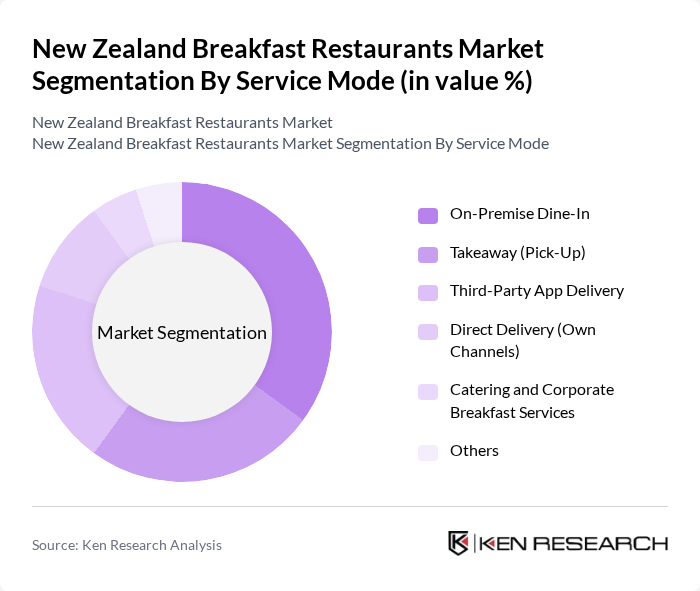
By Service Mode:The service mode in the breakfast restaurant market reflects the evolving consumer preferences for convenience and flexibility. On-Premise Dine-In remains popular for those seeking a leisurely breakfast or brunch experience, supported by New Zealand’s strong café culture and social dining habits. Takeaway (Pick-Up) services have gained traction, especially among busy professionals and commuters, with many cafés offering barista coffee and breakfast items for collection. Third-Party App Delivery has surged in popularity, driven by the rise of food delivery platforms that enable consumers to order breakfast from cafés, QSRs, and virtual kitchens. Direct Delivery (Own Channels) is also growing as restaurants and cafés invest in their own online ordering systems and loyalty apps to strengthen customer relationships and manage margins. Catering and Corporate Breakfast Services cater to business meetings, events, and workplace gatherings, often focusing on platters, bakery assortments, and barista coffee. Other service modes, including hotel in?room breakfast service and institutional/educational breakfast offerings, continue to diversify the market.
New Zealand Breakfast Restaurants Market Competitive Landscape
The New Zealand Breakfast Restaurants Market is characterized by a dynamic mix of regional and international players. Leading participants such as The Coffee Club New Zealand, Columbus Coffee, Muffin Break New Zealand, McCafé (McDonald’s New Zealand), Local independent cafés (e.g., Bestie Café, Ortolana, Neo Café & Eatery), Major hotel breakfast venues (e.g., Rydges, Novotel, Sofitel), Cloud-kitchen breakfast brands and virtual concepts, Regional café chains (e.g., Robert Harris Café, The Coffee Club regional franchisees), Quick-service chains with breakfast menus (e.g., McDonald’s, Burger King, Subway), Specialty healthy breakfast concepts (e.g., Little Bird Organics & The Unbakery), Brunch-focused restaurants and bistros, Mobile breakfast trucks and pop-up concepts, Airport and transit-hub breakfast operators, Café operators in shopping centres and retail precincts, Other notable emerging breakfast restaurant brands contribute to innovation, geographic expansion, and service delivery in this space.
New Zealand Breakfast Restaurants Market Industry Analysis
Growth Drivers
- Increasing Demand for Healthy Breakfast Options:The New Zealand breakfast restaurant sector is witnessing a surge in demand for healthy breakfast choices, driven by a growing health-conscious population. In future, the health food market in New Zealand is projected to reach NZD 1.3 billion, reflecting a 8% increase from the previous year. This trend is supported by the New Zealand Ministry of Health's initiatives promoting balanced diets, which encourage restaurants to offer nutritious options, thereby attracting a wider customer base focused on wellness.
- Rise in Café Culture and Social Dining:The café culture in New Zealand is thriving, with over 3,200 cafés operating nationwide in future. This growth is fueled by a shift towards social dining experiences, where consumers prefer to gather in relaxed environments. According to the New Zealand Restaurant Association, the number of diners opting for breakfast out has increased by 12% since the previous year, indicating a robust market for breakfast restaurants that cater to social interactions and community engagement.
- Growth of Tourism and Hospitality Sector:New Zealand's tourism sector is rebounding, with an expected influx of 3.8 million international visitors in future, a 10% increase from the previous year. This growth is anticipated to boost the breakfast restaurant market, as tourists seek local dining experiences. The Ministry of Business, Innovation and Employment reports that hospitality revenue is projected to reach NZD 22 billion in future, highlighting the significant opportunity for breakfast establishments to capitalize on this trend.
Market Challenges
- High Competition Among Local and International Brands:The New Zealand breakfast restaurant market is characterized by intense competition, with over 1,600 establishments vying for consumer attention. This saturation leads to price wars and challenges in brand differentiation. According to IBISWorld, the industry is expected to see a 6% decline in profit margins in future due to this competitive pressure, making it crucial for restaurants to innovate and enhance customer loyalty to survive.
- Fluctuating Food Costs and Supply Chain Issues:The breakfast restaurant sector faces significant challenges from fluctuating food prices, which have risen by 9% in the past year due to global supply chain disruptions. The New Zealand Food Price Index indicates that essential ingredients like eggs and dairy have seen price increases of 13% and 11%, respectively. These rising costs can squeeze profit margins and force restaurants to adjust their pricing strategies, impacting overall consumer demand.
New Zealand Breakfast Restaurants Market Future Outlook
The future of the New Zealand breakfast restaurant market appears promising, driven by evolving consumer preferences and a focus on sustainability. As more diners seek out eco-friendly options, restaurants that prioritize local sourcing and sustainable practices are likely to thrive. Additionally, the integration of technology in customer engagement, such as mobile ordering and loyalty programs, will enhance the dining experience, attracting a tech-savvy clientele. Overall, the market is poised for growth as it adapts to these emerging trends.
Market Opportunities
- Introduction of Plant-Based and Vegan Breakfast Options:With the plant-based food market in New Zealand projected to reach NZD 600 million in future, breakfast restaurants have a significant opportunity to cater to this growing demographic. Offering diverse vegan options can attract health-conscious consumers and those with dietary restrictions, enhancing customer loyalty and expanding market reach.
- Development of Unique Dining Experiences:Creating unique dining experiences, such as themed brunches or interactive cooking classes, can differentiate breakfast restaurants in a crowded market. As consumer spending on experiential dining is expected to increase by 18% in future, restaurants that innovate their offerings can capture a larger share of the market and enhance customer engagement.
Scope of the Report
| Segment | Sub-Segments |
|---|---|
| By Restaurant Format | Full-Service Breakfast Restaurants Quick-Service / Fast-Casual Breakfast Outlets Cafés and Coffee Bars with Breakfast Focus Hotel and Lodge Breakfast Venues Cloud / Virtual Breakfast Kitchens Street Stalls, Kiosks and Food Trucks (Breakfast-Oriented) Others |
| By Service Mode | On-Premise Dine-In Takeaway (Pick-Up) Third-Party App Delivery Direct Delivery (Own Channels) Catering and Corporate Breakfast Services Others |
| By Consumer Segment | Families and Groups Young Professionals and Office Workers Students Domestic Travellers and Tourists International Tourists Health- and Wellness-Focused Consumers Others |
| By Location Type | High-Street / CBD Locations Suburban Neighbourhoods Transit Hubs (Airports, Bus & Train Stations) Retail and Shopping Centres Tourism Hotspots and Leisure Destinations Others |
| By Price Positioning | Value / Budget Mass Mid-Range Premium Casual Fine / Experiential Breakfast Dining Others |
| By Menu / Cuisine Orientation | Traditional Kiwi & Anglo-European Breakfast Global / Fusion and Brunch Concepts Asian-Inspired Breakfast Formats Plant-Based, Vegan and Vegetarian-Focused Free-From & Functional (Gluten-Free, Keto, etc.) Others |
| By Ownership Structure | Chained / Franchise Outlets Independent Restaurants and Cafés Hotel-Operated Outlets Others |
Key Target Audience
Investors and Venture Capitalist Firms
Government and Regulatory Bodies (e.g., Ministry of Business, Innovation and Employment)
Food Suppliers and Ingredient Producers
Restaurant Franchise Owners
Local Tourism Boards
Health and Nutrition Organizations
Real Estate Developers
Food Delivery Service Providers
Players Mentioned in the Report:
The Coffee Club New Zealand
Columbus Coffee
Muffin Break New Zealand
McCafe (McDonalds New Zealand)
Local independent cafes (e.g., Bestie Cafe, Ortolana, Neo Cafe & Eatery)
Major hotel breakfast venues (e.g., Rydges, Novotel, Sofitel)
Cloud-kitchen breakfast brands and virtual concepts
Regional cafe chains (e.g., Robert Harris Cafe, The Coffee Club regional franchisees)
Quick-service chains with breakfast menus (e.g., McDonalds, Burger King, Subway)
Specialty healthy breakfast concepts (e.g., Little Bird Organics & The Unbakery)
Brunch-focused restaurants and bistros
Mobile breakfast trucks and pop-up concepts
Airport and transit-hub breakfast operators
Cafe operators in shopping centres and retail precincts
Other notable emerging breakfast restaurant brands
Table of Contents
Market Assessment Phase
1. Executive Summary and Approach
2. New Zealand Breakfast Restaurants Market Overview
2.1 Key Insights and Strategic Recommendations
2.2 New Zealand Breakfast Restaurants Market Overview
2.3 Definition and Scope
2.4 Evolution of Market Ecosystem
2.5 Timeline of Key Regulatory Milestones
2.6 Value Chain & Stakeholder Mapping
2.7 Business Cycle Analysis
2.8 Policy & Incentive Landscape
3. New Zealand Breakfast Restaurants Market Analysis
3.1 Growth Drivers
3.1.1 Increasing demand for healthy breakfast options
3.1.2 Rise in café culture and social dining
3.1.3 Growth of tourism and hospitality sector
3.1.4 Expansion of delivery and takeout services
3.2 Market Challenges
3.2.1 High competition among local and international brands
3.2.2 Fluctuating food costs and supply chain issues
3.2.3 Changing consumer preferences and dietary restrictions
3.2.4 Regulatory compliance and health standards
3.3 Market Opportunities
3.3.1 Introduction of plant-based and vegan breakfast options
3.3.2 Development of unique dining experiences
3.3.3 Leveraging technology for customer engagement
3.3.4 Expansion into underserved regions
3.4 Market Trends
3.4.1 Increasing focus on sustainability and local sourcing
3.4.2 Growth of online ordering and food delivery platforms
3.4.3 Popularity of brunch menus and all-day breakfast
3.4.4 Integration of health and wellness into menu offerings
3.5 Government Regulation
3.5.1 Food safety regulations and compliance
3.5.2 Employment laws and minimum wage standards
3.5.3 Health and safety regulations for food establishments
3.5.4 Environmental regulations regarding waste management
4. SWOT Analysis
5. Stakeholder Analysis
6. Porter's Five Forces Analysis
7. New Zealand Breakfast Restaurants Market Market Size, 2019-2024
7.1 By Value
7.2 By Volume
7.3 By Average Selling Price
8. New Zealand Breakfast Restaurants Market Segmentation
8.1 By Restaurant Format
8.1.1 Full-Service Breakfast Restaurants
8.1.2 Quick-Service / Fast-Casual Breakfast Outlets
8.1.3 Cafés and Coffee Bars with Breakfast Focus
8.1.4 Hotel and Lodge Breakfast Venues
8.1.5 Cloud / Virtual Breakfast Kitchens
8.1.6 Street Stalls, Kiosks and Food Trucks (Breakfast-Oriented)
8.1.7 Others
8.2 By Service Mode
8.2.1 On-Premise Dine-In
8.2.2 Takeaway (Pick-Up)
8.2.3 Third-Party App Delivery
8.2.4 Direct Delivery (Own Channels)
8.2.5 Catering and Corporate Breakfast Services
8.2.6 Others
8.3 By Consumer Segment
8.3.1 Families and Groups
8.3.2 Young Professionals and Office Workers
8.3.3 Students
8.3.4 Domestic Travellers and Tourists
8.3.5 International Tourists
8.3.6 Health- and Wellness-Focused Consumers
8.3.7 Others
8.4 By Location Type
8.4.1 High-Street / CBD Locations
8.4.2 Suburban Neighbourhoods
8.4.3 Transit Hubs (Airports, Bus & Train Stations)
8.4.4 Retail and Shopping Centres
8.4.5 Tourism Hotspots and Leisure Destinations
8.4.6 Others
8.5 By Price Positioning
8.5.1 Value / Budget
8.5.2 Mass Mid-Range
8.5.3 Premium Casual
8.5.4 Fine / Experiential Breakfast Dining
8.5.5 Others
8.6 By Menu / Cuisine Orientation
8.6.1 Traditional Kiwi & Anglo-European Breakfast
8.6.2 Global / Fusion and Brunch Concepts
8.6.3 Asian-Inspired Breakfast Formats
8.6.4 Plant-Based, Vegan and Vegetarian-Focused
8.6.5 Free-From & Functional (Gluten-Free, Keto, etc.)
8.6.6 Others
8.7 By Ownership Structure
8.7.1 Chained / Franchise Outlets
8.7.2 Independent Restaurants and Cafés
8.7.3 Hotel-Operated Outlets
8.7.4 Others
9. New Zealand Breakfast Restaurants Market Competitive Analysis
9.1 Market Share of Key Players
9.2 Cross Comparison of Key Players
9.2.1 Company Name
9.2.2 Outlet Count in New Zealand (Units)
9.2.3 Systemwide Sales (NZD, Latest Year)
9.2.4 Like-for-Like Sales Growth (%)
9.2.5 Average Order Value (AOV, NZD)
9.2.6 Revenue per Available Seat Hour (RevPASH)
9.2.7 Table Turnover Rate (Covers per Seat per Day)
9.2.8 Breakfast Daypart Mix (% of Total Sales)
9.2.9 Digital Sales Mix (% via Apps & Online Channels)
9.2.10 Customer Retention / Repeat Visit Rate (%)
9.2.11 Net Promoter Score (NPS) / Customer Satisfaction Index
9.2.12 Labor Cost as % of Sales
9.2.13 Food & Beverage Cost as % of Sales
9.3 SWOT Analysis of Top Players
9.4 Pricing Analysis
9.5 Detailed Profile of Major Companies
9.5.1 The Coffee Club New Zealand
9.5.2 Columbus Coffee
9.5.3 Muffin Break New Zealand
9.5.4 McCafé (McDonald’s New Zealand)
9.5.5 Local independent cafés (e.g., Bestie Café, Ortolana, Neo Café & Eatery)
9.5.6 Major hotel breakfast venues (e.g., Rydges, Novotel, Sofitel)
9.5.7 Cloud-kitchen breakfast brands and virtual concepts
9.5.8 Regional café chains (e.g., Robert Harris Café, The Coffee Club regional franchisees)
9.5.9 Quick-service chains with breakfast menus (e.g., McDonald’s, Burger King, Subway)
9.5.10 Specialty healthy breakfast concepts (e.g., Little Bird Organics & The Unbakery)
9.5.11 Brunch-focused restaurants and bistros
9.5.12 Mobile breakfast trucks and pop-up concepts
9.5.13 Airport and transit-hub breakfast operators
9.5.14 Café operators in shopping centres and retail precincts
9.5.15 Other notable emerging breakfast restaurant brands
10. New Zealand Breakfast Restaurants Market End-User Analysis
10.1 Procurement Behavior of Key Ministries
10.1.1 Government contracts for catering services
10.1.2 Partnerships with local suppliers
10.1.3 Compliance with health and safety standards
10.1.4 Budget allocation for public events
10.2 Corporate Spend on Infrastructure & Energy
10.2.1 Investment in energy-efficient appliances
10.2.2 Budget for renovations and expansions
10.2.3 Spending on marketing and promotions
10.2.4 Allocation for staff training and development
10.3 Pain Point Analysis by End-User Category
10.3.1 Difficulty in sourcing quality ingredients
10.3.2 Challenges in maintaining consistent service quality
10.3.3 High operational costs
10.3.4 Limited access to technology for order management
10.4 User Readiness for Adoption
10.4.1 Awareness of health trends
10.4.2 Willingness to try new dining experiences
10.4.3 Acceptance of online ordering systems
10.4.4 Interest in loyalty programs
10.5 Post-Deployment ROI and Use Case Expansion
10.5.1 Evaluation of customer feedback
10.5.2 Analysis of sales growth post-implementation
10.5.3 Assessment of operational efficiency improvements
10.5.4 Exploration of new menu offerings
11. New Zealand Breakfast Restaurants Market Future Size, 2025-2030
11.1 By Value
11.2 By Volume
11.3 By Average Selling Price
Go-To-Market Strategy Phase
1. Whitespace Analysis + Business Model Canvas
1.1 Market Gaps Identification
1.2 Value Proposition Development
1.3 Revenue Streams Analysis
1.4 Cost Structure Evaluation
1.5 Key Partnerships Exploration
1.6 Customer Segments Definition
1.7 Channels for Delivery
2. Marketing and Positioning Recommendations
2.1 Branding Strategies
2.2 Product USPs
3. Distribution Plan
3.1 Urban Retail vs Rural NGO Tie-Ups
4. Channel & Pricing Gaps
4.1 Underserved Routes
4.2 Pricing Bands
5. Unmet Demand & Latent Needs
5.1 Category Gaps
5.2 Consumer Segments
6. Customer Relationship
6.1 Loyalty Programs
6.2 After-Sales Service
7. Value Proposition
7.1 Sustainability
7.2 Integrated Supply Chains
8. Key Activities
8.1 Regulatory Compliance
8.2 Branding
8.3 Distribution Setup
9. Entry Strategy Evaluation
9.1 Domestic Market Entry Strategy
9.1.1 Product Mix
9.1.2 Pricing Band
9.1.3 Packaging
9.2 Export Entry Strategy
9.2.1 Target Countries
9.2.2 Compliance Roadmap
10. Entry Mode Assessment
10.1 JV
10.2 Greenfield
10.3 M&A
10.4 Distributor Model
11. Capital and Timeline Estimation
11.1 Capital Requirements
11.2 Timelines
12. Control vs Risk Trade-Off
12.1 Ownership vs Partnerships
13. Profitability Outlook
13.1 Breakeven Analysis
13.2 Long-Term Sustainability
14. Potential Partner List
14.1 Distributors
14.2 JVs
14.3 Acquisition Targets
15. Execution Roadmap
15.1 Phased Plan for Market Entry
15.1.1 Market Setup
15.1.2 Market Entry
15.1.3 Growth Acceleration
15.1.4 Scale & Stabilize
15.2 Key Activities and Milestones
15.2.1 Activity Planning
15.2.2 Milestone Tracking
Research Methodology
Phase 1: Approach1
Desk Research
- Analysis of industry reports from New Zealand's Ministry of Business, Innovation and Employment
- Review of market trends and consumer behavior studies published by local food and beverage associations
- Examination of demographic data and economic indicators from Statistics New Zealand
Primary Research
- Interviews with owners and managers of leading breakfast restaurants across major cities
- Surveys conducted with customers to gauge preferences and dining habits
- Focus groups with food industry experts to discuss emerging trends in breakfast offerings
Validation & Triangulation
- Cross-validation of findings through comparison with international breakfast market studies
- Triangulation of data from consumer surveys, restaurant interviews, and industry reports
- Sanity checks through expert panel reviews involving chefs and culinary consultants
Phase 2: Market Size Estimation1
Top-down Assessment
- Estimation of total market size based on national food service revenue data
- Segmentation of the breakfast market by type of cuisine and service style (e.g., dine-in, takeaway)
- Incorporation of tourism and local dining trends impacting breakfast consumption
Bottom-up Modeling
- Collection of sales data from a representative sample of breakfast restaurants
- Analysis of average transaction values and customer footfall metrics
- Volume estimates based on menu item popularity and seasonal variations
Forecasting & Scenario Analysis
- Multi-factor regression analysis incorporating economic growth, population trends, and health consciousness
- Scenario modeling based on potential impacts of regulatory changes and food safety standards
- Baseline, optimistic, and pessimistic forecasts for market growth through 2030
Phase 3: CATI Sample Composition1
| Scope Item/Segment | Sample Size | Target Respondent Profiles |
|---|---|---|
| Urban Breakfast Restaurant Owners | 80 | Restaurant Owners, Franchise Operators |
| Breakfast Menu Development Experts | 60 | Culinary Chefs, Menu Planners |
| Consumer Dining Preferences | 120 | Regular Breakfast Diners, Food Enthusiasts |
| Food and Beverage Industry Analysts | 45 | Market Analysts, Industry Consultants |
| Health and Wellness Influencers | 40 | Nutritionists, Health Coaches |
Frequently Asked Questions
What is the current value of the New Zealand Breakfast Restaurants Market?
The New Zealand Breakfast Restaurants Market is valued at approximately USD 1.0 billion, reflecting its significant share within the broader foodservice and café/restaurant revenue pool in New Zealand.
What factors are driving growth in the New Zealand Breakfast Restaurants Market?
Which cities dominate the New Zealand Breakfast Restaurants Market?
What are the recent regulatory changes affecting breakfast restaurants in New Zealand?
Other Regional/Country Reports
Other Adjacent Reports
Philippines Café Market
United States Coffee Shop Market Size, Share, Trends & Forecast, 2026–2032India Bakery Products Market Size, Share & Forecast, By Product Type, Distribution Channel & Price Tier, 2026-2031Bahrain Quick Service Restaurant Market
Indonesia Full Service Restaurant Market
Singapore Food Delivery Market
Saudi Arabia Catering Services Market Size, Share & Forecast, By Service Type, End-Use Industry & Delivery Model, 2026–2032Egypt Hotel Hospitality Market
Bahrain Plant-Based Food Market
Germany Sustainable Food Market
Why Buy From Us?

What makes us stand out is that our consultants follow Robust, Refine and Result (RRR) methodology. Robust for clear definitions, approaches and sanity checking, Refine for differentiating respondents' facts and opinions, and Result for presenting data with story.

We have set a benchmark in the industry by offering our clients with syndicated and customized market research reports featuring coverage of entire market as well as meticulous research and analyst insights.

While we don't replace traditional research, we flip the method upside down. Our dual approach of Top Bottom & Bottom Top ensures quality deliverable by not just verifying company fundamentals but also looking at the sector and macroeconomic factors.

With one step in the future, our research team constantly tries to show you the bigger picture. We help with some of the tough questions you may encounter along the way: How is the industry positioned? Best marketing channel? KPI's of competitors? By aligning every element, we help maximize success.

Our report gives you instant access to the answers and sources that other companies might choose to hide. We elaborate each steps of research methodology we have used and showcase you the sample size to earn your trust.

If you need any support, we are here! We pride ourselves on universe strength, data quality, and quick, friendly, and professional service.