About the Report
Base Year 2024Japan Luxury Jewelry Market Overview
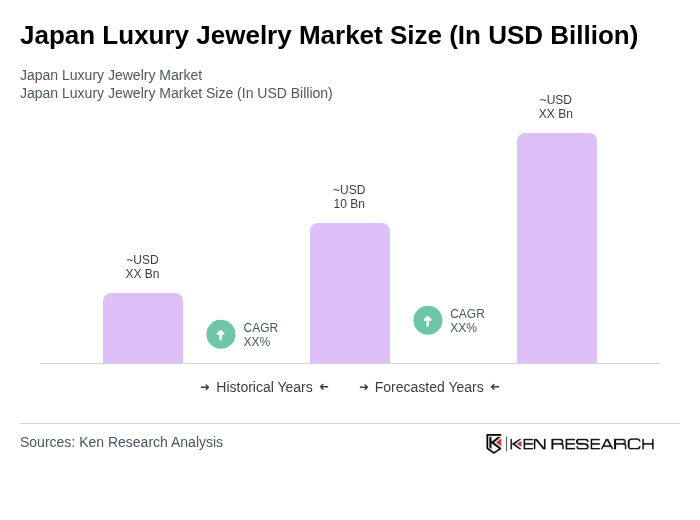
- The Japan Luxury Jewelry Market is valued at USD 10 billion, based on a five-year historical analysis. This growth is primarily driven by increasing disposable incomes, a rising number of affluent consumers, and a growing appreciation for luxury goods among younger demographics. The market has seen a significant uptick in demand for high-quality and unique jewelry pieces, reflecting changing consumer preferences towards personalized luxury.
- Tokyo, Osaka, and Yokohama are the dominant cities in the Japan Luxury Jewelry Market. Tokyo, as the capital, serves as a cultural and economic hub, attracting both local and international luxury brands. Osaka and Yokohama follow closely, benefiting from their affluent populations and vibrant shopping districts that cater to luxury consumers, thus driving market growth in these regions.
- In 2023, the Japanese government implemented regulations aimed at enhancing consumer protection in the luxury goods sector. This includes stricter guidelines on the authenticity and quality of luxury jewelry, requiring retailers to provide detailed information about the materials used and the origin of their products. Such measures are designed to build consumer trust and ensure a fair marketplace.
Japan Luxury Jewelry Market Segmentation
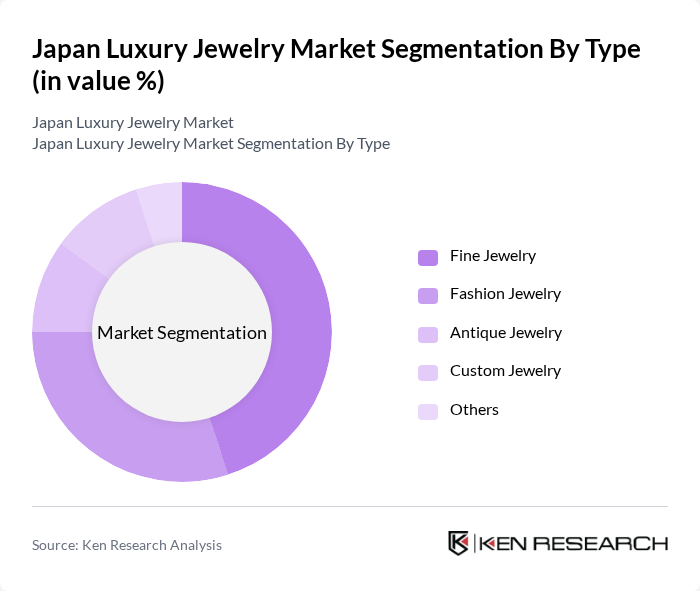
By Type:The market is segmented into Fine Jewelry, Fashion Jewelry, Antique Jewelry, Custom Jewelry, and Others. Fine Jewelry is the leading subsegment, driven by its association with high-quality materials and craftsmanship, appealing to affluent consumers seeking investment pieces. Fashion Jewelry follows, popular among younger demographics for its trendy designs and affordability. Antique Jewelry attracts collectors and those seeking unique, historical pieces, while Custom Jewelry caters to consumers desiring personalized items.
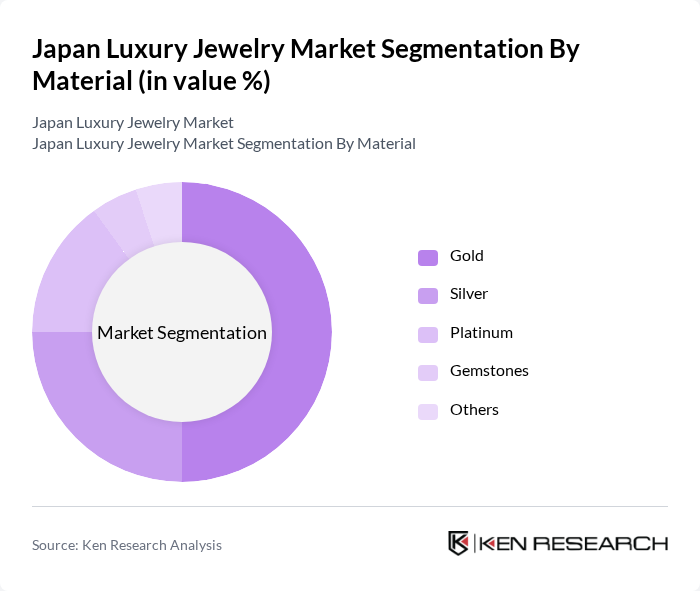
By Material:The market is segmented into Gold, Silver, Platinum, Gemstones, and Others. Gold jewelry dominates the market due to its traditional value and status symbol, appealing to consumers looking for both aesthetic and investment value. Silver follows as a popular choice for fashion jewelry, while Platinum is favored for its durability and prestige. Gemstones are increasingly sought after for their unique beauty, and the "Others" category includes alternative materials that cater to niche markets.
Japan Luxury Jewelry Market Competitive Landscape
The Japan Luxury Jewelry Market is characterized by a dynamic mix of regional and international players. Leading participants such as Mikimoto, Tasaki, Cartier, Tiffany & Co., Bulgari, Van Cleef & Arpels, Chopard, Harry Winston, Piaget, Graff, Boucheron, David Yurman, De Beers, Chloé, Ippolita contribute to innovation, geographic expansion, and service delivery in this space.
Japan Luxury Jewelry Market Industry Analysis
Growth Drivers
- Increasing Disposable Income Among Consumers:The average disposable income in Japan is projected to reach ¥3.5 million (approximately $32,000) in future, reflecting a steady increase from previous years. This rise in disposable income enables consumers to allocate more funds towards luxury purchases, including jewelry. As more individuals enter higher income brackets, the demand for high-end jewelry is expected to grow, particularly among millennials and affluent consumers seeking unique pieces that signify status and personal expression.
- Rising Demand for Personalized and Bespoke Jewelry:The bespoke jewelry segment in Japan is experiencing significant growth, with sales expected to reach ¥150 billion ($1.4 billion) in future. This trend is driven by consumers' desire for unique, personalized items that reflect their individual tastes and stories. As more jewelers offer customization options, the market is likely to expand, catering to a clientele that values craftsmanship and personal connection in their luxury purchases.
- Growth of E-commerce Platforms for Luxury Goods:E-commerce sales of luxury jewelry in Japan are projected to exceed ¥200 billion ($1.8 billion) in future, driven by the increasing adoption of online shopping. The convenience of digital platforms, combined with enhanced online marketing strategies, allows luxury brands to reach a broader audience. This shift towards e-commerce is particularly appealing to younger consumers who prefer the ease of online transactions and the ability to browse extensive collections from home.
Market Challenges
- Economic Fluctuations Affecting Consumer Spending:Japan's economy is projected to grow at a modest rate of 1.2% in future, influenced by global economic uncertainties. Such fluctuations can lead to reduced consumer confidence and spending, particularly in the luxury sector. As consumers become more cautious with their expenditures, luxury jewelry brands may face challenges in maintaining sales growth, especially if economic conditions worsen or if inflation rises significantly.
- Counterfeit Products Impacting Brand Reputation:The prevalence of counterfeit luxury goods in Japan is a growing concern, with estimates suggesting that counterfeit jewelry sales could reach ¥50 billion ($450 million) in future. This not only undermines consumer trust but also poses a significant threat to established brands. As counterfeit products become more sophisticated, luxury jewelry companies must invest in anti-counterfeiting measures and consumer education to protect their brand integrity and market share.
Japan Luxury Jewelry Market Future Outlook
The Japan luxury jewelry market is poised for dynamic growth, driven by evolving consumer preferences and technological advancements. As the trend towards online shopping continues, brands that enhance their digital presence and offer personalized experiences will likely thrive. Additionally, the increasing focus on sustainability and ethical sourcing will shape consumer choices, prompting brands to adapt their practices. Collaborations with local artisans and the expansion into rural markets present further avenues for growth, ensuring a vibrant future for the industry.
Market Opportunities
- Expansion into Untapped Rural Markets:With approximately 30% of Japan's population residing in rural areas, luxury jewelry brands have a significant opportunity to penetrate these markets. By establishing local partnerships and tailored marketing strategies, brands can cater to the unique preferences of rural consumers, potentially increasing their market share and driving sales growth in these regions.
- Increasing Interest in Sustainable and Ethical Jewelry:The demand for sustainable jewelry is on the rise, with consumers willing to pay up to 20% more for ethically sourced products. This trend presents an opportunity for luxury brands to differentiate themselves by adopting sustainable practices, such as using recycled materials and ensuring fair labor conditions. By aligning with consumer values, brands can enhance their appeal and foster loyalty among environmentally conscious shoppers.
Scope of the Report
| Segment | Sub-Segments |
|---|---|
| By Type | Fine Jewelry Fashion Jewelry Antique Jewelry Custom Jewelry Others |
| By Material | Gold Silver Platinum Gemstones Others |
| By Distribution Channel | Online Retail Offline Retail Direct Sales Luxury Boutiques Others |
| By Consumer Demographics | Age Group (18-25, 26-35, 36-50, 51+) Gender Income Level Lifestyle Preferences Others |
| By Occasion | Weddings Anniversaries Birthdays Festivals Others |
| By Brand Positioning | Luxury Brands Premium Brands Mass Market Brands Emerging Brands Others |
| By Price Range | High-End Mid-Range Affordable Luxury Budget Others |
Key Target Audience
Investors and Venture Capitalist Firms
Government and Regulatory Bodies (e.g., Ministry of Economy, Trade and Industry)
Manufacturers and Producers
Distributors and Retailers
Luxury Brand Managers
Trade Associations (e.g., Japan Jewelry Association)
Financial Institutions
Market Analysts and Industry Experts
Players Mentioned in the Report:
Mikimoto
Tasaki
Cartier
Tiffany & Co.
Bulgari
Van Cleef & Arpels
Chopard
Harry Winston
Piaget
Graff
Boucheron
David Yurman
De Beers
Chloe
Ippolita
Table of Contents
Market Assessment Phase
1. Executive Summary and Approach
2. Japan Luxury Jewelry Market Overview
2.1 Key Insights and Strategic Recommendations
2.2 Japan Luxury Jewelry Market Overview
2.3 Definition and Scope
2.4 Evolution of Market Ecosystem
2.5 Timeline of Key Regulatory Milestones
2.6 Value Chain & Stakeholder Mapping
2.7 Business Cycle Analysis
2.8 Policy & Incentive Landscape
3. Japan Luxury Jewelry Market Analysis
3.1 Growth Drivers
3.1.1 Increasing disposable income among consumers
3.1.2 Rising demand for personalized and bespoke jewelry
3.1.3 Growth of e-commerce platforms for luxury goods
3.1.4 Influence of social media and celebrity endorsements
3.2 Market Challenges
3.2.1 Economic fluctuations affecting consumer spending
3.2.2 Counterfeit products impacting brand reputation
3.2.3 High competition among established brands
3.2.4 Regulatory hurdles in import/export of luxury goods
3.3 Market Opportunities
3.3.1 Expansion into untapped rural markets
3.3.2 Collaborations with local artisans for unique offerings
3.3.3 Increasing interest in sustainable and ethical jewelry
3.3.4 Growth in luxury tourism boosting jewelry sales
3.4 Market Trends
3.4.1 Shift towards online shopping for luxury items
3.4.2 Rising popularity of vintage and antique jewelry
3.4.3 Customization and personalization in jewelry design
3.4.4 Increased focus on sustainability in sourcing materials
3.5 Government Regulation
3.5.1 Import tariffs on luxury goods
3.5.2 Regulations on gemstone certification
3.5.3 Compliance with consumer protection laws
3.5.4 Environmental regulations affecting production processes
4. SWOT Analysis
5. Stakeholder Analysis
6. Porter's Five Forces Analysis
7. Japan Luxury Jewelry Market Market Size, 2019-2024
7.1 By Value
7.2 By Volume
7.3 By Average Selling Price
8. Japan Luxury Jewelry Market Segmentation
8.1 By Type
8.1.1 Fine Jewelry
8.1.2 Fashion Jewelry
8.1.3 Antique Jewelry
8.1.4 Custom Jewelry
8.1.5 Others
8.2 By Material
8.2.1 Gold
8.2.2 Silver
8.2.3 Platinum
8.2.4 Gemstones
8.2.5 Others
8.3 By Distribution Channel
8.3.1 Online Retail
8.3.2 Offline Retail
8.3.3 Direct Sales
8.3.4 Luxury Boutiques
8.3.5 Others
8.4 By Consumer Demographics
8.4.1 Age Group (18-25, 26-35, 36-50, 51+)
8.4.2 Gender
8.4.3 Income Level
8.4.4 Lifestyle Preferences
8.4.5 Others
8.5 By Occasion
8.5.1 Weddings
8.5.2 Anniversaries
8.5.3 Birthdays
8.5.4 Festivals
8.5.5 Others
8.6 By Brand Positioning
8.6.1 Luxury Brands
8.6.2 Premium Brands
8.6.3 Mass Market Brands
8.6.4 Emerging Brands
8.6.5 Others
8.7 By Price Range
8.7.1 High-End
8.7.2 Mid-Range
8.7.3 Affordable Luxury
8.7.4 Budget
8.7.5 Others
9. Japan Luxury Jewelry Market Competitive Analysis
9.1 Market Share of Key Players
9.2 Cross Comparison of Key Players
9.2.1 Company Name
9.2.2 Group Size (Large, Medium, or Small as per industry convention)
9.2.3 Revenue Growth Rate
9.2.4 Market Penetration Rate
9.2.5 Customer Retention Rate
9.2.6 Average Order Value
9.2.7 Pricing Strategy
9.2.8 Brand Equity Score
9.2.9 Product Return Rate
9.2.10 Customer Satisfaction Index
9.3 SWOT Analysis of Top Players
9.4 Pricing Analysis
9.5 Detailed Profile of Major Companies
9.5.1 Mikimoto
9.5.2 Tasaki
9.5.3 Cartier
9.5.4 Tiffany & Co.
9.5.5 Bulgari
9.5.6 Van Cleef & Arpels
9.5.7 Chopard
9.5.8 Harry Winston
9.5.9 Piaget
9.5.10 Graff
9.5.11 Boucheron
9.5.12 David Yurman
9.5.13 De Beers
9.5.14 Chloé
9.5.15 Ippolita
10. Japan Luxury Jewelry Market End-User Analysis
10.1 Procurement Behavior of Key Ministries
10.1.1 Government procurement policies
10.1.2 Budget allocation for luxury items
10.1.3 Supplier selection criteria
10.1.4 Contract management practices
10.1.5 Others
10.2 Corporate Spend on Infrastructure & Energy
10.2.1 Investment in luxury retail spaces
10.2.2 Spending on marketing and branding
10.2.3 Budget for corporate gifting
10.2.4 Expenditure on employee rewards
10.2.5 Others
10.3 Pain Point Analysis by End-User Category
10.3.1 Quality concerns
10.3.2 Availability of desired designs
10.3.3 Pricing transparency
10.3.4 After-sales service issues
10.3.5 Others
10.4 User Readiness for Adoption
10.4.1 Awareness of luxury brands
10.4.2 Willingness to pay premium prices
10.4.3 Familiarity with online purchasing
10.4.4 Interest in sustainable products
10.4.5 Others
10.5 Post-Deployment ROI and Use Case Expansion
10.5.1 Measurement of customer satisfaction
10.5.2 Analysis of repeat purchase rates
10.5.3 Evaluation of brand loyalty
10.5.4 Assessment of market share growth
10.5.5 Others
11. Japan Luxury Jewelry Market Future Size, 2025-2030
11.1 By Value
11.2 By Volume
11.3 By Average Selling Price
Go-To-Market Strategy Phase
1. Whitespace Analysis + Business Model Canvas
1.1 Market gaps identification
1.2 Business model evaluation
1.3 Value proposition analysis
1.4 Competitive landscape assessment
1.5 Others
2. Marketing and Positioning Recommendations
2.1 Branding strategies
2.2 Product USPs
2.3 Target audience segmentation
2.4 Communication strategies
2.5 Others
3. Distribution Plan
3.1 Urban retail strategies
3.2 Rural NGO tie-ups
3.3 E-commerce integration
3.4 Partnership with luxury retailers
3.5 Others
4. Channel & Pricing Gaps
4.1 Underserved routes
4.2 Pricing bands analysis
4.3 Competitor pricing strategies
4.4 Consumer price sensitivity
4.5 Others
5. Unmet Demand & Latent Needs
5.1 Category gaps identification
5.2 Consumer segments analysis
5.3 Emerging trends exploration
5.4 Product development opportunities
5.5 Others
6. Customer Relationship
6.1 Loyalty programs
6.2 After-sales service
6.3 Customer feedback mechanisms
6.4 Engagement strategies
6.5 Others
7. Value Proposition
7.1 Sustainability initiatives
7.2 Integrated supply chains
7.3 Unique selling propositions
7.4 Customer-centric approaches
7.5 Others
8. Key Activities
8.1 Regulatory compliance
8.2 Branding efforts
8.3 Distribution setup
8.4 Marketing campaigns
8.5 Others
9. Entry Strategy Evaluation
9.1 Domestic Market Entry Strategy
9.1.1 Product mix considerations
9.1.2 Pricing band analysis
9.1.3 Packaging strategies
9.1.4 Marketing approach
9.1.5 Others
9.2 Export Entry Strategy
9.2.1 Target countries
9.2.2 Compliance roadmap
9.2.3 Distribution channels
9.2.4 Market entry barriers
9.2.5 Others
10. Entry Mode Assessment
10.1 Joint Ventures
10.2 Greenfield Investments
10.3 Mergers & Acquisitions
10.4 Distributor Model
10.5 Others
11. Capital and Timeline Estimation
11.1 Capital requirements
11.2 Timelines for market entry
11.3 Financial projections
11.4 Resource allocation
11.5 Others
12. Control vs Risk Trade-Off
12.1 Ownership considerations
12.2 Partnerships evaluation
12.3 Risk management strategies
12.4 Control mechanisms
12.5 Others
13. Profitability Outlook
13.1 Breakeven analysis
13.2 Long-term sustainability
13.3 Profit margin assessments
13.4 Revenue forecasts
13.5 Others
14. Potential Partner List
14.1 Distributors
14.2 Joint Ventures
14.3 Acquisition targets
14.4 Strategic alliances
14.5 Others
15. Execution Roadmap
15.1 Phased Plan for Market Entry
15.1.1 Market Setup
15.1.2 Market Entry
15.1.3 Growth Acceleration
15.1.4 Scale & Stabilize
15.2 Key Activities and Milestones
15.2.1 Activity timelines
15.2.2 Milestone tracking
15.2.3 Resource allocation
15.2.4 Performance metrics
15.2.5 Others
Research Methodology
Phase 1: Approach1
Desk Research
- Analysis of market reports from industry associations and luxury jewelry trade publications
- Review of consumer behavior studies and demographic data from government databases
- Examination of historical sales data and trends from leading luxury jewelry retailers in Japan
Primary Research
- In-depth interviews with jewelry designers and artisans to understand market dynamics
- Surveys targeting affluent consumers to gauge purchasing preferences and trends
- Focus groups with luxury retail managers to discuss sales strategies and customer engagement
Validation & Triangulation
- Cross-validation of findings through multiple data sources, including sales figures and consumer insights
- Triangulation of qualitative insights from interviews with quantitative data from surveys
- Sanity checks conducted through expert panel reviews comprising industry veterans and market analysts
Phase 2: Market Size Estimation1
Top-down Assessment
- Estimation of total luxury goods market size in Japan, with a focus on jewelry segment
- Analysis of consumer spending patterns and luxury goods consumption trends
- Incorporation of macroeconomic factors influencing luxury jewelry purchases, such as GDP growth
Bottom-up Modeling
- Collection of sales data from key luxury jewelry retailers to establish baseline revenue figures
- Estimation of average transaction values and purchase frequency among target demographics
- Aggregation of data from various distribution channels, including online and brick-and-mortar sales
Forecasting & Scenario Analysis
- Development of predictive models based on historical growth rates and market trends
- Scenario analysis considering economic fluctuations, consumer sentiment, and global market influences
- Projections for market growth through 2030, including best-case and worst-case scenarios
Phase 3: CATI Sample Composition1
| Scope Item/Segment | Sample Size | Target Respondent Profiles |
|---|---|---|
| Luxury Jewelry Retailers | 100 | Store Managers, Sales Executives |
| Affluent Consumers | 150 | High Net-Worth Individuals, Luxury Shoppers |
| Jewelry Designers and Artisans | 50 | Independent Designers, Craftsmanship Experts |
| Market Analysts and Consultants | 30 | Industry Analysts, Market Research Professionals |
| Luxury Brand Executives | 40 | Brand Managers, Marketing Directors |
Frequently Asked Questions
What is the current value of the Japan Luxury Jewelry Market?
The Japan Luxury Jewelry Market is valued at approximately USD 10 billion, reflecting a significant growth trend driven by increasing disposable incomes and a rising number of affluent consumers who appreciate luxury goods.
Which cities dominate the Japan Luxury Jewelry Market?
What are the main types of jewelry in the Japan Luxury Jewelry Market?
How is the Japan Luxury Jewelry Market regulated?
Other Regional/Country Reports
Other Adjacent Reports
South Africa Luxury Cosmetics Market
Philippines Precious Metals Market Size, Share, Growth Drivers, Trends, Opportunities & Forecast 2025–2030Philippines Gemstone Market
Kuwait fashion accessories market report size, share, growth drivers, trends, opportunities & forecast 2025–2030UAE Sustainable Fashion Market
Thailand E-commerce Retail Market
Why Buy From Us?

What makes us stand out is that our consultants follow Robust, Refine and Result (RRR) methodology. Robust for clear definitions, approaches and sanity checking, Refine for differentiating respondents' facts and opinions, and Result for presenting data with story.

We have set a benchmark in the industry by offering our clients with syndicated and customized market research reports featuring coverage of entire market as well as meticulous research and analyst insights.

While we don't replace traditional research, we flip the method upside down. Our dual approach of Top Bottom & Bottom Top ensures quality deliverable by not just verifying company fundamentals but also looking at the sector and macroeconomic factors.

With one step in the future, our research team constantly tries to show you the bigger picture. We help with some of the tough questions you may encounter along the way: How is the industry positioned? Best marketing channel? KPI's of competitors? By aligning every element, we help maximize success.

Our report gives you instant access to the answers and sources that other companies might choose to hide. We elaborate each steps of research methodology we have used and showcase you the sample size to earn your trust.

If you need any support, we are here! We pride ourselves on universe strength, data quality, and quick, friendly, and professional service.