Japan Otoplasty Market Report Size Share Growth Drivers Trends Opportunities and Forecast 2025–2030

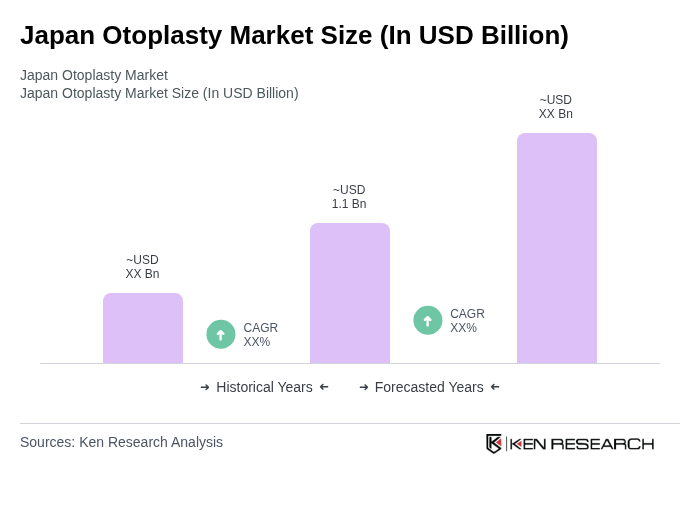
Japan Otoplasty Market at USD 1.1 Bn, fueled by rising cosmetic demand, minimally invasive techniques, and urban healthcare hubs like Tokyo and Osaka.

Region:Asia

Author(s):Geetanshi

Product Code:KRAE1504

Pages:95

Published On:March 2026
About the Report

Base Year 2024

Japan Otoplasty Market Overview

  • The Japan Otoplasty Market is valued at USD 1.1 billion, based on a five-year historical analysis. This growth is primarily driven by increasing awareness of cosmetic procedures, rising disposable incomes, growing acceptance of aesthetic surgery among the population, technological advancements in minimally invasive treatments, and expanding medical tourism. The demand for otoplasty procedures has surged as individuals seek to enhance their appearance and self-esteem, particularly among younger demographics.
  • Tokyo, Osaka, and Yokohama are the dominant cities in the Japan Otoplasty Market due to their high population density, advanced healthcare infrastructure, and concentration of cosmetic surgery clinics. These urban centers are also home to a large number of qualified plastic surgeons, making them attractive locations for individuals seeking otoplasty procedures.
  • The Medical Practitioners Act, 1948 issued by the Ministry of Health, Labour and Welfare requires plastic surgeons performing cosmetic surgeries, including otoplasty, to hold national medical licenses with specialization certification from the Japanese Society of Plastic and Reconstructive Surgery, mandating facilities to maintain infection control standards, equipment safety thresholds, and mandatory reporting of adverse events for all procedures exceeding minor interventions.
Japan Otoplasty Market Size

Japan Otoplasty Market Segmentation

By Procedure Type:The procedure type segmentation includes various methods of otoplasty, each catering to different patient needs. The subsegments are Ear Pinback (Setback Otoplasty), Ear Augmentation, and Ear Reduction. Among these, Ear Pinback is the most popular due to its effectiveness in correcting protruding ears, which is a common concern among both children and adults. The increasing trend of parents opting for this procedure for their children has further solidified its dominance in the market.
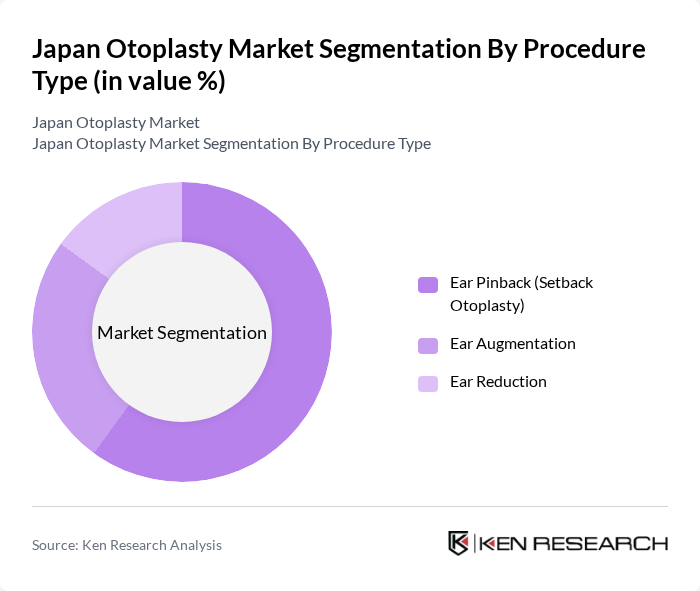
Japan Otoplasty Market segmentation by Procedure Type.

By Technique:The technique segmentation encompasses both surgical and non-surgical methods of otoplasty. Surgical techniques dominate the market due to their long-lasting results and effectiveness in reshaping the ear structure. Non-surgical techniques, while gaining popularity for their minimally invasive nature, still represent a smaller portion of the market. The preference for surgical options is driven by patient expectations for permanent solutions to ear deformities.
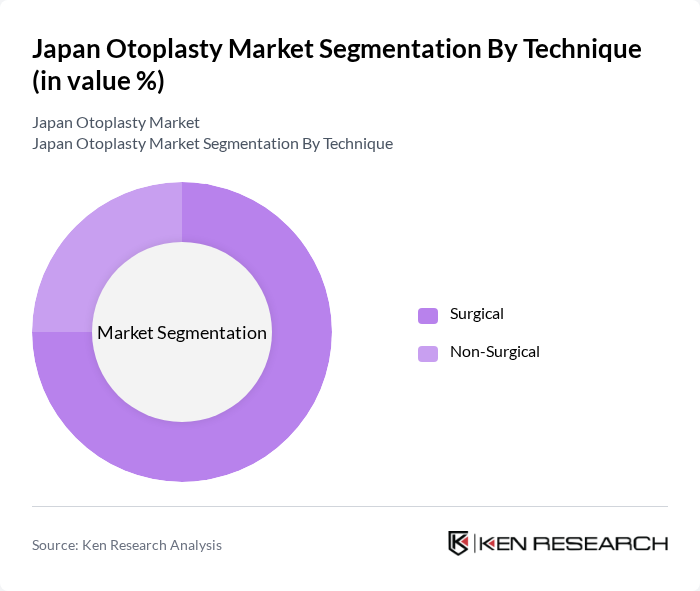
Japan Otoplasty Market segmentation by Technique.

Japan Otoplasty Market Competitive Landscape

The Japan Otoplasty Market is characterized by a dynamic mix of regional and international players. Leading participants such as Aesthetic Surgery Japan, Tokyo Medical University Hospital, Shinjuku Plastic Surgery Clinic, Osaka Otoplasty Center, Yokohama Cosmetic Surgery Clinic, Nagoya Aesthetic Surgery Institute, Kobe Plastic Surgery Clinic, Fukuoka Otoplasty Specialists, Sapporo Cosmetic Surgery Center, Kyoto Aesthetic Surgery Clinic, Hiroshima Plastic Surgery Hospital, Sendai Otoplasty Clinic, Chiba Cosmetic Surgery Center, Kanagawa Aesthetic Surgery Clinic, Nara Otoplasty Specialists contribute to innovation, geographic expansion, and service delivery in this space.

Aesthetic Surgery Japan

2005

Tokyo, Japan

Tokyo Medical University Hospital

1916

Tokyo, Japan

Shinjuku Plastic Surgery Clinic

2000

Tokyo, Japan

Osaka Otoplasty Center

2010

Osaka, Japan

Yokohama Cosmetic Surgery Clinic

2008

Yokohama, Japan

Company

Establishment Year

Headquarters

Market Share (%)

EBITDA Margin (%)

Procedure Volume (Annual Cases)

Patient Satisfaction Score (NPS)

Geographic Coverage (No. of Clinics)

R&D Investment (% of Revenue)

Japan Otoplasty Market Industry Analysis

Growth Drivers

  • Increasing Awareness of Aesthetic Procedures:The Japanese population is increasingly aware of aesthetic procedures, with a reported 62% of individuals aged 18-34 expressing interest in cosmetic enhancements. This demographic shift is supported by a survey indicating that 47% of respondents believe that aesthetic procedures improve self-esteem. The rise of social media platforms has further amplified awareness, leading to a surge in inquiries and consultations for otoplasty, particularly among younger adults seeking to enhance their appearance.
  • Rising Demand for Cosmetic Surgery:The demand for cosmetic surgery in Japan has seen a significant increase, with the number of surgical procedures rising to approximately 1.3 million. Otoplasty, in particular, has gained traction, with a reported 16% increase in procedures performed compared to the previous year. This growth is driven by changing beauty standards and a cultural shift towards acceptance of cosmetic enhancements, making otoplasty a popular choice for individuals seeking to improve their ear aesthetics.
  • Technological Advancements in Surgical Techniques:Technological innovations in surgical techniques have greatly enhanced the safety and effectiveness of otoplasty procedures. In future, over 72% of otoplasty surgeries in Japan are performed using minimally invasive techniques, which reduce recovery time and scarring. The introduction of advanced imaging technologies and 3D modeling has also improved surgical precision, leading to higher patient satisfaction rates, which are reported at 92% for those undergoing otoplasty procedures.

Market Challenges

  • High Cost of Procedures:The cost of otoplasty procedures in Japan can range from ¥320,000 to ¥620,000 (approximately $2,900 to $5,600), which poses a significant barrier for many potential patients. With the average disposable income in Japan projected to be around ¥3.7 million, the affordability of such procedures remains a challenge. This high cost limits access for lower-income individuals, potentially stunting market growth in the otoplasty sector.
  • Limited Insurance Coverage:In Japan, most health insurance plans do not cover cosmetic procedures, including otoplasty, which can deter patients from seeking surgery. As of future, only about 22% of individuals report having any form of insurance that covers cosmetic enhancements. This lack of coverage forces patients to pay out-of-pocket, further complicating their decision to undergo surgery and impacting overall market growth in the otoplasty sector.

Japan Otoplasty Market Future Outlook

The future of the otoplasty market in Japan appears promising, driven by increasing consumer awareness and technological advancements. As the population continues to embrace aesthetic procedures, the demand for otoplasty is expected to rise. Additionally, the integration of innovative surgical techniques and patient-centric care models will likely enhance the overall experience, leading to higher satisfaction rates. The market is poised for growth, with a focus on expanding access and affordability for a broader demographic.

Market Opportunities

  • Expansion of Medical Tourism:Japan's reputation for high-quality medical care presents a significant opportunity for the otoplasty market. In future, medical tourism is projected to attract over 600,000 international patients seeking cosmetic procedures, including otoplasty. This influx can boost local clinics and hospitals, enhancing their service offerings and driving revenue growth in the sector.
  • Development of Innovative Surgical Techniques:The ongoing development of innovative surgical techniques, such as 3D-printed ear implants, presents a unique opportunity for the otoplasty market. These advancements can improve surgical outcomes and reduce recovery times, appealing to a broader audience. As these technologies become more mainstream, they are expected to attract a new segment of patients interested in cutting-edge cosmetic solutions.

Scope of the Report

SegmentSub-Segments
By Procedure Type

Ear Pinback (Setback Otoplasty)

Ear Augmentation

Ear Reduction

By Technique

Surgical

Non-Surgical

By Age Group

Pediatric (5-18 years)

Adult (19-40 years)

Geriatric (40+ years)

By End-User

Hospitals

Cosmetic Surgery Clinics

Ambulatory Surgical Centers

Key Target Audience

Investors and Venture Capitalist Firms

Government and Regulatory Bodies (e.g., Ministry of Health, Labour and Welfare)

Manufacturers and Producers of Otoplasty Devices

Distributors and Retailers of Medical Equipment

Healthcare Providers and Clinics Specializing in Otoplasty

Medical Technology Innovators

Industry Associations (e.g., Japan Society of Plastic and Reconstructive Surgery)

Financial Institutions and Investment Banks

Players Mentioned in the Report:

Aesthetic Surgery Japan

Tokyo Medical University Hospital

Shinjuku Plastic Surgery Clinic

Osaka Otoplasty Center

Yokohama Cosmetic Surgery Clinic

Nagoya Aesthetic Surgery Institute

Kobe Plastic Surgery Clinic

Fukuoka Otoplasty Specialists

Sapporo Cosmetic Surgery Center

Kyoto Aesthetic Surgery Clinic

Hiroshima Plastic Surgery Hospital

Sendai Otoplasty Clinic

Chiba Cosmetic Surgery Center

Kanagawa Aesthetic Surgery Clinic

Nara Otoplasty Specialists

Table of Contents

Market Assessment Phase

1. Executive Summary and Approach


2. Japan Otoplasty Market Overview

2.1 Key Insights and Strategic Recommendations

2.2 Japan Otoplasty Market Overview

2.3 Definition and Scope

2.4 Evolution of Market Ecosystem

2.5 Timeline of Key Regulatory Milestones

2.6 Value Chain & Stakeholder Mapping

2.7 Business Cycle Analysis

2.8 Policy & Incentive Landscape


3. Japan Otoplasty Market Analysis

3.1 Growth Drivers

3.1.1 Increasing Awareness of Aesthetic Procedures
3.1.2 Rising Demand for Cosmetic Surgery
3.1.3 Technological Advancements in Surgical Techniques
3.1.4 Growing Acceptance of Otoplasty Among Younger Demographics

3.2 Market Challenges

3.2.1 High Cost of Procedures
3.2.2 Limited Insurance Coverage
3.2.3 Competition from Non-Surgical Alternatives
3.2.4 Regulatory Hurdles in Medical Practices

3.3 Market Opportunities

3.3.1 Expansion of Medical Tourism
3.3.2 Development of Innovative Surgical Techniques
3.3.3 Increasing Investment in Aesthetic Clinics
3.3.4 Collaborations with Influencers for Awareness Campaigns

3.4 Market Trends

3.4.1 Rise in Minimally Invasive Procedures
3.4.2 Growing Popularity of Customizable Otoplasty Solutions
3.4.3 Increased Focus on Patient-Centric Care
3.4.4 Use of Virtual Reality in Pre-Operative Consultations

3.5 Government Regulation

3.5.1 Licensing Requirements for Surgeons
3.5.2 Safety Standards for Surgical Facilities
3.5.3 Advertising Regulations for Cosmetic Procedures
3.5.4 Patient Consent and Ethical Guidelines

4. SWOT Analysis


5. Stakeholder Analysis


6. Porter's Five Forces Analysis


7. Japan Otoplasty Market Market Size, 2019-2024

7.1 By Value

7.2 By Volume

7.3 By Average Selling Price


8. Japan Otoplasty Market Segmentation

8.1 By Procedure Type

8.1.1 Ear Pinback (Setback Otoplasty)
8.1.2 Ear Augmentation
8.1.3 Ear Reduction

8.2 By Technique

8.2.1 Surgical
8.2.2 Non-Surgical

8.3 By Age Group

8.3.1 Pediatric (5-18 years)
8.3.2 Adult (19-40 years)
8.3.3 Geriatric (40+ years)

8.4 By End-User

8.4.1 Hospitals
8.4.2 Cosmetic Surgery Clinics
8.4.3 Ambulatory Surgical Centers

9. Japan Otoplasty Market Competitive Analysis

9.1 Market Share of Key Players

9.2 Cross Comparison of Key Players

9.2.1 Revenue Growth Rate (CAGR %)
9.2.2 Market Share (%)
9.2.3 EBITDA Margin (%)
9.2.4 Procedure Volume (Annual Cases)
9.2.5 Patient Satisfaction Score (NPS)
9.2.6 Geographic Coverage (No. of Clinics)
9.2.7 R&D Investment (% of Revenue)
9.2.8 surgeon Expertise (Board-Certified Surgeons)
9.2.9 Complication Rate (%)
9.2.10 Return on Assets (ROA %)

9.3 SWOT Analysis of Top Players

9.4 Pricing Analysis

9.5 Detailed Profile of Major Companies

9.5.1 Aesthetic Surgery Japan
9.5.2 Tokyo Medical University Hospital
9.5.3 Shinjuku Plastic Surgery Clinic
9.5.4 Osaka Otoplasty Center
9.5.5 Yokohama Cosmetic Surgery Clinic
9.5.6 Nagoya Aesthetic Surgery Institute
9.5.7 Kobe Plastic Surgery Clinic
9.5.8 Fukuoka Otoplasty Specialists
9.5.9 Sapporo Cosmetic Surgery Center
9.5.10 Kyoto Aesthetic Surgery Clinic
9.5.11 Hiroshima Plastic Surgery Hospital
9.5.12 Sendai Otoplasty Clinic
9.5.13 Chiba Cosmetic Surgery Center
9.5.14 Kanagawa Aesthetic Surgery Clinic
9.5.15 Nara Otoplasty Specialists

10. Japan Otoplasty Market End-User Analysis

10.1 Procurement Behavior of Key Ministries

10.1.1 Government Health Initiatives
10.1.2 Budget Allocations for Aesthetic Procedures
10.1.3 Regulatory Compliance Requirements
10.1.4 Stakeholder Engagement Strategies

10.2 Corporate Spend on Infrastructure & Energy

10.2.1 Investment in Medical Facilities
10.2.2 Funding for Research and Development
10.2.3 Partnerships with Technology Providers
10.2.4 Marketing and Outreach Budgets

10.3 Pain Point Analysis by End-User Category

10.3.1 Accessibility to Quality Care
10.3.2 Affordability of Procedures
10.3.3 Awareness of Available Options
10.3.4 Post-Operative Care Challenges

10.4 User Readiness for Adoption

10.4.1 Attitudes Towards Cosmetic Surgery
10.4.2 Knowledge of Otoplasty Benefits
10.4.3 Willingness to Invest in Aesthetic Procedures
10.4.4 Influence of Social Media on Decision Making

10.5 Post-Deployment ROI and Use Case Expansion

10.5.1 Patient Satisfaction Metrics
10.5.2 Long-Term Health Outcomes
10.5.3 Referral Rates and Word-of-Mouth
10.5.4 Opportunities for Service Expansion

11. Japan Otoplasty Market Future Size, 2025-2030

11.1 By Value

11.2 By Volume

11.3 By Average Selling Price


Go-To-Market Strategy Phase

1. Whitespace Analysis + Business Model Canvas

1.1 Market Gaps Identification

1.2 Value Proposition Development

1.3 Revenue Streams Analysis

1.4 Customer Segmentation

1.5 Key Partnerships

1.6 Cost Structure Evaluation

1.7 Competitive Advantage Assessment


2. Marketing and Positioning Recommendations

2.1 Branding Strategies

2.2 Product USPs


3. Distribution Plan

3.1 Urban Retail vs Rural NGO Tie-ups


4. Channel & Pricing Gaps

4.1 Underserved Routes

4.2 Pricing Bands


5. Unmet Demand & Latent Needs

5.1 Category Gaps

5.2 Consumer Segments


6. Customer Relationship

6.1 Loyalty Programs

6.2 After-sales Service


7. Value Proposition

7.1 Sustainability

7.2 Integrated Supply Chains


8. Key Activities

8.1 Regulatory Compliance

8.2 Branding

8.3 Distribution Setup


9. Entry Strategy Evaluation

9.1 Domestic Market Entry Strategy

9.1.1 Product Mix
9.1.2 Pricing Band
9.1.3 Packaging

9.2 Export Entry Strategy

9.2.1 Target Countries
9.2.2 Compliance Roadmap

10. Entry Mode Assessment

10.1 JV

10.2 Greenfield

10.3 M&A

10.4 Distributor Model


11. Capital and Timeline Estimation

11.1 Capital Requirements

11.2 Timelines


12. Control vs Risk Trade-Off

12.1 Ownership vs Partnerships


13. Profitability Outlook

13.1 Breakeven Analysis

13.2 Long-term Sustainability


14. Potential Partner List

14.1 Distributors

14.2 JVs

14.3 Acquisition Targets


15. Execution Roadmap

15.1 Phased Plan for Market Entry

15.1.1 Market Setup
15.1.2 Market Entry
15.1.3 Growth Acceleration
15.1.4 Scale & Stabilize

15.2 Key Activities and Milestones

15.2.1 Milestone Planning
15.2.2 Activity Tracking

Research Methodology

ApproachModellingSample

Phase 1: Approach1

Desk Research

  • Analysis of market reports from Japanese healthcare and cosmetic surgery associations
  • Review of demographic data and trends from Japan's Ministry of Health, Labour and Welfare
  • Examination of published articles and journals focusing on otoplasty procedures and patient satisfaction

Primary Research

  • Interviews with leading otolaryngologists and plastic surgeons specializing in otoplasty
  • Surveys conducted with patients who have undergone otoplasty to gather insights on motivations and outcomes
  • Focus groups with healthcare professionals to discuss trends and innovations in otoplasty techniques

Validation & Triangulation

  • Cross-validation of findings through multiple expert interviews and patient surveys
  • Triangulation of data from clinical studies, market reports, and expert opinions
  • Sanity checks through peer reviews and consultations with industry experts

Phase 2: Market Size Estimation1

Top-down Assessment

  • Estimation of the total addressable market based on national healthcare expenditure on cosmetic procedures
  • Segmentation of the market by age group, gender, and geographic region within Japan
  • Incorporation of trends in cosmetic surgery popularity and cultural attitudes towards otoplasty

Bottom-up Modeling

  • Collection of data on the number of otoplasty procedures performed annually from hospitals and clinics
  • Estimation of average costs associated with otoplasty, including surgical fees and post-operative care
  • Calculation of market size based on procedure volume and average pricing

Forecasting & Scenario Analysis

  • Multi-factor regression analysis considering factors such as aging population and increasing disposable income
  • Scenario planning based on potential changes in healthcare regulations and patient preferences
  • Development of baseline, optimistic, and pessimistic forecasts for the otoplasty market through 2030

Phase 3: CATI Sample Composition1

Scope Item/SegmentSample SizeTarget Respondent Profiles
Otoplasty Patients120Individuals aged 18-45 who have undergone otoplasty
Plastic Surgeons100Board-certified plastic surgeons performing otoplasty
Otolaryngologists80ENT specialists involved in ear surgeries
Healthcare Administrators70Hospital administrators overseeing cosmetic surgery departments
Cosmetic Surgery Clinics60Managers and staff from clinics specializing in cosmetic procedures

Frequently Asked Questions

What is the current value of the Japan Otoplasty Market?

The Japan Otoplasty Market is valued at approximately USD 1.1 billion, reflecting a significant growth trend driven by increased awareness of cosmetic procedures and rising disposable incomes among the population.

What are the main cities driving the Japan Otoplasty Market?

What types of otoplasty procedures are most common in Japan?

What techniques are used in otoplasty procedures in Japan?

Other Regional/Country Reports

United Arab Emirates Otoplasty Market Report Size Share Growth Drivers Trends Opportunities And Forecast 2025–2030

Indonesia Otoplasty Market Report Size Share Growth Drivers Trends Opportunities and Forecast 2025–2030

Malaysia Otoplasty Market Report Size Share Growth Drivers Trends Opportunities and Forecast 2025–2030

KSA Otoplasty Market Report Size Share Growth Drivers Trends Opportunities and Forecast 2025–2030

APAC Otoplasty Market Report Size Share Growth Drivers Trends Opportunities and Forecast 2025–2030

SEA Otoplasty Market Report Size Share Growth Drivers Trends Opportunities and Forecast 2025–2030

Why Buy From Us?

Refine Robust Result (RRR) Framework

What makes us stand out is that our consultants follow Robust, Refine and Result (RRR) methodology. Robust for clear definitions, approaches and sanity checking, Refine for differentiating respondents' facts and opinions, and Result for presenting data with story.

Our Reach Is Unmatched

We have set a benchmark in the industry by offering our clients with syndicated and customized market research reports featuring coverage of entire market as well as meticulous research and analyst insights.

Shifting the Research Paradigm

While we don't replace traditional research, we flip the method upside down. Our dual approach of Top Bottom & Bottom Top ensures quality deliverable by not just verifying company fundamentals but also looking at the sector and macroeconomic factors.

More Insights-Better Decisions

With one step in the future, our research team constantly tries to show you the bigger picture. We help with some of the tough questions you may encounter along the way: How is the industry positioned? Best marketing channel? KPI's of competitors? By aligning every element, we help maximize success.

Transparency and Trust

Our report gives you instant access to the answers and sources that other companies might choose to hide. We elaborate each steps of research methodology we have used and showcase you the sample size to earn your trust.

Round the Clock Support

If you need any support, we are here! We pride ourselves on universe strength, data quality, and quick, friendly, and professional service.

Why Clients Choose Us?

400000+
Reports in repository
150+
Consulting projects a year
100+
Analysts
8000+
Client Queries in 2022








