Region:Asia
Author(s):Geetanshi
Product Code:KRAA3396
Pages:90
Published On:January 2026
By Type:The decorative concrete market can be segmented into various types, including Stamped Concrete, Stained Concrete, Polished Concrete, Decorative Overlays, Exposed Aggregate Concrete, Concrete Resurfacing, and Others. Each type serves different aesthetic and functional purposes, catering to diverse consumer preferences and applications.
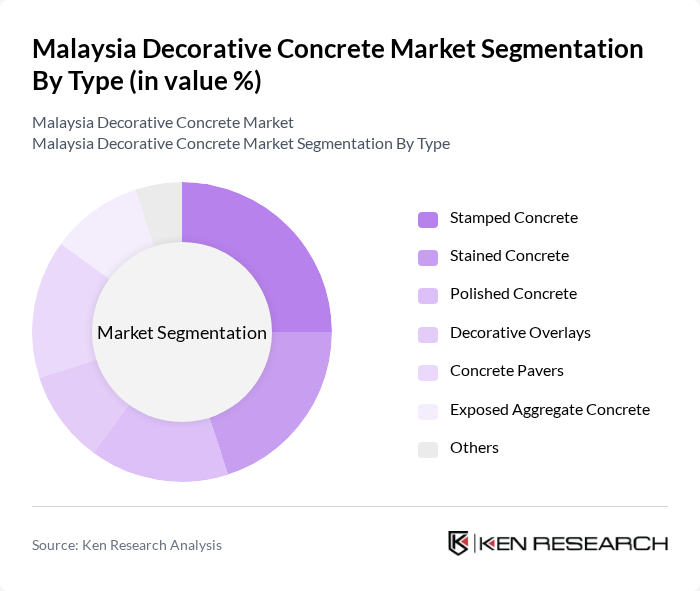
The Stamped Concrete segment is currently dominating the market due to its versatility and ability to mimic the appearance of natural materials like stone and brick. This type of decorative concrete is highly favored for both residential and commercial applications, as it offers a cost-effective solution for enhancing outdoor spaces such as patios and walkways. The growing trend of outdoor living spaces and the increasing focus on aesthetic appeal in construction are driving the demand for stamped concrete.
By End-User:The market can also be segmented based on end-users, which include Residential, Commercial, Industrial, Government & Utilities, and Others. Each end-user category has distinct requirements and preferences for decorative concrete applications.
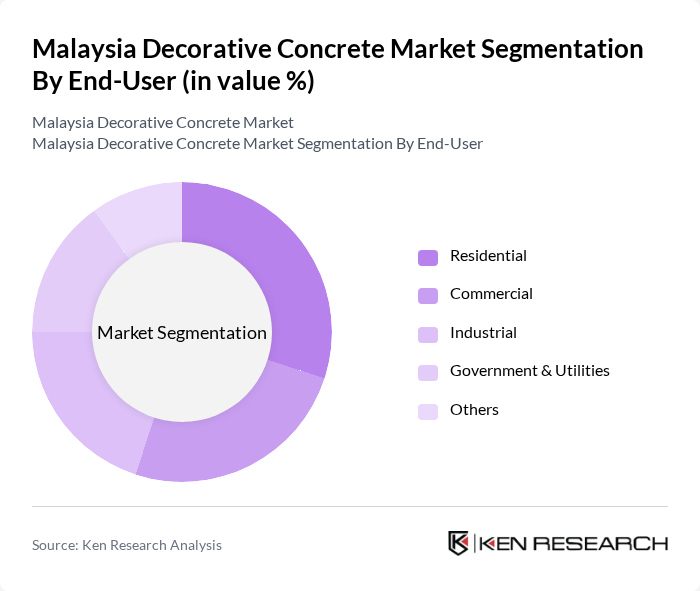
The Residential segment leads the market, driven by the increasing trend of home renovations and the desire for aesthetically pleasing outdoor spaces. Homeowners are increasingly opting for decorative concrete solutions to enhance their properties' curb appeal and functionality. The rise in disposable income and consumer awareness regarding the benefits of decorative concrete are further propelling this segment's growth.
The Malaysia Decorative Concrete Market is characterized by a dynamic mix of regional and international players. Leading participants such as Lafarge Malaysia, Holcim Malaysia, CEMEX Malaysia, Boral Malaysia, Sika Malaysia, KPM Industries, Concrete Innovations, Sika Sarnafil, UEM Sunrise, YTL Cement, Tasek Corporation, APM Industries, Mapei Malaysia, Sika Malaysia, Concrete Solutions contribute to innovation, geographic expansion, and service delivery in this space.
The future of the Malaysia decorative concrete market appears promising, driven by ongoing urbanization and a growing emphasis on aesthetic and sustainable construction practices. As the government continues to invest in infrastructure, the demand for innovative flooring solutions is expected to rise. Additionally, the integration of smart technologies in construction will likely enhance product offerings, making decorative concrete more appealing to consumers. Overall, the market is poised for growth, with significant opportunities for innovation and expansion in various sectors.
| Segment | Sub-Segments |
|---|---|
| By Type | Stamped Concrete Stained Concrete Polished Concrete Decorative Overlays Exposed Aggregate Concrete Concrete Resurfacing Others |
| By End-User | Residential Commercial Industrial Government & Utilities Others |
| By Application | Flooring Walls Driveways Patios Pool Decks Others |
| By Region | Central Region Northern Region Southern Region Eastern Region |
| By Product Formulation | Polymer-Modified Concrete Fiber-Reinforced Concrete Self-Leveling Concrete Others |
| By Distribution Channel | Direct Sales Distributors Online Sales Retail Outlets Others |
| By Customer Type | Individual Consumers Contractors Architects Builders Others |
| Scope Item/Segment | Sample Size | Target Respondent Profiles |
|---|---|---|
| Residential Decorative Concrete Applications | 120 | Homeowners, Interior Designers |
| Commercial Decorative Concrete Projects | 100 | Project Managers, Architects |
| Industrial Decorative Concrete Solutions | 80 | Construction Engineers, Facility Managers |
| Supplier and Distributor Insights | 60 | Sales Managers, Product Development Leads |
| Market Trends and Innovations | 90 | Industry Analysts, Research Scholars |
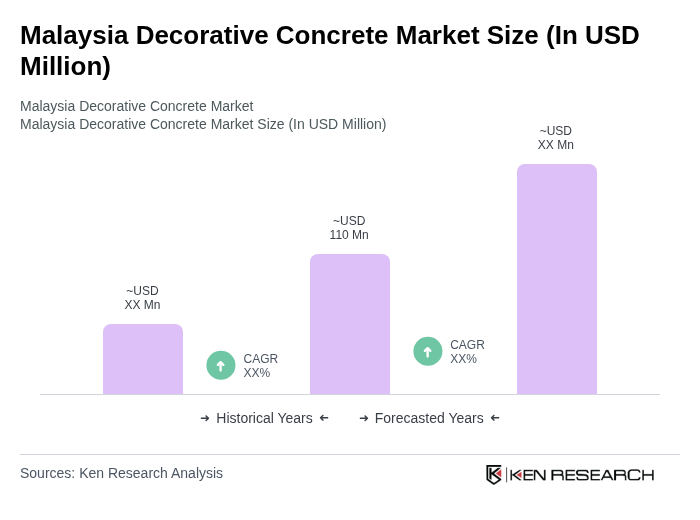
The Malaysia Decorative Concrete Market is valued at approximately USD 110 million, reflecting a significant growth trend driven by increasing demand for aesthetic and durable flooring solutions in both residential and commercial sectors.

What makes us stand out is that our consultants follow Robust, Refine and Result (RRR) methodology. Robust for clear definitions, approaches and sanity checking, Refine for differentiating respondents' facts and opinions, and Result for presenting data with story.

We have set a benchmark in the industry by offering our clients with syndicated and customized market research reports featuring coverage of entire market as well as meticulous research and analyst insights.

While we don't replace traditional research, we flip the method upside down. Our dual approach of Top Bottom & Bottom Top ensures quality deliverable by not just verifying company fundamentals but also looking at the sector and macroeconomic factors.

With one step in the future, our research team constantly tries to show you the bigger picture. We help with some of the tough questions you may encounter along the way: How is the industry positioned? Best marketing channel? KPI's of competitors? By aligning every element, we help maximize success.

Our report gives you instant access to the answers and sources that other companies might choose to hide. We elaborate each steps of research methodology we have used and showcase you the sample size to earn your trust.

If you need any support, we are here! We pride ourselves on universe strength, data quality, and quick, friendly, and professional service.













