About the Report
Base Year 2024Mexico Cargo Security Market Overview
- The Mexico Cargo Security Market is valued at USD 1.85 billion, based on a five-year historical analysis of the combined physical security equipment and services sector. This growth is primarily driven by the increasing need for secure transportation of goods, a persistent rise in cargo theft incidents, and the rapid expansion of e-commerce, which necessitates robust security measures to protect shipments throughout the supply chain. Additionally, the adoption of advanced technologies such as artificial intelligence and real-time monitoring is further enhancing security capabilities and market demand .
- Key hubs in this market include Mexico City, Guadalajara, and Monterrey. These cities dominate due to their strategic locations, extensive transportation networks, and high levels of industrial activity, making them critical centers for logistics and cargo movement, thereby increasing the demand for security solutions .
- In recent years, the Mexican government has strengthened national cargo security protocols, mandating enhanced security measures for cargo transport. These regulations aim to reduce theft and ensure the safety of goods in transit, requiring companies to adopt advanced security technologies and best practices, including real-time tracking, AI-powered surveillance, and improved risk assessment .

Mexico Cargo Security Market Segmentation
By Type:The market is segmented into a comprehensive range of security solutions designed to address the diverse requirements of cargo protection. The subsegments include Physical Security Solutions (such as guards, barriers, and locks), Electronic Security Systems (including alarms and access control), Surveillance and Monitoring Services (real-time video and sensor monitoring), Risk Assessment Services (threat analysis and vulnerability audits), Security Consulting Services (strategy and compliance advisory), Cargo Insurance (coverage for loss or theft), Cargo Screening and Inspection (scanning and verification), Tracking and Tracing Systems (GPS, RFID, and IoT-enabled tracking), Access Control and Authentication (biometric and digital access), and Others. Each subsegment plays a vital role in strengthening the security framework for cargo transportation .

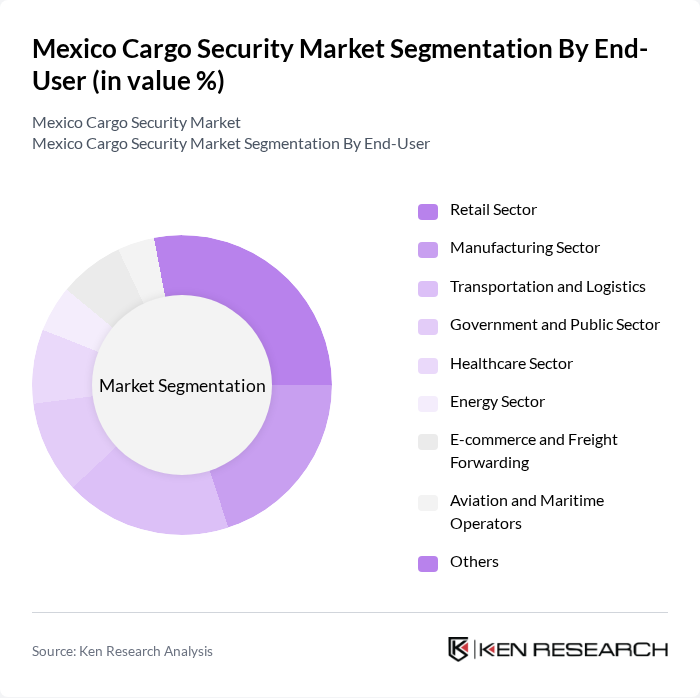
By End-User:The end-user segmentation encompasses a wide array of sectors utilizing cargo security solutions. These sectors include the Retail Sector (protection of high-value goods and supply chain integrity), Manufacturing Sector (securing raw materials and finished products), Transportation and Logistics (fleet and shipment monitoring), Government and Public Sector (compliance and regulatory enforcement), Healthcare Sector (safe transport of pharmaceuticals and medical devices), Energy Sector (protection of critical infrastructure and hazardous materials), E-commerce and Freight Forwarding (real-time tracking and loss prevention), Aviation and Maritime Operators (port and airport security), and Others. Each sector has distinct security needs, driving demand for customized solutions .
Mexico Cargo Security Market Competitive Landscape
The Mexico Cargo Security Market is characterized by a dynamic mix of regional and international players. Leading participants such as Grupo Multisistemas de Seguridad Industrial, Securitas Mexico, G4S Secure Solutions Mexico, Prosegur Mexico, Control Risks, ADT Security Services Mexico, DHL Supply Chain Mexico, FedEx Express Mexico, Kuehne + Nagel Mexico, Brink's Mexico, Seguritech Privada, Veritas Global, Grupo Protexa, C3S Security, Seguridad Privada de Mexico contribute to innovation, geographic expansion, and service delivery in this space.
Mexico Cargo Security Market Industry Analysis
Growth Drivers
- Increasing Incidents of Cargo Theft:The rise in cargo theft incidents in Mexico has become a significant concern, with over 20,000 reported cases in future, according to the National Association of Freight Transport (ANTP). This alarming trend has prompted businesses to invest in enhanced security measures to protect their assets. The economic impact of cargo theft is estimated to exceed $4.6 billion annually, driving demand for advanced security solutions to mitigate risks and safeguard supply chains.
- Rising Demand for Supply Chain Transparency:As global trade expands, the need for supply chain transparency has intensified. In future, the Mexican logistics sector is projected to grow by approximately 5%, with companies increasingly adopting technologies that provide real-time visibility into cargo movements. This demand is fueled by consumer expectations for accountability and traceability, leading to investments in security technologies that enhance monitoring and reporting capabilities throughout the supply chain.
- Government Initiatives for Enhanced Security:The Mexican government has implemented various initiatives to bolster cargo security, including the National Cargo Security Strategy launched in future. This strategy aims to reduce cargo theft by a significant percentage through increased funding for security infrastructure and collaboration with private sectors. The government’s commitment to improving security measures is expected to drive market growth, as businesses align with these initiatives to ensure compliance and protect their assets.
Market Challenges
- High Costs of Security Implementation:The financial burden of implementing comprehensive security measures poses a significant challenge for many businesses in Mexico. The average cost of advanced security systems can range from $10,000 to $100,000, depending on the scale and complexity of the solution. This high initial investment can deter smaller companies from adopting necessary security technologies, leaving them vulnerable to theft and losses in an increasingly risky environment.
- Lack of Awareness Among Stakeholders:A considerable gap in awareness regarding cargo security risks exists among stakeholders in Mexico. Many businesses, particularly small and medium-sized enterprises (SMEs), underestimate the potential impact of cargo theft, which can lead to losses of up to $1 million per incident. This lack of awareness hampers the adoption of effective security measures, leaving a significant portion of the market unprotected and susceptible to theft.
Mexico Cargo Security Market Future Outlook
The Mexico cargo security market is poised for significant evolution as businesses increasingly prioritize security in their operations. With the integration of advanced technologies such as IoT and AI, companies are expected to enhance their security protocols, leading to improved risk management. Additionally, the growing emphasis on regulatory compliance will drive investments in security solutions, fostering a more secure logistics environment. As the market matures, collaboration between technology providers and logistics firms will be crucial in addressing emerging security challenges effectively.
Market Opportunities
- Growth of E-commerce and Logistics Sector:The e-commerce sector in Mexico is estimated to be valued at over $38 billion in future, creating a substantial demand for secure logistics solutions. This growth presents an opportunity for security providers to develop tailored solutions that address the unique challenges of e-commerce logistics, ensuring safe and efficient delivery processes.
- Adoption of IoT and AI in Security Solutions:The increasing adoption of IoT and AI technologies in security systems is set to revolutionize cargo security. The market for IoT-enabled security solutions is expected to grow significantly in future, providing opportunities for companies to leverage data analytics and real-time monitoring to enhance security measures and reduce theft incidents.
Scope of the Report
| Segment | Sub-Segments |
|---|---|
| By Type | Physical Security Solutions Electronic Security Systems Surveillance and Monitoring Services Risk Assessment Services Security Consulting Services Cargo Insurance Cargo Screening and Inspection Tracking and Tracing Systems Access Control and Authentication Others |
| By End-User | Retail Sector Manufacturing Sector Transportation and Logistics Government and Public Sector Healthcare Sector Energy Sector E-commerce and Freight Forwarding Aviation and Maritime Operators Others |
| By Cargo Type | Perishable Goods Electronics Pharmaceuticals Textiles Heavy Machinery Consumer Goods Others |
| By Security Technology | GPS Tracking Systems RFID Technology Biometric Systems Video Surveillance Systems Alarm Systems Access Control Systems X-ray Scanners Explosive Detection Systems (EDS) Others |
| By Service Type | Consulting Services Installation Services Maintenance Services Monitoring Services Emergency Response Services Training Services Others |
| By Mode of Transport | Road Cargo Security Rail Cargo Security Air Cargo Security Maritime Cargo Security Others |
| By Region | Northern Mexico Central Mexico Southern Mexico Baja California Yucatan Peninsula Others |
| By Market Maturity | Emerging Market Growth Market Mature Market Declining Market Others |
Key Target Audience
Investors and Venture Capitalist Firms
Government and Regulatory Bodies (e.g., Secretaría de Seguridad y Protección Ciudadana, Secretaría de Infraestructura, Comunicaciones y Transportes)
Logistics and Supply Chain Companies
Insurance Providers
Customs and Border Protection Agencies
Transport and Freight Companies
Security Technology Providers
Trade Associations and Industry Groups
Players Mentioned in the Report:
Grupo Multisistemas de Seguridad Industrial
Securitas Mexico
G4S Secure Solutions Mexico
Prosegur Mexico
Control Risks
ADT Security Services Mexico
DHL Supply Chain Mexico
FedEx Express Mexico
Kuehne + Nagel Mexico
Brink's Mexico
Seguritech Privada
Veritas Global
Grupo Protexa
C3S Security
Seguridad Privada de Mexico
Table of Contents
Market Assessment Phase
1. Executive Summary and Approach
2. Mexico Cargo Security Market Overview
2.1 Key Insights and Strategic Recommendations
2.2 Mexico Cargo Security Market Overview
2.3 Definition and Scope
2.4 Evolution of Market Ecosystem
2.5 Timeline of Key Regulatory Milestones
2.6 Value Chain & Stakeholder Mapping
2.7 Business Cycle Analysis
2.8 Policy & Incentive Landscape
3. Mexico Cargo Security Market Analysis
3.1 Growth Drivers
3.1.1 Increasing Incidents of Cargo Theft
3.1.2 Rising Demand for Supply Chain Transparency
3.1.3 Government Initiatives for Enhanced Security
3.1.4 Technological Advancements in Security Solutions
3.2 Market Challenges
3.2.1 High Costs of Security Implementation
3.2.2 Lack of Awareness Among Stakeholders
3.2.3 Regulatory Compliance Issues
3.2.4 Fragmented Market with Numerous Players
3.3 Market Opportunities
3.3.1 Growth of E-commerce and Logistics Sector
3.3.2 Adoption of IoT and AI in Security Solutions
3.3.3 Expansion of Insurance Coverage for Cargo
3.3.4 Partnerships with Technology Providers
3.4 Market Trends
3.4.1 Increasing Use of Real-time Tracking Systems
3.4.2 Shift Towards Integrated Security Solutions
3.4.3 Growing Focus on Cybersecurity in Logistics
3.4.4 Enhanced Training Programs for Personnel
3.5 Government Regulation
3.5.1 Implementation of National Security Policies
3.5.2 Regulations on Cargo Transport Security
3.5.3 Compliance with International Security Standards
3.5.4 Incentives for Security Technology Adoption
4. SWOT Analysis
5. Stakeholder Analysis
6. Porter's Five Forces Analysis
7. Mexico Cargo Security Market Market Size, 2019-2024
7.1 By Value
7.2 By Volume
7.3 By Average Selling Price
8. Mexico Cargo Security Market Segmentation
8.1 By Type
8.1.1 Physical Security Solutions
8.1.2 Electronic Security Systems
8.1.3 Surveillance and Monitoring Services
8.1.4 Risk Assessment Services
8.1.5 Security Consulting Services
8.1.6 Cargo Insurance
8.1.7 Cargo Screening and Inspection
8.1.8 Tracking and Tracing Systems
8.1.9 Access Control and Authentication
8.1.10 Others
8.2 By End-User
8.2.1 Retail Sector
8.2.2 Manufacturing Sector
8.2.3 Transportation and Logistics
8.2.4 Government and Public Sector
8.2.5 Healthcare Sector
8.2.6 Energy Sector
8.2.7 E-commerce and Freight Forwarding
8.2.8 Aviation and Maritime Operators
8.2.9 Others
8.3 By Cargo Type
8.3.1 Perishable Goods
8.3.2 Electronics
8.3.3 Pharmaceuticals
8.3.4 Textiles
8.3.5 Heavy Machinery
8.3.6 Consumer Goods
8.3.7 Others
8.4 By Security Technology
8.4.1 GPS Tracking Systems
8.4.2 RFID Technology
8.4.3 Biometric Systems
8.4.4 Video Surveillance Systems
8.4.5 Alarm Systems
8.4.6 Access Control Systems
8.4.7 X-ray Scanners
8.4.8 Explosive Detection Systems (EDS)
8.4.9 Others
8.5 By Service Type
8.5.1 Consulting Services
8.5.2 Installation Services
8.5.3 Maintenance Services
8.5.4 Monitoring Services
8.5.5 Emergency Response Services
8.5.6 Training Services
8.5.7 Others
8.6 By Mode of Transport
8.6.1 Road Cargo Security
8.6.2 Rail Cargo Security
8.6.3 Air Cargo Security
8.6.4 Maritime Cargo Security
8.6.5 Others
8.7 By Region
8.7.1 Northern Mexico
8.7.2 Central Mexico
8.7.3 Southern Mexico
8.7.4 Baja California
8.7.5 Yucatan Peninsula
8.7.6 Others
8.8 By Market Maturity
8.8.1 Emerging Market
8.8.2 Growth Market
8.8.3 Mature Market
8.8.4 Declining Market
8.8.5 Others
9. Mexico Cargo Security Market Competitive Analysis
9.1 Market Share of Key Players
9.2 Cross Comparison of Key Players
9.2.1 Company Name
9.2.2 Group Size (Large, Medium, or Small as per industry convention)
9.2.3 Revenue Growth Rate (Mexico Cargo Security Segment)
9.2.4 Customer Retention Rate (Logistics/Security Contracts)
9.2.5 Market Penetration Rate (Share of Secured Cargo Movements)
9.2.6 Average Response Time to Security Incidents
9.2.7 Technology Adoption Rate (e.g., % of Fleet with GPS/RFID/AI-enabled Systems)
9.2.8 Compliance Rate with National/International Security Standards
9.2.9 Customer Satisfaction Score (NPS or Equivalent)
9.2.10 Operational Efficiency Ratio (e.g., Incidents per 1,000 Shipments)
9.2.11 Coverage of Transport Modes (Road, Rail, Air, Maritime)
9.3 SWOT Analysis of Top Players
9.4 Pricing Analysis
9.5 Detailed Profile of Major Companies
9.5.1 Grupo Multisistemas de Seguridad Industrial
9.5.2 Securitas Mexico
9.5.3 G4S Secure Solutions Mexico
9.5.4 Prosegur Mexico
9.5.5 Control Risks
9.5.6 ADT Security Services Mexico
9.5.7 DHL Supply Chain Mexico
9.5.8 FedEx Express Mexico
9.5.9 Kuehne + Nagel Mexico
9.5.10 Brink's Mexico
9.5.11 Seguritech Privada
9.5.12 Veritas Global
9.5.13 Grupo Protexa
9.5.14 C3S Security
9.5.15 Seguridad Privada de Mexico
10. Mexico Cargo Security Market End-User Analysis
10.1 Procurement Behavior of Key Ministries
10.1.1 Ministry of Transport
10.1.2 Ministry of National Defense
10.1.3 Ministry of Economy
10.1.4 Ministry of Public Security
10.1.5 Ministry of Health
10.2 Corporate Spend on Infrastructure & Energy
10.2.1 Logistics Companies
10.2.2 Retail Corporations
10.2.3 Manufacturing Firms
10.2.4 Government Contracts
10.3 Pain Point Analysis by End-User Category
10.3.1 High Theft Rates
10.3.2 Regulatory Compliance Costs
10.3.3 Lack of Real-time Data
10.3.4 Insufficient Training
10.4 User Readiness for Adoption
10.4.1 Awareness of Security Solutions
10.4.2 Budget Allocations
10.4.3 Technology Infrastructure
10.4.4 Training Programs
10.5 Post-Deployment ROI and Use Case Expansion
10.5.1 Cost Savings from Theft Prevention
10.5.2 Increased Operational Efficiency
10.5.3 Enhanced Customer Trust
10.5.4 Opportunities for Upselling
11. Mexico Cargo Security Market Future Size, 2025-2030
11.1 By Value
11.2 By Volume
11.3 By Average Selling Price
Go-To-Market Strategy Phase
1. Whitespace Analysis + Business Model Canvas
1.1 Market Gaps Identification
1.2 Value Proposition Development
1.3 Revenue Streams Analysis
1.4 Cost Structure Evaluation
1.5 Key Partnerships Exploration
1.6 Customer Segmentation
1.7 Channels of Distribution
1.8 Customer Relationships
2. Marketing and Positioning Recommendations
2.1 Branding Strategies
2.2 Product USPs
2.3 Target Market Positioning
2.4 Communication Strategies
2.5 Digital Marketing Approaches
2.6 Trade Show Participation
2.7 Customer Engagement Tactics
2.8 Feedback Mechanisms
3. Distribution Plan
3.1 Urban Retail Strategies
3.2 Rural NGO Tie-ups
3.3 Direct Sales Channels
3.4 Online Distribution Platforms
3.5 Partnerships with Logistics Firms
3.6 Regional Distribution Centers
3.7 Inventory Management Solutions
3.8 Customer Delivery Options
4. Channel & Pricing Gaps
4.1 Underserved Routes
4.2 Pricing Bands Analysis
4.3 Competitor Pricing Strategies
4.4 Customer Willingness to Pay
4.5 Discount Structures
4.6 Bundling Opportunities
4.7 Seasonal Pricing Adjustments
4.8 Price Sensitivity Analysis
5. Unmet Demand & Latent Needs
5.1 Category Gaps
5.2 Consumer Segments
5.3 Emerging Trends
5.4 Customer Feedback Insights
5.5 Market Research Findings
5.6 Product Development Opportunities
5.7 Service Enhancement Areas
5.8 Future Demand Projections
6. Customer Relationship
6.1 Loyalty Programs
6.2 After-sales Service
6.3 Customer Support Channels
6.4 Feedback Collection Mechanisms
6.5 Relationship Management Tools
6.6 Customer Retention Strategies
6.7 Engagement through Social Media
6.8 Personalization of Services
7. Value Proposition
7.1 Sustainability Initiatives
7.2 Integrated Supply Chains
7.3 Cost-Effectiveness
7.4 Enhanced Security Features
7.5 Customer-Centric Solutions
7.6 Technological Innovations
7.7 Compliance with Regulations
7.8 Brand Reputation
8. Key Activities
8.1 Regulatory Compliance
8.2 Branding Initiatives
8.3 Distribution Setup
8.4 Training and Development
8.5 Marketing Campaigns
8.6 Partnership Development
8.7 Customer Engagement Activities
8.8 Performance Monitoring
9. Entry Strategy Evaluation
9.1 Domestic Market Entry Strategy
9.1.1 Product Mix
9.1.2 Pricing Band
9.1.3 Packaging Solutions
9.1.4 Marketing Strategies
9.1.5 Distribution Channels
9.1.6 Customer Targeting
9.1.7 Compliance Considerations
9.1.8 Risk Management
9.2 Export Entry Strategy
9.2.1 Target Countries
9.2.2 Compliance Roadmap
9.2.3 Market Research
9.2.4 Distribution Partnerships
9.2.5 Pricing Strategy
9.2.6 Marketing Adaptations
9.2.7 Regulatory Considerations
9.2.8 Risk Assessment
10. Entry Mode Assessment
10.1 Joint Ventures
10.2 Greenfield Investments
10.3 Merger
Research Methodology
Phase 1: Approach1
Desk Research
- Analysis of government reports on cargo theft and security regulations in Mexico
- Review of industry publications and white papers on cargo security technologies
- Examination of statistical data from logistics and transportation associations
Primary Research
- Interviews with security managers at major logistics companies operating in Mexico
- Surveys with law enforcement agencies regarding cargo theft incidents and trends
- Field interviews with freight forwarders and shipping companies to understand security challenges
Validation & Triangulation
- Cross-validation of findings through multiple data sources including law enforcement and industry reports
- Triangulation of qualitative insights from interviews with quantitative data from surveys
- Sanity checks through expert panels comprising industry veterans and security consultants
Phase 2: Market Size Estimation1
Top-down Assessment
- Estimation of total logistics market size in Mexico as a baseline for cargo security market
- Segmentation of market size by cargo type (e.g., perishables, electronics, textiles)
- Incorporation of growth rates from related sectors such as e-commerce and manufacturing
Bottom-up Modeling
- Collection of data on security spending from leading logistics firms
- Estimation of average security costs per shipment based on industry benchmarks
- Volume x cost analysis to derive total market value for cargo security solutions
Forecasting & Scenario Analysis
- Multi-factor regression analysis incorporating economic indicators and crime rates
- Scenario modeling based on potential regulatory changes and technological advancements
- Development of baseline, optimistic, and pessimistic forecasts through 2030
Phase 3: CATI Sample Composition1
| Scope Item/Segment | Sample Size | Target Respondent Profiles |
|---|---|---|
| Logistics Security Solutions | 100 | Security Managers, Operations Directors |
| Cargo Theft Prevention Strategies | 80 | Risk Management Officers, Compliance Managers |
| Technology Adoption in Cargo Security | 70 | IT Managers, Technology Managers |
| Insurance and Liability in Cargo Transport | 50 | Insurance Underwriters, Claims Adjusters |
| Regulatory Compliance and Cargo Security | 90 | Legal Advisors, Regulatory Affairs Managers |
Frequently Asked Questions
What is the current value of the Mexico Cargo Security Market?
The Mexico Cargo Security Market is valued at approximately USD 1.85 billion, driven by the increasing need for secure transportation of goods, rising cargo theft incidents, and the growth of e-commerce requiring robust security measures throughout the supply chain.
What are the main factors driving growth in the Mexico Cargo Security Market?
Which cities are the primary hubs for cargo security in Mexico?
What types of security solutions are available in the Mexico Cargo Security Market?
Why Buy From Us?

What makes us stand out is that our consultants follow Robust, Refine and Result (RRR) methodology. Robust for clear definitions, approaches and sanity checking, Refine for differentiating respondents' facts and opinions, and Result for presenting data with story.

We have set a benchmark in the industry by offering our clients with syndicated and customized market research reports featuring coverage of entire market as well as meticulous research and analyst insights.

While we don't replace traditional research, we flip the method upside down. Our dual approach of Top Bottom & Bottom Top ensures quality deliverable by not just verifying company fundamentals but also looking at the sector and macroeconomic factors.

With one step in the future, our research team constantly tries to show you the bigger picture. We help with some of the tough questions you may encounter along the way: How is the industry positioned? Best marketing channel? KPI's of competitors? By aligning every element, we help maximize success.

Our report gives you instant access to the answers and sources that other companies might choose to hide. We elaborate each steps of research methodology we have used and showcase you the sample size to earn your trust.

If you need any support, we are here! We pride ourselves on universe strength, data quality, and quick, friendly, and professional service.