Region:Middle East
Author(s):Shubham
Product Code:KRAC4244
Pages:85
Published On:October 2025
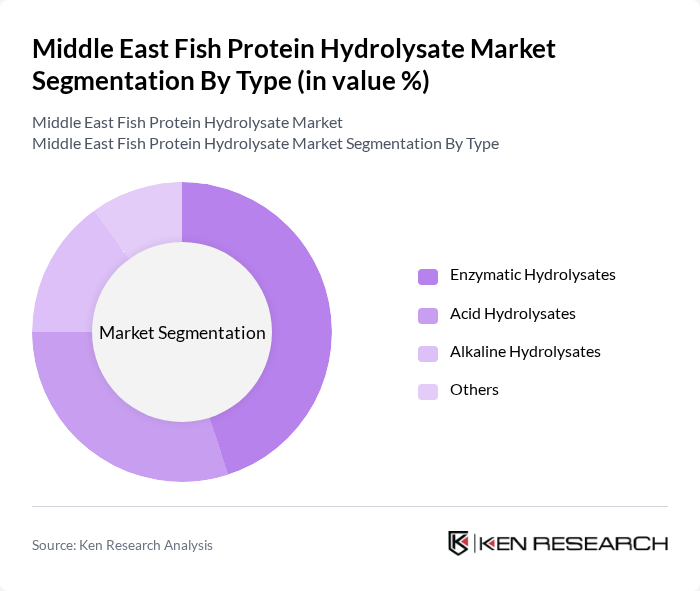
By Type:The market is segmented into enzymatic hydrolysates, acid hydrolysates, alkaline hydrolysates, and others. Enzymatic hydrolysates are gaining traction due to their superior digestibility, high bioactive peptide content, and favorable nutritional profile, making them the preferred choice for functional foods and nutraceuticals. Acid and alkaline hydrolysates remain significant for specialized applications in animal feed and industrial processing. The demand for these products is driven by the increasing focus on health, sustainability, and the use of fish by-products in food and feed sectors .
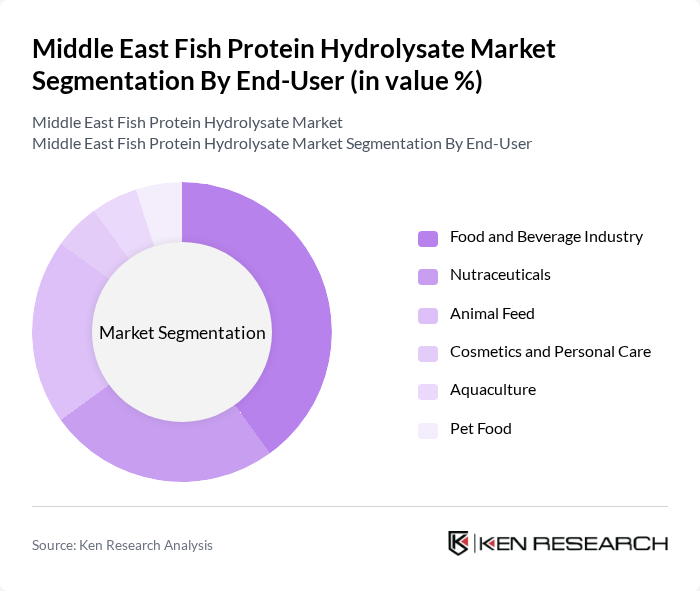
By End-User:The end-user segmentation includes the food and beverage industry, nutraceuticals, animal feed, cosmetics and personal care, aquaculture, and pet food. The food and beverage industry is the leading segment, driven by the growing trend of health-conscious consumers seeking protein-rich ingredients and functional foods. Nutraceuticals are gaining popularity as consumers increasingly turn to dietary supplements for health benefits such as improved muscle recovery and immune support. The animal feed and aquaculture sectors are expanding due to the need for high-quality, sustainable protein sources for livestock and fish farming. Cosmetics and personal care, as well as pet food, are emerging segments leveraging the bioactive and antioxidant properties of fish protein hydrolysates .
The Middle East Fish Protein Hydrolysate Market is characterized by a dynamic mix of regional and international players. Leading participants such as Janatha Fish Meal & Oil Products, Kemin Industries Inc., Novozymes A/S, Sopropeche S.A., Symrise AG, Marine Ingredients AS, Scanbio Marine Group, NutraFish, Aker BioMarine, Hvalur hf, Seagarden AS, BioCare Copenhagen, Algaia, Maruha Nichiro Corporation, Cargill, Incorporated, DSM Nutritional Products contribute to innovation, geographic expansion, and service delivery in this space.
The future of the Middle East fish protein hydrolysate market appears promising, driven by increasing consumer health consciousness and a shift towards sustainable sourcing practices. As the aquaculture sector continues to expand, the availability of high-quality raw materials will likely improve. Furthermore, innovations in hydrolysis technology are expected to enhance product quality and efficiency, positioning the market for robust growth. Collaborative efforts with health and wellness brands will also play a crucial role in driving market penetration and consumer acceptance.
| Segment | Sub-Segments |
|---|---|
| By Type | Enzymatic Hydrolysates Acid Hydrolysates Alkaline Hydrolysates Others |
| By End-User | Food and Beverage Industry Nutraceuticals Animal Feed Cosmetics and Personal Care Aquaculture Pet Food |
| By Application | Dietary Supplements Functional Foods Sports Nutrition Clinical Nutrition Animal Nutrition (Poultry, Ruminant, Swine, Aquaculture, Pets) Others |
| By Distribution Channel | Online Retail Supermarkets/Hypermarkets Specialty Stores Direct Sales Distributors/Wholesalers |
| By Source | Marine Fish Freshwater Fish Fish Waste/By-products Others |
| By Form | Powder Liquid Others |
| By Price Range | Premium Mid-Range Economy |
| By Country | Saudi Arabia United Arab Emirates Egypt South Africa Rest of Middle East & Africa |
| Scope Item/Segment | Sample Size | Target Respondent Profiles |
|---|---|---|
| Food Industry Applications | 100 | Food Technologists, Product Development Managers |
| Nutraceutical Sector Insights | 80 | Health Product Manufacturers, Nutrition Experts |
| Aquaculture Feed Producers | 60 | Feed Formulation Specialists, Aquaculture Managers |
| Retail Market Trends | 90 | Retail Buyers, Category Managers |
| Export and Trade Analysis | 50 | Export Managers, Trade Analysts |
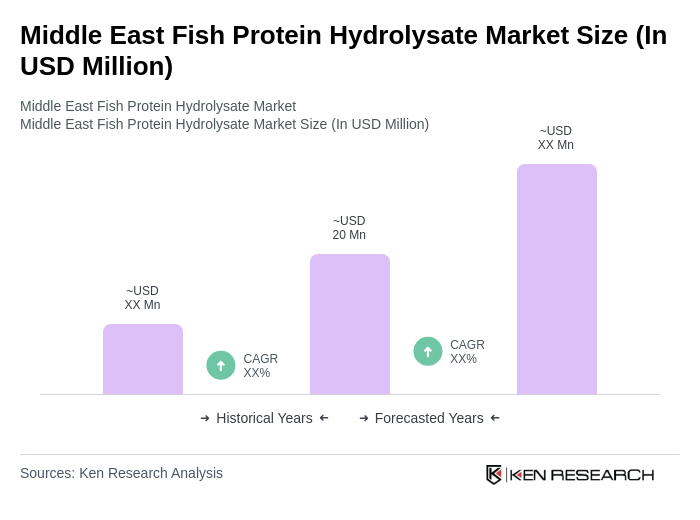
The Middle East Fish Protein Hydrolysate Market is valued at approximately USD 20 million, driven by the increasing demand for protein-rich dietary supplements and the health benefits associated with fish protein hydrolysates.

What makes us stand out is that our consultants follow Robust, Refine and Result (RRR) methodology. Robust for clear definitions, approaches and sanity checking, Refine for differentiating respondents' facts and opinions, and Result for presenting data with story.

We have set a benchmark in the industry by offering our clients with syndicated and customized market research reports featuring coverage of entire market as well as meticulous research and analyst insights.

While we don't replace traditional research, we flip the method upside down. Our dual approach of Top Bottom & Bottom Top ensures quality deliverable by not just verifying company fundamentals but also looking at the sector and macroeconomic factors.

With one step in the future, our research team constantly tries to show you the bigger picture. We help with some of the tough questions you may encounter along the way: How is the industry positioned? Best marketing channel? KPI's of competitors? By aligning every element, we help maximize success.

Our report gives you instant access to the answers and sources that other companies might choose to hide. We elaborate each steps of research methodology we have used and showcase you the sample size to earn your trust.

If you need any support, we are here! We pride ourselves on universe strength, data quality, and quick, friendly, and professional service.













