Region:Middle East
Author(s):Shubham
Product Code:KRAA5150
Pages:91
Published On:January 2026
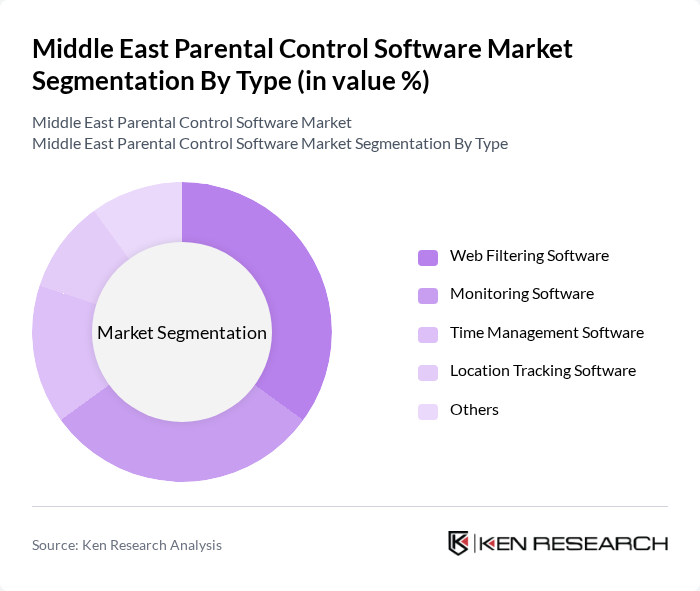
By Type:The market is segmented into various types of parental control software, including Web Filtering Software, Monitoring Software, Time Management Software, Location Tracking Software, and Others. Each of these sub-segments caters to different parental needs, with web filtering and monitoring software being the most sought after due to their effectiveness in blocking inappropriate content and tracking online activities. The increasing reliance on digital devices among children has led to a surge in demand for these solutions, making them critical in ensuring a safe online experience.
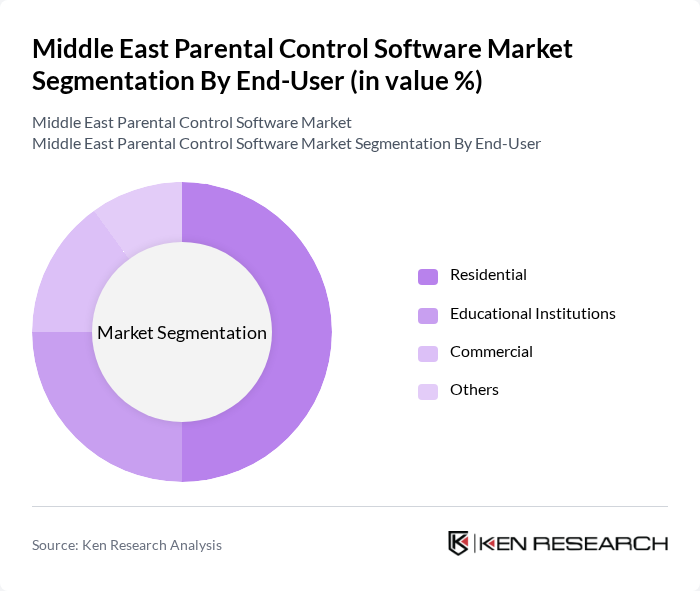
By End-User:The end-user segmentation includes Residential, Educational Institutions, and Commercial entities. The residential segment is the largest, driven by parents' increasing concerns about their children's online safety. Educational institutions are also adopting these solutions to create a secure digital learning environment. Commercial entities are increasingly implementing parental control solutions for employee productivity and child safety in corporate environments. The growing awareness of the importance of digital safety among parents and educators is propelling the demand for parental control software across these segments.
The Middle East Parental Control Software Market is characterized by a dynamic mix of regional and international players. Leading participants such as Qustodio, NortonLifeLock, Kaspersky Lab, Net Nanny, Bark Technologies, FamilyTime, KidLogger, Mobicip, FamiSafe, Circle with Disney, Screen Time Labs, OurPact, Safe Lagoon, Kidgy, WebWatcher contribute to innovation, geographic expansion, and service delivery in this space.
The future of the parental control software market in the Middle East appears promising, driven by technological advancements and increasing digital engagement among children. As parents become more aware of online risks, the demand for effective monitoring solutions is expected to rise. Additionally, the integration of artificial intelligence and machine learning into these solutions will enhance their effectiveness, making them more appealing to tech-savvy parents. This evolution will likely lead to a more competitive landscape, fostering innovation and improved user experiences.
| Segment | Sub-Segments |
|---|---|
| By Type | Web Filtering Software Monitoring Software Time Management Software Location Tracking Software Others |
| By End-User | Residential Educational Institutions Government Corporate Others |
| By Age Group | Children (0-12 years) Teenagers (13-19 years) Young Adults (20-30 years) Others |
| By Deployment Mode | Cloud-Based On-Premises Hybrid Others |
| By Region | GCC Countries Levant Region North Africa Others |
| By Features | Content Filtering Activity Monitoring Reporting and Analytics Alerts and Notifications Others |
| By Pricing Model | Subscription-Based One-Time Purchase Freemium Others |
| Scope Item/Segment | Sample Size | Target Respondent Profiles |
|---|---|---|
| Parental Control Software Users | 120 | Parents of children aged 5-15 |
| Educators' Insights on Digital Safety | 85 | Teachers and School Administrators |
| Child Psychologists' Perspectives | 65 | Child Psychologists and Counselors |
| Software Developers' Input | 50 | Developers and Product Managers in EdTech |
| Market Analysts' Views | 45 | Market Analysts and Industry Experts |
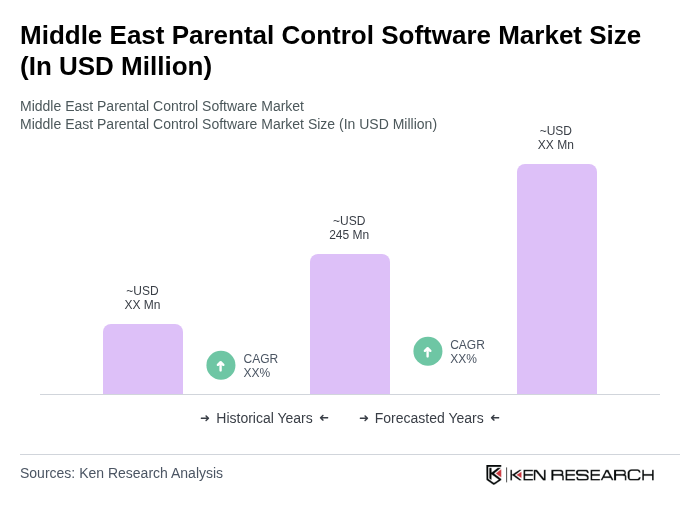
The Middle East Parental Control Software Market is valued at approximately USD 245 million, reflecting significant growth driven by increasing concerns over children's online safety and the rise in internet penetration and smart device adoption among families.

What makes us stand out is that our consultants follow Robust, Refine and Result (RRR) methodology. Robust for clear definitions, approaches and sanity checking, Refine for differentiating respondents' facts and opinions, and Result for presenting data with story.

We have set a benchmark in the industry by offering our clients with syndicated and customized market research reports featuring coverage of entire market as well as meticulous research and analyst insights.

While we don't replace traditional research, we flip the method upside down. Our dual approach of Top Bottom & Bottom Top ensures quality deliverable by not just verifying company fundamentals but also looking at the sector and macroeconomic factors.

With one step in the future, our research team constantly tries to show you the bigger picture. We help with some of the tough questions you may encounter along the way: How is the industry positioned? Best marketing channel? KPI's of competitors? By aligning every element, we help maximize success.

Our report gives you instant access to the answers and sources that other companies might choose to hide. We elaborate each steps of research methodology we have used and showcase you the sample size to earn your trust.

If you need any support, we are here! We pride ourselves on universe strength, data quality, and quick, friendly, and professional service.













