Region:Middle East
Author(s):Shubham
Product Code:KRAC4320
Pages:81
Published On:October 2025
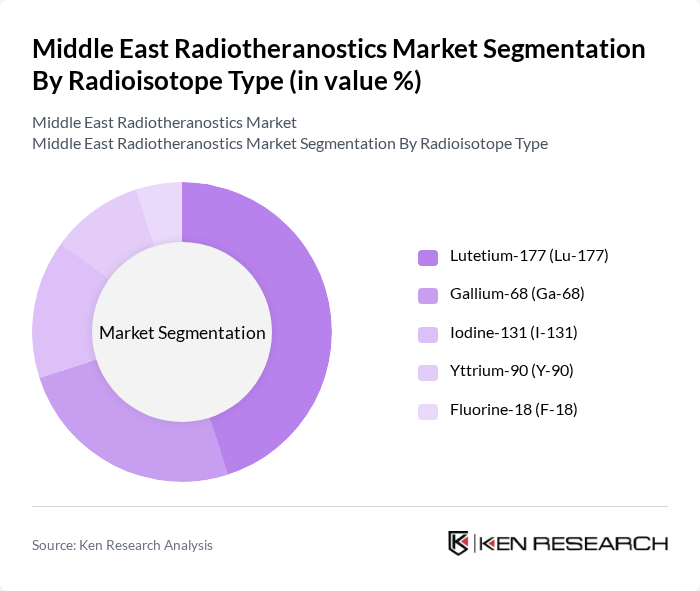
By Radioisotope Type:The market is segmented into various radioisotope types, including Lutetium-177 (Lu-177), Gallium-68 (Ga-68), Iodine-131 (I-131), Yttrium-90 (Y-90), and Fluorine-18 (F-18). Among these,Lutetium-177is leading due to its effectiveness in treating neuroendocrine tumors and prostate cancer, which are prevalent in the region. The increasing number of clinical trials and regulatory approvals for Lu-177-based therapies is driving its market share, as healthcare providers increasingly adopt this radioisotope for targeted treatment .
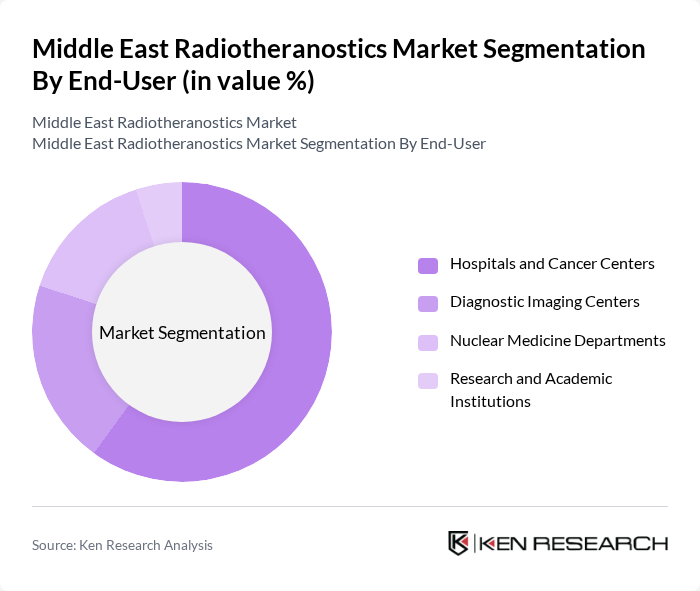
By End-User:The end-user segmentation includes Hospitals and Cancer Centers, Diagnostic Imaging Centers, Nuclear Medicine Departments, and Research and Academic Institutions.Hospitals and Cancer Centersdominate this segment due to the increasing number of cancer cases and the demand for advanced treatment options. These facilities are equipped with the latest technology and skilled professionals, making them the primary choice for patients seeking radiotheranostics services .
The Middle East Radiotheranostics Market is characterized by a dynamic mix of regional and international players. Leading participants such as Novartis AG, Bayer AG, Siemens Healthineers, GE Healthcare, Telix Pharmaceuticals Limited, ITM Radiopharma GmbH, Lantheus Medical Imaging (Progenics Pharmaceuticals), Advanced Accelerator Applications (AAA), Curium Pharma, Bracco Imaging S.p.A., IBA Radiopharma Solutions, Eczacibasi-Monrol Nuclear Products, Astellas Pharma Inc., RadioMedix Inc., Nordic Nanovector ASA contribute to innovation, geographic expansion, and service delivery in this space.
The future of the radiotheranostics market in the Middle East appears promising, driven by technological advancements and increasing healthcare investments. As governments prioritize cancer care, the integration of artificial intelligence in diagnostics and treatment planning is expected to enhance precision and efficiency. Furthermore, the shift towards outpatient care models will likely facilitate broader access to radiotheranostics, making it a cornerstone of personalized medicine in the region, ultimately improving patient outcomes and satisfaction.
| Segment | Sub-Segments |
|---|---|
| By Radioisotope Type | Lutetium-177 (Lu-177) Gallium-68 (Ga-68) Iodine-131 (I-131) Yttrium-90 (Y-90) Fluorine-18 (F-18) |
| By End-User | Hospitals and Cancer Centers Diagnostic Imaging Centers Nuclear Medicine Departments Research and Academic Institutions |
| By Clinical Application | Oncology (Primary) Neuroendocrine Tumors Prostate Cancer Cardiology Neurology |
| By Product Type | Diagnostic Radiopharmaceuticals Therapeutic Radiopharmaceuticals Theranostic Paired Agents |
| By Regional Market | GCC Countries (Saudi Arabia, UAE, Kuwait, Qatar, Bahrain, Oman) Levant Region (Egypt, Jordan, Lebanon, Palestine) North Africa (Morocco, Algeria, Tunisia) Iraq and Iran |
| By Distribution Channel | Direct Hospital Supply Radiopharmaceutical Distributors Cyclotron and Reactor Facilities Specialty Pharmaceutical Distributors |
| By Regulatory Approval Status | FDA Approved Products EMA Approved Products Local Regulatory Authority Approved Clinical Trial Stage Products |
| Scope Item/Segment | Sample Size | Target Respondent Profiles |
|---|---|---|
| Oncology Clinics | 100 | Oncologists, Clinic Managers |
| Radiology Departments | 90 | Radiologists, Imaging Technologists |
| Medical Device Suppliers | 60 | Sales Managers, Product Specialists |
| Healthcare Policy Makers | 50 | Health Administrators, Policy Analysts |
| Patient Advocacy Groups | 40 | Advocacy Leaders, Patient Representatives |
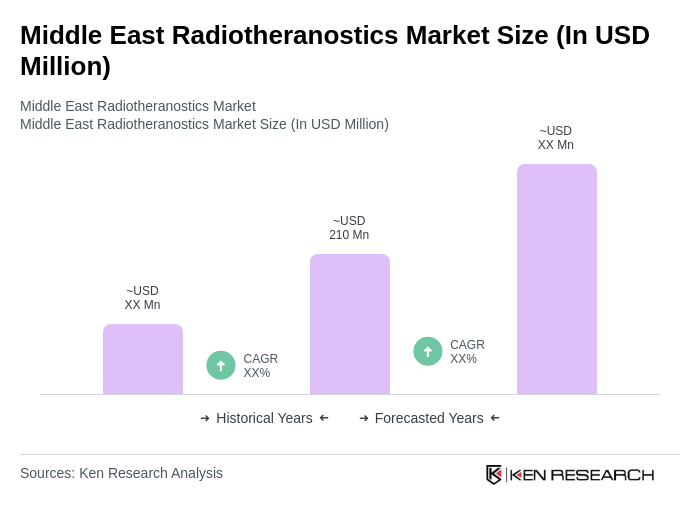
The Middle East Radiotheranostics Market is valued at approximately USD 210 million, driven by the increasing prevalence of cancer, advancements in nuclear medicine, and the rising adoption of targeted therapies.

What makes us stand out is that our consultants follow Robust, Refine and Result (RRR) methodology. Robust for clear definitions, approaches and sanity checking, Refine for differentiating respondents' facts and opinions, and Result for presenting data with story.

We have set a benchmark in the industry by offering our clients with syndicated and customized market research reports featuring coverage of entire market as well as meticulous research and analyst insights.

While we don't replace traditional research, we flip the method upside down. Our dual approach of Top Bottom & Bottom Top ensures quality deliverable by not just verifying company fundamentals but also looking at the sector and macroeconomic factors.

With one step in the future, our research team constantly tries to show you the bigger picture. We help with some of the tough questions you may encounter along the way: How is the industry positioned? Best marketing channel? KPI's of competitors? By aligning every element, we help maximize success.

Our report gives you instant access to the answers and sources that other companies might choose to hide. We elaborate each steps of research methodology we have used and showcase you the sample size to earn your trust.

If you need any support, we are here! We pride ourselves on universe strength, data quality, and quick, friendly, and professional service.













