About the Report
Base Year 2024Nigeria Luxury Fashion & Lifestyle Market Overview
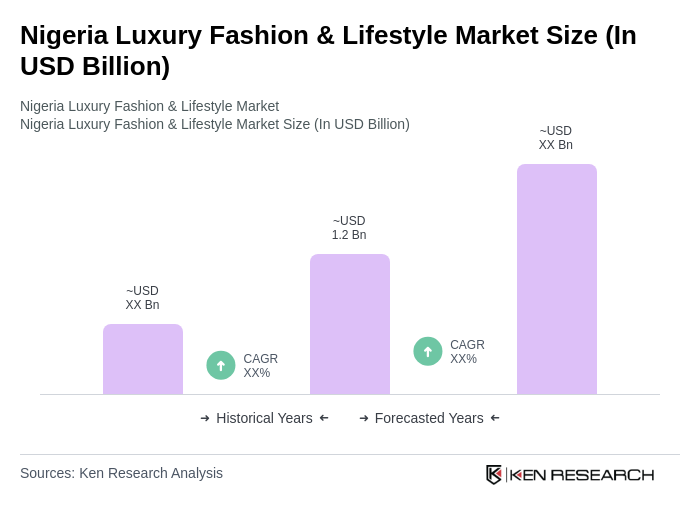
- The Nigeria Luxury Fashion & Lifestyle Market is valued at USD 1.2 billion, based on a five-year historical analysis. This growth is primarily driven by increasing disposable incomes, a burgeoning middle and upper class, and a growing interest in both local and international luxury brands among Nigerian consumers. The market has experienced a significant rise in demand for high-end fashion and lifestyle products, reflecting a shift in consumer preferences towards premium quality, exclusivity, and brand authenticity. The influence of affluent millennials and Gen Z, who are tech-savvy and value sustainability, is particularly notable in shaping market trends .
- Lagos and Abuja remain the dominant cities in the Nigeria Luxury Fashion & Lifestyle Market. Lagos, as the commercial hub, features a vibrant fashion scene with numerous luxury boutiques, international brands, and fashion events. Abuja, being the political capital, has a high concentration of affluent consumers who are increasingly investing in luxury goods, making these cities pivotal in shaping national market trends. Urbanization and the rise of e-commerce are further accelerating luxury spending in these metropolitan areas .
- The Nigerian government, through the National Policy on Creative Industry (NPCI) issued by the Federal Ministry of Information and Culture in 2023, introduced targeted tax incentives and grant schemes to promote local fashion brands. This policy aims to support indigenous designers and manufacturers, foster a more sustainable luxury fashion ecosystem, and reduce reliance on imported goods. The policy mandates compliance with local content requirements and provides grants for capacity building and export promotion .
Nigeria Luxury Fashion & Lifestyle Market Segmentation
By Type:The luxury fashion and lifestyle market can be segmented into various types, including Apparel, Footwear, Accessories, Jewelry, Handbags, Fragrances, and Others. Among these, Apparel is the leading sub-segment, driven by the increasing demand for designer clothing, the influence of social media, and the desire for unique, high-quality garments that reflect personal style and status. Consumers are also showing increased interest in sustainable and locally produced apparel, further fueling growth in this segment .

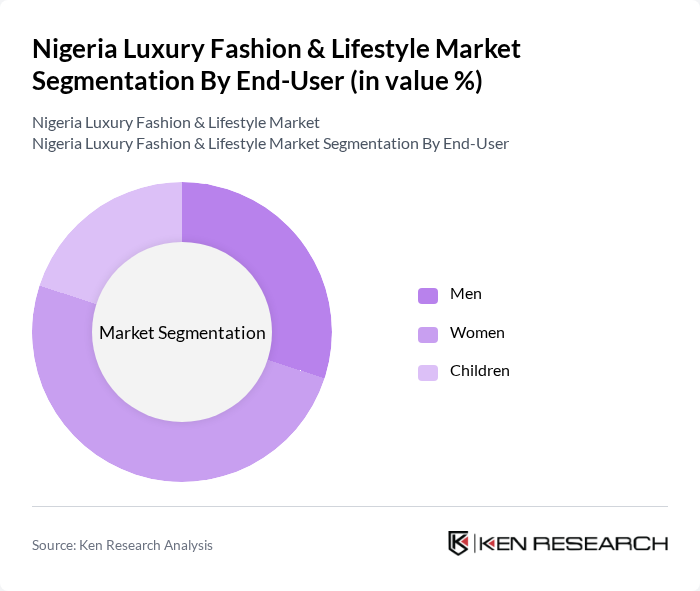
By End-User:The market can also be segmented by end-user demographics, including Men, Women, and Children. The Women segment dominates the market, driven by a growing interest in fashion and luxury products among female consumers. Women are increasingly investing in luxury apparel, accessories, and beauty products, reflecting their desire for self-expression and status through fashion. The influence of social media influencers and fashion bloggers continues to drive demand in this segment .
Nigeria Luxury Fashion & Lifestyle Market Competitive Landscape
The Nigeria Luxury Fashion & Lifestyle Market is characterized by a dynamic mix of regional and international players. Leading participants such as Deola Sagoe, Tiffany Amber, Mai Atafo, Lisa Folawiyo, Orange Culture, Maki Oh, Ziva Lagos, Ejiro Amos Tafiri, Adebayo Oke-Lawal, The Folklore, Ayo Van Elmar, Kulture Fashion, NACK (Nigerian Articulate Culture Kollection), Gert-Johan Coetzee, Polo Luxury Group contribute to innovation, geographic expansion, and service delivery in this space .
Nigeria Luxury Fashion & Lifestyle Market Industry Analysis
Growth Drivers
- Rising Disposable Income:The average disposable income in Nigeria is projected to reach approximately $3,600 per capita in future, reflecting a significant increase from $2,500 in future. This rise in income allows consumers to allocate more funds towards luxury fashion and lifestyle products. As the middle class expands, the demand for high-end goods is expected to grow, with an estimated 20% increase in luxury spending anticipated over the next year, driven by a more affluent consumer base.
- Increasing Urbanization:Nigeria's urban population is expected to surpass 60% in future, up from 50% in future. This urbanization trend is fostering a culture of luxury consumption, as urban dwellers typically have greater access to luxury brands and services. Cities like Lagos and Abuja are becoming hubs for luxury retail, with over 30 new luxury boutiques opening in these areas in the past year, catering to the growing urban elite seeking exclusive fashion options.
- Expansion of E-commerce Platforms:The e-commerce sector in Nigeria is projected to grow to $16 billion in future, up from $13 billion in future. This growth is facilitating easier access to luxury fashion items, as online platforms increasingly offer a wide range of high-end products. With over 50% of consumers preferring online shopping for luxury goods, the rise of digital marketplaces is expected to enhance the visibility and availability of luxury brands, driving sales and consumer engagement.
Market Challenges
- Economic Instability:Nigeria's economy is projected to grow at a modest rate of 3.6% in future, hindered by inflation rates expected to reach 22.1%. This economic instability poses a challenge for luxury fashion brands, as consumers may prioritize essential goods over luxury items. The fluctuating exchange rates and high inflation can lead to reduced consumer confidence, impacting overall spending in the luxury sector and creating uncertainty for retailers.
- Counterfeit Products:The prevalence of counterfeit luxury goods in Nigeria is estimated to account for 30% of the market, significantly undermining brand integrity and consumer trust. This issue is exacerbated by limited enforcement of intellectual property laws, making it difficult for genuine brands to compete. The financial losses incurred by luxury brands due to counterfeiting are projected to exceed $1 billion annually, posing a significant challenge to market growth and brand reputation.
Nigeria Luxury Fashion & Lifestyle Market Future Outlook
The Nigeria luxury fashion and lifestyle market is poised for dynamic growth, driven by increasing disposable incomes and urbanization trends. As consumers become more discerning, brands that prioritize sustainability and authenticity are likely to thrive. The rise of digital platforms will further enhance market accessibility, allowing luxury brands to reach a broader audience. However, addressing challenges such as economic instability and counterfeiting will be crucial for sustained growth and brand loyalty in this evolving landscape.
Market Opportunities
- Emerging Local Designers:The rise of local designers is creating a unique opportunity in the luxury market, with over 100 new brands launched in the past year. These designers are gaining recognition for their innovative styles and cultural relevance, appealing to both local and international consumers. Supporting local talent can enhance brand loyalty and foster a sense of community, driving sales in the luxury segment.
- Sustainable Fashion Trends:The demand for sustainable fashion is growing, with 70% of consumers expressing interest in eco-friendly products. This trend presents an opportunity for luxury brands to differentiate themselves by adopting sustainable practices. By incorporating eco-friendly materials and ethical production methods, brands can attract environmentally conscious consumers, potentially increasing market share and enhancing brand reputation in the luxury sector.
Scope of the Report
| Segment | Sub-Segments |
|---|---|
| By Type | Apparel Footwear Accessories Jewelry Handbags Fragrances Others |
| By End-User | Men Women Children |
| By Sales Channel | Online Retail Brick-and-Mortar Stores Luxury Boutiques |
| By Price Range | Premium Super Premium Ultra Luxury |
| By Occasion | Casual Wear Formal Wear Special Events |
| By Material | Leather Cotton Silk |
| By Brand Origin | Local Brands International Brands Hybrid Brands |
| By Distribution Mode | Direct Sales Distributors E-commerce Platforms |
Key Target Audience
Investors and Venture Capitalist Firms
Government and Regulatory Bodies (e.g., National Agency for Food and Drug Administration and Control, Standards Organization of Nigeria)
Luxury Fashion Brands and Designers
High-End Retailers and Boutiques
Event Organizers and Fashion Show Producers
Media and Influencers in Fashion and Lifestyle
Logistics and Supply Chain Companies
Financial Institutions and Banks specializing in Luxury Goods Financing
Players Mentioned in the Report:
Deola Sagoe
Tiffany Amber
Mai Atafo
Lisa Folawiyo
Orange Culture
Maki Oh
Ziva Lagos
Ejiro Amos Tafiri
Adebayo Oke-Lawal
The Folklore
Ayo Van Elmar
Kulture Fashion
NACK (Nigerian Articulate Culture Kollection)
Gert-Johan Coetzee
Polo Luxury Group
Table of Contents
Market Assessment Phase
1. Executive Summary and Approach
2. Nigeria Luxury Fashion & Lifestyle Market Overview
2.1 Key Insights and Strategic Recommendations
2.2 Nigeria Luxury Fashion & Lifestyle Market Overview
2.3 Definition and Scope
2.4 Evolution of Market Ecosystem
2.5 Timeline of Key Regulatory Milestones
2.6 Value Chain & Stakeholder Mapping
2.7 Business Cycle Analysis
2.8 Policy & Incentive Landscape
3. Nigeria Luxury Fashion & Lifestyle Market Analysis
3.1 Growth Drivers
3.1.1 Rising Disposable Income
3.1.2 Increasing Urbanization
3.1.3 Growing Influence of Social Media
3.1.4 Expansion of E-commerce Platforms
3.2 Market Challenges
3.2.1 Economic Instability
3.2.2 Counterfeit Products
3.2.3 Limited Access to Luxury Goods
3.2.4 High Import Tariffs
3.3 Market Opportunities
3.3.1 Emerging Local Designers
3.3.2 Sustainable Fashion Trends
3.3.3 International Brand Collaborations
3.3.4 Growth of Luxury Tourism
3.4 Market Trends
3.4.1 Customization and Personalization
3.4.2 Digital Fashion Shows
3.4.3 Eco-Friendly Materials
3.4.4 Rise of Influencer Marketing
3.5 Government Regulation
3.5.1 Import Regulations
3.5.2 Tax Incentives for Local Production
3.5.3 Intellectual Property Protection
3.5.4 Trade Agreements
4. SWOT Analysis
5. Stakeholder Analysis
6. Porter's Five Forces Analysis
7. Nigeria Luxury Fashion & Lifestyle Market Market Size, 2019-2024
7.1 By Value
7.2 By Volume
7.3 By Average Selling Price
8. Nigeria Luxury Fashion & Lifestyle Market Segmentation
8.1 By Type
8.1.1 Apparel
8.1.2 Footwear
8.1.3 Accessories
8.1.4 Jewelry
8.1.5 Handbags
8.1.6 Fragrances
8.1.7 Others
8.2 By End-User
8.2.1 Men
8.2.2 Women
8.2.3 Children
8.3 By Sales Channel
8.3.1 Online Retail
8.3.2 Brick-and-Mortar Stores
8.3.3 Luxury Boutiques
8.4 By Price Range
8.4.1 Premium
8.4.2 Super Premium
8.4.3 Ultra Luxury
8.5 By Occasion
8.5.1 Casual Wear
8.5.2 Formal Wear
8.5.3 Special Events
8.6 By Material
8.6.1 Leather
8.6.2 Cotton
8.6.3 Silk
8.7 By Brand Origin
8.7.1 Local Brands
8.7.2 International Brands
8.7.3 Hybrid Brands
8.8 By Distribution Mode
8.8.1 Direct Sales
8.8.2 Distributors
8.8.3 E-commerce Platforms
9. Nigeria Luxury Fashion & Lifestyle Market Competitive Analysis
9.1 Market Share of Key Players
9.2 Cross Comparison of Key Players
9.2.1 Company Name
9.2.2 Group Size (Large, Medium, or Small as per industry convention)
9.2.3 Revenue Growth Rate
9.2.4 Market Share in Nigeria Luxury Segment
9.2.5 Store Footprint (Number of Outlets/Boutiques in Nigeria)
9.2.6 Average Transaction Value
9.2.7 Customer Acquisition Cost
9.2.8 Market Penetration Rate
9.2.9 Customer Retention Rate
9.2.10 Pricing Strategy
9.2.11 Brand Equity (Brand Awareness & Perception)
9.2.12 Product Diversification (Range of Offerings)
9.2.13 Distribution Efficiency (Online/Offline Reach)
9.2.14 Local Collaboration/Partnerships
9.2.15 Digital Engagement (Social Media Following, Online Sales %)
9.3 SWOT Analysis of Top Players
9.4 Pricing Analysis
9.5 Detailed Profile of Major Companies
9.5.1 Deola Sagoe
9.5.2 Tiffany Amber
9.5.3 Mai Atafo
9.5.4 Lisa Folawiyo
9.5.5 Orange Culture
9.5.6 Maki Oh
9.5.7 Ziva Lagos
9.5.8 Ejiro Amos Tafiri
9.5.9 Adebayo Oke-Lawal
9.5.10 The Folklore
9.5.11 Ayo Van Elmar
9.5.12 Kulture Fashion
9.5.13 NACK (Nigerian Articulate Culture Kollection)
9.5.14 Gert-Johan Coetzee
9.5.15 Polo Luxury Group
10. Nigeria Luxury Fashion & Lifestyle Market End-User Analysis
10.1 Procurement Behavior of Key Ministries
10.1.1 Budget Allocation Trends
10.1.2 Preferred Suppliers
10.1.3 Procurement Processes
10.2 Corporate Spend on Infrastructure & Energy
10.2.1 Investment Priorities
10.2.2 Spending Patterns
10.2.3 Key Projects
10.3 Pain Point Analysis by End-User Category
10.3.1 Quality Concerns
10.3.2 Availability Issues
10.3.3 Price Sensitivity
10.4 User Readiness for Adoption
10.4.1 Awareness Levels
10.4.2 Adoption Barriers
10.4.3 Training Needs
10.5 Post-Deployment ROI and Use Case Expansion
10.5.1 Performance Metrics
10.5.2 User Feedback
10.5.3 Future Investment Plans
11. Nigeria Luxury Fashion & Lifestyle Market Future Size, 2025-2030
11.1 By Value
11.2 By Volume
11.3 By Average Selling Price
Go-To-Market Strategy Phase
1. Whitespace Analysis + Business Model Canvas
1.1 Market Gaps Identification
1.2 Business Model Framework
2. Marketing and Positioning Recommendations
2.1 Branding Strategies
2.2 Product USPs
3. Distribution Plan
3.1 Urban Retail vs Rural NGO Tie-ups
4. Channel & Pricing Gaps
4.1 Underserved Routes
4.2 Pricing Bands
5. Unmet Demand & Latent Needs
5.1 Category Gaps
5.2 Consumer Segments
6. Customer Relationship
6.1 Loyalty Programs
6.2 After-sales Service
7. Value Proposition
7.1 Sustainability
7.2 Integrated Supply Chains
8. Key Activities
8.1 Regulatory Compliance
8.2 Branding
8.3 Distribution Setup
9. Entry Strategy Evaluation
9.1 Domestic Market Entry Strategy
9.1.1 Product Mix
9.1.2 Pricing Band
9.1.3 Packaging
9.2 Export Entry Strategy
9.2.1 Target Countries
9.2.2 Compliance Roadmap
10. Entry Mode Assessment
10.1 JV
10.2 Greenfield
10.3 M&A
10.4 Distributor Model
11. Capital and Timeline Estimation
11.1 Capital Requirements
11.2 Timelines
12. Control vs Risk Trade-Off
12.1 Ownership vs Partnerships
13. Profitability Outlook
13.1 Breakeven Analysis
13.2 Long-term Sustainability
14. Potential Partner List
14.1 Distributors
14.2 JVs
14.3 Acquisition Targets
15. Execution Roadmap
15.1 Phased Plan for Market Entry
15.1.1 Market Setup
15.1.2 Market Entry
15.1.3 Growth Acceleration
15.1.4 Scale & Stabilize
15.2 Key Activities and Milestones
15.2.1 Activity Timeline
15.2.2 Milestone Tracking
Research Methodology
Phase 1: Approach1
Desk Research
- Analysis of market reports from industry associations and fashion councils in Nigeria
- Review of consumer behavior studies and lifestyle trends published by local research firms
- Examination of trade publications and fashion magazines focusing on luxury brands in Nigeria
Primary Research
- Interviews with fashion designers and brand owners in the luxury segment
- Surveys targeting affluent consumers to understand purchasing preferences and behaviors
- Focus groups with lifestyle influencers and fashion bloggers to gauge market perceptions
Validation & Triangulation
- Cross-validation of findings through multiple data sources including sales data and consumer insights
- Triangulation of qualitative insights from interviews with quantitative data from surveys
- Sanity checks conducted through expert panel reviews comprising industry veterans and market analysts
Phase 2: Market Size Estimation1
Top-down Assessment
- Estimation of total luxury fashion market size based on GDP contribution and consumer spending patterns
- Segmentation of the market by product categories such as apparel, accessories, and lifestyle goods
- Incorporation of growth rates from historical data and emerging trends in luxury consumption
Bottom-up Modeling
- Collection of sales data from leading luxury retailers and boutiques in Nigeria
- Estimation of average transaction values and purchase frequencies among target demographics
- Analysis of market penetration rates for new luxury brands entering the Nigerian market
Forecasting & Scenario Analysis
- Multi-factor regression analysis incorporating economic indicators and consumer confidence indices
- Scenario modeling based on potential shifts in consumer behavior and economic conditions
- Development of baseline, optimistic, and pessimistic forecasts through 2030
Phase 3: CATI Sample Composition1
| Scope Item/Segment | Sample Size | Target Respondent Profiles |
|---|---|---|
| Luxury Apparel Purchasers | 120 | Affluent Consumers, Fashion Enthusiasts |
| High-End Accessory Buyers | 90 | Luxury Brand Loyalists, Trendsetters |
| Lifestyle Product Consumers | 60 | Home Decor Aficionados, Lifestyle Influencers |
| Fashion Retailers and Boutiques | 50 | Store Managers, Brand Representatives |
| Fashion Event Attendees | 40 | Event Organizers, Fashion Show Participants |
Frequently Asked Questions
What is the current value of the Nigeria Luxury Fashion & Lifestyle Market?
The Nigeria Luxury Fashion & Lifestyle Market is valued at approximately USD 1.2 billion, reflecting significant growth driven by rising disposable incomes and an increasing interest in luxury brands among consumers.
Which cities are the main hubs for luxury fashion in Nigeria?
What factors are driving growth in the Nigeria Luxury Fashion Market?
How is the Nigerian government supporting local fashion brands?
Other Regional/Country Reports
Other Adjacent Reports
Singapore Luxury Cosmetics Market
Bahrain Premium Jewelry Market
UAE High-End Footwear Market
Mexico Luxury Accessories Market
Vietnam Designer Handbags Market
Global Fragrance and Perfume Market Size, Share & Forecast, By Product Category, Price Tier & Distribution Channel, 2026-2031Oman Sustainable Fashion Market
Vietnam Luxury Travel Market Size, Share & Forecast, By Service Type, Customer Type & Booking Channel, 2025–2032Belgium Upscale Hospitality Market
Bahrain Gourmet Food Market
Why Buy From Us?

What makes us stand out is that our consultants follow Robust, Refine and Result (RRR) methodology. Robust for clear definitions, approaches and sanity checking, Refine for differentiating respondents' facts and opinions, and Result for presenting data with story.

We have set a benchmark in the industry by offering our clients with syndicated and customized market research reports featuring coverage of entire market as well as meticulous research and analyst insights.

While we don't replace traditional research, we flip the method upside down. Our dual approach of Top Bottom & Bottom Top ensures quality deliverable by not just verifying company fundamentals but also looking at the sector and macroeconomic factors.

With one step in the future, our research team constantly tries to show you the bigger picture. We help with some of the tough questions you may encounter along the way: How is the industry positioned? Best marketing channel? KPI's of competitors? By aligning every element, we help maximize success.

Our report gives you instant access to the answers and sources that other companies might choose to hide. We elaborate each steps of research methodology we have used and showcase you the sample size to earn your trust.

If you need any support, we are here! We pride ourselves on universe strength, data quality, and quick, friendly, and professional service.