About the Report
Base Year 2024Nigeria Online Grocery Platforms Market Overview
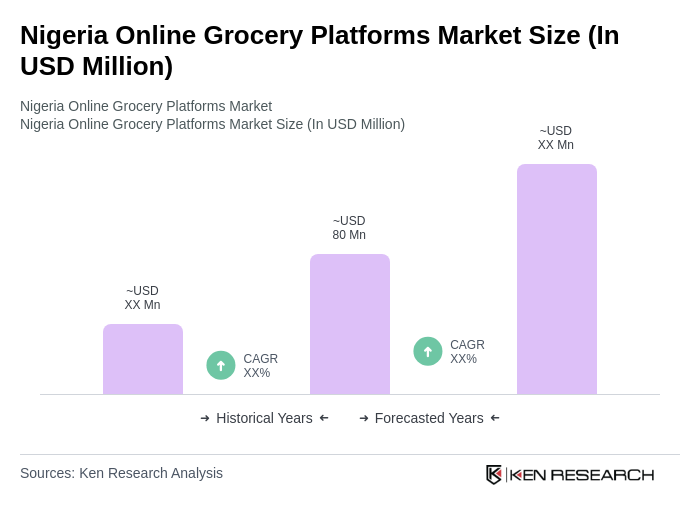
- The Nigeria Online Grocery Platforms Market is valued at USD 80 million, based on a five-year historical analysis. This growth is primarily driven by the increasing adoption of e-commerce, rapid urbanization, and a significant shift in consumer preferences towards online shopping for convenience and variety. The surge in smartphone penetration and improved internet accessibility has further accelerated this trend, enabling consumers to order groceries from the comfort of their homes. The market has also benefited from increased digital payment adoption and the expansion of logistics networks, which have improved service reliability and delivery speed .
- Lagos, Abuja, and Port Harcourt are the dominant cities in the Nigeria Online Grocery Platforms Market. Lagos, as the largest city, features high population density and a rapidly growing middle class, driving demand for online grocery services. Abuja, the capital, has a significant expatriate community and a rising number of tech-savvy consumers, while Port Harcourt benefits from its oil wealth, leading to increased disposable income and higher spending on online groceries. These urban centers also benefit from better digital infrastructure and higher smartphone penetration, making them key growth hubs for online grocery platforms .
- In 2023, the Nigerian government implemented theNational Digital Economy Policy and Strategy (2020–2030), issued by the Federal Ministry of Communications and Digital Economy. This policy aims to enhance the digital economy, including e-commerce, by promoting digital literacy, improving internet infrastructure, and providing incentives for tech startups. The policy mandates the development of broadband infrastructure, encourages digital entrepreneurship, and sets compliance requirements for digital platforms, thereby fostering a conducive environment for the online grocery market .
Nigeria Online Grocery Platforms Market Segmentation
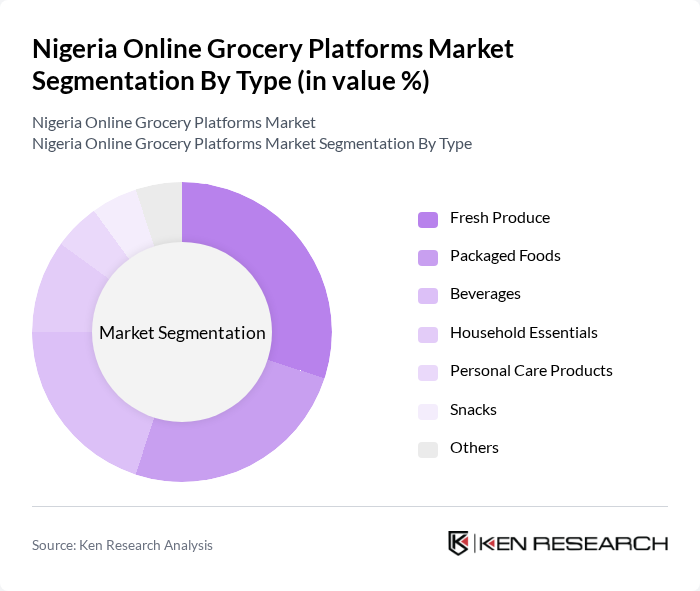
By Type:The market is segmented into Fresh Produce, Packaged Foods, Beverages, Household Essentials, Personal Care Products, Snacks, and Others. Among these,Fresh Produceis gaining traction due to increasing consumer preference for healthy eating and organic products. Packaged Foods also hold a significant share as they offer convenience and longer shelf life, appealing to busy urban consumers. The demand for Beverages, particularly non-alcoholic drinks, is rising, driven by changing lifestyles and growing health consciousness. Notably, fresh food accounts for the largest share of online grocery revenue in Nigeria, reflecting strong consumer demand for perishable and organic items .
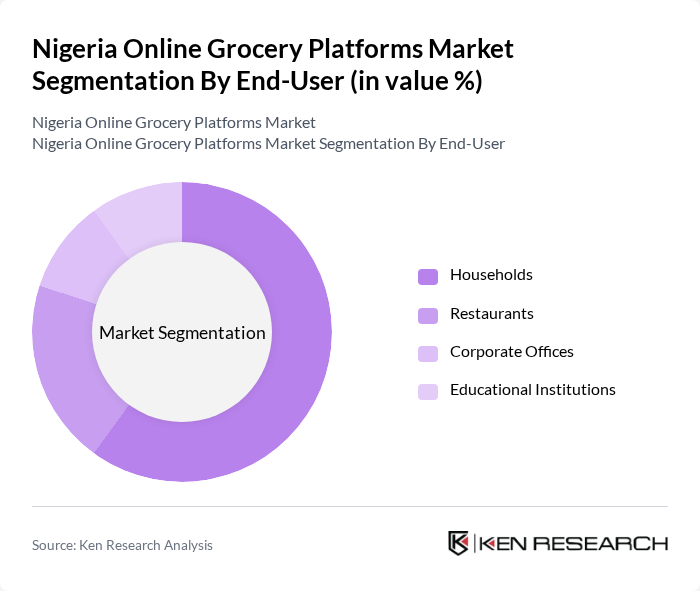
By End-User:The end-user segmentation includes Households, Restaurants, Corporate Offices, and Educational Institutions.Householdsdominate the market as they increasingly turn to online platforms for grocery shopping due to convenience and time-saving benefits. Restaurants are also significant users, relying on online grocery platforms for bulk purchases and fresh ingredients. Corporate Offices and Educational Institutions contribute to the market as they seek efficient solutions for catering and staff meals. The dominance of households is consistent with broader trends in the Nigerian e-commerce sector, where individual consumers are the primary drivers of online grocery demand .
Nigeria Online Grocery Platforms Market Competitive Landscape
The Nigeria Online Grocery Platforms Market is characterized by a dynamic mix of regional and international players. Leading participants such as Jumia Nigeria, Konga, Gloo.ng, Supermart.ng, FreshDirect Nigeria, Shoprite Nigeria, PayPorte, FoodCo Nigeria, Ebeano Supermarket, Spar Nigeria, NaijaGroceries, Ziva, MyFood, Farmcrowdy, MarketForce, BuyPower, and EazyShop contribute to innovation, geographic expansion, and service delivery in this space .
Nigeria Online Grocery Platforms Market Industry Analysis
Growth Drivers
- Increasing Internet Penetration:Nigeria's internet penetration rate is estimated at approximately43 percent, equating to about90 million users. This connectivity facilitates access to online grocery platforms, enabling consumers to shop conveniently from their homes. The World Bank reports that increased internet access correlates with higher e-commerce activity, as more individuals engage in digital transactions, thus driving the growth of online grocery services in urban and semi-urban areas.
- Urbanization and Changing Lifestyles:Nigeria's urban population is estimated at approximately54 percent. Cities like Lagos and Abuja are experiencing rapid growth. This urbanization leads to changing lifestyles, where consumers prioritize convenience and time-saving solutions. According to the National Bureau of Statistics, urban dwellers are increasingly adopting online grocery shopping, reflecting a shift in consumer behavior that favors digital platforms over traditional shopping methods, thereby boosting market demand.
- Rise in E-commerce Adoption:The Nigerian e-commerce sector is valued at approximatelyUSD 13 billion, driven by a growing acceptance of online shopping. Factors such as improved payment systems and increased smartphone usage contribute to this trend. The Nigerian Communications Commission indicates that mobile internet subscriptions are above85 million, facilitating easier access to online grocery platforms. This growing e-commerce landscape supports the expansion of online grocery services, catering to a tech-savvy consumer base.
Market Challenges
- Logistics and Delivery Issues:The logistics infrastructure in Nigeria remains underdeveloped, with onlyabout 15 percentof roads in good condition, according to the Federal Ministry of Works and Housing. This hampers timely deliveries for online grocery platforms, leading to customer dissatisfaction. Additionally, the high cost of transportation and inadequate warehousing facilities further complicate logistics, making it a significant challenge for online grocery businesses aiming to provide reliable service.
- Payment System Limitations:Despite advancements, Nigeria's payment systems face challenges, with onlyabout 45 percentof the population having access to formal banking services as reported by the Central Bank of Nigeria. This limitation affects online grocery transactions, as many consumers rely on cash payments. The lack of trust in digital payment methods and concerns over fraud deter potential customers from fully embracing online grocery shopping, posing a challenge for market growth.
Nigeria Online Grocery Platforms Market Future Outlook
The future of Nigeria's online grocery market appears promising, driven by technological advancements and evolving consumer preferences. As internet penetration continues to rise, more consumers are expected to embrace online shopping. Additionally, the integration of AI and data analytics will enhance personalized shopping experiences, making platforms more appealing. Companies that adapt to these trends and address logistical challenges will likely capture a larger market share, fostering a competitive environment that benefits consumers through improved services and offerings.
Market Opportunities
- Expansion into Rural Areas:With approximately47 percentof Nigeria's population residing in rural areas, there is significant potential for online grocery platforms to expand their services. By establishing delivery networks and partnerships with local vendors, companies can tap into this underserved market, providing essential goods and convenience to rural consumers, thereby driving growth and increasing market penetration.
- Partnerships with Local Farmers:Collaborating with local farmers can enhance supply chain efficiency and product freshness. By sourcing directly from farmers, online grocery platforms can offer competitive pricing and promote local produce. This strategy not only supports local economies but also appeals to consumers increasingly interested in sustainability and supporting local businesses, creating a win-win situation for both parties.
Scope of the Report
| Segment | Sub-Segments |
|---|---|
| By Type | Fresh Produce Packaged Foods Beverages Household Essentials Personal Care Products Snacks Others |
| By End-User | Households Restaurants Corporate Offices Educational Institutions |
| By Sales Channel | Direct-to-Consumer Third-Party Marketplaces Mobile Apps Websites |
| By Distribution Mode | Home Delivery Click and Collect Subscription Services |
| By Price Range | Budget Mid-Range Premium |
| By Product Origin | Locally Sourced Imported |
| By Packaging Type | Eco-Friendly Packaging Standard Packaging Bulk Packaging |
Key Target Audience
Investors and Venture Capitalist Firms
Government and Regulatory Bodies (e.g., National Agency for Food and Drug Administration and Control, Federal Competition and Consumer Protection Commission)
Manufacturers and Producers
Distributors and Retailers
Logistics and Supply Chain Companies
Payment Solution Providers
Industry Associations (e.g., Nigerian Association of Chambers of Commerce and Industry)
Financial Institutions
Players Mentioned in the Report:
Jumia Nigeria
Konga
Gloo.ng
Supermart.ng
FreshDirect Nigeria
Shoprite Nigeria
PayPorte
FoodCo Nigeria
Ebeano Supermarket
Spar Nigeria
NaijaGroceries
Ziva
MyFood
Farmcrowdy
E-commerce Nigeria (removenot a company name)
Add: MarketForce
Add: BuyPower
Add: EazyShop
Table of Contents
Market Assessment Phase
1. Executive Summary and Approach
2. Nigeria Online Grocery Platforms Market Overview
2.1 Key Insights and Strategic Recommendations
2.2 Nigeria Online Grocery Platforms Market Overview
2.3 Definition and Scope
2.4 Evolution of Market Ecosystem
2.5 Timeline of Key Regulatory Milestones
2.6 Value Chain & Stakeholder Mapping
2.7 Business Cycle Analysis
2.8 Policy & Incentive Landscape
3. Nigeria Online Grocery Platforms Market Analysis
3.1 Growth Drivers
3.1.1 Increasing Internet Penetration
3.1.2 Urbanization and Changing Lifestyles
3.1.3 Rise in E-commerce Adoption
3.1.4 Demand for Convenience and Time-Saving Solutions
3.2 Market Challenges
3.2.1 Logistics and Delivery Issues
3.2.2 Payment System Limitations
3.2.3 Competition from Traditional Grocery Stores
3.2.4 Regulatory Hurdles
3.3 Market Opportunities
3.3.1 Expansion into Rural Areas
3.3.2 Partnerships with Local Farmers
3.3.3 Introduction of Subscription Models
3.3.4 Leveraging Social Media for Marketing
3.4 Market Trends
3.4.1 Growth of Mobile Shopping
3.4.2 Increased Focus on Sustainability
3.4.3 Personalization of Shopping Experience
3.4.4 Integration of AI and Data Analytics
3.5 Government Regulation
3.5.1 E-commerce Policy Framework
3.5.2 Consumer Protection Regulations
3.5.3 Taxation Policies for Online Sales
3.5.4 Food Safety Standards
4. SWOT Analysis
5. Stakeholder Analysis
6. Porter's Five Forces Analysis
7. Nigeria Online Grocery Platforms Market Market Size, 2019-2024
7.1 By Value
7.2 By Volume
7.3 By Average Selling Price
8. Nigeria Online Grocery Platforms Market Segmentation
8.1 By Type
8.1.1 Fresh Produce
8.1.2 Packaged Foods
8.1.3 Beverages
8.1.4 Household Essentials
8.1.5 Personal Care Products
8.1.6 Snacks
8.1.7 Others
8.2 By End-User
8.2.1 Households
8.2.2 Restaurants
8.2.3 Corporate Offices
8.2.4 Educational Institutions
8.3 By Sales Channel
8.3.1 Direct-to-Consumer
8.3.2 Third-Party Marketplaces
8.3.3 Mobile Apps
8.3.4 Websites
8.4 By Distribution Mode
8.4.1 Home Delivery
8.4.2 Click and Collect
8.4.3 Subscription Services
8.5 By Price Range
8.5.1 Budget
8.5.2 Mid-Range
8.5.3 Premium
8.6 By Product Origin
8.6.1 Locally Sourced
8.6.2 Imported
8.7 By Packaging Type
8.7.1 Eco-Friendly Packaging
8.7.2 Standard Packaging
8.7.3 Bulk Packaging
9. Nigeria Online Grocery Platforms Market Competitive Analysis
9.1 Market Share of Key Players
9.2 Cross Comparison of Key Players
9.2.1 Company Name
9.2.2 Group Size (Large, Medium, or Small as per industry convention)
9.2.3 Customer Acquisition Cost (CAC)
9.2.4 Average Order Value (AOV)
9.2.5 Customer Retention Rate
9.2.6 Delivery Time Efficiency (Average Delivery Time in Hours)
9.2.7 Pricing Strategy (Everyday Low Price, Premium, Dynamic, etc.)
9.2.8 Market Penetration Rate (% of Target Market Served)
9.2.9 Revenue Growth Rate (YoY)
9.2.10 Customer Satisfaction Score (CSAT or NPS)
9.2.11 Inventory Turnover Ratio
9.2.12 Gross Margin
9.2.13 Order Fulfillment Accuracy
9.2.14 Return Rate
9.2.15 Technology Adoption Index (e.g., AI, IoT, Predictive Analytics)
9.3 SWOT Analysis of Top Players
9.4 Pricing Analysis
9.5 Detailed Profile of Major Companies
9.5.1 Jumia Nigeria
9.5.2 Konga
9.5.3 Gloo.ng
9.5.4 Supermart.ng
9.5.5 FreshDirect Nigeria
9.5.6 Shoprite Nigeria
9.5.7 PayPorte
9.5.8 FoodCo Nigeria
9.5.9 Ebeano Supermarket
9.5.10 Spar Nigeria
9.5.11 NaijaGroceries
9.5.12 Ziva
9.5.13 MyFood
9.5.14 Farmcrowdy
9.5.15 E-commerce Nigeria (remove—not a company name)
9.5.16 Add: MarketForce
9.5.17 Add: BuyPower
9.5.18 Add: EazyShop
10. Nigeria Online Grocery Platforms Market End-User Analysis
10.1 Procurement Behavior of Key Ministries
10.1.1 Ministry of Agriculture
10.1.2 Ministry of Trade and Investment
10.1.3 Ministry of Health
10.2 Corporate Spend on Infrastructure & Energy
10.2.1 Corporate Food Procurement
10.2.2 Investment in E-commerce Infrastructure
10.3 Pain Point Analysis by End-User Category
10.3.1 Price Sensitivity
10.3.2 Quality Assurance
10.3.3 Delivery Reliability
10.4 User Readiness for Adoption
10.4.1 Digital Literacy Levels
10.4.2 Access to Technology
10.5 Post-Deployment ROI and Use Case Expansion
10.5.1 Cost Savings Analysis
10.5.2 Customer Feedback Mechanisms
11. Nigeria Online Grocery Platforms Market Future Size, 2025-2030
11.1 By Value
11.2 By Volume
11.3 By Average Selling Price
Go-To-Market Strategy Phase
1. Whitespace Analysis + Business Model Canvas
1.1 Market Gaps Identification
1.2 Business Model Framework
2. Marketing and Positioning Recommendations
2.1 Branding Strategies
2.2 Product USPs
3. Distribution Plan
3.1 Urban Retail vs Rural NGO Tie-ups
4. Channel & Pricing Gaps
4.1 Underserved Routes
4.2 Pricing Bands
5. Unmet Demand & Latent Needs
5.1 Category Gaps
5.2 Consumer Segments
6. Customer Relationship
6.1 Loyalty Programs
6.2 After-sales Service
7. Value Proposition
7.1 Sustainability
7.2 Integrated Supply Chains
8. Key Activities
8.1 Regulatory Compliance
8.2 Branding
8.3 Distribution Setup
9. Entry Strategy Evaluation
9.1 Domestic Market Entry Strategy
9.1.1 Product Mix
9.1.2 Pricing Band
9.1.3 Packaging
9.2 Export Entry Strategy
9.2.1 Target Countries
9.2.2 Compliance Roadmap
10. Entry Mode Assessment
10.1 JV
10.2 Greenfield
10.3 M&A
10.4 Distributor Model
11. Capital and Timeline Estimation
11.1 Capital Requirements
11.2 Timelines
12. Control vs Risk Trade-Off
12.1 Ownership vs Partnerships
13. Profitability Outlook
13.1 Breakeven Analysis
13.2 Long-term Sustainability
14. Potential Partner List
14.1 Distributors
14.2 JVs
14.3 Acquisition Targets
15. Execution Roadmap
15.1 Phased Plan for Market Entry
15.1.1 Market Setup
15.1.2 Market Entry
15.1.3 Growth Acceleration
15.1.4 Scale & Stabilize
15.2 Key Activities and Milestones
15.2.1 Activity Timeline
15.2.2 Milestone Tracking
Research Methodology
Phase 1: Approach1
Desk Research
- Analysis of industry reports and market studies on online grocery trends in Nigeria
- Review of government publications and statistics related to e-commerce and retail sectors
- Examination of consumer behavior studies and demographic data from reputable sources
Primary Research
- Interviews with key stakeholders in the online grocery sector, including platform operators and logistics providers
- Surveys targeting consumers who utilize online grocery services to understand preferences and pain points
- Focus group discussions with industry experts and analysts to gather qualitative insights
Validation & Triangulation
- Cross-validation of findings through multiple data sources, including sales data and consumer feedback
- Triangulation of insights from primary interviews with secondary research findings
- Sanity checks conducted through expert panel reviews to ensure data reliability
Phase 2: Market Size Estimation1
Top-down Assessment
- Estimation of total market size based on national e-commerce growth rates and grocery spending patterns
- Segmentation of the market by product categories, such as fresh produce, packaged goods, and household items
- Incorporation of trends in urbanization and digital payment adoption affecting online grocery shopping
Bottom-up Modeling
- Collection of sales data from leading online grocery platforms to establish baseline revenue figures
- Analysis of average order values and frequency of purchases to model consumer spending behavior
- Estimation of market penetration rates based on demographic and geographic factors
Forecasting & Scenario Analysis
- Development of forecasting models using historical growth data and market trends
- Scenario analysis based on potential regulatory changes and economic conditions impacting consumer spending
- Creation of multiple growth scenarios (baseline, optimistic, and pessimistic) through 2030
Phase 3: CATI Sample Composition1
| Scope Item/Segment | Sample Size | Target Respondent Profiles |
|---|---|---|
| Online Grocery Consumers | 120 | Regular users of online grocery platforms, aged 18-55 |
| Platform Operators | 40 | CEOs, Founders, and Senior Management of online grocery platforms |
| Logistics Providers | 40 | Operations Managers and Logistics Coordinators in delivery services |
| Retail Analysts | 30 | Market analysts and consultants specializing in e-commerce and retail |
| Consumer Behavior Experts | 20 | Researchers and academics focused on consumer trends in Nigeria |
Frequently Asked Questions
What is the current value of the Nigeria Online Grocery Platforms Market?
The Nigeria Online Grocery Platforms Market is valued at approximately USD 80 million, driven by increased e-commerce adoption, urbanization, and consumer preference for online shopping. This growth reflects a significant shift in how Nigerians purchase groceries, emphasizing convenience and variety.
Which cities are the main hubs for online grocery shopping in Nigeria?
What factors are driving the growth of online grocery platforms in Nigeria?
What challenges do online grocery platforms face in Nigeria?
Other Regional/Country Reports
Indonesia Online Grocery Platforms Market
Malaysia Online Grocery Platforms Market
KSA Online Grocery Platforms Market
APAC Online Grocery Platforms Market
SEA Online Grocery Platforms Market
Vietnam Online Grocery Platforms Market
Other Adjacent Reports
Kuwait Last-Mile Delivery Market
Australia E-Commerce Logistics Market Size, Share & Forecast, By Service Type, Mode of Transport & Shipment Flow, 2025–2032Bahrain digital payment solutions market size, share, growth drivers, trends, opportunities & forecast 2025–2030Germany Food Supply Chain Market
Japan Cold Chain Logistics Market Size, Share & Forecast, By Service Type, Mode of Transport & End-Use Industry, 2025–2032Global Mobile Commerce Market Outlook to 2030UK Online Retail Market Outlook to 2025Vietnam Agri-Tech Market
Europe Sustainable Packaging Market Size, Share & Forecast 2025-2031Oman Consumer Analytics Market
Why Buy From Us?

What makes us stand out is that our consultants follow Robust, Refine and Result (RRR) methodology. Robust for clear definitions, approaches and sanity checking, Refine for differentiating respondents' facts and opinions, and Result for presenting data with story.

We have set a benchmark in the industry by offering our clients with syndicated and customized market research reports featuring coverage of entire market as well as meticulous research and analyst insights.

While we don't replace traditional research, we flip the method upside down. Our dual approach of Top Bottom & Bottom Top ensures quality deliverable by not just verifying company fundamentals but also looking at the sector and macroeconomic factors.

With one step in the future, our research team constantly tries to show you the bigger picture. We help with some of the tough questions you may encounter along the way: How is the industry positioned? Best marketing channel? KPI's of competitors? By aligning every element, we help maximize success.

Our report gives you instant access to the answers and sources that other companies might choose to hide. We elaborate each steps of research methodology we have used and showcase you the sample size to earn your trust.

If you need any support, we are here! We pride ourselves on universe strength, data quality, and quick, friendly, and professional service.