About the Report
Base Year 2024North America Home Furniture Market Overview
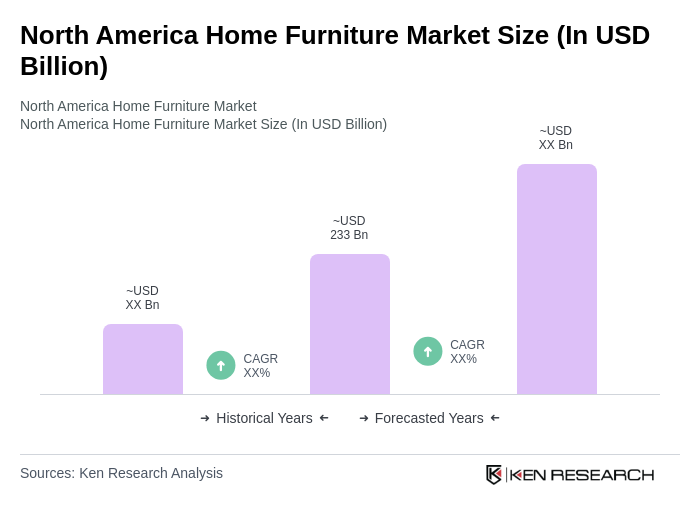
- The North America Home Furniture Market is valued at USD 233 billion, based on a five-year historical analysis. This growth is primarily driven by increasing consumer spending on home improvement, rising residential renovation activity, and a continued shift toward home personalization and comfort, supported by greater online availability and faster delivery options for furniture. The market has seen strong demand in categories such as sofas, beds, mattresses, and home office furniture, as consumers invest in multi-functional and ergonomically designed products for hybrid living.
- The United States dominates the North American home furniture market due to its large consumer base, higher disposable income, and deep culture of home ownership, with urban metros like New York, Los Angeles, and Chicago acting as high-demand hubs. Canada and Mexico also contribute meaningfully, supported by urbanization and growing interest in contemporary and value-oriented furniture through omnichannel retail.
- In recent years, the U.S. has advanced safety and chemical regulations that affect furniture, including national flammability standards for upholstered furniture under the Consumer Product Safety Commission’s 16 CFR part 1640 (aligning with California TB 117-2013) and state-level restrictions on certain flame retardants and toxic chemicals, which promote safer materials and greener practices across the industry.
North America Home Furniture Market Segmentation
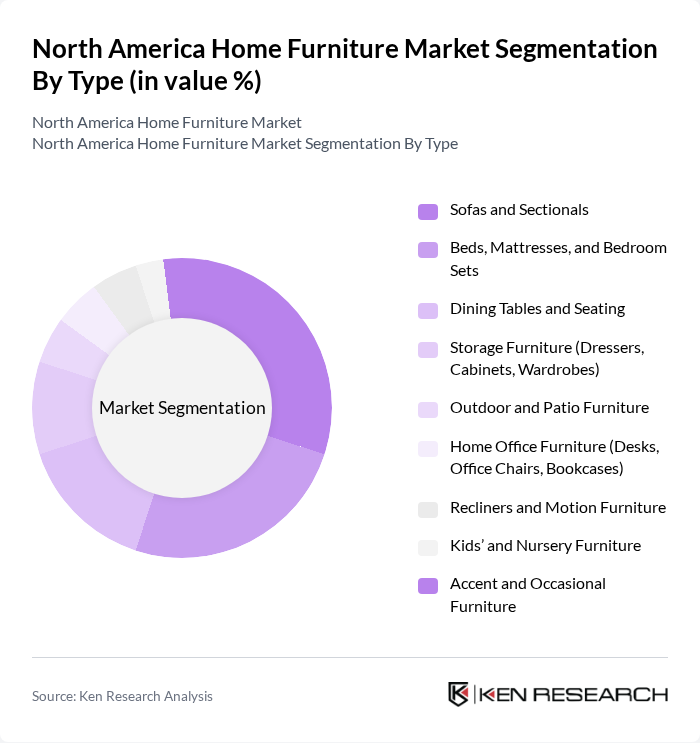
By Type:The market is segmented into various types of furniture, including sofas and sectionals, beds, mattresses, and bedroom sets, dining tables and seating, storage furniture, outdoor and patio furniture, home office furniture, recliners, kids’ furniture, and accent furniture. Each sub-segment caters to different consumer needs and preferences, reflecting trends in home decor and functionality.
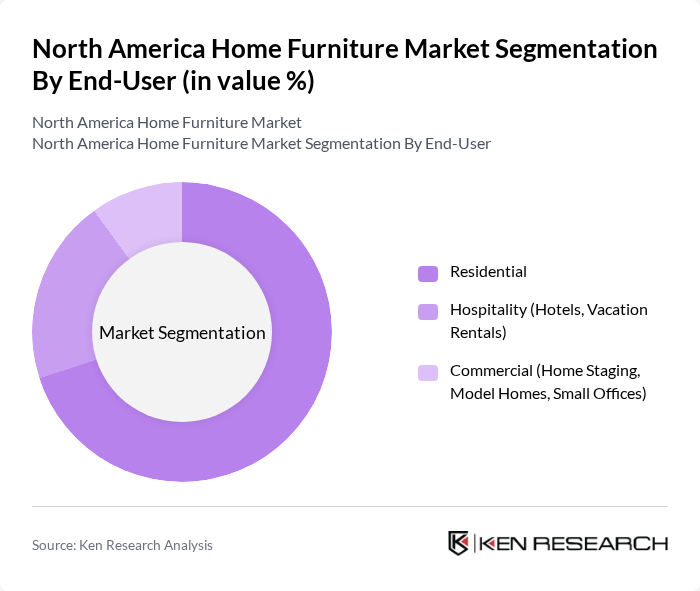
By End-User:The end-user segmentation includes residential, hospitality, and commercial sectors. Each segment has unique requirements, with residential consumers focusing on comfort and aesthetics, while hospitality and commercial sectors prioritize durability and functionality.
North America Home Furniture Market Competitive Landscape
The North America Home Furniture Market is characterized by a dynamic mix of regional and international players. Leading participants such as Ashley Furniture Industries, LLC, La-Z-Boy Incorporated, IKEA North America Services, LLC, Wayfair Inc., Williams-Sonoma, Inc. (Pottery Barn, West Elm), RH (Restoration Hardware Holdings, Inc.), Tempur Sealy International, Inc., Sleep Number Corporation, Mattress Firm Group Inc., Ethan Allen Interiors Inc., Bassett Furniture Industries, Inc., Hooker Furnishings Corporation, Flexsteel Industries, Inc., American Signature, Inc. (Value City Furniture), Sauder Woodworking Co., The Home Depot, Inc. (Home Decorators Collection), Lowe’s Companies, Inc., Costco Wholesale Corporation, Walmart Inc. (Mainstays, Better Homes & Gardens), Canadian Tire Corporation, Limited (CTC), Crate & Barrel Holdings (CB2), Haverty Furniture Companies, Inc., Rooms To Go Incorporated, Bob’s Discount Furniture, LLC, Leon’s Furniture Limited (incl. The Brick), Sleep Country Canada Holdings Inc., Dorel Industries Inc. (Dorel Home), Palliser Furniture Ltd., Urban Outfitters, Inc. (Anthropologie, Terrain), Article Furniture International Inc. contribute to innovation, geographic expansion, and service delivery in this space.
North America Home Furniture Market Industry Analysis
Growth Drivers
- Increasing Consumer Spending on Home Decor:In future, consumer spending on home furnishings in North America is projected to reach approximately $160 billion, reflecting a significant increase from previous years. This growth is driven by rising disposable incomes, which are expected to average around $65,000 per household. As consumers prioritize home aesthetics, the demand for stylish and functional furniture continues to surge, bolstered by a cultural shift towards home-centric lifestyles, especially post-pandemic.
- Rise in Home Renovation and Remodeling Activities:The home renovation market in North America is anticipated to exceed $450 billion in future, fueled by a growing trend of homeowners investing in upgrades. With 60% of homeowners planning renovations, the demand for new furniture to complement these changes is substantial. This trend is further supported by low mortgage rates and increased home equity, encouraging homeowners to enhance their living spaces with modern furniture solutions.
- Growth of E-commerce in Furniture Sales:E-commerce sales in the North American furniture market are projected to surpass $80 billion in future, representing a significant shift in consumer purchasing behavior. With 45% of furniture sales expected to occur online, the convenience of digital shopping and the rise of mobile commerce are key factors driving this growth. Retailers are increasingly investing in online platforms, enhancing customer experiences through virtual showrooms and augmented reality tools.
Market Challenges
- Supply Chain Disruptions:The North American furniture industry continues to face significant supply chain challenges, with delays affecting over 65% of manufacturers. Factors such as port congestion and labor shortages have led to increased lead times, impacting inventory levels. In future, these disruptions are expected to result in a 20% increase in operational costs for many companies, hindering their ability to meet consumer demand effectively.
- Fluctuating Raw Material Prices:The volatility in raw material prices, particularly for wood and metals, poses a substantial challenge for furniture manufacturers. In future, the price of lumber is projected to remain 25% higher than pre-pandemic levels, driven by supply constraints and increased demand. This fluctuation not only affects production costs but also forces manufacturers to adjust pricing strategies, potentially alienating price-sensitive consumers.
North America Home Furniture Market Future Outlook
The North America home furniture market is poised for transformative growth, driven by evolving consumer preferences and technological advancements. As sustainability becomes a priority, manufacturers are increasingly adopting eco-friendly practices, which will likely reshape product offerings. Additionally, the integration of smart technology into furniture design is expected to enhance functionality and appeal to tech-savvy consumers. These trends indicate a dynamic market landscape, where innovation and consumer-centric strategies will play pivotal roles in shaping future developments.
Market Opportunities
- Expansion of Smart Furniture Solutions:The demand for smart furniture, which integrates technology for enhanced user experience, is on the rise. By future, the smart furniture segment is expected to grow significantly, driven by consumer interest in convenience and connectivity. This presents a lucrative opportunity for manufacturers to innovate and capture a tech-oriented market segment.
- Opportunities in the Rental Furniture Market:The rental furniture market is projected to grow to $12 billion in future, fueled by urbanization and the increasing popularity of flexible living arrangements. This trend offers furniture companies a chance to diversify their offerings and cater to a growing demographic of renters seeking stylish, temporary solutions for their living spaces.
Scope of the Report
| Segment | Sub-Segments |
|---|---|
| By Type | Sofas and Sectionals Beds, Mattresses, and Bedroom Sets Dining Tables and Seating Storage Furniture (Dressers, Cabinets, Wardrobes) Outdoor and Patio Furniture Home Office Furniture (Desks, Office Chairs, Bookcases) Recliners and Motion Furniture Kids’ and Nursery Furniture Accent and Occasional Furniture |
| By End-User | Residential Hospitality (Hotels, Vacation Rentals) Commercial (Home Staging, Model Homes, Small Offices) |
| By Distribution Channel | Online (E-commerce Marketplaces and DTC) Offline (Specialty Furniture Stores, Big-Box Retail, Warehouse Clubs) Omnichannel (Click-and-Collect, Showroom-to-Home Delivery) |
| By Price Range | Budget Mid-range Premium and Luxury |
| By Material | Solid Wood and Engineered Wood Metal Upholstery (Fabric and Leather) Glass and Stone/Composite Wicker, Rattan, and Plastics |
| By Style | Modern/Contemporary Traditional Transitional Rustic/Farmhouse Scandinavian/Minimalist |
| By Functionality | Multi-functional and Space-Saving Standard Customizable and Modular |
| By Country | United States Canada Mexico |
Key Target Audience
Investors and Venture Capitalist Firms
Government and Regulatory Bodies (e.g., U.S. Department of Commerce, Consumer Product Safety Commission)
Manufacturers and Producers
Distributors and Retailers
Interior Designers and Architects
Home Improvement and Renovation Companies
Logistics and Supply Chain Management Firms
Financial Institutions
Players Mentioned in the Report:
Ashley Furniture Industries, LLC
La-Z-Boy Incorporated
IKEA North America Services, LLC
Wayfair Inc.
Williams-Sonoma, Inc. (Pottery Barn, West Elm)
RH (Restoration Hardware Holdings, Inc.)
Tempur Sealy International, Inc.
Sleep Number Corporation
Mattress Firm Group Inc.
Ethan Allen Interiors Inc.
Bassett Furniture Industries, Inc.
Hooker Furnishings Corporation
Flexsteel Industries, Inc.
American Signature, Inc. (Value City Furniture)
Sauder Woodworking Co.
The Home Depot, Inc. (Home Decorators Collection)
Lowes Companies, Inc.
Costco Wholesale Corporation
Walmart Inc. (Mainstays, Better Homes & Gardens)
Canadian Tire Corporation, Limited (CTC)
Crate & Barrel Holdings (CB2)
Haverty Furniture Companies, Inc.
Rooms To Go Incorporated
Bobs Discount Furniture, LLC
Leons Furniture Limited (incl. The Brick)
Sleep Country Canada Holdings Inc.
Dorel Industries Inc. (Dorel Home)
Palliser Furniture Ltd.
Urban Outfitters, Inc. (Anthropologie, Terrain)
Article Furniture International Inc.
Table of Contents
Market Assessment Phase
1. Executive Summary and Approach
2. North America Home Furniture Market Overview
2.1 Key Insights and Strategic Recommendations
2.2 North America Home Furniture Market Overview
2.3 Definition and Scope
2.4 Evolution of Market Ecosystem
2.5 Timeline of Key Regulatory Milestones
2.6 Value Chain & Stakeholder Mapping
2.7 Business Cycle Analysis
2.8 Policy & Incentive Landscape
3. North America Home Furniture Market Analysis
3.1 Growth Drivers
3.1.1 Increasing Consumer Spending on Home Decor
3.1.2 Rise in Home Renovation and Remodeling Activities
3.1.3 Growth of E-commerce in Furniture Sales
3.1.4 Demand for Sustainable and Eco-friendly Furniture
3.2 Market Challenges
3.2.1 Supply Chain Disruptions
3.2.2 Fluctuating Raw Material Prices
3.2.3 Intense Competition from Online Retailers
3.2.4 Changing Consumer Preferences
3.3 Market Opportunities
3.3.1 Expansion of Smart Furniture Solutions
3.3.2 Growth in Urbanization and Housing Developments
3.3.3 Increasing Popularity of Customizable Furniture
3.3.4 Opportunities in the Rental Furniture Market
3.4 Market Trends
3.4.1 Shift Towards Minimalist and Functional Designs
3.4.2 Integration of Technology in Furniture
3.4.3 Rise of Multi-functional Furniture
3.4.4 Increased Focus on Health and Wellness in Furniture Design
3.5 Government Regulation
3.5.1 Regulations on Sustainable Materials
3.5.2 Safety Standards for Furniture Products
3.5.3 Import Tariffs on Furniture
3.5.4 Environmental Regulations Affecting Manufacturing
4. SWOT Analysis
5. Stakeholder Analysis
6. Porter's Five Forces Analysis
7. North America Home Furniture Market Market Size, 2019-2024
7.1 By Value
7.2 By Volume
7.3 By Average Selling Price
8. North America Home Furniture Market Segmentation
8.1 By Type
8.1.1 Sofas and Sectionals
8.1.2 Beds, Mattresses, and Bedroom Sets
8.1.3 Dining Tables and Seating
8.1.4 Storage Furniture (Dressers, Cabinets, Wardrobes)
8.1.5 Outdoor and Patio Furniture
8.1.6 Home Office Furniture (Desks, Office Chairs, Bookcases)
8.1.7 Recliners and Motion Furniture
8.1.8 Kids’ and Nursery Furniture
8.1.9 Accent and Occasional Furniture
8.2 By End-User
8.2.1 Residential
8.2.2 Hospitality (Hotels, Vacation Rentals)
8.2.3 Commercial (Home Staging, Model Homes, Small Offices)
8.3 By Distribution Channel
8.3.1 Online (E-commerce Marketplaces and DTC)
8.3.2 Offline (Specialty Furniture Stores, Big-Box Retail, Warehouse Clubs)
8.3.3 Omnichannel (Click-and-Collect, Showroom-to-Home Delivery)
8.4 By Price Range
8.4.1 Budget
8.4.2 Mid-range
8.4.3 Premium and Luxury
8.5 By Material
8.5.1 Solid Wood and Engineered Wood
8.5.2 Metal
8.5.3 Upholstery (Fabric and Leather)
8.5.4 Glass and Stone/Composite
8.5.5 Wicker, Rattan, and Plastics
8.6 By Style
8.6.1 Modern/Contemporary
8.6.2 Traditional
8.6.3 Transitional
8.6.4 Rustic/Farmhouse
8.6.5 Scandinavian/Minimalist
8.7 By Functionality
8.7.1 Multi-functional and Space-Saving
8.7.2 Standard
8.7.3 Customizable and Modular
8.8 By Country
8.8.1 United States
8.8.2 Canada
8.8.3 Mexico
9. North America Home Furniture Market Competitive Analysis
9.1 Market Share of Key Players
9.2 KPIs for Cross Comparison of Key Players
9.2.1 Company Name
9.2.2 North America Home Furniture Revenue (US$)
9.2.3 Revenue Growth Rate (YoY and 3-Yr CAGR)
9.2.4 E-commerce Share of Sales (%)
9.2.5 Store Footprint (No. of Stores/Showrooms in North America)
9.2.6 Average Ticket Size / Average Order Value (US$)
9.2.7 Gross Margin (%)
9.2.8 Inventory Turnover (x)
9.2.9 Lead Time to Delivery (Days) and On-time Delivery Rate (%)
9.2.10 Return Rate (%)
9.2.11 Customer Satisfaction / NPS
9.2.12 Private-Label Mix (%)
9.2.13 Sustainability KPIs (Certified Wood %, Recycled Content %, ESG Ratings)
9.2.14 Market Penetration (Regional Coverage across US/Canada/Mexico)
9.2.15 Omnichannel Capabilities (BOPIS, AR/VR, White-glove Delivery)
9.3 SWOT Analysis of Top Players
9.4 Pricing Analysis
9.5 List of Major Companies
9.5.1 Ashley Furniture Industries, LLC
9.5.2 La-Z-Boy Incorporated
9.5.3 IKEA North America Services, LLC
9.5.4 Wayfair Inc.
9.5.5 Williams-Sonoma, Inc. (Pottery Barn, West Elm)
9.5.6 RH (Restoration Hardware Holdings, Inc.)
9.5.7 Tempur Sealy International, Inc.
9.5.8 Sleep Number Corporation
9.5.9 Mattress Firm Group Inc.
9.5.10 Ethan Allen Interiors Inc.
9.5.11 Bassett Furniture Industries, Inc.
9.5.12 Hooker Furnishings Corporation
9.5.13 Flexsteel Industries, Inc.
9.5.14 American Signature, Inc. (Value City Furniture)
9.5.15 Sauder Woodworking Co.
9.5.16 The Home Depot, Inc. (Home Decorators Collection)
9.5.17 Lowe’s Companies, Inc.
9.5.18 Costco Wholesale Corporation
9.5.19 Walmart Inc. (Mainstays, Better Homes & Gardens)
9.5.20 Canadian Tire Corporation, Limited (CTC)
9.5.21 Crate & Barrel Holdings (CB2)
9.5.22 Haverty Furniture Companies, Inc.
9.5.23 Rooms To Go Incorporated
9.5.24 Bob’s Discount Furniture, LLC
9.5.25 Leon’s Furniture Limited (incl. The Brick)
9.5.26 Sleep Country Canada Holdings Inc.
9.5.27 Dorel Industries Inc. (Dorel Home)
9.5.28 Palliser Furniture Ltd.
9.5.29 Urban Outfitters, Inc. (Anthropologie, Terrain)
9.5.30 Article Furniture International Inc.
10. North America Home Furniture Market End-User Analysis
10.1 Procurement Behavior of Key Ministries
10.1.1 Government Procurement Policies
10.1.2 Budget Allocation for Furniture
10.1.3 Supplier Selection Criteria
10.2 Corporate Spend on Infrastructure & Energy
10.2.1 Investment Trends in Office Furniture
10.2.2 Budgeting for Renovations
10.2.3 Corporate Sustainability Initiatives
10.3 Pain Point Analysis by End-User Category
10.3.1 Quality and Durability Concerns
10.3.2 Delivery and Installation Issues
10.3.3 Customization Limitations
10.4 User Readiness for Adoption
10.4.1 Awareness of New Trends
10.4.2 Willingness to Invest in Quality
10.4.3 Adoption of E-commerce Solutions
10.5 Post-Deployment ROI and Use Case Expansion
10.5.1 Measurement of Customer Satisfaction
10.5.2 Analysis of Repeat Purchases
10.5.3 Expansion into New Markets
11. North America Home Furniture Market Future Size, 2025-2030
11.1 By Value
11.2 By Volume
11.3 By Average Selling Price
Go-To-Market Strategy Phase
1. Whitespace Analysis + Business Model Canvas
1.1 Market Gaps Identification
1.2 Value Proposition Development
1.3 Revenue Streams Analysis
1.4 Key Partnerships Exploration
1.5 Cost Structure Assessment
1.6 Customer Segmentation
1.7 Channels of Distribution
2. Marketing and Positioning Recommendations
2.1 Branding Strategies
2.2 Product USPs
2.3 Target Audience Identification
2.4 Marketing Channels Selection
2.5 Promotional Strategies
3. Distribution Plan
3.1 Urban Retail Strategies
3.2 Rural NGO Tie-ups
3.3 E-commerce Distribution
3.4 Logistics and Supply Chain Management
4. Channel & Pricing Gaps
4.1 Underserved Routes
4.2 Pricing Bands Analysis
4.3 Competitor Pricing Strategies
5. Unmet Demand & Latent Needs
5.1 Category Gaps Identification
5.2 Consumer Segments Analysis
5.3 Emerging Trends Exploration
6. Customer Relationship
6.1 Loyalty Programs Development
6.2 After-sales Service Strategies
6.3 Customer Feedback Mechanisms
7. Value Proposition
7.1 Sustainability Initiatives
7.2 Integrated Supply Chains
7.3 Unique Selling Points
8. Key Activities
8.1 Regulatory Compliance
8.2 Branding Initiatives
8.3 Distribution Setup
9. Entry Strategy Evaluation
9.1 Domestic Market Entry Strategy
9.1.1 Product Mix Considerations
9.1.2 Pricing Band Strategy
9.1.3 Packaging Solutions
9.2 Export Entry Strategy
9.2.1 Target Countries Identification
9.2.2 Compliance Roadmap Development
10. Entry Mode Assessment
10.1 Joint Ventures
10.2 Greenfield Investments
10.3 Mergers & Acquisitions
10.4 Distributor Model Evaluation
11. Capital and Timeline Estimation
11.1 Capital Requirements Analysis
11.2 Timelines for Market Entry
12. Control vs Risk Trade-Off
12.1 Ownership vs Partnerships
13. Profitability Outlook
13.1 Breakeven Analysis
13.2 Long-term Sustainability Strategies
14. Potential Partner List
14.1 Distributors Identification
14.2 Joint Ventures Opportunities
14.3 Acquisition Targets
15. Execution Roadmap
15.1 Phased Plan for Market Entry
15.1.1 Market Setup
15.1.2 Market Entry
15.1.3 Growth Acceleration
15.1.4 Scale & Stabilize
15.2 Key Activities and Milestones
15.2.1 Activity Planning
15.2.2 Milestone Tracking
Research Methodology
Phase 1: Approach1
Desk Research
- Analysis of industry reports from market research firms focusing on the North American home furniture sector
- Review of government publications and trade statistics related to furniture manufacturing and sales
- Examination of consumer behavior studies and trends in home furnishing preferences
Primary Research
- Interviews with key stakeholders including furniture retailers, manufacturers, and distributors
- Surveys targeting consumers to gather insights on purchasing habits and preferences
- Focus groups with interior designers and home decor influencers to understand market trends
Validation & Triangulation
- Cross-validation of findings through multiple data sources including sales data and consumer feedback
- Triangulation of insights from primary interviews with secondary research findings
- Sanity checks conducted through expert panel reviews to ensure data accuracy and relevance
Phase 2: Market Size Estimation1
Top-down Assessment
- Estimation of total market size based on national furniture sales data and growth rates
- Segmentation of the market by product categories such as living room, bedroom, and office furniture
- Incorporation of demographic trends and housing market data to refine estimates
Bottom-up Modeling
- Collection of sales data from leading furniture retailers to establish baseline figures
- Analysis of average transaction values and volume of units sold across different segments
- Estimation of market share for emerging brands and niche players in the home furniture market
Forecasting & Scenario Analysis
- Development of forecasting models based on historical sales data and economic indicators
- Scenario analysis considering factors such as consumer spending trends and supply chain disruptions
- Projections for market growth under various economic conditions through 2030
Phase 3: CATI Sample Composition1
| Scope Item/Segment | Sample Size | Target Respondent Profiles |
|---|---|---|
| Residential Furniture Purchases | 150 | Homeowners, Renters |
| Commercial Furniture Solutions | 100 | Office Managers, Facilities Coordinators |
| Online Furniture Shopping Trends | 120 | eCommerce Shoppers, Digital Commerce Analysts |
| Eco-friendly Furniture Preferences | 80 | Sustainability Advocates, Green Product Buyers |
| Luxury Furniture Market Insights | 70 | Interior Designers, High-End Retail Buyers |
Frequently Asked Questions
What is the current value of the North America Home Furniture Market?
The North America Home Furniture Market is valued at approximately USD 233 billion, reflecting a significant growth driven by increased consumer spending on home improvement and a shift towards personalized and comfortable living spaces.
Which countries dominate the North America Home Furniture Market?
What are the main drivers of growth in the North America Home Furniture Market?
What challenges does the North America Home Furniture Market face?
Other Regional/Country Reports
Why Buy From Us?

What makes us stand out is that our consultants follow Robust, Refine and Result (RRR) methodology. Robust for clear definitions, approaches and sanity checking, Refine for differentiating respondents' facts and opinions, and Result for presenting data with story.

We have set a benchmark in the industry by offering our clients with syndicated and customized market research reports featuring coverage of entire market as well as meticulous research and analyst insights.

While we don't replace traditional research, we flip the method upside down. Our dual approach of Top Bottom & Bottom Top ensures quality deliverable by not just verifying company fundamentals but also looking at the sector and macroeconomic factors.

With one step in the future, our research team constantly tries to show you the bigger picture. We help with some of the tough questions you may encounter along the way: How is the industry positioned? Best marketing channel? KPI's of competitors? By aligning every element, we help maximize success.

Our report gives you instant access to the answers and sources that other companies might choose to hide. We elaborate each steps of research methodology we have used and showcase you the sample size to earn your trust.

If you need any support, we are here! We pride ourselves on universe strength, data quality, and quick, friendly, and professional service.