Region:Middle East
Author(s):Rebecca
Product Code:KRAC8471
Pages:92
Published On:November 2025
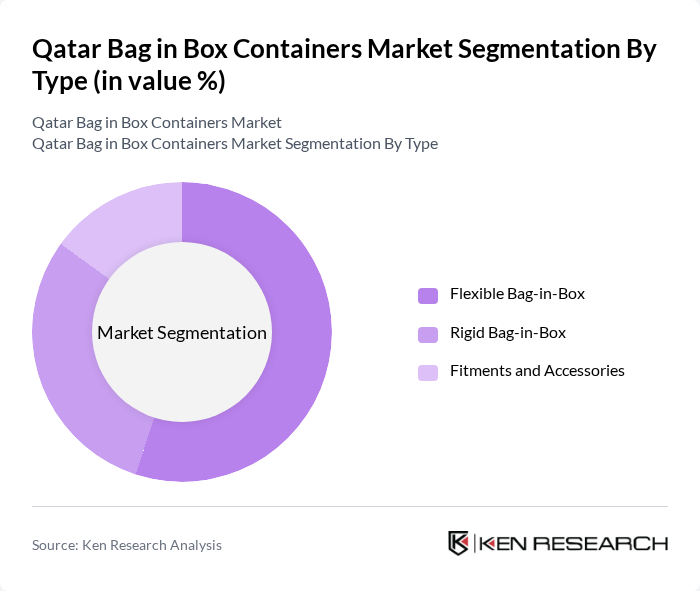
By Type:The market is segmented into three main types: Flexible Bag-in-Box, Rigid Bag-in-Box, and Fitments and Accessories. Among these, Flexible Bag-in-Box is the leading subsegment due to its lightweight nature, cost-effectiveness, and suitability for a wide range of liquid and semi-liquid products. The demand for Rigid Bag-in-Box is also growing, particularly in sectors requiring more robust packaging for industrial and bulk applications. Fitments and Accessories, such as dispensing taps and connectors, play a crucial role in enhancing the functionality and user convenience of bag-in-box systems.
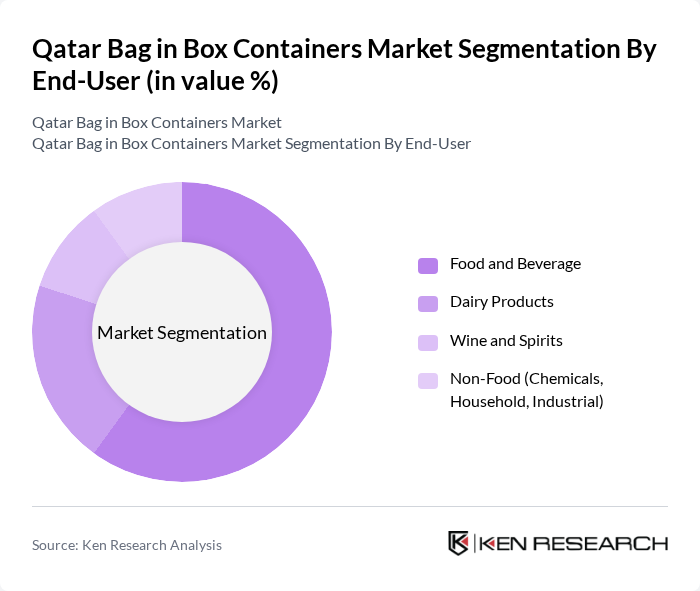
By End-User:The end-user segmentation includes Food and Beverage, Dairy Products, Wine and Spirits, and Non-Food (Chemicals, Household, Industrial). The Food and Beverage segment dominates the market, driven by the increasing consumption of packaged liquids, the convenience offered by bag-in-box solutions, and the sector’s focus on reducing packaging waste. Dairy Products and Wine and Spirits are also significant contributors, as they require specialized packaging to maintain product integrity and extend shelf life. The Non-Food segment is growing steadily, reflecting a diversification in the application of bag-in-box containers for chemicals, cleaning agents, and industrial fluids.
The Qatar Bag in Box Containers Market is characterized by a dynamic mix of regional and international players. Leading participants such as SIG Combibloc Group AG, Smurfit Kappa Group plc, DS Smith plc, Mondi Group, Scholle IPN (now part of SIG), Liquibox (a part of Sealed Air), Huhtamaki Oyj, Amcor plc, Tetra Pak International S.A., International Paper Company, WestRock Company, Berry Global Group, Inc., Sealed Air Corporation, Elopak ASA, Rapak (part of DS Smith) contribute to innovation, geographic expansion, and service delivery in this space.
The future of the Qatar Bag in Box containers market appears promising, driven by increasing consumer awareness of sustainability and convenience. As the food and beverage industry continues to expand, manufacturers are likely to invest in innovative packaging technologies to enhance product appeal. Additionally, the growing trend of e-commerce will further propel the demand for efficient packaging solutions, creating a favorable environment for Bag in Box containers to thrive in the coming years.
| Segment | Sub-Segments |
|---|---|
| By Type | Flexible Bag-in-Box Rigid Bag-in-Box Fitments and Accessories |
| By End-User | Food and Beverage Dairy Products Wine and Spirits Non-Food (Chemicals, Household, Industrial) |
| By Material | Plastic (Polyethylene, EVOH, Others) Paperboard Aluminum Foil |
| By Capacity | Less than 5 liters to 15 liters More than 15 liters |
| By Application | Liquid Foods (Juice, Dairy, Water, Sauces) Non-Liquid Foods (Powders, Granules) Industrial Applications (Lubricants, Chemicals) Household Products |
| By Distribution Channel | Online Sales Offline Retail Direct Sales (B2B) Distributors/Wholesalers |
| By Region | Doha Al Rayyan Al Wakrah Others |
| Scope Item/Segment | Sample Size | Target Respondent Profiles |
|---|---|---|
| Beverage Industry Packaging | 100 | Production Managers, Quality Assurance Managers |
| Food Service Sector Usage | 80 | Restaurant Owners, Supply Chain Managers |
| Retail Distribution Insights | 70 | Logistics Managers, Retail Buyers |
| Environmental Impact Assessments | 60 | Sustainability Managers, Compliance Officers |
| Market Entry Strategies | 90 | Business Development Managers, Market Analysts |
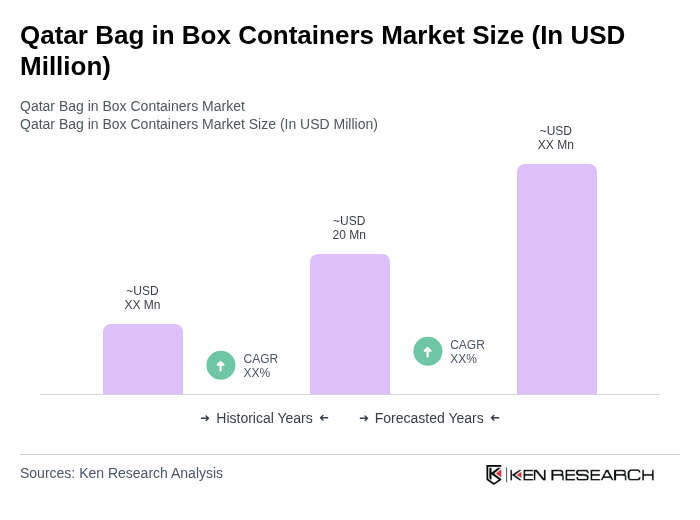
The Qatar Bag in Box Containers Market is valued at approximately USD 20 million, reflecting a five-year historical analysis. This growth is driven by increasing demand for convenient and sustainable packaging solutions in the food and beverage sector.

What makes us stand out is that our consultants follow Robust, Refine and Result (RRR) methodology. Robust for clear definitions, approaches and sanity checking, Refine for differentiating respondents' facts and opinions, and Result for presenting data with story.

We have set a benchmark in the industry by offering our clients with syndicated and customized market research reports featuring coverage of entire market as well as meticulous research and analyst insights.

While we don't replace traditional research, we flip the method upside down. Our dual approach of Top Bottom & Bottom Top ensures quality deliverable by not just verifying company fundamentals but also looking at the sector and macroeconomic factors.

With one step in the future, our research team constantly tries to show you the bigger picture. We help with some of the tough questions you may encounter along the way: How is the industry positioned? Best marketing channel? KPI's of competitors? By aligning every element, we help maximize success.

Our report gives you instant access to the answers and sources that other companies might choose to hide. We elaborate each steps of research methodology we have used and showcase you the sample size to earn your trust.

If you need any support, we are here! We pride ourselves on universe strength, data quality, and quick, friendly, and professional service.













