Region:Middle East
Author(s):Dev
Product Code:KRAB1913
Pages:82
Published On:January 2026
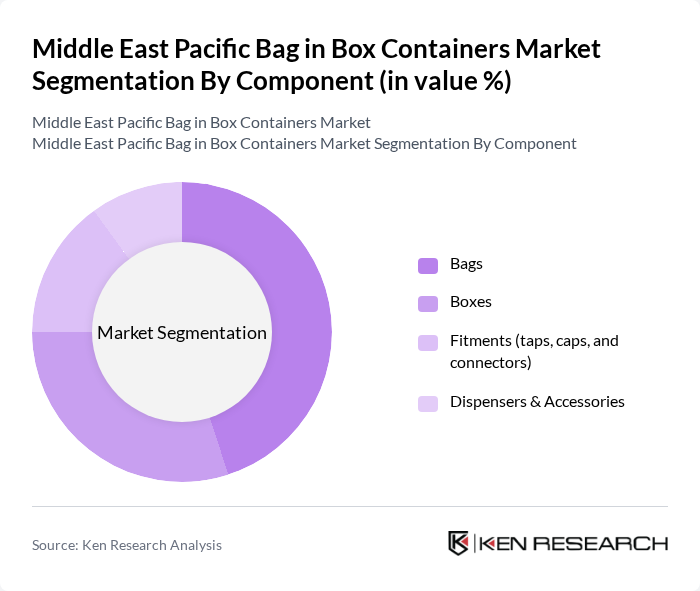
By Component:The components of bag-in-box containers include various elements that contribute to their functionality and usability. The primary components are bags, boxes, fitments (taps, caps, and connectors), and dispensers & accessories. Bags are widely used as the inner flexible liners that provide liquid containment and product protection, while boxes offer stacking strength and branding surface, and specialized fitments and dispensers enable controlled, hygienic dispensing – a configuration that is especially valued in the food, beverage, and foodservice sectors.
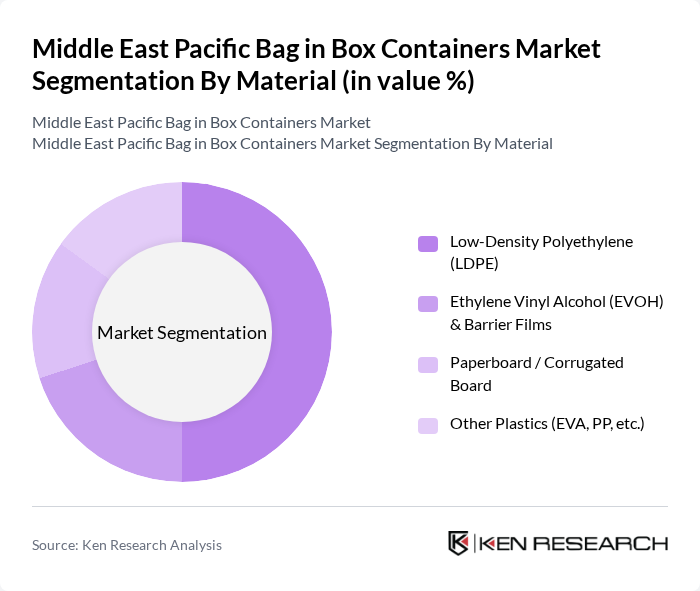
By Material:The materials used in bag-in-box containers significantly influence their performance and sustainability. The primary materials include Low-Density Polyethylene (LDPE), Ethylene Vinyl Alcohol (EVOH) & Barrier Films, Paperboard / Corrugated Board, and Other Plastics (EVA, PP, etc.). LDPE and EVOH barrier structures are widely used for inner bags due to their flexibility, sealability, and oxygen and moisture barrier performance, while paperboard or corrugated board is the standard material for the outer box, supporting recyclability and lightweighting trends in line with global shifts toward sustainable packaging.
The Middle East Pacific Bag in Box Containers Market is characterized by a dynamic mix of regional and international players. Leading participants such as Smurfit Kappa Group, Mondi Group, DS Smith Plc, International Paper Company, Amcor Plc, Scholle IPN (a part of SIG Group), Liquibox (a Smurfit Kappa company), Huhtamaki Oyj, Berry Global Group, Inc., WestRock Company, Sealed Air Corporation, AptarGroup, Inc., Tetra Pak, Elopak ASA, CDF Corporation contribute to innovation, geographic expansion, and service delivery in this space.
The future of the Bag in Box containers market in the Middle East appears promising, driven by the increasing emphasis on sustainability and convenience. As consumer preferences shift towards eco-friendly packaging, manufacturers are likely to innovate and adapt their offerings. Additionally, the growth of e-commerce will further enhance the demand for efficient packaging solutions. Companies that invest in advanced technologies and sustainable practices will be well-positioned to capitalize on these trends, ensuring a competitive edge in the evolving market landscape.
| Segment | Sub-Segments |
|---|---|
| By Component | Bags Boxes Fitments (taps, caps, and connectors) Dispensers & Accessories |
| By Material | Low-Density Polyethylene (LDPE) Ethylene Vinyl Alcohol (EVOH) & Barrier Films Paperboard / Corrugated Board Other Plastics (EVA, PP, etc.) |
| By Capacity | Less than 5 liters to 10 liters to 20 liters Above 20 liters |
| By Application | Alcoholic Beverages (wine, cider, spirits) Non-Alcoholic Beverages (juice, water, concentrates) Liquid Food (sauces, dairy, edible oils) Industrial Liquids (chemicals, lubricants, agrochemicals) Household & Personal Care |
| By End-User | Food & Beverage Manufacturers Retail & HoReCa (hotels, restaurants, catering) Industrial & Chemical Companies Household & Institutional Users |
| By Distribution Channel | Direct Sales to Brand Owners Distributors & Packaging Converters Online / E-commerce Channels OEM / Contract Packaging Partners |
| By Region | GCC Countries Levant North Africa Rest of Middle East & Africa |
| Scope Item/Segment | Sample Size | Target Respondent Profiles |
|---|---|---|
| Beverage Industry Packaging | 120 | Production Managers, Quality Assurance Specialists |
| Food Processing Sector | 90 | Operations Directors, Supply Chain Managers |
| Pharmaceutical Packaging Solutions | 60 | Regulatory Affairs Managers, Product Development Leads |
| Logistics and Distribution Networks | 50 | Logistics Coordinators, Warehouse Supervisors |
| Sustainability Initiatives in Packaging | 40 | Sustainability Managers, Environmental Compliance Officers |
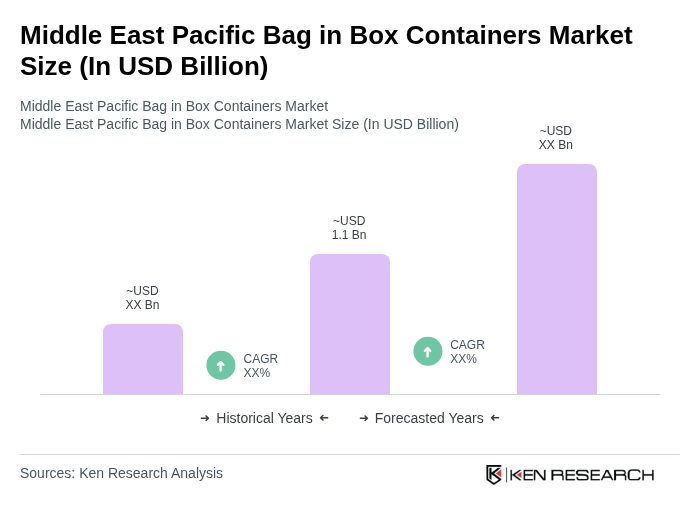
The Middle East Pacific Bag in Box Containers Market is valued at approximately USD 1.1 billion, reflecting a significant growth trend driven by the demand for sustainable and convenient packaging solutions across various industries, particularly food and beverage.

What makes us stand out is that our consultants follow Robust, Refine and Result (RRR) methodology. Robust for clear definitions, approaches and sanity checking, Refine for differentiating respondents' facts and opinions, and Result for presenting data with story.

We have set a benchmark in the industry by offering our clients with syndicated and customized market research reports featuring coverage of entire market as well as meticulous research and analyst insights.

While we don't replace traditional research, we flip the method upside down. Our dual approach of Top Bottom & Bottom Top ensures quality deliverable by not just verifying company fundamentals but also looking at the sector and macroeconomic factors.

With one step in the future, our research team constantly tries to show you the bigger picture. We help with some of the tough questions you may encounter along the way: How is the industry positioned? Best marketing channel? KPI's of competitors? By aligning every element, we help maximize success.

Our report gives you instant access to the answers and sources that other companies might choose to hide. We elaborate each steps of research methodology we have used and showcase you the sample size to earn your trust.

If you need any support, we are here! We pride ourselves on universe strength, data quality, and quick, friendly, and professional service.













