Region:Middle East
Author(s):Rebecca
Product Code:KRAA4361
Pages:95
Published On:January 2026
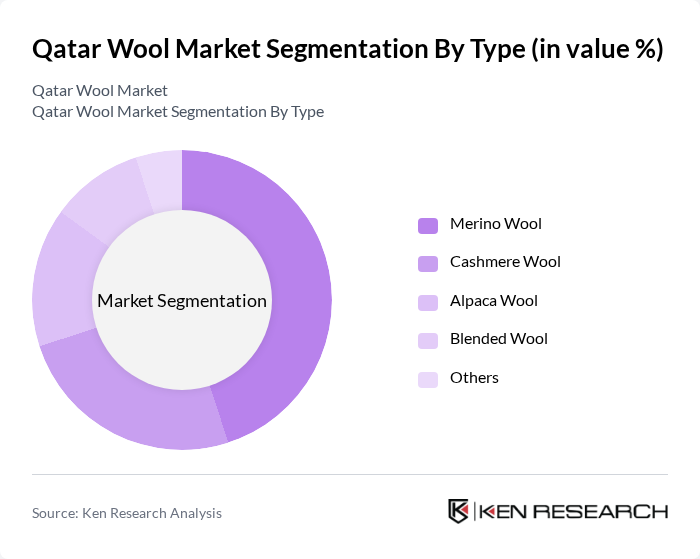
By Type:The wool market can be segmented into various types, including Merino Wool, Cashmere Wool, Alpaca Wool, Lamb Wool, and Others. Among these, Merino Wool is the most dominant segment due to its fine quality and softness, making it highly sought after in the fashion industry. Cashmere Wool follows closely, appreciated for its luxurious feel and warmth. The demand for Alpaca Wool is also growing, driven by its unique properties and sustainability appeal. Lamb Wool, while less dominant, is valued for its softness and is often used in specialty products. The "Others" category includes various lesser-known wool types that cater to niche markets.
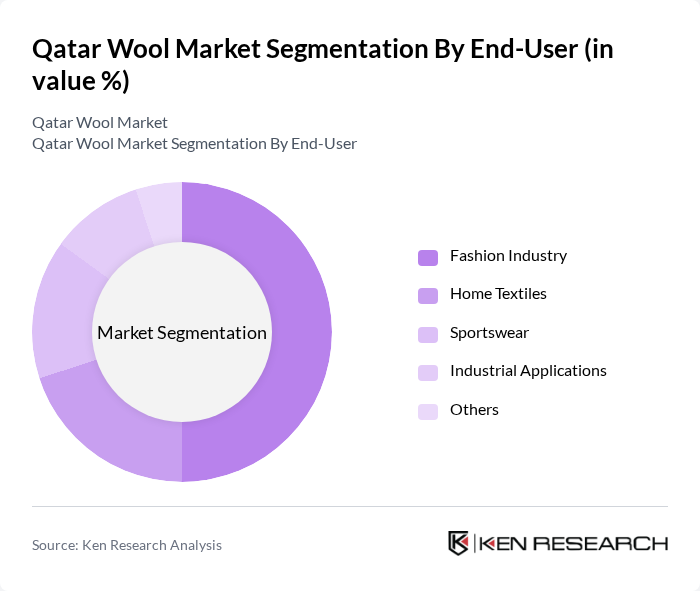
By End-User:The end-user segmentation of the wool market includes the Fashion Industry, Home Textiles, Industrial Applications, and Others. The Fashion Industry is the leading segment, driven by the increasing demand for high-quality wool garments and accessories. Home Textiles, including blankets and carpets, also represent a significant portion of the market, as consumers seek durable and luxurious materials for their homes. Industrial Applications, while smaller, are growing due to the use of wool in various technical textiles. The "Others" category encompasses niche applications that cater to specific consumer needs.
The Qatar Wool Market is characterized by a dynamic mix of regional and international players. Leading participants such as Qatar Wool Company, Al Jazeera Wool Industries, Gulf Wool Manufacturing, Doha Wool Traders, Qatar Textile Group, Al Rayyan Wool Co., Qatar National Wool Co., Al Khaleej Wool Products, Qatar Fiber Industries, Doha Wool & Textiles, Qatar Wool Exporters, Al Maktab Wool Suppliers, Qatar Wool Processing Co., Al Fardan Wool Traders, Qatar Wool Innovations contribute to innovation, geographic expansion, and service delivery in this space.
The future of the Qatar wool market appears promising, driven by increasing consumer interest in sustainable and high-quality textiles. As local production initiatives expand, the market is likely to see enhanced collaboration between wool producers and fashion designers, fostering innovation in product offerings. Additionally, the growth of e-commerce platforms will facilitate wider distribution, allowing consumers easier access to wool products. This evolving landscape presents a unique opportunity for the wool industry to capitalize on emerging trends and consumer preferences.
| Segment | Sub-Segments |
|---|---|
| By Type | Merino Wool Cashmere Wool Alpaca Wool Lamb Wool Others |
| By End-User | Fashion Industry Home Textiles Industrial Applications Others |
| By Product Category | Apparel Carpets and Rugs Upholstery Others |
| By Distribution Channel | Online Retail Brick-and-Mortar Stores Wholesale Distributors Others |
| By Geographic Distribution | Urban Areas Rural Areas Export Markets Others |
| By Price Range | Premium Wool Products Mid-Range Wool Products Budget Wool Products Others |
| By Sustainability Certification | Organic Certified Wool Fair Trade Certified Wool Others |
| Scope Item/Segment | Sample Size | Target Respondent Profiles |
|---|---|---|
| Wool Importers | 100 | Import Managers, Supply Chain Coordinators |
| Textile Manufacturers | 80 | Production Managers, Procurement Officers |
| Local Farmers | 60 | Wool Producers, Agricultural Advisors |
| Retail Sector Buyers | 70 | Merchandise Managers, Retail Buyers |
| Industry Experts | 50 | Market Analysts, Economic Advisors |
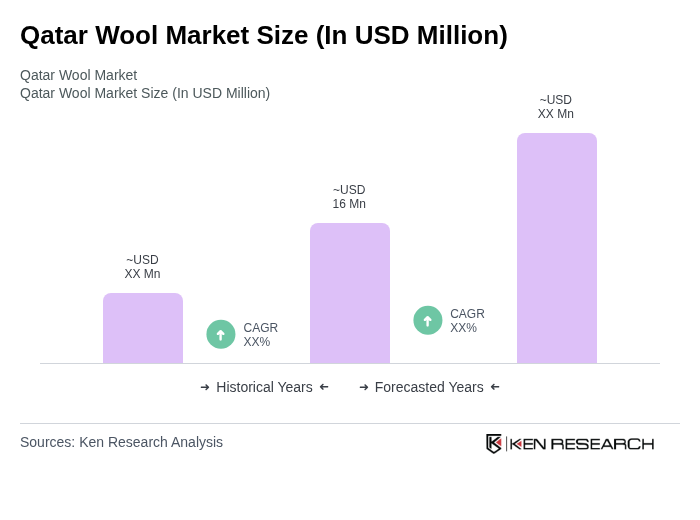
The Qatar Wool Market is valued at approximately USD 2 million, reflecting a growing demand for high-quality wool products in the fashion and textile industries, as well as an increasing consumer awareness of sustainable materials.

What makes us stand out is that our consultants follow Robust, Refine and Result (RRR) methodology. Robust for clear definitions, approaches and sanity checking, Refine for differentiating respondents' facts and opinions, and Result for presenting data with story.

We have set a benchmark in the industry by offering our clients with syndicated and customized market research reports featuring coverage of entire market as well as meticulous research and analyst insights.

While we don't replace traditional research, we flip the method upside down. Our dual approach of Top Bottom & Bottom Top ensures quality deliverable by not just verifying company fundamentals but also looking at the sector and macroeconomic factors.

With one step in the future, our research team constantly tries to show you the bigger picture. We help with some of the tough questions you may encounter along the way: How is the industry positioned? Best marketing channel? KPI's of competitors? By aligning every element, we help maximize success.

Our report gives you instant access to the answers and sources that other companies might choose to hide. We elaborate each steps of research methodology we have used and showcase you the sample size to earn your trust.

If you need any support, we are here! We pride ourselves on universe strength, data quality, and quick, friendly, and professional service.













