Region:Middle East
Author(s):Dev
Product Code:KRAC1623
Pages:92
Published On:December 2025
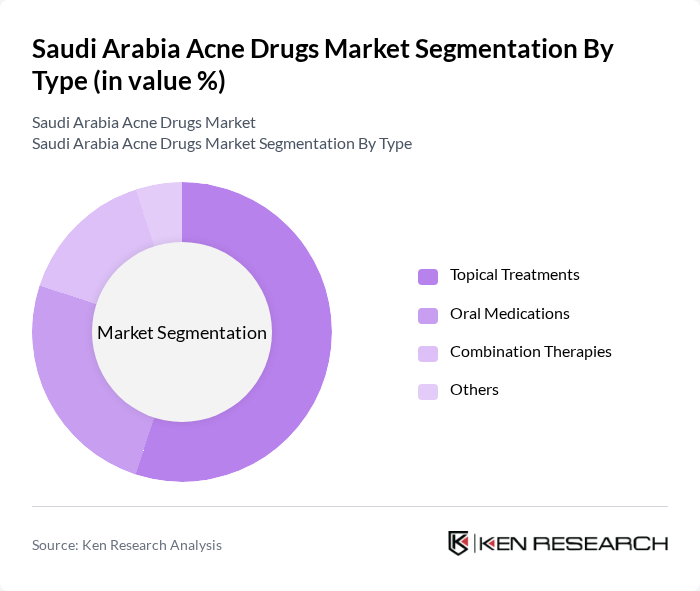
By Type:The market is segmented into various types of acne treatments, including topical treatments, oral medications, combination therapies, and others. Topical treatments dominate the market due to their direct application and effectiveness in managing mild to moderate acne. The increasing preference for over-the-counter topical solutions, which are perceived as safer and more convenient, has led to a significant rise in their consumption. Oral medications, while effective for severe cases, are less frequently used due to potential side effects, making topical treatments the preferred choice among consumers.
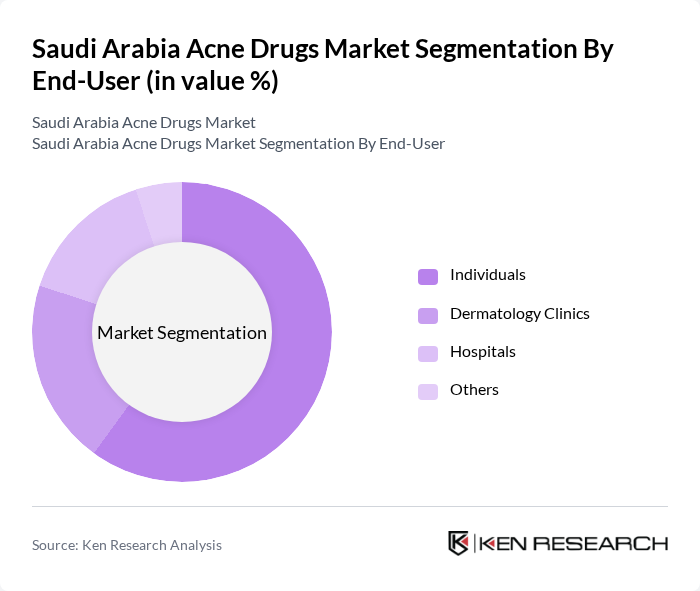
By End-User:The end-user segmentation includes individuals, dermatology clinics, hospitals, and others. Individuals represent the largest segment, driven by the increasing awareness of skincare and the growing prevalence of acne among adolescents and young adults. Dermatology clinics and hospitals also play a crucial role in the market, particularly for severe cases requiring professional treatment. The rise in self-medication and the availability of products through retail and online channels have further empowered individuals to seek solutions for their acne concerns.
The Saudi Arabia Acne Drugs Market is characterized by a dynamic mix of regional and international players. Leading participants such as Galderma, Johnson & Johnson, Pfizer, Roche, Valeant Pharmaceuticals, Mylan, Allergan, Procter & Gamble, L'Oréal, Unilever, Bayer, Sanofi, Merck, Novartis, and GlaxoSmithKline contribute to innovation, geographic expansion, and service delivery in this space.
The Saudi Arabia acne drugs market is poised for significant transformation driven by advancements in digital health and telemedicine. With **99 percent** internet access and a growing number of mobile users, remote consultations and online sales of acne treatments are expected to flourish. Additionally, the government's commitment to healthcare innovation under Vision 2030 will likely foster the development of new technologies and treatment options, enhancing market dynamics and consumer access to effective solutions.
| Segment | Sub-Segments |
|---|---|
| By Type | Topical Treatments Oral Medications Combination Therapies Others |
| By End-User | Individuals Dermatology Clinics Hospitals Others |
| By Distribution Channel | Retail Pharmacies Online Pharmacies Hospitals and Clinics Others |
| By Age Group | Adolescents Adults Elderly Others |
| By Gender | Male Female Others |
| By Severity of Acne | Mild Acne Moderate Acne Severe Acne Others |
| By Region | Central Region Eastern Region Western Region Southern Region Others |
| Scope Item/Segment | Sample Size | Target Respondent Profiles |
|---|---|---|
| Dermatology Clinics | 100 | Dermatologists, Clinic Managers |
| Pharmacies | 80 | Pharmacists, Store Managers |
| Patient Focus Groups | 60 | Acne Patients, Caregivers |
| Healthcare Professionals | 70 | General Practitioners, Nurse Practitioners |
| Market Analysts | 50 | Pharmaceutical Analysts, Market Researchers |
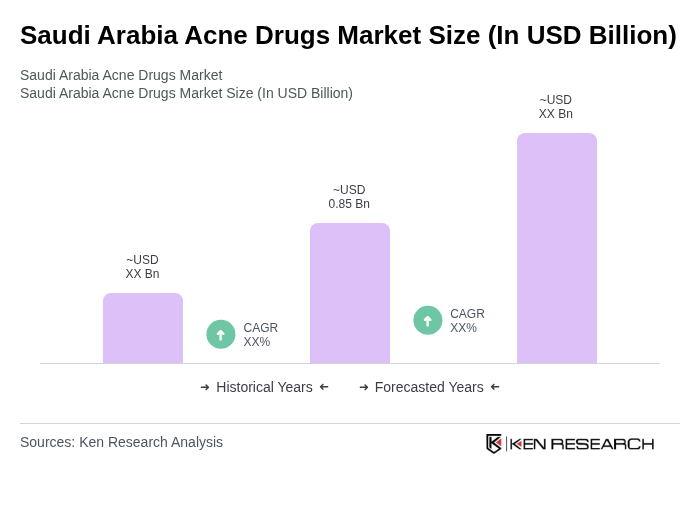
The Saudi Arabia Acne Drugs Market is valued at approximately USD 0.85 billion, reflecting a growing demand for effective acne treatments, particularly those that incorporate natural and halal-certified ingredients.

What makes us stand out is that our consultants follow Robust, Refine and Result (RRR) methodology. Robust for clear definitions, approaches and sanity checking, Refine for differentiating respondents' facts and opinions, and Result for presenting data with story.

We have set a benchmark in the industry by offering our clients with syndicated and customized market research reports featuring coverage of entire market as well as meticulous research and analyst insights.

While we don't replace traditional research, we flip the method upside down. Our dual approach of Top Bottom & Bottom Top ensures quality deliverable by not just verifying company fundamentals but also looking at the sector and macroeconomic factors.

With one step in the future, our research team constantly tries to show you the bigger picture. We help with some of the tough questions you may encounter along the way: How is the industry positioned? Best marketing channel? KPI's of competitors? By aligning every element, we help maximize success.

Our report gives you instant access to the answers and sources that other companies might choose to hide. We elaborate each steps of research methodology we have used and showcase you the sample size to earn your trust.

If you need any support, we are here! We pride ourselves on universe strength, data quality, and quick, friendly, and professional service.













