Region:Middle East
Author(s):Geetanshi
Product Code:KRAD1165
Pages:89
Published On:November 2025
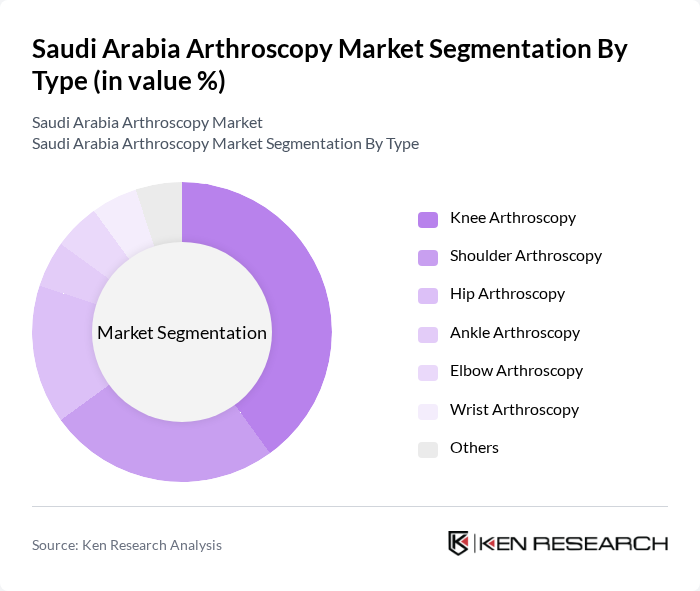
By Type:The market is segmented into various types of arthroscopy procedures, including knee, shoulder, hip, ankle, elbow, wrist, and others. Among these, knee arthroscopy is the most prevalent due to the high incidence of knee injuries and conditions such as osteoarthritis. The increasing awareness of the benefits of arthroscopic surgery, such as reduced recovery time and minimal scarring, drives demand for knee procedures. Additionally, advancements in surgical techniques and equipment have made knee arthroscopy more accessible and effective, further solidifying its dominance in the market.
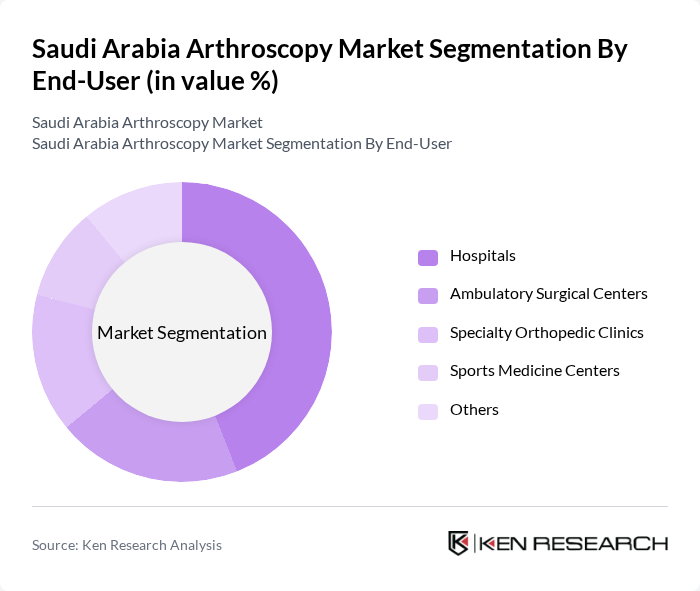
By End-User:The end-user segmentation includes hospitals, ambulatory surgical centers, specialty orthopedic clinics, sports medicine centers, and others. Hospitals are the leading end-users of arthroscopy services, primarily due to their comprehensive facilities and ability to handle complex cases. The trend towards outpatient procedures has also led to a rise in the use of ambulatory surgical centers, which offer convenience and cost-effectiveness. As patients increasingly prefer minimally invasive surgeries, the demand for specialized orthopedic clinics and sports medicine centers is also growing, contributing to the overall market expansion.
The Saudi Arabia Arthroscopy Market is characterized by a dynamic mix of regional and international players. Leading participants such as Stryker Corporation, Arthrex, Inc., Smith & Nephew plc, Johnson & Johnson (DePuy Synthes), Medtronic plc, Zimmer Biomet Holdings, Inc., ConMed Corporation, B. Braun Melsungen AG, NuVasive, Inc., Orthofix Medical Inc., KFx Medical Corporation, Aesculap, Inc., Medacta International SA, RTI Surgical Holdings, Inc., DJO Global, Inc., Karl Storz SE & Co. KG, Olympus Corporation, Smiths Medical (now part of ICU Medical, Inc.), Al Faisaliah Medical Systems (Saudi distributor), Gulf Medical Co. Ltd. (Saudi distributor) contribute to innovation, geographic expansion, and service delivery in this space.
The Saudi Arabia arthroscopy market is poised for significant growth as healthcare infrastructure expands and technological advancements continue. In future, the integration of robotics and telemedicine in surgical practices is expected to enhance patient outcomes and streamline procedures. Additionally, the increasing focus on outpatient care will likely lead to a rise in minimally invasive surgeries, making arthroscopy more accessible. These trends indicate a promising future for the market, driven by innovation and improved healthcare delivery systems.
| Segment | Sub-Segments |
|---|---|
| By Type | Knee Arthroscopy Shoulder Arthroscopy Hip Arthroscopy Ankle Arthroscopy Elbow Arthroscopy Wrist Arthroscopy Others |
| By End-User | Hospitals Ambulatory Surgical Centers Specialty Orthopedic Clinics Sports Medicine Centers Others |
| By Procedure Type | Diagnostic Arthroscopy Therapeutic Arthroscopy Revision Arthroscopy Others |
| By Region | Central Region (Riyadh) Eastern Region (Dammam, Al Khobar) Western Region (Jeddah, Makkah) Southern Region (Abha) Northern Region (Tabuk) |
| By Age Group | Pediatric Adult Geriatric |
| By Surgical Technique | Conventional Arthroscopy Robotic-Assisted Arthroscopy Computer-Assisted Arthroscopy Others |
| By Product Type | Arthroscopes Surgical Instruments Visualization Systems Fluid Management Systems Implants & Fixation Devices Others |
| Scope Item/Segment | Sample Size | Target Respondent Profiles |
|---|---|---|
| Orthopedic Surgeons | 60 | Consultant Surgeons, Surgical Specialists |
| Hospital Administrators | 50 | Chief Operating Officers, Procurement Managers |
| Medical Device Suppliers | 40 | Sales Representatives, Product Managers |
| Patients Post-Surgery | 45 | Recent Surgery Patients, Rehabilitation Specialists |
| Healthcare Policy Makers | 40 | Health Ministry Officials, Regulatory Bodies |
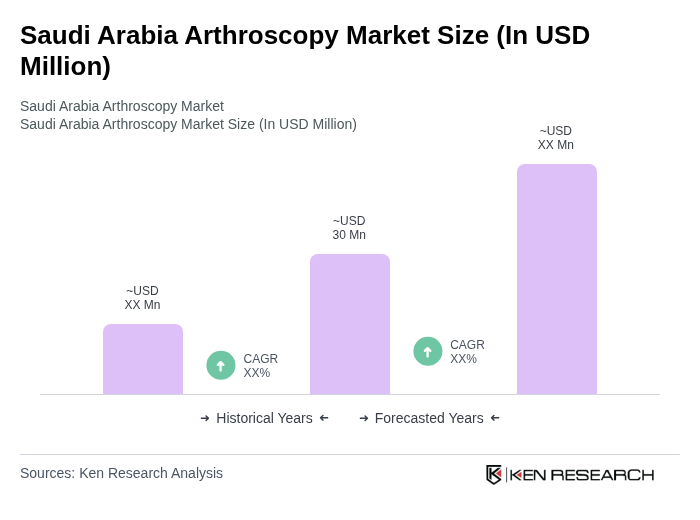
The Saudi Arabia Arthroscopy Market is valued at approximately USD 30 million, driven by the increasing prevalence of orthopedic disorders, advancements in arthroscopic technologies, and a rise in sports-related injuries, contributing to the demand for minimally invasive surgical procedures.

What makes us stand out is that our consultants follow Robust, Refine and Result (RRR) methodology. Robust for clear definitions, approaches and sanity checking, Refine for differentiating respondents' facts and opinions, and Result for presenting data with story.

We have set a benchmark in the industry by offering our clients with syndicated and customized market research reports featuring coverage of entire market as well as meticulous research and analyst insights.

While we don't replace traditional research, we flip the method upside down. Our dual approach of Top Bottom & Bottom Top ensures quality deliverable by not just verifying company fundamentals but also looking at the sector and macroeconomic factors.

With one step in the future, our research team constantly tries to show you the bigger picture. We help with some of the tough questions you may encounter along the way: How is the industry positioned? Best marketing channel? KPI's of competitors? By aligning every element, we help maximize success.

Our report gives you instant access to the answers and sources that other companies might choose to hide. We elaborate each steps of research methodology we have used and showcase you the sample size to earn your trust.

If you need any support, we are here! We pride ourselves on universe strength, data quality, and quick, friendly, and professional service.













