Region:Middle East
Author(s):Shubham
Product Code:KRAC1442
Pages:89
Published On:October 2025
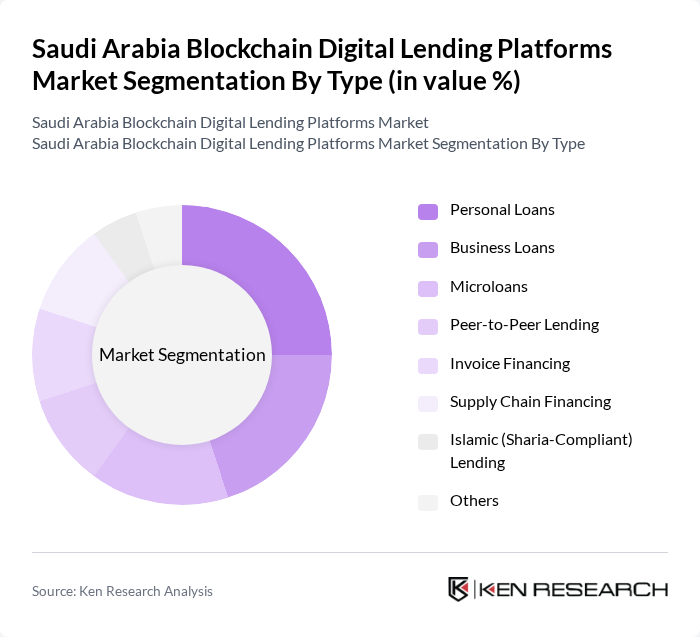
By Type:The market is segmented into various types of lending products, including Personal Loans, Business Loans, Microloans, Peer-to-Peer Lending, Invoice Financing, Supply Chain Financing, Islamic (Sharia-Compliant) Lending, and Others. Each of these segments addresses distinct consumer and business needs, reflecting the diverse preferences and financial requirements across Saudi Arabia’s digital economy. The prominence of Sharia-compliant lending and peer-to-peer models underscores the importance of regulatory alignment and innovation in product offerings .
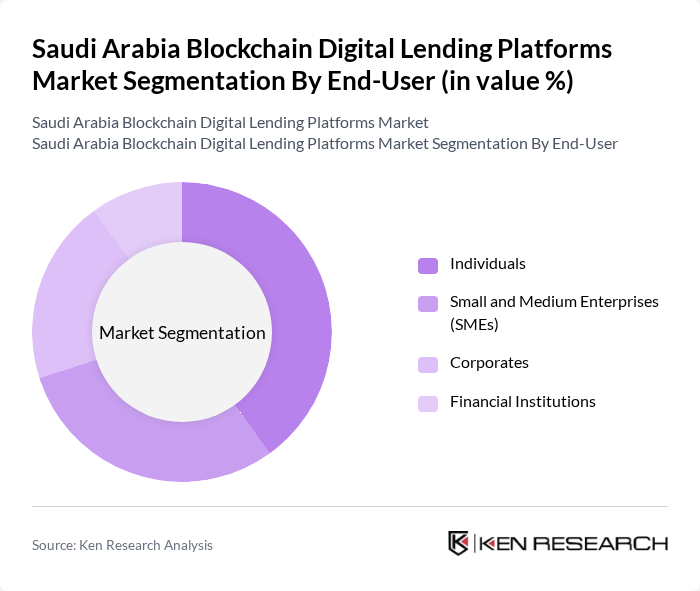
By End-User:The end-user segmentation includes Individuals, Small and Medium Enterprises (SMEs), Corporates, and Financial Institutions. Each segment has distinct requirements and preferences, influencing the types of digital lending products they utilize. Individuals and SMEs represent the largest user base, driven by increasing demand for accessible and flexible credit solutions, while corporates and financial institutions leverage digital lending for operational efficiency and portfolio diversification .
The Saudi Arabia Blockchain Digital Lending Platforms Market is characterized by a dynamic mix of regional and international players. Leading participants such as Raqamyah, Tamam, Forus, Manafa, Lendo, FinZey, Hala, Tamara, Tabby, Lean Technologies, Tweeq, BayanPay, HyperPay, PayTabs, STC Pay contribute to innovation, geographic expansion, and service delivery in this space.
The future of the blockchain digital lending market in Saudi Arabia appears promising, driven by technological advancements and increasing consumer acceptance. As regulatory frameworks solidify, more players are likely to enter the market, enhancing competition and innovation. The integration of artificial intelligence in credit scoring and risk assessment will further streamline lending processes. Additionally, the rise of decentralized finance (DeFi) solutions is expected to reshape traditional lending models, offering consumers more choices and flexibility in their financial transactions.
| Segment | Sub-Segments |
|---|---|
| By Type | Personal Loans Business Loans Microloans Peer-to-Peer Lending Invoice Financing Supply Chain Financing Islamic (Sharia-Compliant) Lending Others |
| By End-User | Individuals Small and Medium Enterprises (SMEs) Corporates Financial Institutions |
| By Application | Consumer Lending Business Financing Supply Chain & Trade Finance Agricultural Financing Real Estate Financing |
| By Distribution Channel | Online Platforms Mobile Applications API Integrations (Open Banking) Direct Sales |
| By Customer Segment | Retail Customers Institutional Customers High Net-Worth Individuals Unbanked/Underbanked |
| By Loan Size | Small Loans (? SAR 50,000) Medium Loans (SAR 50,001–500,000) Large Loans (> SAR 500,000) |
| By Policy Support | Government Subsidies Tax Incentives Regulatory Support SAMA Sandbox Participation Others |
| Scope Item/Segment | Sample Size | Target Respondent Profiles |
|---|---|---|
| Consumer Digital Lending Users | 100 | Individual Borrowers, Financial Advisors |
| Small Business Owners Utilizing Digital Lending | 60 | SME Owners, Financial Managers |
| Blockchain Technology Experts | 40 | Blockchain Developers, IT Consultants |
| Regulatory Bodies and Financial Authorities | 40 | Regulators, Compliance Officers |
| Investors in Fintech Startups | 50 | Venture Capitalists, Angel Investors |
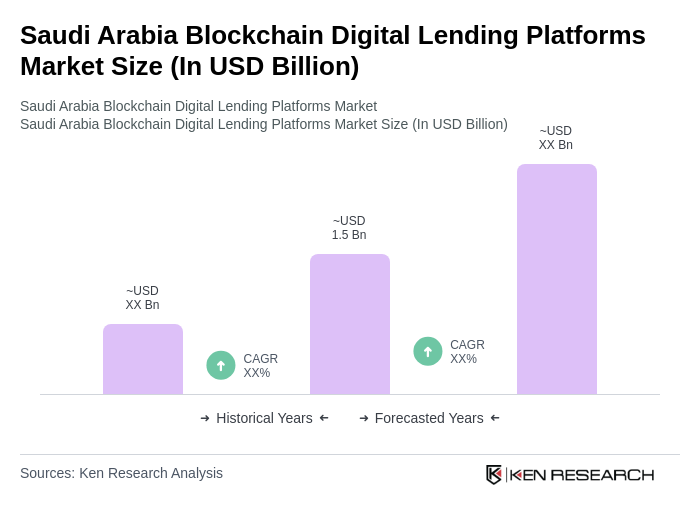
The Saudi Arabia Blockchain Digital Lending Platforms Market is valued at approximately USD 1.5 billion, reflecting significant growth driven by the adoption of blockchain technology in financial services and government initiatives under Vision 2030.

What makes us stand out is that our consultants follow Robust, Refine and Result (RRR) methodology. Robust for clear definitions, approaches and sanity checking, Refine for differentiating respondents' facts and opinions, and Result for presenting data with story.

We have set a benchmark in the industry by offering our clients with syndicated and customized market research reports featuring coverage of entire market as well as meticulous research and analyst insights.

While we don't replace traditional research, we flip the method upside down. Our dual approach of Top Bottom & Bottom Top ensures quality deliverable by not just verifying company fundamentals but also looking at the sector and macroeconomic factors.

With one step in the future, our research team constantly tries to show you the bigger picture. We help with some of the tough questions you may encounter along the way: How is the industry positioned? Best marketing channel? KPI's of competitors? By aligning every element, we help maximize success.

Our report gives you instant access to the answers and sources that other companies might choose to hide. We elaborate each steps of research methodology we have used and showcase you the sample size to earn your trust.

If you need any support, we are here! We pride ourselves on universe strength, data quality, and quick, friendly, and professional service.













