About the Report
Base Year 2024Saudi Arabia Breakfast Restaurants Market Overview
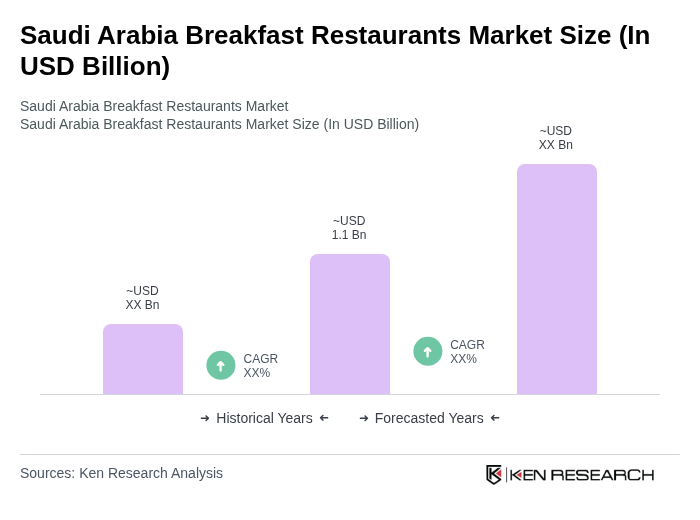
- The Saudi Arabia Breakfast Restaurants Market is valued at USD 1.1 billion, based on a five-year historical analysis of the organized food service sector and the share of breakfast-oriented formats within it. This growth is primarily driven by increasing urbanization, rising disposable incomes, and a strong shift towards out-of-home consumption as part of Vision 2030 lifestyle changes, which are boosting visits to cafés, quick service formats, and casual restaurants. The market has seen a significant shift in consumer preferences towards healthier, premium, and diverse breakfast options such as whole-grain bakery items, specialty coffee, protein-rich menus, and international breakfast concepts, further fueling expansion of breakfast-focused and café/bakery formats.
- Key cities dominating the market include Riyadh, Jeddah, and Dammam, which together account for a major share of the country’s organized food service and café traffic due to higher population density, higher incomes, and a concentration of modern retail and mixed-use developments. These cities are characterized by a high concentration of expatriates and a vibrant tourism and business travel sector supported by Vision 2030 initiatives, seasonal pilgrimage flows, and large-scale events, all of which boost demand for breakfast dining in hotels, cafés, and quick service chains. Additionally, the presence and ongoing expansion of major international chains and strong local brands in these urban centers, particularly in the quick service and café/bakery segments, enhances their market dominance in breakfast occasions.
- In 2023, the Saudi Food and Drug Authority issued and enforced the “Food Establishments Regulation”, under the authority of the Saudi Food and Drug Authority Law, setting binding requirements on licensing, food safety management systems, temperature control, traceability, and hygiene for restaurants, cafés, and similar outlets serving ready-to-eat food. This framework requires breakfast restaurants to comply with Hazard Analysis and Critical Control Point (HACCP)-based controls, maintain documented cleaning and disinfection programs, ensure staff food-safety training, and undergo regular official inspections as conditions for obtaining and renewing operating licenses. Such regulations are crucial for maintaining consumer trust, improving consistency of food quality and hygiene across breakfast formats, and supporting the premiumization of the breakfast dining experience in key urban markets.
Saudi Arabia Breakfast Restaurants Market Segmentation
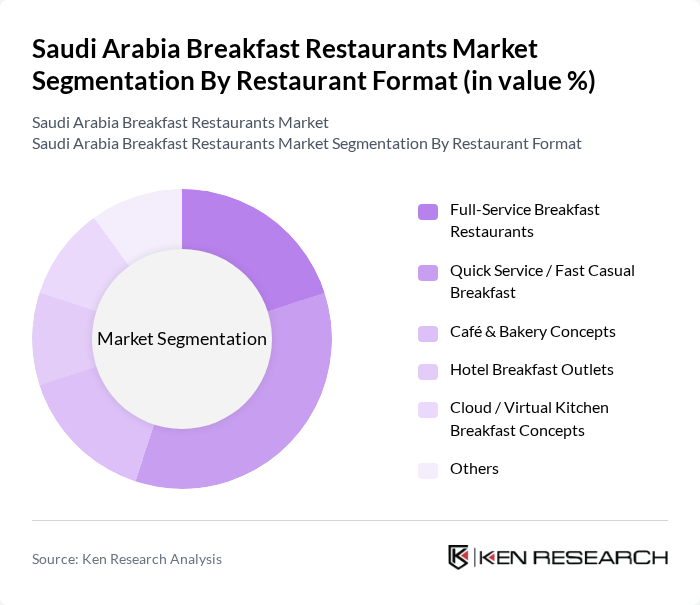
By Restaurant Format:The restaurant format segmentation includes various types of establishments catering to breakfast consumers. The subsegments are Full-Service Breakfast Restaurants, Quick Service / Fast Casual Breakfast, Café & Bakery Concepts, Hotel Breakfast Outlets, Cloud / Virtual Kitchen Breakfast Concepts, and Others. Among these, Quick Service / Fast Casual Breakfast is currently the leading subsegment in value terms, supported by the strong performance of quick service restaurants and fast-casual chains within the broader food service market, as they offer speed, standardized menus, and attractive price points for morning and on-the-go occasions. Café & Bakery Concepts are also rapidly gaining share, reflecting the Kingdom’s expanding coffee and café culture and growing demand for specialty coffee and bakery-led breakfast experiences.
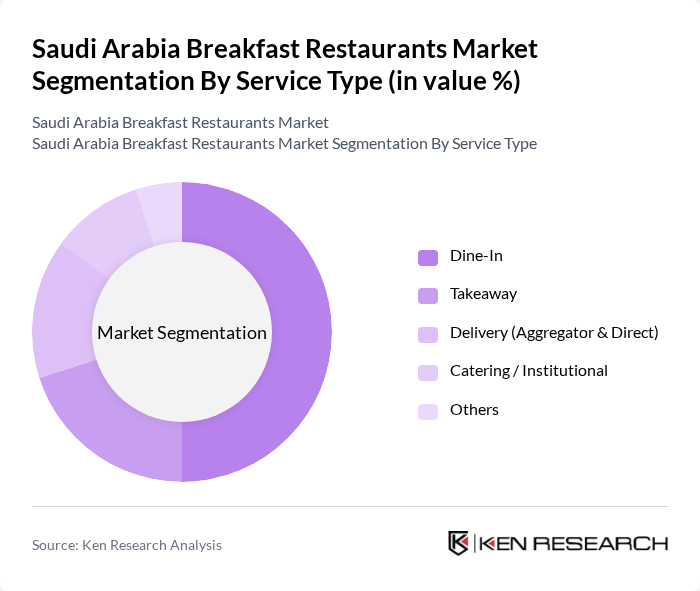
By Service Type:This segmentation focuses on the different service types offered by breakfast restaurants. The subsegments include Dine-In, Takeaway, Delivery (Aggregator & Direct), Catering / Institutional, and Others. Dine-In is the dominant service type, as many consumers continue to value the experience of enjoying breakfast in cafés, hotel outlets, and casual restaurants, which offer social interactions, ambiance, and extended stays, especially in major cities with strong café culture. At the same time, delivery and takeaway channels are expanding their role in breakfast through aggregators and cloud kitchens, driven by convenience, busy lifestyles, and the growing penetration of food delivery apps.
Saudi Arabia Breakfast Restaurants Market Competitive Landscape
The Saudi Arabia Breakfast Restaurants Market is characterized by a dynamic mix of regional and international players. Leading participants such as ALBAIK, Herfy Food Services, Kudu, McDonald's Saudi Arabia, Starbucks Saudi Arabia, Dunkin' Saudi Arabia, Tim Hortons Saudi Arabia, Café Bateel, Paul Bakery & Restaurant, Eggspectation, IHOP Saudi Arabia, The Cheesecake Factory, The Breakfast Club, Cinnabon Saudi Arabia, Crêpeaffaire contribute to innovation, geographic expansion, and service delivery in this space.
Saudi Arabia Breakfast Restaurants Market Industry Analysis
Growth Drivers
- Increasing Demand for Healthy Breakfast Options:The Saudi Arabian breakfast restaurant sector is witnessing a surge in demand for healthy options, driven by a growing awareness of nutrition. In future, the health food market in Saudi Arabia is projected to reach SAR 12 billion, reflecting a 20% increase from previous periods. This trend is supported by government initiatives promoting healthier lifestyles, as well as a rise in consumer spending on organic and nutritious food, which is expected to reach SAR 6 billion by the end of future.
- Rise in Urbanization and Lifestyle Changes:Urbanization in Saudi Arabia is accelerating, with over 85% of the population living in urban areas in future. This shift is leading to lifestyle changes that favor dining out, particularly for breakfast. The urban population is expected to increase by 2.5 million people annually, creating a larger customer base for breakfast restaurants. Additionally, the average household income in urban areas is projected to rise by 10% in future, further boosting spending on dining experiences.
- Growth of the Tourism Sector:The tourism sector in Saudi Arabia is set to expand significantly, with the government aiming to attract 120 million visitors in future. In future, tourism revenue is expected to reach SAR 60 billion, a 25% increase from previous periods. This influx of tourists is driving demand for diverse dining options, including breakfast restaurants that cater to both local and international tastes, thereby enhancing market growth opportunities in the sector.
Market Challenges
- High Competition Among Local and International Brands:The breakfast restaurant market in Saudi Arabia is highly competitive, with over 1,800 establishments vying for market share. Major international chains are expanding rapidly, increasing pressure on local brands. In future, it is estimated that competition will intensify, with a projected 15% increase in new restaurant openings. This saturation can lead to price wars and reduced profit margins for existing players, challenging their sustainability.
- Fluctuating Food Prices:The breakfast restaurant industry faces challenges due to fluctuating food prices, which are influenced by global supply chain disruptions and local agricultural conditions. In future, food inflation in Saudi Arabia is expected to reach 8%, impacting the cost of ingredients. This volatility can strain profit margins for restaurants, forcing them to either absorb costs or pass them on to consumers, potentially affecting customer loyalty and sales.
Saudi Arabia Breakfast Restaurants Market Future Outlook
The future of the breakfast restaurant market in Saudi Arabia appears promising, driven by evolving consumer preferences and a robust economic environment. As urbanization continues, restaurants that adapt to the growing demand for healthy and diverse breakfast options will likely thrive. Additionally, leveraging technology for enhanced customer experiences, such as mobile ordering and personalized menus, will be crucial. The integration of sustainability practices will also resonate with environmentally conscious consumers, further shaping the market landscape in the coming years.
Market Opportunities
- Introduction of Innovative Breakfast Menus:There is a significant opportunity for breakfast restaurants to introduce innovative menus that cater to diverse dietary preferences, including vegan and gluten-free options. In future, the demand for such alternatives is expected to grow by 30%, driven by changing consumer habits. Restaurants that capitalize on this trend can attract a broader customer base and enhance their market position.
- Collaborations with Local Farmers and Suppliers:Establishing partnerships with local farmers can enhance the freshness and quality of menu offerings while supporting the local economy. In future, the farm-to-table movement is projected to gain traction, with a 35% increase in consumer preference for locally sourced ingredients. This approach not only appeals to health-conscious diners but also strengthens community ties, fostering brand loyalty.
Scope of the Report
| Segment | Sub-Segments |
|---|---|
| By Restaurant Format | Full-Service Breakfast Restaurants Quick Service / Fast Casual Breakfast Café & Bakery Concepts Hotel Breakfast Outlets Cloud / Virtual Kitchen Breakfast Concepts Others |
| By Service Type | Dine-In Takeaway Delivery (Aggregator & Direct) Catering / Institutional Others |
| By Consumer Segment | Families Young Professionals Tourists & Business Travelers Students Blue-Collar & Shift Workers Others |
| By City Tier / Location | Tier-1 Cities (Riyadh, Jeddah, Dammam/Khobar) Tier-2 Cities Pilgrimage Cities (Makkah, Madinah) Tourist & Leisure Destinations (e.g., NEOM, AlUla, Red Sea) Highway & Transit Locations (Airports, Malls, Fuel Stations) Others |
| By Average Spend per Person | Value / Budget (? SAR 25) Mid-Range (SAR 26–60) Premium (SAR 61–120) Luxury (? SAR 121) Others |
| By Cuisine Type | Traditional Saudi & Middle Eastern Western / International Asian Fusion & Contemporary Specialty Concepts (Vegan, Health-Focused, etc.) Others |
| By Ownership Type | International Chains Regional & Local Chains Independent Restaurants & Cafés |
Key Target Audience
Investors and Venture Capitalist Firms
Government and Regulatory Bodies (e.g., Saudi Food and Drug Authority, Ministry of Commerce)
Manufacturers and Producers of Breakfast Food Products
Distributors and Retailers of Food and Beverage Products
Franchise Operators and Business Owners
Technology Providers for Restaurant Management Systems
Industry Associations (e.g., Saudi Restaurant Association)
Financial Institutions and Banks
Players Mentioned in the Report:
ALBAIK
Herfy Food Services
Kudu
McDonald's Saudi Arabia
Starbucks Saudi Arabia
Dunkin' Saudi Arabia
Tim Hortons Saudi Arabia
Cafe Bateel
Paul Bakery & Restaurant
Eggspectation
IHOP Saudi Arabia
The Cheesecake Factory
The Breakfast Club
Cinnabon Saudi Arabia
Crepeaffaire
Table of Contents
Market Assessment Phase
1. Executive Summary and Approach
2. Saudi Arabia Breakfast Restaurants Market Overview
2.1 Key Insights and Strategic Recommendations
2.2 Saudi Arabia Breakfast Restaurants Market Overview
2.3 Definition and Scope
2.4 Evolution of Market Ecosystem
2.5 Timeline of Key Regulatory Milestones
2.6 Value Chain & Stakeholder Mapping
2.7 Business Cycle Analysis
2.8 Policy & Incentive Landscape
3. Saudi Arabia Breakfast Restaurants Market Analysis
3.1 Growth Drivers
3.1.1 Increasing Demand for Healthy Breakfast Options
3.1.2 Rise in Urbanization and Lifestyle Changes
3.1.3 Growth of the Tourism Sector
3.1.4 Expansion of Delivery and Takeaway Services
3.2 Market Challenges
3.2.1 High Competition Among Local and International Brands
3.2.2 Fluctuating Food Prices
3.2.3 Regulatory Compliance and Licensing Issues
3.2.4 Cultural Preferences and Dietary Restrictions
3.3 Market Opportunities
3.3.1 Introduction of Innovative Breakfast Menus
3.3.2 Collaborations with Local Farmers and Suppliers
3.3.3 Expansion into Underserved Regions
3.3.4 Leveraging Technology for Enhanced Customer Experience
3.4 Market Trends
3.4.1 Growing Popularity of Brunch Culture
3.4.2 Increased Focus on Sustainability and Organic Ingredients
3.4.3 Rise of Food Delivery Apps
3.4.4 Integration of Health and Wellness in Menu Offerings
3.5 Government Regulation
3.5.1 Food Safety Standards and Regulations
3.5.2 Licensing and Permitting Requirements
3.5.3 Health and Hygiene Regulations
3.5.4 Employment and Labor Laws
4. SWOT Analysis
5. Stakeholder Analysis
6. Porter's Five Forces Analysis
7. Saudi Arabia Breakfast Restaurants Market Market Size, 2019-2024
7.1 By Value
7.2 By Volume
7.3 By Average Selling Price
8. Saudi Arabia Breakfast Restaurants Market Segmentation
8.1 By Restaurant Format
8.1.1 Full-Service Breakfast Restaurants
8.1.2 Quick Service / Fast Casual Breakfast
8.1.3 Café & Bakery Concepts
8.1.4 Hotel Breakfast Outlets
8.1.5 Cloud / Virtual Kitchen Breakfast Concepts
8.1.6 Others
8.2 By Service Type
8.2.1 Dine-In
8.2.2 Takeaway
8.2.3 Delivery (Aggregator & Direct)
8.2.4 Catering / Institutional
8.2.5 Others
8.3 By Consumer Segment
8.3.1 Families
8.3.2 Young Professionals
8.3.3 Tourists & Business Travelers
8.3.4 Students
8.3.5 Blue-Collar & Shift Workers
8.3.6 Others
8.4 By City Tier / Location
8.4.1 Tier-1 Cities (Riyadh, Jeddah, Dammam/Khobar)
8.4.2 Tier-2 Cities
8.4.3 Pilgrimage Cities (Makkah, Madinah)
8.4.4 Tourist & Leisure Destinations (e.g., NEOM, AlUla, Red Sea)
8.4.5 Highway & Transit Locations (Airports, Malls, Fuel Stations)
8.4.6 Others
8.5 By Average Spend per Person
8.5.1 Value / Budget (? SAR 25)
8.5.2 Mid-Range (SAR 26–60)
8.5.3 Premium (SAR 61–120)
8.5.4 Luxury (? SAR 121)
8.5.5 Others
8.6 By Cuisine Type
8.6.1 Traditional Saudi & Middle Eastern
8.6.2 Western / International
8.6.3 Asian
8.6.4 Fusion & Contemporary
8.6.5 Specialty Concepts (Vegan, Health-Focused, etc.)
8.6.6 Others
8.7 By Ownership Type
8.7.1 International Chains
8.7.2 Regional & Local Chains
8.7.3 Independent Restaurants & Cafés
9. Saudi Arabia Breakfast Restaurants Market Competitive Analysis
9.1 Market Share of Key Players
9.2 Cross Comparison of Key Players
9.2.1 Company Name
9.2.2 Group Size (Large, Medium, or Small as per industry convention)
9.2.3 Number of Breakfast-Focused Outlets in Saudi Arabia
9.2.4 Share of Breakfast Revenue in Total Sales (%)
9.2.5 Revenue Growth Rate (Breakfast Segment)
9.2.6 Same-Store Sales Growth (Breakfast Daypart)
9.2.7 Average Transaction Value / Average Check (SAR)
9.2.8 Customer Footfall per Day / per Outlet
9.2.9 Delivery Order Mix (% of Total Breakfast Orders)
9.2.10 Table Turnover Rate During Breakfast Hours
9.2.11 Market Penetration (Cities / Regions Covered)
9.2.12 Digital Engagement Metrics (App Users, Loyalty Members, etc.)
9.3 SWOT Analysis of Top Players
9.4 Pricing Analysis
9.5 Detailed Profile of Major Companies
9.5.1 ALBAIK
9.5.2 Herfy Food Services
9.5.3 Kudu
9.5.4 McDonald's Saudi Arabia
9.5.5 Starbucks Saudi Arabia
9.5.6 Dunkin' Saudi Arabia
9.5.7 Tim Hortons Saudi Arabia
9.5.8 Café Bateel
9.5.9 Paul Bakery & Restaurant
9.5.10 Eggspectation
9.5.11 IHOP Saudi Arabia
9.5.12 The Cheesecake Factory
9.5.13 The Breakfast Club
9.5.14 Cinnabon Saudi Arabia
9.5.15 Crêpeaffaire
10. Saudi Arabia Breakfast Restaurants Market End-User Analysis
10.1 Procurement Behavior of Key Ministries
10.1.1 Ministry of Health
10.1.2 Ministry of Education
10.1.3 Ministry of Tourism
10.1.4 Ministry of Commerce
10.2 Corporate Spend on Infrastructure & Energy
10.2.1 Corporate Dining Services
10.2.2 Employee Wellness Programs
10.3 Pain Point Analysis by End-User Category
10.3.1 Quality of Ingredients
10.3.2 Pricing Concerns
10.3.3 Availability of Diverse Options
10.3.4 Service Speed
10.4 User Readiness for Adoption
10.4.1 Awareness of Breakfast Options
10.4.2 Willingness to Try New Cuisines
10.5 Post-Deployment ROI and Use Case Expansion
10.5.1 Customer Feedback Mechanisms
10.5.2 Menu Innovation Impact
11. Saudi Arabia Breakfast Restaurants Market Future Size, 2025-2030
11.1 By Value
11.2 By Volume
11.3 By Average Selling Price
Go-To-Market Strategy Phase
1. Whitespace Analysis + Business Model Canvas
1.1 Market Gaps Identification
1.2 Business Model Development
2. Marketing and Positioning Recommendations
2.1 Branding Strategies
2.2 Product USPs
3. Distribution Plan
3.1 Urban Retail vs Rural NGO Tie-Ups
4. Channel & Pricing Gaps
4.1 Underserved Routes
4.2 Pricing Bands
5. Unmet Demand & Latent Needs
5.1 Category Gaps
5.2 Consumer Segments
6. Customer Relationship
6.1 Loyalty Programs
6.2 After-Sales Service
7. Value Proposition
7.1 Sustainability
7.2 Integrated Supply Chains
8. Key Activities
8.1 Regulatory Compliance
8.2 Branding
8.3 Distribution Setup
9. Entry Strategy Evaluation
9.1 Domestic Market Entry Strategy
9.1.1 Product Mix
9.1.2 Pricing Band
9.1.3 Packaging
9.2 Export Entry Strategy
9.2.1 Target Countries
9.2.2 Compliance Roadmap
10. Entry Mode Assessment
10.1 JV
10.2 Greenfield
10.3 M&A
10.4 Distributor Model
11. Capital and Timeline Estimation
11.1 Capital Requirements
11.2 Timelines
12. Control vs Risk Trade-Off
12.1 Ownership vs Partnerships
13. Profitability Outlook
13.1 Breakeven Analysis
13.2 Long-Term Sustainability
14. Potential Partner List
14.1 Distributors
14.2 JVs
14.3 Acquisition Targets
15. Execution Roadmap
15.1 Phased Plan for Market Entry
15.1.1 Market Setup
15.1.2 Market Entry
15.1.3 Growth Acceleration
15.1.4 Scale & Stabilize
15.2 Key Activities and Milestones
15.2.1 Milestone Planning
Research Methodology
Phase 1: Approach1
Desk Research
- Analysis of industry reports from local and international market research firms
- Review of government publications and statistics related to the food and beverage sector in Saudi Arabia
- Examination of consumer behavior studies and trends in dining preferences specific to breakfast restaurants
Primary Research
- Interviews with owners and managers of popular breakfast restaurants across major cities
- Surveys conducted with customers to gather insights on preferences, spending habits, and dining experiences
- Focus group discussions with food industry experts and culinary professionals to understand market dynamics
Validation & Triangulation
- Cross-validation of findings through multiple data sources, including sales data and consumer feedback
- Triangulation of insights from primary interviews with secondary data trends
- Sanity checks through expert panel reviews to ensure data accuracy and relevance
Phase 2: Market Size Estimation1
Top-down Assessment
- Estimation of the overall food service market size in Saudi Arabia, focusing on breakfast segments
- Analysis of demographic data to identify target consumer segments for breakfast restaurants
- Incorporation of economic indicators and consumer spending patterns on dining out
Bottom-up Modeling
- Collection of sales data from a sample of breakfast restaurants to establish average revenue per establishment
- Estimation of the number of breakfast restaurants based on industry growth rates and market entry trends
- Calculation of market size using volume of meals served and average price points
Forecasting & Scenario Analysis
- Multi-factor regression analysis incorporating population growth, urbanization rates, and tourism influx
- Scenario modeling based on potential changes in consumer preferences and economic conditions
- Development of baseline, optimistic, and pessimistic forecasts for the next five years
Phase 3: CATI Sample Composition1
| Scope Item/Segment | Sample Size | Target Respondent Profiles |
|---|---|---|
| Breakfast Restaurant Owners | 60 | Restaurant Owners, Franchise Operators |
| Breakfast Consumers | 120 | Regular Diners, Occasional Visitors |
| Culinary Experts | 40 | Chefs, Food Critics, Industry Consultants |
| Food and Beverage Suppliers | 70 | Suppliers, Distributors, Importers |
| Market Analysts | 40 | Market Researchers, Economic Analysts |
Frequently Asked Questions
What is the current value of the Saudi Arabia Breakfast Restaurants Market?
The Saudi Arabia Breakfast Restaurants Market is valued at approximately USD 1.1 billion, reflecting a significant growth trend driven by urbanization, rising disposable incomes, and a shift towards out-of-home dining experiences as part of Vision 2030 lifestyle changes.
Which cities dominate the Saudi Arabia Breakfast Restaurants Market?
What are the main restaurant formats in the Saudi Arabia Breakfast Restaurants Market?
How has consumer preference shifted in the Saudi Arabia Breakfast Restaurants Market?
Other Regional/Country Reports
Other Adjacent Reports
Singapore Coffee Shop Market
Vietnam bakery products market size, share, growth drivers, trends, opportunities & forecast 2025–2030India Quick Service Restaurant Market Outlook to 2030South Africa Food Delivery Services Market
Belgium Hospitality Services Market
Germany Healthy Food Options Market
Japan Tourism Dining Market
Oman Casual Dining Market
APAC cloud kitchen market size, share, growth drivers, trends, opportunities & forecast 2025–2030Vietnam Food Safety Equipment Market
Why Buy From Us?

What makes us stand out is that our consultants follow Robust, Refine and Result (RRR) methodology. Robust for clear definitions, approaches and sanity checking, Refine for differentiating respondents' facts and opinions, and Result for presenting data with story.

We have set a benchmark in the industry by offering our clients with syndicated and customized market research reports featuring coverage of entire market as well as meticulous research and analyst insights.

While we don't replace traditional research, we flip the method upside down. Our dual approach of Top Bottom & Bottom Top ensures quality deliverable by not just verifying company fundamentals but also looking at the sector and macroeconomic factors.

With one step in the future, our research team constantly tries to show you the bigger picture. We help with some of the tough questions you may encounter along the way: How is the industry positioned? Best marketing channel? KPI's of competitors? By aligning every element, we help maximize success.

Our report gives you instant access to the answers and sources that other companies might choose to hide. We elaborate each steps of research methodology we have used and showcase you the sample size to earn your trust.

If you need any support, we are here! We pride ourselves on universe strength, data quality, and quick, friendly, and professional service.