About the Report
Base Year 2024Saudi Arabia Business Travel Market Overview
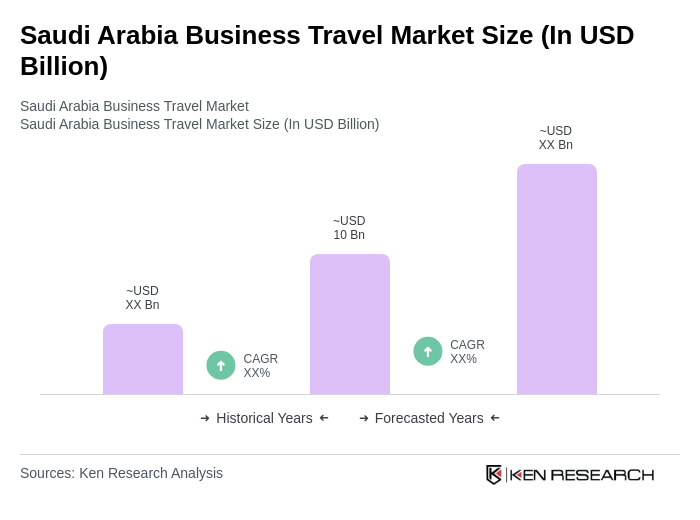
- The Saudi Arabia Business Travel Market is valued at USD 10 billion, based on a five-year historical analysis. This growth is primarily driven by the country’s economic diversification under Vision 2030, increased foreign direct investment, and the rapid expansion of the tourism and hospitality sector. The surge in corporate travel activities, alongside a significant rise in international events, technology sector collaborations, and large-scale infrastructure projects, has further accelerated market expansion. Key drivers include the influx of global consultants and executives for giga-projects such as NEOM, Qiddiya, and the Red Sea Project, as well as the growing need for in-person business engagement in finance, oil and gas, and technology sectors .
- Key cities dominating the Saudi Arabia Business Travel Market include Riyadh, Jeddah, and Dammam. Riyadh functions as the political and economic center, attracting multinational corporations, government agencies, and hosting major conferences. Jeddah, strategically positioned as a gateway for pilgrims and international visitors, is a hub for global events and exhibitions. Dammam remains a critical center for the oil and gas industry, with ongoing business travel demand driven by energy sector activities and regional headquarters expansion .
- The “Regulations for Issuing Visit Visas for Business” (2023) issued by the Ministry of Foreign Affairs streamline visa processes for foreign business travelers, introducing simplified application requirements, digital processing, and multi-entry options. This regulation is designed to facilitate easier access for international business professionals, promote increased foreign investment, and support participation in local business activities by reducing administrative barriers and expediting entry for corporate visitors.
Saudi Arabia Business Travel Market Segmentation
By Type:
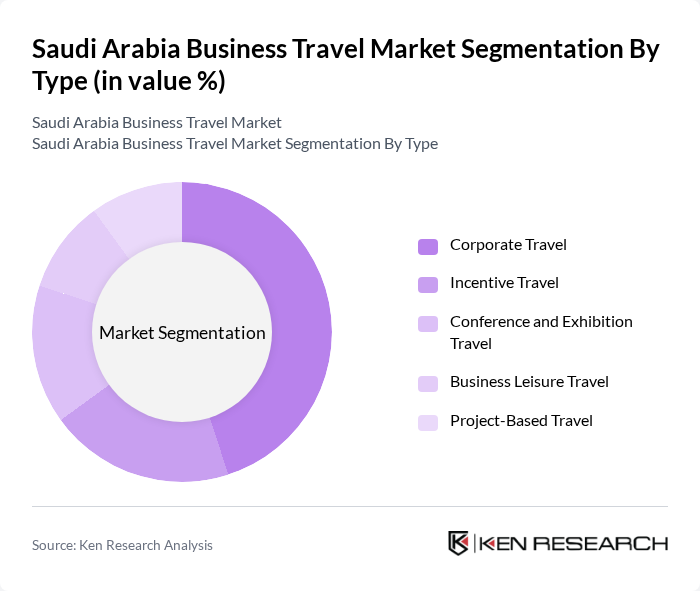
The business travel market in Saudi Arabia is segmented into Corporate Travel, Incentive Travel, Conference and Exhibition Travel, Business Leisure Travel, and Project-Based Travel. Corporate Travel is the leading sub-segment, driven by the increasing number of regional headquarters, multinational operations, and project-based assignments in sectors such as energy, technology, and finance. The demand for travel related to meetings, negotiations, and corporate events has surged, reflecting the importance of face-to-face engagement for trust-building and efficient project execution. Incentive Travel remains significant, as organizations use travel rewards to enhance employee performance and retention, further supporting market growth .
By End-User:
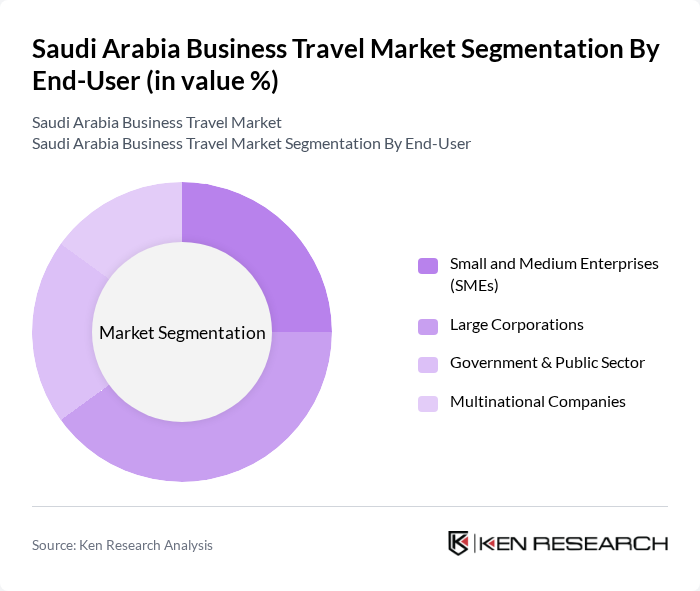
The end-user segmentation of the business travel market includes Small and Medium Enterprises (SMEs), Large Corporations, Government & Public Sector, and Multinational Companies. Large Corporations dominate this segment, reflecting their extensive travel requirements for global operations, project management, and executive mobility. SMEs are increasingly active, leveraging business travel to expand market reach and establish international partnerships. Government and public sector travel is driven by official missions, policy forums, and international collaboration, while multinational companies use business travel to coordinate cross-border operations and support regional expansion .
Saudi Arabia Business Travel Market Competitive Landscape
The Saudi Arabia Business Travel Market is characterized by a dynamic mix of regional and international players. Leading participants such as Saudi Arabian Airlines (Saudia), Almosafer, Kanoo Travel, Dnata, Riyadh Travel and Tourism Company, Al Tayyar Travel Group (Seera Group), ITL World, Al Fursan Travel & Tourism, Al Rajhi Aviation, Al Khalidiah Tourism, BCD Travel, American Express Global Business Travel, FCM Travel Solutions, Egencia, and Travelport contribute to innovation, geographic expansion, and service delivery in this space.
Saudi Arabia Business Travel Market Industry Analysis
Growth Drivers
- Economic Diversification Initiatives:Saudi Arabia's Vision 2030 aims to reduce dependency on oil, targeting a non-oil GDP growth of 4.5% in future. The government is investing approximately $500 billion in various sectors, including tourism and entertainment, which are expected to enhance business travel. This diversification is crucial as it creates new opportunities for international business engagements, thereby increasing the demand for business travel services across the region.
- Increased Foreign Investment:In future, foreign direct investment (FDI) inflows are projected to reach $20 billion, driven by reforms that enhance the business environment. The Saudi Arabian General Investment Authority (SAGIA) has streamlined processes, attracting multinational corporations. This influx of investment not only boosts local economies but also necessitates increased business travel for meetings, negotiations, and project management, significantly impacting the travel market positively.
- Enhanced Connectivity and Infrastructure:The Saudi government is investing $30 billion in infrastructure projects, including the expansion of airports and the development of high-speed rail networks. In future, the number of international flights is expected to increase by 15%, improving access to major business hubs. Enhanced connectivity facilitates smoother travel for business professionals, thereby driving growth in the business travel sector as companies seek efficient travel solutions.
Market Challenges
- Regulatory Compliance Issues:Navigating the complex regulatory landscape in Saudi Arabia poses significant challenges for businesses. In future, compliance costs are estimated to rise by 10% due to stricter regulations on foreign investments and business operations. Companies must invest in legal expertise to ensure adherence, which can deter potential business travelers and increase operational costs, ultimately impacting the growth of the business travel market.
- Cultural Sensitivity in Business Practices:Saudi Arabia's unique cultural norms require foreign business travelers to adapt their practices significantly. In future, 60% of international business travelers report challenges in understanding local customs, which can lead to misunderstandings and hinder negotiations. This cultural barrier can deter potential business engagements, affecting the overall demand for business travel services in the region.
Saudi Arabia Business Travel Market Future Outlook
The Saudi Arabia business travel market is poised for significant transformation, driven by ongoing economic diversification and infrastructure enhancements. As the country continues to attract foreign investments and develop its tourism sector, business travel is expected to flourish. The rise of digital solutions and a focus on health and safety will further shape travel experiences. Companies are likely to adopt more flexible travel policies, accommodating remote work trends while ensuring compliance with evolving regulations, thus fostering a robust business travel environment.
Market Opportunities
- Growth in MICE (Meetings, Incentives, Conferences, Exhibitions):The MICE sector is projected to grow significantly, with an estimated 1,200 events planned in future. This growth is supported by government initiatives to promote Saudi Arabia as a global business hub, creating opportunities for increased business travel as companies seek to participate in these events, enhancing networking and collaboration.
- Digital Transformation in Travel Services:The adoption of digital tools in travel management is expected to increase by 25% in future. Companies are investing in AI-driven solutions to streamline booking processes and enhance traveler experiences. This digital shift presents opportunities for travel service providers to innovate and cater to the evolving needs of business travelers, ultimately driving market growth.
Scope of the Report
| Segment | Sub-Segments |
|---|---|
| By Type | Corporate Travel Incentive Travel Conference and Exhibition Travel Business Leisure Travel Project-Based Travel |
| By End-User | Small and Medium Enterprises (SMEs) Large Corporations Government & Public Sector Multinational Companies |
| By Travel Purpose | Client Meetings & Negotiations Training, Workshops & Seminars Conferences & Exhibitions (MICE) Site Visits & Project Management |
| By Service Type | Travel Management Services Accommodation & Hospitality Services Transportation (Air, Rail, Road) Event & Meeting Management Services |
| By Booking Channel | Online Travel Agencies (OTAs) Direct Corporate Booking Travel Management Companies (TMCs) In-house Corporate Travel Departments |
| By Duration of Stay | Short-term (1-7 days) Medium-term (8-30 days) Long-term (Over 30 days) |
| By Region | Central Region (Riyadh) Eastern Region (Dammam, Khobar) Western Region (Jeddah, Makkah, Madinah) Southern Region Northern Region |
Key Target Audience
Investors and Venture Capitalist Firms
Government and Regulatory Bodies (e.g., Saudi Arabian General Investment Authority, Ministry of Tourism)
Corporate Travel Managers
Travel Management Companies
Airlines and Hospitality Providers
Event Organizers and Conference Planners
Tourism Boards and Promotion Agencies
Logistics and Transportation Companies
Players Mentioned in the Report:
Saudi Arabian Airlines (Saudia)
Almosafer
Kanoo Travel
Dnata
Riyadh Travel and Tourism Company
Al Tayyar Travel Group (Seera Group)
ITL World
Al Fursan Travel & Tourism
Al Rajhi Aviation
Al Khalidiah Tourism
BCD Travel
American Express Global Business Travel
FCM Travel Solutions
Egencia
Travelport
Table of Contents
Market Assessment Phase
1. Executive Summary and Approach
2. Saudi Arabia Business Travel Market Overview
2.1 Key Insights and Strategic Recommendations
2.2 Saudi Arabia Business Travel Market Overview
2.3 Definition and Scope
2.4 Evolution of Market Ecosystem
2.5 Timeline of Key Regulatory Milestones
2.6 Value Chain & Stakeholder Mapping
2.7 Business Cycle Analysis
2.8 Policy & Incentive Landscape
3. Saudi Arabia Business Travel Market Analysis
3.1 Growth Drivers
3.1.1 Economic Diversification Initiatives
3.1.2 Increased Foreign Investment
3.1.3 Expansion of Business Hubs
3.1.4 Enhanced Connectivity and Infrastructure
3.2 Market Challenges
3.2.1 Regulatory Compliance Issues
3.2.2 Cultural Sensitivity in Business Practices
3.2.3 Fluctuating Oil Prices
3.2.4 Competition from Regional Markets
3.3 Market Opportunities
3.3.1 Growth in MICE (Meetings, Incentives, Conferences, Exhibitions)
3.3.2 Digital Transformation in Travel Services
3.3.3 Sustainable Travel Initiatives
3.3.4 Development of Luxury Business Travel Services
3.4 Market Trends
3.4.1 Rise of Remote Work and Hybrid Models
3.4.2 Increased Focus on Health and Safety
3.4.3 Adoption of AI and Automation in Travel Management
3.4.4 Growth of Localized Travel Solutions
3.5 Government Regulation
3.5.1 Visa Reforms for Business Travelers
3.5.2 Tax Incentives for Business Investments
3.5.3 Regulations on Travel Safety Standards
3.5.4 Policies Supporting Sustainable Tourism
4. SWOT Analysis
5. Stakeholder Analysis
6. Porter's Five Forces Analysis
7. Saudi Arabia Business Travel Market Market Size, 2019-2024
7.1 By Value
7.2 By Volume
7.3 By Average Selling Price
8. Saudi Arabia Business Travel Market Segmentation
8.1 By Type
8.1.1 Corporate Travel
8.1.2 Incentive Travel
8.1.3 Conference and Exhibition Travel
8.1.4 Business Leisure Travel
8.1.5 Project-Based Travel
8.2 By End-User
8.2.1 Small and Medium Enterprises (SMEs)
8.2.2 Large Corporations
8.2.3 Government & Public Sector
8.2.4 Multinational Companies
8.3 By Travel Purpose
8.3.1 Client Meetings & Negotiations
8.3.2 Training, Workshops & Seminars
8.3.3 Conferences & Exhibitions (MICE)
8.3.4 Site Visits & Project Management
8.4 By Service Type
8.4.1 Travel Management Services
8.4.2 Accommodation & Hospitality Services
8.4.3 Transportation (Air, Rail, Road)
8.4.4 Event & Meeting Management Services
8.5 By Booking Channel
8.5.1 Online Travel Agencies (OTAs)
8.5.2 Direct Corporate Booking
8.5.3 Travel Management Companies (TMCs)
8.5.4 In-house Corporate Travel Departments
8.6 By Duration of Stay
8.6.1 Short-term (1-7 days)
8.6.2 Medium-term (8-30 days)
8.6.3 Long-term (Over 30 days)
8.7 By Region
8.7.1 Central Region (Riyadh)
8.7.2 Eastern Region (Dammam, Khobar)
8.7.3 Western Region (Jeddah, Makkah, Madinah)
8.7.4 Southern Region
8.7.5 Northern Region
9. Saudi Arabia Business Travel Market Competitive Analysis
9.1 Market Share of Key Players
9.2 Cross Comparison of Key Players
9.2.1 Company Name
9.2.2 Company Size (Large, Medium, Small)
9.2.3 Annual Revenue from Business Travel Segment
9.2.4 Number of Corporate Clients
9.2.5 Market Share (%)
9.2.6 Year-on-Year Revenue Growth (%)
9.2.7 Average Booking Value per Trip
9.2.8 Customer Retention Rate (%)
9.2.9 Customer Satisfaction (NPS or Equivalent)
9.2.10 Digital Adoption Rate (%)
9.2.11 Geographic Coverage (Domestic/International)
9.2.12 Service Portfolio Breadth
9.3 SWOT Analysis of Top Players
9.4 Pricing Analysis
9.5 Detailed Profile of Major Companies
9.5.1 Saudi Arabian Airlines (Saudia)
9.5.2 Almosafer
9.5.3 Kanoo Travel
9.5.4 Dnata
9.5.5 Riyadh Travel and Tourism Company
9.5.6 Al Tayyar Travel Group (Seera Group)
9.5.7 ITL World
9.5.8 Al Fursan Travel & Tourism
9.5.9 Al Rajhi Aviation
9.5.10 Al Khalidiah Tourism
9.5.11 BCD Travel
9.5.12 American Express Global Business Travel
9.5.13 FCM Travel Solutions
9.5.14 Egencia
9.5.15 Travelport
10. Saudi Arabia Business Travel Market End-User Analysis
10.1 Procurement Behavior of Key Ministries
10.1.1 Ministry of Finance
10.1.2 Ministry of Commerce
10.1.3 Ministry of Tourism
10.2 Corporate Spend on Infrastructure & Energy
10.2.1 Investment in Business Hubs
10.2.2 Spending on Transportation Infrastructure
10.2.3 Budget Allocation for Conferences
10.3 Pain Point Analysis by End-User Category
10.3.1 Cost Management Challenges
10.3.2 Compliance with Local Regulations
10.3.3 Quality of Service Issues
10.4 User Readiness for Adoption
10.4.1 Technology Adoption Levels
10.4.2 Training and Development Needs
10.5 Post-Deployment ROI and Use Case Expansion
10.5.1 Measurement of Travel Efficiency
10.5.2 Expansion into New Markets
11. Saudi Arabia Business Travel Market Future Size, 2025-2030
11.1 By Value
11.2 By Volume
11.3 By Average Selling Price
Go-To-Market Strategy Phase
1. Whitespace Analysis + Business Model Canvas
1.1 Market Gaps Identification
1.2 Business Model Framework
2. Marketing and Positioning Recommendations
2.1 Branding Strategies
2.2 Product USPs
3. Distribution Plan
3.1 Urban Retail Strategies
3.2 Rural NGO Tie-ups
4. Channel & Pricing Gaps
4.1 Underserved Routes
4.2 Pricing Bands
5. Unmet Demand & Latent Needs
5.1 Category Gaps
5.2 Consumer Segments
6. Customer Relationship
6.1 Loyalty Programs
6.2 After-sales Service
7. Value Proposition
7.1 Sustainability Initiatives
7.2 Integrated Supply Chains
8. Key Activities
8.1 Regulatory Compliance
8.2 Branding Efforts
8.3 Distribution Setup
9. Entry Strategy Evaluation
9.1 Domestic Market Entry Strategy
9.1.1 Product Mix
9.1.2 Pricing Band
9.1.3 Packaging Strategies
9.2 Export Entry Strategy
9.2.1 Target Countries
9.2.2 Compliance Roadmap
10. Entry Mode Assessment
10.1 Joint Ventures
10.2 Greenfield Investments
10.3 Mergers & Acquisitions
10.4 Distributor Model
11. Capital and Timeline Estimation
11.1 Capital Requirements
11.2 Timelines
12. Control vs Risk Trade-Off
12.1 Ownership vs Partnerships
13. Profitability Outlook
13.1 Breakeven Analysis
13.2 Long-term Sustainability
14. Potential Partner List
14.1 Distributors
14.2 Joint Ventures
14.3 Acquisition Targets
15. Execution Roadmap
15.1 Phased Plan for Market Entry
15.1.1 Market Setup
15.1.2 Market Entry
15.1.3 Growth Acceleration
15.1.4 Scale & Stabilize
15.2 Key Activities and Milestones
15.2.1 Milestone Planning
15.2.2 Activity Tracking
Research Methodology
Phase 1: Approach1
Desk Research
- Analysis of government reports and publications on tourism and business travel trends in Saudi Arabia
- Review of industry white papers and market analysis reports from travel and tourism associations
- Examination of statistical data from the Saudi Arabian Monetary Authority regarding travel expenditures
Primary Research
- Interviews with travel managers from multinational corporations operating in Saudi Arabia
- Surveys conducted with business travelers to gather insights on preferences and spending habits
- Focus group discussions with travel agencies specializing in corporate travel solutions
Validation & Triangulation
- Cross-validation of findings through comparison with international business travel trends
- Triangulation of data from government sources, industry reports, and primary research insights
- Sanity checks through expert panel reviews involving industry veterans and travel consultants
Phase 2: Market Size Estimation1
Top-down Assessment
- Estimation of total business travel expenditure based on national tourism statistics
- Segmentation of the market by industry verticals such as oil & gas, finance, and technology
- Incorporation of macroeconomic indicators influencing business travel growth
Bottom-up Modeling
- Collection of data on average spending per business trip from corporate travel policies
- Estimation of trip frequency based on industry-specific travel patterns
- Calculation of total market size by aggregating data from various corporate sectors
Forecasting & Scenario Analysis
- Multi-variable forecasting model incorporating GDP growth, oil prices, and global travel trends
- Scenario analysis based on potential regulatory changes and geopolitical factors
- Development of baseline, optimistic, and pessimistic forecasts through 2030
Phase 3: CATI Sample Composition1
| Scope Item/Segment | Sample Size | Target Respondent Profiles |
|---|---|---|
| Corporate Travel Managers | 100 | Travel Managers, Procurement Officers |
| Business Travelers | 120 | Frequent Business Travelers, Executive Assistants |
| Travel Agencies | 80 | Agency Owners, Corporate Travel Consultants |
| Industry Experts | 40 | Travel Industry Analysts, Economic Advisors |
| Corporate HR Managers | 60 | HR Managers, Employee Benefits Coordinators |
Frequently Asked Questions
What is the current value of the Saudi Arabia Business Travel Market?
The Saudi Arabia Business Travel Market is valued at approximately USD 10 billion, driven by economic diversification initiatives under Vision 2030, increased foreign direct investment, and the expansion of the tourism and hospitality sectors.
Which cities are the main hubs for business travel in Saudi Arabia?
What are the key drivers of growth in the Saudi Arabia Business Travel Market?
How has the Saudi government facilitated business travel for foreign professionals?
Other Regional/Country Reports
Indonesia Business Travel Market Report
Malaysia Business Travel Market Report
KSA Business Travel Market Report
APAC Business Travel Market Report
SEA Business Travel Market Report
Vietnam Business Travel Market Report
Other Adjacent Reports
Malaysia Travel Technology Market
KSA MICE Market Outlook to 2030APAC car rental market size, share, growth drivers, trends, opportunities & forecast 2025–2030Saudi Arabia Travel Insurance Market Outlook to 2030: Size, Share, Growth and TrendsBahrain event management market report Size, Share, Growth Drivers, Trends, Opportunities & Forecast 2025–2030South Korea Visa Services Market
Vietnam Corporate Event Planning Market
Why Buy From Us?

What makes us stand out is that our consultants follow Robust, Refine and Result (RRR) methodology. Robust for clear definitions, approaches and sanity checking, Refine for differentiating respondents' facts and opinions, and Result for presenting data with story.

We have set a benchmark in the industry by offering our clients with syndicated and customized market research reports featuring coverage of entire market as well as meticulous research and analyst insights.

While we don't replace traditional research, we flip the method upside down. Our dual approach of Top Bottom & Bottom Top ensures quality deliverable by not just verifying company fundamentals but also looking at the sector and macroeconomic factors.

With one step in the future, our research team constantly tries to show you the bigger picture. We help with some of the tough questions you may encounter along the way: How is the industry positioned? Best marketing channel? KPI's of competitors? By aligning every element, we help maximize success.

Our report gives you instant access to the answers and sources that other companies might choose to hide. We elaborate each steps of research methodology we have used and showcase you the sample size to earn your trust.

If you need any support, we are here! We pride ourselves on universe strength, data quality, and quick, friendly, and professional service.