Region:Middle East
Author(s):Geetanshi
Product Code:KRAC0985
Pages:82
Published On:October 2025
By Type:The market is segmented into various types of microinsurance products, including Health Microinsurance, Life Microinsurance, Property Microinsurance, Agriculture Microinsurance, Travel Microinsurance, Vehicle Microinsurance, Liability Microinsurance, and Others. Each of these segments caters to specific consumer needs and preferences, reflecting the diverse requirements of the population. Health microinsurance is particularly prominent due to regulatory mandates and employer requirements for health coverage, while property and vehicle microinsurance are growing with increased SME activity and urbanization.
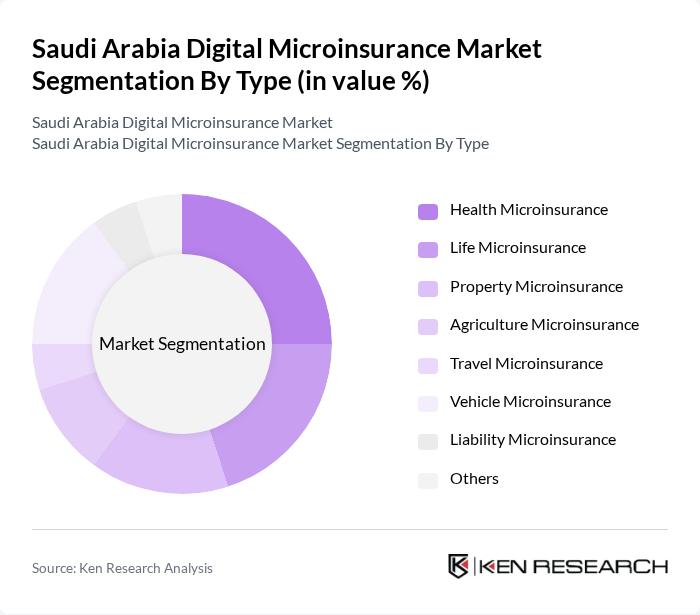
Among these segments,Health Microinsuranceis currently dominating the market due to increasing healthcare costs, regulatory mandates for health insurance, and rising awareness of health-related risks among consumers. The demand for affordable health coverage has surged, particularly among low-income individuals who seek financial protection against medical expenses. Government initiatives, such as the comprehensive state-funded health insurance program announced by the Ministry of Health, further support this trend by improving healthcare access and affordability.
By End-User:The market is segmented by end-users into Individuals, Small and Medium Enterprises (SMEs), Large Corporations, and Government Entities. Each segment has distinct needs and preferences, influencing the types of microinsurance products they seek. Individuals are the largest segment, driven by the need for personal financial security and the accessibility of microinsurance products. SMEs increasingly adopt microinsurance to manage operational risks, while large corporations and government entities focus on tailored solutions for workforce protection and risk mitigation.
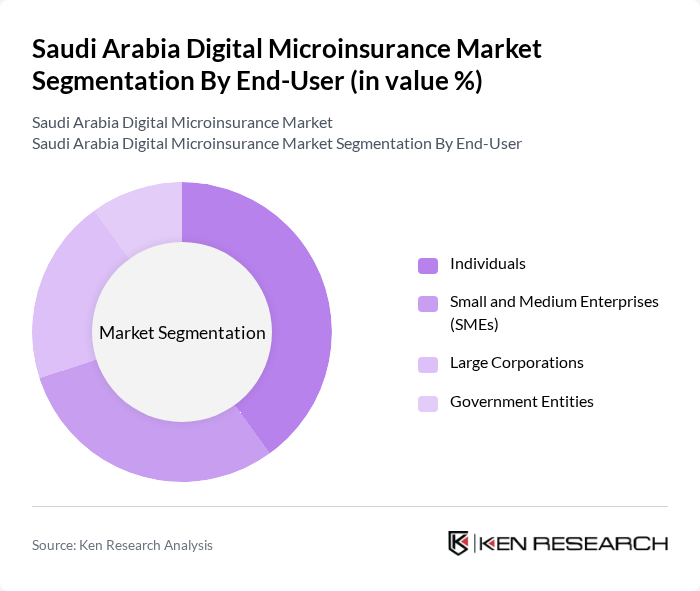
Individuals represent the largest segment in the market, driven by the increasing need for personal financial security and the rising awareness of microinsurance products. The affordability and accessibility of these products make them particularly appealing to low-income households, which constitute a significant portion of the population. SMEs also show a growing interest in microinsurance as they seek to mitigate risks associated with their operations, especially in the context of economic diversification and the rise in SME formation.
The Saudi Arabia Digital Microinsurance Market is characterized by a dynamic mix of regional and international players. Leading participants such as Tawuniya, Bupa Arabia, Al Rajhi Takaful, Gulf Insurance Group, Alinma Tokio Marine, Al Ahli Takaful, United Cooperative Assurance, Al Sagr Cooperative Insurance, Saudi Arabian Insurance Company (SAICO), Aljazira Takaful Taawuni Company, Medgulf Cooperative Insurance, Allianz Saudi Fransi Cooperative Insurance, Walaa Cooperative Insurance, Al-Etihad Cooperative Insurance, and Al-Bilad Insurance contribute to innovation, geographic expansion, and service delivery in this space. The largest insurers, including Bupa Arabia and Tawuniya, account for more than half of the market’s insurance revenue, with strong digital policy issuance and high claims settlement ratios supporting their market leadership.
The future of the digital microinsurance market in Saudi Arabia appears promising, driven by technological advancements and changing consumer behaviors. As digital literacy continues to rise, more consumers are expected to embrace online insurance solutions. Additionally, the integration of artificial intelligence and data analytics will enhance product customization, allowing insurers to tailor offerings to specific consumer needs. This trend, combined with ongoing government support for digital initiatives, is likely to create a more robust and competitive market landscape in the coming years.
| Segment | Sub-Segments |
|---|---|
| By Type | Health Microinsurance Life Microinsurance Property Microinsurance Agriculture Microinsurance Travel Microinsurance Vehicle Microinsurance Liability Microinsurance Others |
| By End-User | Individuals Small and Medium Enterprises (SMEs) Large Corporations Government Entities |
| By Distribution Channel | Online Platforms Mobile Applications Insurance Agents/Brokers Direct Sales Partnerships with Retailers |
| By Premium Range | Low Premium (< SAR 100) Medium Premium (SAR 100 - SAR 500) High Premium (> SAR 500) |
| By Coverage Type | Basic Coverage Comprehensive Coverage Customizable Coverage |
| By Payment Frequency | Monthly Payments Quarterly Payments Annual Payments |
| By Policy Duration | Short-term Policies Long-term Policies Renewable Policies |
| Scope Item/Segment | Sample Size | Target Respondent Profiles |
|---|---|---|
| Low-Income Households | 120 | Individuals aged 18-60, with monthly income below SAR 5,000 |
| Digital Insurance Providers | 65 | CEOs, Product Managers, and Marketing Directors |
| Regulatory Bodies | 45 | Policy Makers, Compliance Officers, and Analysts |
| Fintech Companies | 70 | Founders, CTOs, and Business Development Managers |
| Insurance Brokers | 60 | Senior Brokers, Sales Managers, and Client Relationship Managers |
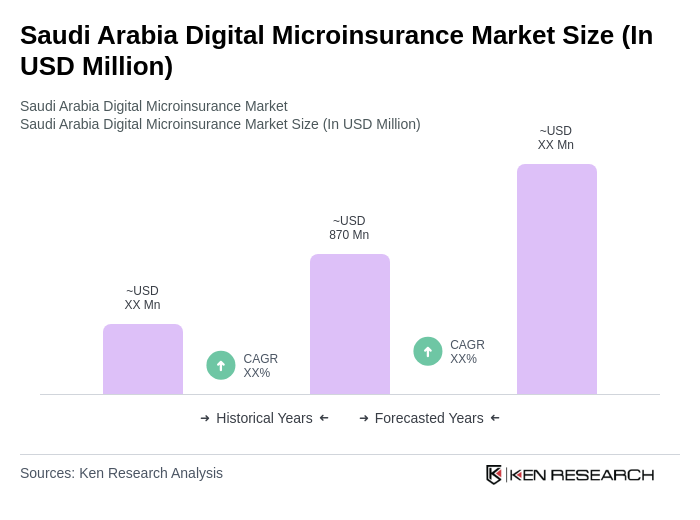
The Saudi Arabia Digital Microinsurance Market is valued at approximately USD 870 million, driven by increased digital technology penetration, consumer awareness, and government initiatives aimed at financial inclusion, particularly for low-income individuals and small businesses.

What makes us stand out is that our consultants follow Robust, Refine and Result (RRR) methodology. Robust for clear definitions, approaches and sanity checking, Refine for differentiating respondents' facts and opinions, and Result for presenting data with story.

We have set a benchmark in the industry by offering our clients with syndicated and customized market research reports featuring coverage of entire market as well as meticulous research and analyst insights.

While we don't replace traditional research, we flip the method upside down. Our dual approach of Top Bottom & Bottom Top ensures quality deliverable by not just verifying company fundamentals but also looking at the sector and macroeconomic factors.

With one step in the future, our research team constantly tries to show you the bigger picture. We help with some of the tough questions you may encounter along the way: How is the industry positioned? Best marketing channel? KPI's of competitors? By aligning every element, we help maximize success.

Our report gives you instant access to the answers and sources that other companies might choose to hide. We elaborate each steps of research methodology we have used and showcase you the sample size to earn your trust.

If you need any support, we are here! We pride ourselves on universe strength, data quality, and quick, friendly, and professional service.













