Region:Middle East
Author(s):Geetanshi
Product Code:KRAB1628
Pages:85
Published On:January 2026
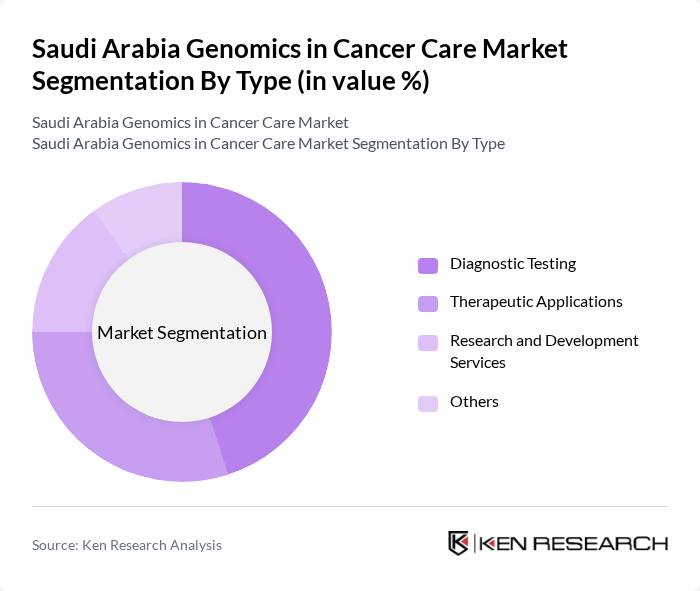
By Type:The market is segmented into various types, including Diagnostic Testing, Therapeutic Applications, Research and Development Services, and Others. Among these, Diagnostic Testing is the leading sub-segment, driven by the increasing demand for early cancer detection and the growing adoption of genomic testing technologies. The rise in awareness regarding personalized medicine has further propelled the growth of this segment, as healthcare providers seek to offer tailored treatment options based on individual genetic profiles.
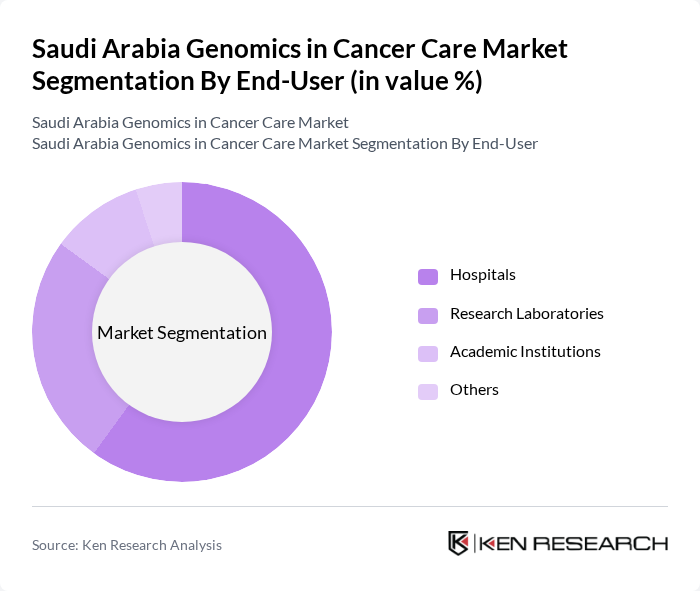
By End-User:The end-user segmentation includes Hospitals, Research Laboratories, Academic Institutions, and Others. Hospitals are the dominant end-user segment, as they are the primary providers of cancer care services and have the necessary infrastructure to implement genomic testing and treatment. The increasing number of cancer patients seeking treatment in hospitals has led to a higher demand for genomic services, thereby driving growth in this segment.
The Saudi Arabia Genomics in Cancer Care Market is characterized by a dynamic mix of regional and international players. Leading participants such as King Faisal Specialist Hospital & Research Centre, Saudi Arabian Oil Company (Saudi Aramco), King Abdulaziz City for Science and Technology, Al Nahdi Medical Company, Saudi Biopharmaceuticals Manufacturing Company, Advanced Genomic Technologies, Al-Muhaidib Group, Saudi German Hospital, Dallah Healthcare Company, Al-Faisal University, BioArabia, Genomic Health, Illumina, Inc., Roche Diagnostics, Siemens Healthineers contribute to innovation, geographic expansion, and service delivery in this space.
The future of the Saudi Arabia genomics in cancer care market appears promising, driven by ongoing technological advancements and increased government support. By in future, the integration of artificial intelligence in genomic data analysis is expected to enhance diagnostic accuracy and treatment personalization. Additionally, the expansion of telemedicine services will facilitate access to genomic testing, particularly in underserved regions, thereby improving patient outcomes and fostering a more equitable healthcare landscape across the nation.
| Segment | Sub-Segments |
|---|---|
| By Type | Diagnostic Testing Therapeutic Applications Research and Development Services Others |
| By End-User | Hospitals Research Laboratories Academic Institutions Others |
| By Cancer Type | Breast Cancer Lung Cancer Colorectal Cancer Others |
| By Technology | Next-Generation Sequencing Polymerase Chain Reaction Microarray Technology Others |
| By Application | Drug Development Clinical Diagnostics Personalized Medicine Others |
| By Investment Source | Government Funding Private Investments International Grants Others |
| By Policy Support | Research Grants Tax Incentives Regulatory Support Others |
| Scope Item/Segment | Sample Size | Target Respondent Profiles |
|---|---|---|
| Oncology Clinics | 100 | Oncologists, Clinical Researchers |
| Genomic Testing Laboratories | 80 | Laboratory Directors, Genetic Counselors |
| Healthcare Administrators | 70 | Hospital Administrators, Policy Makers |
| Patient Advocacy Groups | 60 | Patient Advocates, Caregivers |
| Pharmaceutical Companies | 90 | Product Managers, R&D Directors |
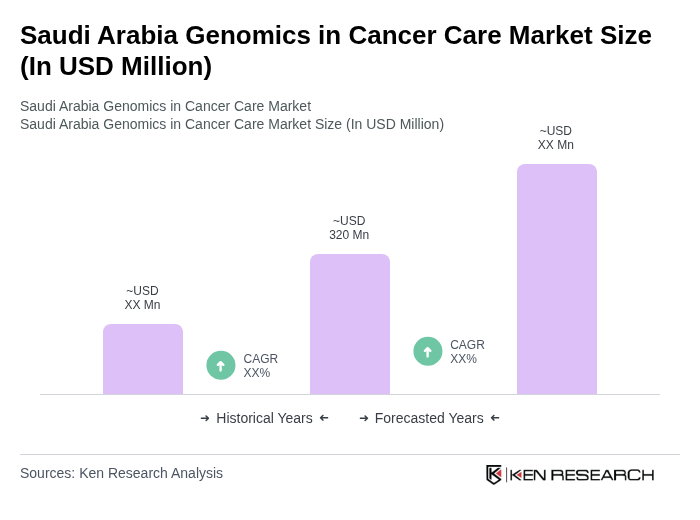
The Saudi Arabia Genomics in Cancer Care Market is valued at approximately USD 320 million, reflecting significant growth driven by advancements in genomic technologies, increasing cancer prevalence, and heightened awareness of personalized medicine.

What makes us stand out is that our consultants follow Robust, Refine and Result (RRR) methodology. Robust for clear definitions, approaches and sanity checking, Refine for differentiating respondents' facts and opinions, and Result for presenting data with story.

We have set a benchmark in the industry by offering our clients with syndicated and customized market research reports featuring coverage of entire market as well as meticulous research and analyst insights.

While we don't replace traditional research, we flip the method upside down. Our dual approach of Top Bottom & Bottom Top ensures quality deliverable by not just verifying company fundamentals but also looking at the sector and macroeconomic factors.

With one step in the future, our research team constantly tries to show you the bigger picture. We help with some of the tough questions you may encounter along the way: How is the industry positioned? Best marketing channel? KPI's of competitors? By aligning every element, we help maximize success.

Our report gives you instant access to the answers and sources that other companies might choose to hide. We elaborate each steps of research methodology we have used and showcase you the sample size to earn your trust.

If you need any support, we are here! We pride ourselves on universe strength, data quality, and quick, friendly, and professional service.













