Region:Middle East
Author(s):Dev
Product Code:KRAD3249
Pages:84
Published On:November 2025
 Treatment Market.png "Saudi Arabia Irritable Bowel Syndrome (IBS) Treatment Market Size")
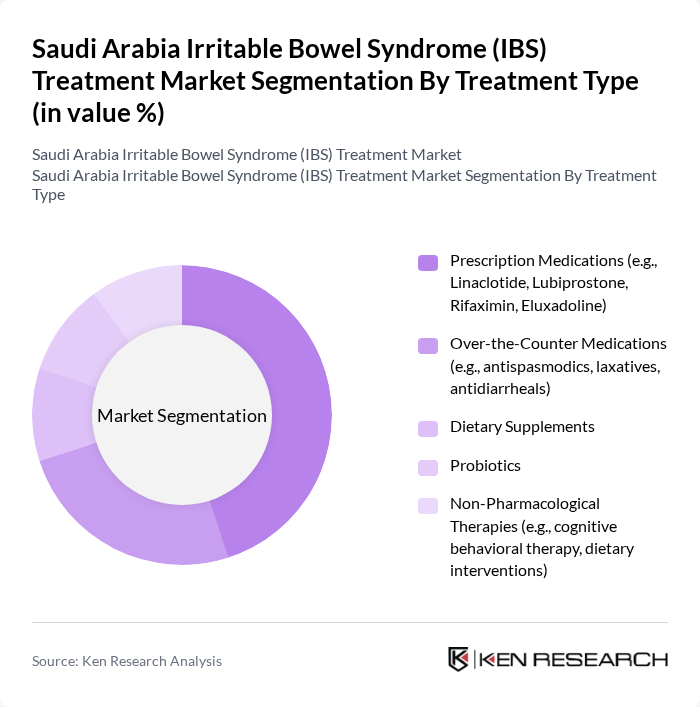
By Treatment Type:The treatment type segmentation includes various approaches to managing IBS, which are crucial for addressing the diverse needs of patients. The subsegments include Prescription Medications, Over-the-Counter Medications, Dietary Supplements, Probiotics, and Non-Pharmacological Therapies. Among these, Prescription Medications are leading the market due to their effectiveness in managing symptoms and the increasing number of approved drugs. Patients often prefer these medications for their targeted action and clinical backing, which drives their demand.
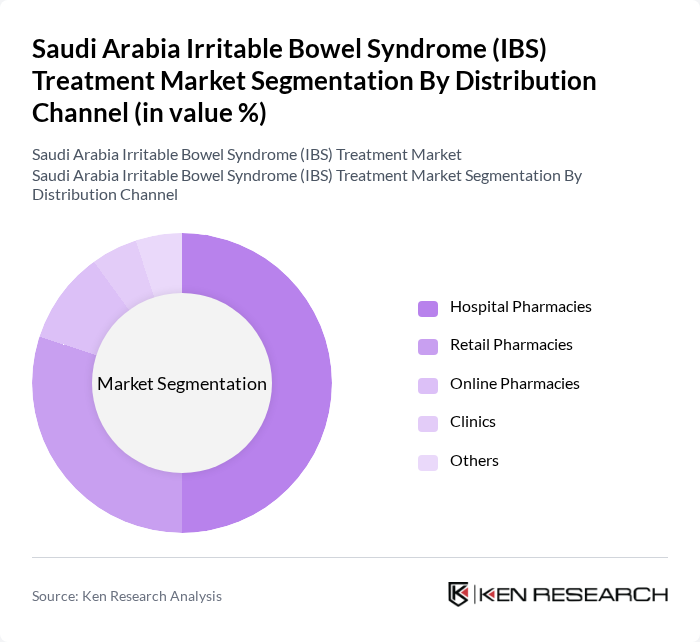
By Distribution Channel:The distribution channel segmentation encompasses the various avenues through which IBS treatments are made available to patients. This includes Hospital Pharmacies, Retail Pharmacies, Online Pharmacies, Clinics, and Others. Hospital Pharmacies dominate this segment as they provide immediate access to medications for patients undergoing treatment. The convenience and trust associated with hospital pharmacies significantly influence patient choices, leading to their higher market share.
The Saudi Arabia Irritable Bowel Syndrome (IBS) Treatment Market is characterized by a dynamic mix of regional and international players. Leading participants such as AbbVie Inc., Takeda Pharmaceutical Company Limited, Johnson & Johnson, Pfizer Inc., GlaxoSmithKline plc, Bayer AG, Astellas Pharma Inc., Merck & Co., Inc., Sanofi S.A., Viatris Inc., Boehringer Ingelheim, Allergan plc, Ironwood Pharmaceuticals, Inc., Sucampo Pharmaceuticals, Inc., Ipsen S.A., Zeria Pharmaceutical Co., Ltd., Abbott Laboratories, Bausch Health Companies Inc., Synergy Pharmaceuticals Inc., Ardelyx, Inc. contribute to innovation, geographic expansion, and service delivery in this space.
The future of the IBS treatment market in Saudi Arabia appears promising, driven by increasing healthcare investments and a focus on innovative treatment solutions. As the government allocates more resources to healthcare infrastructure, the accessibility of specialized IBS care is expected to improve. Additionally, the integration of digital health solutions and telemedicine will likely enhance patient engagement and treatment adherence, fostering a more effective management landscape for IBS in the coming years.
| Segment | Sub-Segments |
|---|---|
| By Treatment Type | Prescription Medications (e.g., Linaclotide, Lubiprostone, Rifaximin, Eluxadoline) Over-the-Counter Medications (e.g., antispasmodics, laxatives, antidiarrheals) Dietary Supplements Probiotics Non-Pharmacological Therapies (e.g., cognitive behavioral therapy, dietary interventions) |
| By Distribution Channel | Hospital Pharmacies Retail Pharmacies Online Pharmacies Clinics Others |
| By Patient Demographics | Age Group (Children, Adults, Seniors) Gender (Male, Female) Socioeconomic Status Others |
| By Severity of Condition | Mild IBS Moderate IBS Severe IBS Others |
| By Treatment Duration | Short-term Treatment Long-term Treatment Others |
| By Geographic Region | Central Region Eastern Region Western Region Southern Region Others |
| By Healthcare Provider Type | Gastroenterologists General Practitioners Nutritionists Others |
| Scope Item/Segment | Sample Size | Target Respondent Profiles |
|---|---|---|
| Gastroenterology Clinics | 40 | Gastroenterologists, Clinic Managers |
| IBS Patient Surveys | 150 | Patients diagnosed with IBS, Caregivers |
| Pharmacy Insights | 50 | Pharmacists, Pharmacy Managers |
| Healthcare Policy Experts | 40 | Health Economists, Policy Makers |
| Dietary and Nutritional Specialists | 40 | Nutritionists, Dietitians |
The Saudi Arabia Irritable Bowel Syndrome (IBS) Treatment Market is valued at approximately USD 3.2 billion, reflecting a significant growth driven by increased awareness of gastrointestinal disorders and advancements in treatment options.

What makes us stand out is that our consultants follow Robust, Refine and Result (RRR) methodology. Robust for clear definitions, approaches and sanity checking, Refine for differentiating respondents' facts and opinions, and Result for presenting data with story.

We have set a benchmark in the industry by offering our clients with syndicated and customized market research reports featuring coverage of entire market as well as meticulous research and analyst insights.

While we don't replace traditional research, we flip the method upside down. Our dual approach of Top Bottom & Bottom Top ensures quality deliverable by not just verifying company fundamentals but also looking at the sector and macroeconomic factors.

With one step in the future, our research team constantly tries to show you the bigger picture. We help with some of the tough questions you may encounter along the way: How is the industry positioned? Best marketing channel? KPI's of competitors? By aligning every element, we help maximize success.

Our report gives you instant access to the answers and sources that other companies might choose to hide. We elaborate each steps of research methodology we have used and showcase you the sample size to earn your trust.

If you need any support, we are here! We pride ourselves on universe strength, data quality, and quick, friendly, and professional service.













