Region:Middle East
Author(s):Shubham
Product Code:KRAA8649
Pages:82
Published On:November 2025
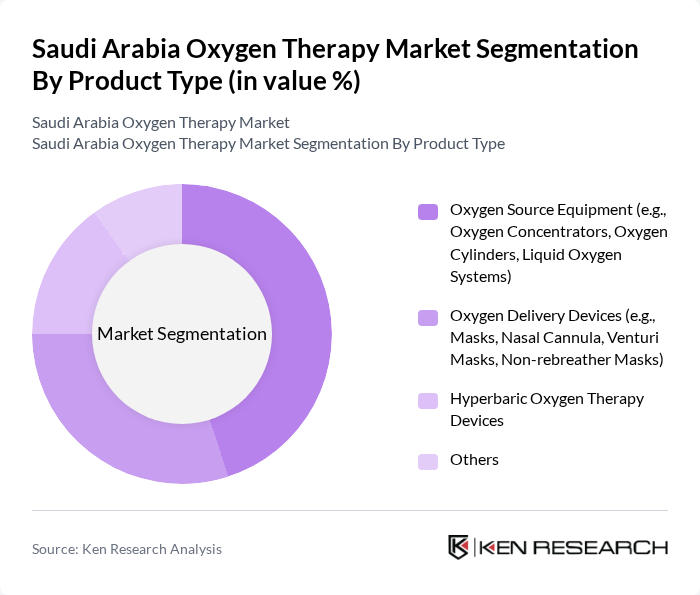
By Product Type:The product type segmentation includes various categories such as Oxygen Source Equipment, Oxygen Delivery Devices, Hyperbaric Oxygen Therapy Devices, and Others. Among these, Oxygen Source Equipment, which includes oxygen concentrators, cylinders, and liquid oxygen systems, is currently the leading sub-segment. This dominance is attributed to the increasing demand for portable and efficient oxygen delivery systems, particularly in homecare settings. The convenience and effectiveness of these devices have made them a preferred choice for both healthcare providers and patients. The segment’s market share is supported by the rising adoption of home-based oxygen therapy and the government’s push for decentralized healthcare delivery .
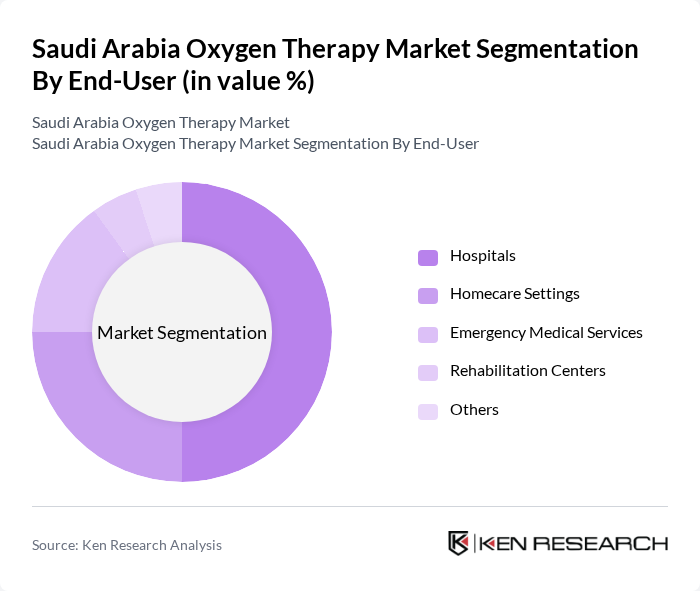
By End-User:The end-user segmentation encompasses Hospitals, Homecare Settings, Emergency Medical Services, Rehabilitation Centers, and Others. Hospitals are the dominant end-user segment, primarily due to the high volume of patients requiring oxygen therapy for various medical conditions. The increasing number of hospital admissions related to respiratory diseases and the growing focus on critical care have significantly contributed to the demand for oxygen therapy in these facilities. Homecare settings are also witnessing rapid growth, driven by government support for home-based care and the rising prevalence of chronic respiratory conditions .
The Saudi Arabia Oxygen Therapy Market is characterized by a dynamic mix of regional and international players. Leading participants such as Air Liquide Arabia (VitalAire Arabia), Linde Healthcare (Linde Saudi Industrial Gases Co.), Philips Healthcare, ResMed, Medtronic, Invacare Corporation, Drive DeVilbiss Healthcare, Chart Industries, Inogen, Fisher & Paykel Healthcare, Smiths Medical (Smiths Group plc), Allied Healthcare Products Inc., Hersill, Tecno-Gaz, Thimar Al Jazirah Company (TAC) Respiratory Division contribute to innovation, geographic expansion, and service delivery in this space.
The future of the oxygen therapy market in Saudi Arabia appears promising, driven by increasing healthcare investments and a focus on enhancing patient care. The government’s commitment to improving healthcare infrastructure, alongside rising awareness of respiratory health, is expected to foster market growth. Additionally, the integration of telemedicine and remote monitoring solutions will likely enhance patient access to oxygen therapy, making it more efficient and effective in managing chronic respiratory conditions.
| Segment | Sub-Segments |
|---|---|
| By Product Type | Oxygen Source Equipment (e.g., Oxygen Concentrators, Oxygen Cylinders, Liquid Oxygen Systems) Oxygen Delivery Devices (e.g., Masks, Nasal Cannula, Venturi Masks, Non-rebreather Masks) Hyperbaric Oxygen Therapy Devices Others |
| By End-User | Hospitals Homecare Settings Emergency Medical Services Rehabilitation Centers Others |
| By Application | Chronic Obstructive Pulmonary Disease (COPD) Asthma Sleep Apnea Pneumonia COVID-19 and Acute Respiratory Distress Syndrome (ARDS) Others |
| By Distribution Channel | Direct Sales Online Sales Retail Pharmacies Others |
| By Region | Central Region Eastern Region Western Region Southern Region |
| By Modality | Portable Medical Oxygen Systems Standalone Medical Oxygen Systems Others |
| By Service Type | Rental Services Sales Services Maintenance Services Others |
| Scope Item/Segment | Sample Size | Target Respondent Profiles |
|---|---|---|
| Hospital Procurement Departments | 60 | Procurement Managers, Supply Chain Coordinators |
| Home Care Oxygen Therapy Users | 50 | Patients, Caregivers, Home Health Aides |
| Emergency Medical Services (EMS) | 40 | EMS Directors, Paramedics, First Responders |
| Healthcare Policy Makers | 40 | Health Ministry Officials, Policy Analysts |
| Medical Equipment Suppliers | 45 | Sales Representatives, Product Managers |
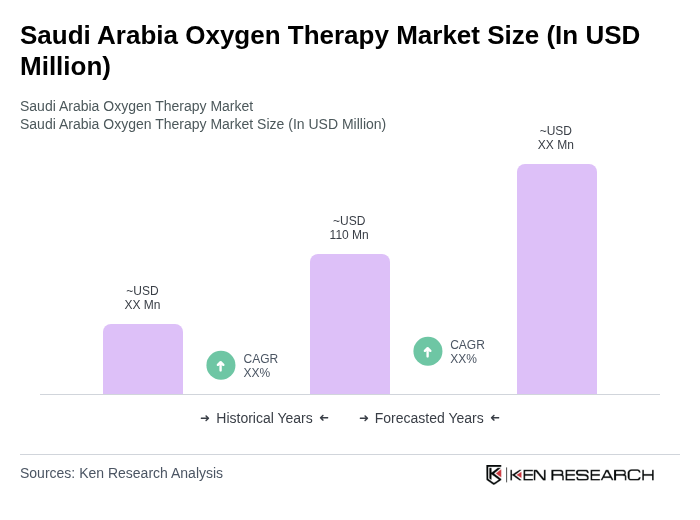
The Saudi Arabia Oxygen Therapy Market is valued at approximately USD 110 million, driven by the increasing prevalence of respiratory diseases, an aging population, and advancements in oxygen therapy technologies.

What makes us stand out is that our consultants follow Robust, Refine and Result (RRR) methodology. Robust for clear definitions, approaches and sanity checking, Refine for differentiating respondents' facts and opinions, and Result for presenting data with story.

We have set a benchmark in the industry by offering our clients with syndicated and customized market research reports featuring coverage of entire market as well as meticulous research and analyst insights.

While we don't replace traditional research, we flip the method upside down. Our dual approach of Top Bottom & Bottom Top ensures quality deliverable by not just verifying company fundamentals but also looking at the sector and macroeconomic factors.

With one step in the future, our research team constantly tries to show you the bigger picture. We help with some of the tough questions you may encounter along the way: How is the industry positioned? Best marketing channel? KPI's of competitors? By aligning every element, we help maximize success.

Our report gives you instant access to the answers and sources that other companies might choose to hide. We elaborate each steps of research methodology we have used and showcase you the sample size to earn your trust.

If you need any support, we are here! We pride ourselves on universe strength, data quality, and quick, friendly, and professional service.













