Region:Middle East
Author(s):Dev
Product Code:KRAD3252
Pages:94
Published On:November 2025
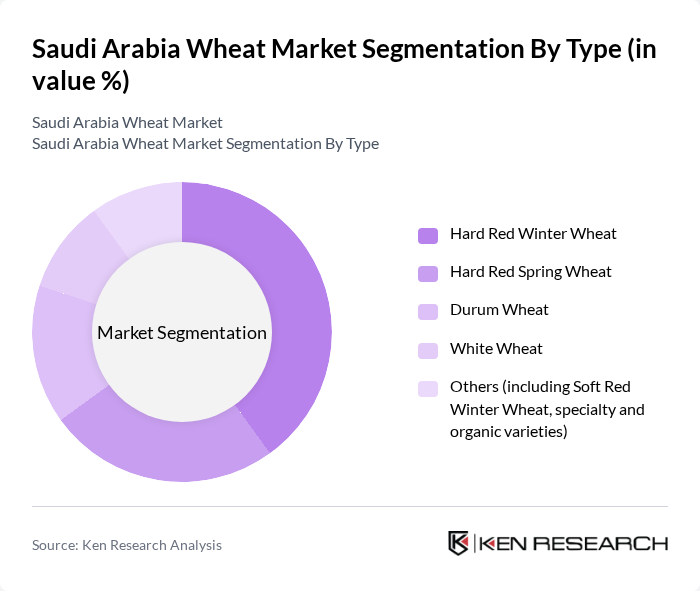
By Type:The wheat market can be segmented into various types, including Hard Red Winter Wheat, Hard Red Spring Wheat, Durum Wheat, White Wheat, and Others (including Soft Red Winter Wheat, specialty and organic varieties). Among these, Hard Red Winter Wheat is the most dominant due to its versatility in food applications and high protein content, making it a preferred choice for bread and other baked goods. The increasing consumer preference for high-quality wheat products has further solidified its market leadership.
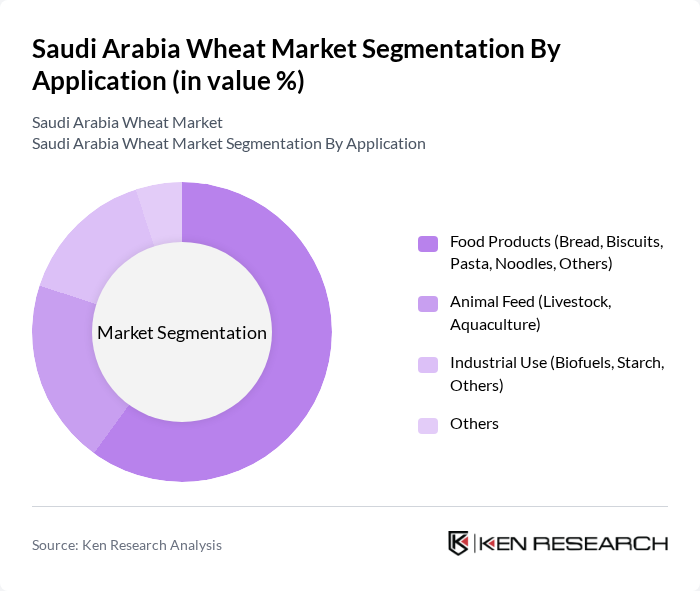
By Application:The applications of wheat in Saudi Arabia are diverse, including Food Products (Bread, Biscuits, Pasta, Noodles, Others), Animal Feed (Livestock, Aquaculture), Industrial Use (Biofuels, Starch, Others), and Others. The Food Products segment is the largest, driven by the high demand for bread and other baked goods among the population. The growing trend towards convenience foods has also contributed to the increased consumption of processed wheat products. Wheat flour maintains a leading position among grain mill products, with the sector forecasted to expand at a significant rate through 2033.
The Saudi Arabia Wheat Market is characterized by a dynamic mix of regional and international players. Leading participants such as Saudi Grains Organization (SAGO), Arabian Mills Company, National Grain Company, Almarai Company, United Farmers Holding Company, Al-Faisaliah Group, Al-Jazeera Agricultural Company, Al-Muhaidib Group, Al-Ahsa Agricultural Development Company, Al-Safi Danone, Al-Qassim Agricultural Company (QACCO), Arabian Agricultural Services Company (ARASCO), Al-Rajhi International for Investment, Al-Suwaidi Group, Al-Hokair Group, Al-Muhaidib Foods contribute to innovation, geographic expansion, and service delivery in this space.
The Saudi wheat market is poised for significant transformation, driven by government initiatives aimed at enhancing food security and increasing local production capabilities. With a focus on sustainable practices and technological advancements, the market is expected to see a rise in organic wheat production and precision agriculture adoption. These trends will not only improve yield but also align with global sustainability goals, positioning Saudi Arabia as a potential leader in innovative agricultural practices in the region.
| Segment | Sub-Segments |
|---|---|
| By Type | Hard Red Winter Wheat Hard Red Spring Wheat Durum Wheat White Wheat Others (including Soft Red Winter Wheat, specialty and organic varieties) |
| By Application | Food Products (Bread, Biscuits, Pasta, Noodles, Others) Animal Feed (Livestock, Aquaculture) Industrial Use (Biofuels, Starch, Others) Others |
| By End-User | Food Processing Industry Bakery Sector Animal Feed Producers Retail Consumers Others |
| By Region | Central Region Eastern Region Western Region Southern Region |
| By Distribution Channel | Direct Sales Retail Outlets Online Sales Wholesale/Institutional Sales Others |
| By Packaging Type | Bulk Packaging Retail Packaging Eco-friendly Packaging Others |
| By Price Segment | Low Price Segment Mid Price Segment High Price Segment Others |
| Scope Item/Segment | Sample Size | Target Respondent Profiles |
|---|---|---|
| Wheat Farmers | 45 | Farm Owners, Agricultural Managers |
| Grain Mill Operators | 38 | Production Managers, Quality Control Supervisors |
| Wheat Importers | 32 | Import Managers, Supply Chain Directors |
| Government Agricultural Officials | 28 | Policy Makers, Agricultural Economists |
| Retail Sector Buyers | 35 | Procurement Officers, Category Managers |
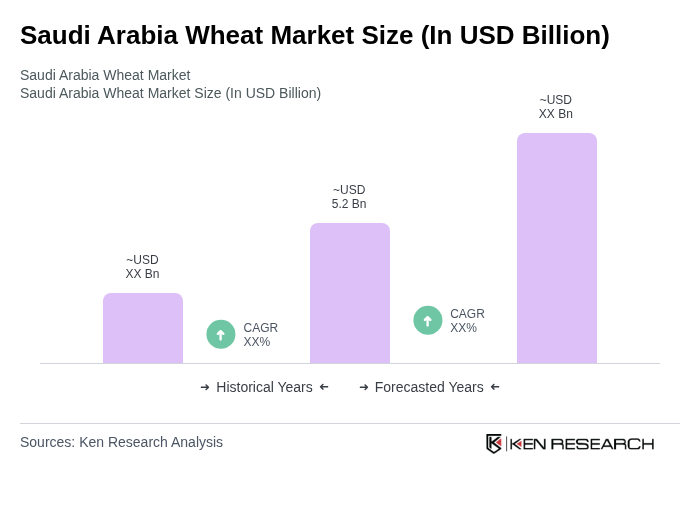
The Saudi Arabia Wheat Market is valued at approximately USD 5.2 billion, reflecting a steady growth driven by increasing domestic consumption, government initiatives for food security, and rising demand for wheat-based products in the food processing sector.

What makes us stand out is that our consultants follow Robust, Refine and Result (RRR) methodology. Robust for clear definitions, approaches and sanity checking, Refine for differentiating respondents' facts and opinions, and Result for presenting data with story.

We have set a benchmark in the industry by offering our clients with syndicated and customized market research reports featuring coverage of entire market as well as meticulous research and analyst insights.

While we don't replace traditional research, we flip the method upside down. Our dual approach of Top Bottom & Bottom Top ensures quality deliverable by not just verifying company fundamentals but also looking at the sector and macroeconomic factors.

With one step in the future, our research team constantly tries to show you the bigger picture. We help with some of the tough questions you may encounter along the way: How is the industry positioned? Best marketing channel? KPI's of competitors? By aligning every element, we help maximize success.

Our report gives you instant access to the answers and sources that other companies might choose to hide. We elaborate each steps of research methodology we have used and showcase you the sample size to earn your trust.

If you need any support, we are here! We pride ourselves on universe strength, data quality, and quick, friendly, and professional service.













