Region:Asia
Author(s):Geetanshi
Product Code:KRAA4070
Pages:80
Published On:January 2026
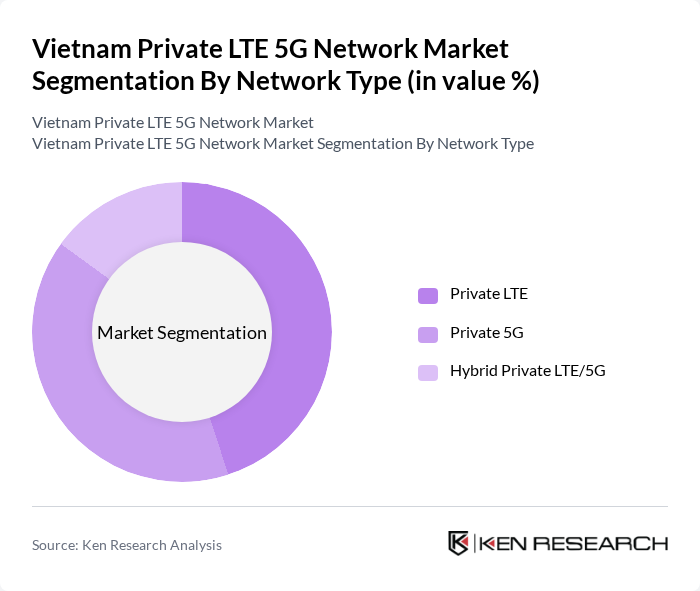
By Network Type:The market is segmented into three primary types: Private LTE, Private 5G, and Hybrid Private LTE/5G. Private LTE is gaining traction due to its established technology, ecosystem maturity, device availability, and proven reliability in mission-critical and industrial environments. Private 5G is emerging as the preferred choice for industries requiring ultra-low latency, high bandwidth, network slicing, and advanced automation capabilities, particularly in manufacturing, logistics, utilities, and transportation. Hybrid Private LTE/5G solutions are also becoming popular as they allow organizations to leverage existing LTE assets while gradually introducing 5G for new use cases, offering flexibility, smooth migration, and scalability for various applications.
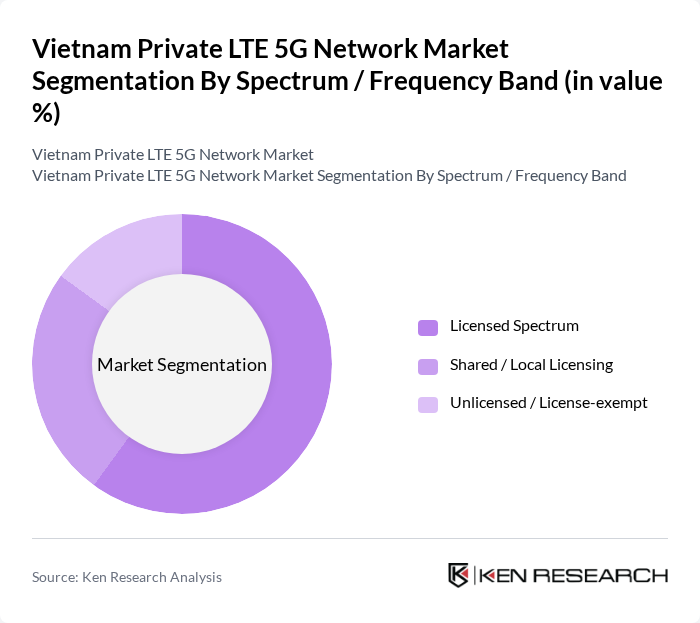
By Spectrum / Frequency Band:The segmentation includes Licensed Spectrum, Shared / Local Licensing (e.g., industrial spectrum), and Unlicensed / License-exempt. Licensed Spectrum is the most widely used due to its reliability, predictable quality of service, and strong regulatory support for 4G/5G bands assigned through national spectrum planning and auctions. Shared / Local Licensing is gaining traction for campus and industrial deployments where enterprises can access localized spectrum or work with operators and system integrators to establish dedicated private networks tailored to factory zones, ports, and utilities. Unlicensed / License-exempt bands are used for complementary solutions and specific applications, often in conjunction with Wi?Fi and IoT technologies, in environments where ultra-strict service guarantees are less critical but flexibility and cost efficiency are important.
The Vietnam Private LTE 5G Network Market is characterized by a dynamic mix of regional and international players. Leading participants such as Viettel Group, VNPT (Vietnam Posts and Telecommunications Group), MobiFone, VinaPhone, FPT Telecom, FPT Software, CMC Telecom, CMC Corporation, Bkav Corporation, NetNam, VNTT (Vietnam Technology and Telecommunication JSC), Saigontourist Cable Television (SCTV), VTC Digicom, HPT Vietnam, Nokia, Ericsson, Huawei (Vietnam Operations) contribute to innovation, geographic expansion, and service delivery in this space.
The future of the Vietnam Private LTE 5G Network market appears promising, driven by technological advancements and increasing digitalization across various sectors. As businesses continue to recognize the value of high-speed connectivity and IoT integration, the demand for private networks is expected to rise. Additionally, government support and investment in infrastructure will likely facilitate the growth of smart city initiatives, further enhancing the market landscape and encouraging innovation in telecommunications.
| Segment | Sub-Segments |
|---|---|
| By Network Type | Private LTE Private 5G Hybrid Private LTE/5G |
| By Spectrum / Frequency Band | Licensed Spectrum Shared / Local Licensing (e.g., industrial spectrum) Unlicensed / License-exempt |
| By Deployment Model | On-premise (Standalone) Hosted / Managed (Operator-led) Hybrid Deployment |
| By Organization Size | Large Enterprises Small & Medium Enterprises (SMEs) |
| By End-use Industry | Manufacturing & Industrial (Industry 4.0) Transportation, Logistics & Ports Energy & Utilities (Power, Oil & Gas) Mining & Natural Resources Public Safety & Government Healthcare & Smart Campuses Smart Cities & Infrastructure |
| By Network Architecture | Standalone (SA) Non-Standalone (NSA) |
| By Region (Vietnam) | Northern Vietnam Central Vietnam Southern Vietnam |
| Scope Item/Segment | Sample Size | Target Respondent Profiles |
|---|---|---|
| Manufacturing Sector Private LTE Adoption | 120 | IT Managers, Operations Directors |
| Logistics and Supply Chain Management | 90 | Logistics Coordinators, Supply Chain Analysts |
| Healthcare Facilities Network Requirements | 80 | Healthcare IT Directors, Facility Managers |
| Smart City Initiatives and 5G Integration | 70 | Urban Planners, Technology Officers |
| Enterprise Clients Utilizing Private Networks | 110 | Chief Technology Officers, Network Administrators |
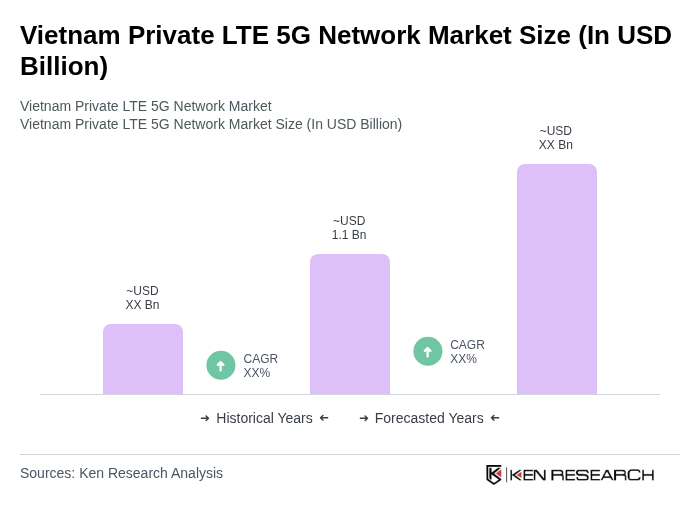
The Vietnam Private LTE 5G Network Market is valued at approximately USD 1.1 billion, reflecting significant growth driven by increasing demand for high-speed connectivity and advancements in digital infrastructure across various sectors.

What makes us stand out is that our consultants follow Robust, Refine and Result (RRR) methodology. Robust for clear definitions, approaches and sanity checking, Refine for differentiating respondents' facts and opinions, and Result for presenting data with story.

We have set a benchmark in the industry by offering our clients with syndicated and customized market research reports featuring coverage of entire market as well as meticulous research and analyst insights.

While we don't replace traditional research, we flip the method upside down. Our dual approach of Top Bottom & Bottom Top ensures quality deliverable by not just verifying company fundamentals but also looking at the sector and macroeconomic factors.

With one step in the future, our research team constantly tries to show you the bigger picture. We help with some of the tough questions you may encounter along the way: How is the industry positioned? Best marketing channel? KPI's of competitors? By aligning every element, we help maximize success.

Our report gives you instant access to the answers and sources that other companies might choose to hide. We elaborate each steps of research methodology we have used and showcase you the sample size to earn your trust.

If you need any support, we are here! We pride ourselves on universe strength, data quality, and quick, friendly, and professional service.













