Region:Asia
Author(s):Geetanshi
Product Code:KRAA3228
Pages:95
Published On:September 2025
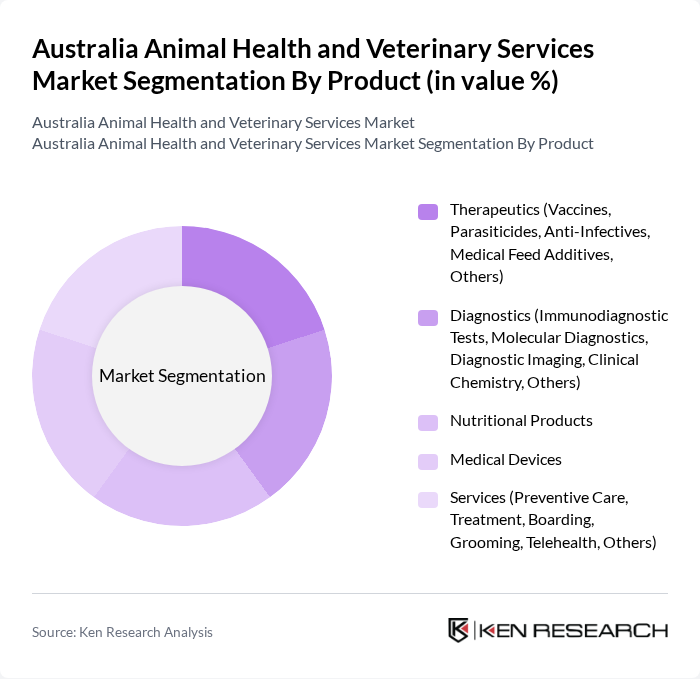
By Product:The product segmentation of the market includes various categories such as therapeutics, diagnostics, nutritional products, medical devices, and services. Among these,therapeutics—including vaccines, parasiticides, anti-infectives, and medical feed additives—lead the market, driven by the high prevalence of animal diseases and the growing focus on preventive healthcare.Diagnostics, such as immunodiagnostic tests and molecular diagnostics, are also gaining traction as pet owners and producers seek accurate and timely health assessments. The adoption of advanced diagnostics and telemedicine is expanding access to care, especially in rural and remote regions .
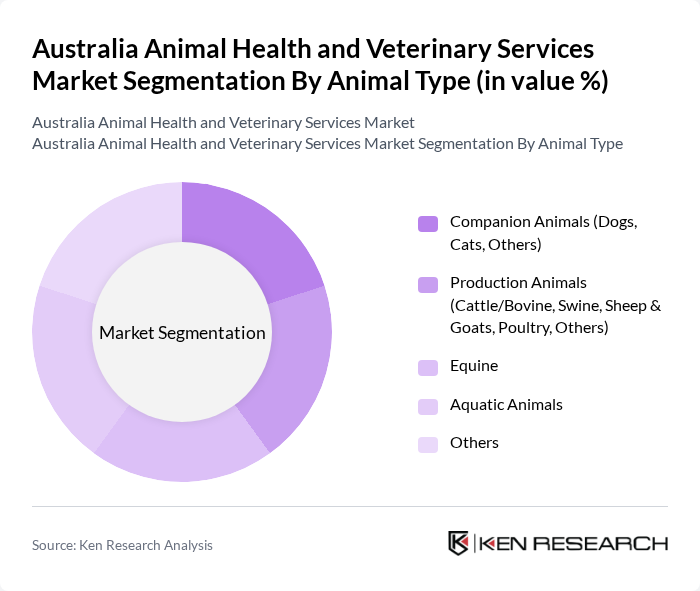
By Animal Type:The animal type segmentation includes companion animals, production animals, equine, aquatic animals, and others.Companion animals, particularly dogs and cats, dominate the market, reflecting the increasing trend of pet ownership and the growing willingness of owners to invest in their pets' health.Production animals—including cattle, swine, and poultry—also represent a significant portion of the market, driven by the need for disease management, productivity enhancement, and compliance with export health standards. The equine and aquatic animal segments are smaller but benefit from targeted health programs and specialty services .
The Australia Animal Health and Veterinary Services Market is characterized by a dynamic mix of regional and international players. Leading participants such as Zoetis Inc., Merck Animal Health, Elanco Animal Health, Boehringer Ingelheim Animal Health, Virbac Australia, IDEXX Laboratories, Neogen Australasia, Vetoquinol Australia, Apiam Animal Health, Greencross Limited, VetPartners Australia, Petstock Vet, Animal Emergency Service (AES), Central Veterinary Services, Provet (Covetrus Australia) contribute to innovation, geographic expansion, and service delivery in this space.
The future of the Australia Animal Health and Veterinary Services market appears promising, driven by increasing pet ownership and advancements in veterinary technology. As pet owners become more aware of the importance of preventive care, the demand for veterinary services is expected to rise. Additionally, the integration of telemedicine and mobile veterinary services will likely enhance accessibility, particularly in rural areas, ensuring that more pets receive timely and effective care in the coming years.
| Segment | Sub-Segments |
|---|---|
| By Product | Therapeutics (Vaccines, Parasiticides, Anti-Infectives, Medical Feed Additives, Others) Diagnostics (Immunodiagnostic Tests, Molecular Diagnostics, Diagnostic Imaging, Clinical Chemistry, Others) Nutritional Products Medical Devices Services (Preventive Care, Treatment, Boarding, Grooming, Telehealth, Others) |
| By Animal Type | Companion Animals (Dogs, Cats, Others) Production Animals (Cattle/Bovine, Swine, Sheep & Goats, Poultry, Others) Equine Aquatic Animals Others |
| By End-User | Pet Owners Livestock Farmers Veterinary Clinics & Hospitals Research Institutions Animal Shelters Others |
| By Service Type | Diagnosis Preventive Care Treatment (Medical & Surgical) Boarding & Grooming Telehealth Services Others |
| By Distribution Channel | Veterinary Clinics & Hospitals Online Retail Pharmacies Direct Sales Distributors Others |
| By Region | Australian Capital Territory & New South Wales Victoria & Tasmania Queensland Northern Territory & South Australia Western Australia Others |
| By Price Range | Budget Mid-Range Premium Others |
| Scope Item/Segment | Sample Size | Target Respondent Profiles |
|---|---|---|
| Veterinary Clinics | 100 | Veterinarians, Clinic Managers |
| Animal Health Product Manufacturers | 60 | Product Managers, Sales Directors |
| Pet Owners | 120 | Pet Owners, Animal Caregivers |
| Livestock Farmers | 80 | Farm Owners, Livestock Managers |
| Veterinary Technicians | 70 | Veterinary Technicians, Support Staff |
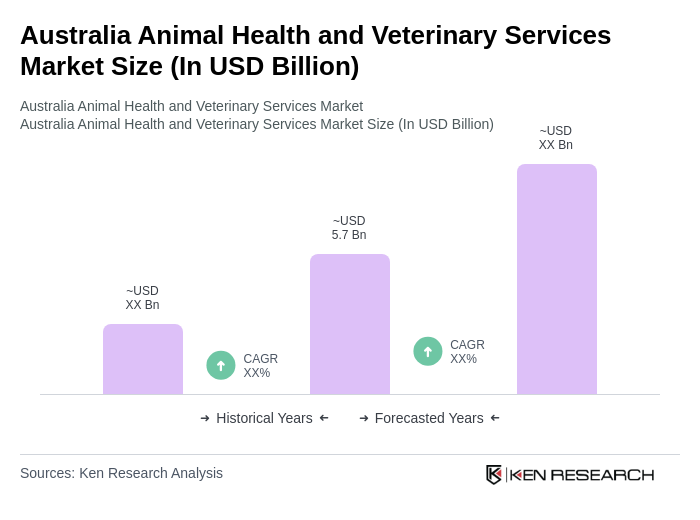
The Australia Animal Health and Veterinary Services Market is valued at approximately USD 5.7 billion, reflecting significant growth driven by increasing pet ownership, advancements in veterinary technology, and rising awareness of animal health among pet owners.

What makes us stand out is that our consultants follow Robust, Refine and Result (RRR) methodology. Robust for clear definitions, approaches and sanity checking, Refine for differentiating respondents' facts and opinions, and Result for presenting data with story.

We have set a benchmark in the industry by offering our clients with syndicated and customized market research reports featuring coverage of entire market as well as meticulous research and analyst insights.

While we don't replace traditional research, we flip the method upside down. Our dual approach of Top Bottom & Bottom Top ensures quality deliverable by not just verifying company fundamentals but also looking at the sector and macroeconomic factors.

With one step in the future, our research team constantly tries to show you the bigger picture. We help with some of the tough questions you may encounter along the way: How is the industry positioned? Best marketing channel? KPI's of competitors? By aligning every element, we help maximize success.

Our report gives you instant access to the answers and sources that other companies might choose to hide. We elaborate each steps of research methodology we have used and showcase you the sample size to earn your trust.

If you need any support, we are here! We pride ourselves on universe strength, data quality, and quick, friendly, and professional service.













